




tranks retweeted

[BIG BROTHER IS WATCHING YOU! @Arcium]
최근 중앙정부의 인터넷 검열과 규제가 점점 심해지고 있습니다. 명분은 좋습니다. 불법적 행위를 막고 평화로운 세상을 위한 선택이라고 합니다.
처음엔 나는 불법을 저지르지 않는 사람이니 큰 문제가 없으리라 생각했습니다.
하지만 카카오톡 사진은 전송 전 국가가 지정한 AI 알고리즘에 검열 된 후 전송 됩니다. 2026년 7월 1일부터는 적용 범위가 동영상에서 이미지까지 확대됩니다. 모든 이미지가 업로드 전 AI 필터링을 거치게 됩니다.
"불법촬영물 유통방지"라는 명분으로 시작된 법입니다. 하지만 한 번 만들어진 검열 인프라는 활용하기에 따라 무궁무진 합니다. 무엇을 막느냐? 무엇이 불법인가?
그때그때의 정부가 정합니다.
그리고 작년 11월, 쿠팡에서 개인정보가 유출됐습니다. 사실상 전 국민입니다. 원인은 외부 해킹이 아니었습니다. 퇴사한 내부 직원의 인증키가 5개월간 방치된 인재였습니다.
"내 데이터를 회사가 잘 보관하고 있겠지"라는 신뢰는 무너졌습니다.
검열과 유출은 다를까 싶지만 뿌리는 같습니다. 누군가가 내 데이터를 들고 있다는 점입니다. 암호화는 저장과 전송에만 적용됩니다. 데이터를 "처리"하는 순간 풀립니다.
정부 위탁 AI든, 회사 내부 서버든, 퇴사자의 인증키든, 처리하는 누군가는 반드시 원본을 봅니다.
하지만? @Arcium는 데이터를 암호화한 상태 그대로 연산합니다.
우리가 평소에 쓰던 블록체인은 탈중앙화된 스토리지입니다. 모든 잔액과 거래가 공개된 장부 위에 올라갑니다. Arcium은 그 위에 "암호화된 연산 레이어"를 얹습니다. 블록체인은 그대로 두고, 프라이버시만 모듈로 끼웁니다.
이게 왜 중요한지는 기존 프라이버시 솔루션과 비교하면 명확해집니다. Monero, Zcash는 별도의 체인입니다. 프라이버시를 얻는 대가로 DeFi 생태계와 분리됩니다. (혹시나 온체인 써보신 분들을 알겠지만 극악으로 불편합니다 ㅋㅋ)
즉 컴포저빌리티가 없습니다. 우리 Arcium은 솔라나를 그대로 씁니다. 권총에 소음기 끼우듯 Arcium의 프라이버시 솔루션을 쓰다 말다 할수 있습니다.
필요한 만큼만, 필요한 곳에만 프라이버시를 끼웁니다. 프라이버시가 별도 체인이 아니라, 솔라나 위의 모듈러 형태로 활용할 수 있습니다.
그래서 누가 쓰냐고요?
@anon0mesh : 인터넷 없이 작동하는 P2P 메신저로 블루투스 같은 기술을 활용합니다. 통신사도, 중앙 서버도, 전화번호도 필요 없습니다. 메시지는 근처 기기를 거쳐 암호화된 상태로 전송될 뿐입니다.
트랜잭션은 오프라인에서 서명되고, 네트워크가 닿을 때 브로드캐스트됩니다. 잔액 확인이나 거래 검증 같은 민감한 연산은 Arcium 모듈에서 암호화된 상태로 수행됩니다.
빅 브라더 이즈 와칭 유!

Infrared x Lair Finance driving liquid staking forward.. literally 🚍 #KBW2025 shuttles powered by @InfraredFinance & @LairFinance. Learn more here -> luma.com/g2gz81dk

tranks retweeted

I've joined @berachain as the Korea Lead 🇰🇷
Bera grew from a maverick concept to a tremendous presence, and is on its way to becoming a special pillar in the world of crypto.
For the first time, a chain and its applications can form a positive sum relationship - with builders leveraging Proof of Liquidity to scale their businesses, and Bera holders capturing a portion of their revenues, benefiting from their success.
And Korea can supercharge the trajectory. It's indisputably a Tier 1 market, and recent regulatory changes have given Korea renewed attention. Bera is already poised for success, with listings on every major Korean exchange (@Official_Upbit @BithumbOfficial) and a strong local community featuring the likes of K-crypto stalwarts like @DeSpreadTeam, that's been with us every step of the way.
The mission is simple: Win Together, and do it the Right Way.
- Ensure Bera reaches all corners of Korea - not just the crypto natives - and grow together as a community.
- Empower Koreans to contribute to the winningest team in more meaningful ways than the typical regional subcommunity.
- Support Korean builders as they take their talents to the global stage and impact the world.
- Be steadfast in the pursuit of excellence, and Win as a team.
First stop: KBW 2025. Join us - DMs open!

.@EnsoBuild를 처음 마주한 것은 베라체인의 Boyco에 예치한 자산을 출금할 때임.
그 당시 Enso는 LP 토큰에 대한 Boyco 입금 및 출금 프로세스를 간소화하여, 유저가 한 번의 프로세스로 '거래 풀 탐색 → 토큰 스왑 → LP 토큰 수령'을 수행하거나 그 반대로 보유한 LP 토큰을 원하는 단일 자산으로 스왑해주는 기능을 제공하고 있었음.
하지만 Enso를 제대로 살펴보거나 사용해본 적이 없었던 나는 최적화 영역에 대한 확신이 없어서 직접 자산을 생태계 프로토콜에서 출금하고 싶었음.
그래서 내 자산이 예치된 Kodiak에 접속하여 자산이 예치된 풀을 찾아 헤맸지만, 그 당시 생태계 프로토콜들 또한 갓 론칭된 상태라 베라체인의 생태계 메인 DEX인 Kodiak의 인터페이스에서는 내가 예치한 자산 Pool 자체가 표시되지 않았고,
결국 나는 Boyco 인터페이스에서 내가 보유한 LP 토큰을 다른 자산으로 스왑하는 Enso 기능을 활용할 수밖에 없었음.
지갑 상호작용을 몇 번 클릭하다 보니 'Kodi-wETH-HONEY' 어쩌고로 표시되어 있던 LP 토큰이 곧장 ETH로 교환되어 내 지갑에 들어와 있었고, 슬리피지도 거의 없었다는것을 발견!
이때부터 Enso는 본인 머리속에 호감 프로젝트로 자리잡음.
앞으로 점점 체인의 종류와 디파이의 종류가 다양해지며 머니레고가 쌓이고, 각 상품에 대한 접근 난이도는 더욱 올라갈 텐데, 그 속에서 Enso가 정말 중요한 역할을 하지 않을까 기대하고 있음.
tranks retweeted

DATCON 2025 | Who is the Korean Michael Saylor? 🏢
This year, DeSpread is bringing an unprecedented and truly unique event to KBW!
You’ve surely heard of MicroStrategy. Companies like these—so-called treasury companies—go far beyond simply holding digital assets. They enhance corporate value and broaden market accessibility through sustainable strategies, making them one of the hottest trends today across both TradiFi and Crypto industry.
This conference highlights the essential importance of DAT (Digital Asset Treasury) companies and is designed as a pivotal first step toward their full-scale adoption and expansion in the Korean market.
As Korea’s DAT ecosystem is still in its infancy, this event is expected to attract significant attention both domestically and globally—serving as a catalyst to showcase Korea’s potential on the world stage and accelerate future investment into the DAT industry.
🗓️ Date: Monday, September 22, 2025 | 13:00–19:00 KST
📍 Location: SAC Art Hall (534 Samseong-ro, Gangnam District, Seoul)
📌 Participants: Galaxy Digital, SBI VC Trade, DeFi Development Corp., Animoca Brands, IVC, MEV Capital, and more to come!

tranks retweeted
1/ GMonad!
DeSpread is actively participating in @monad testnet as a validator and eagerly awaits the successful launch of Monad's upcoming mainnet.
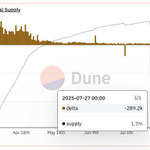
Since 2 weeks ago, @Dune has started supporting data tables and queries for Monad Testnet, and we have built a dashboard for Monad's LST protocols. 🧵

tranks retweeted

스모키의 글을 읽고, 에어드랍과 커뮤니티에 대한 생각
어제 스모키 더 베라(@smokeythebera)의 에어드랍 회의론을 읽고, 밤새 복잡한 생각에 잠겼습니다. 저 또한 프로젝트 팀에 몸담았을 때부터 지금까지 비슷한 고민을 계속해왔기 때문입니다.
지금은 팀을 떠나 다양한 커뮤니티 구성원들과 소통하며 시장을 여러 관점에서 보려고 노력하고 있습니다. 스모키의 냉철한 현실 인식에 깊이 공감하면서도, 그가 내린 결론에 대해서는 조금 다른 관점의 이야기를 나눠보고자 합니다.
1️⃣ 에어드랍의 '목표'를 명확히 해야 합니다.
에어드랍은 단기적 하이프를 위한 마케팅 ‘비용’이 아니라, 우리 프로젝트와 여정을 함께할 ‘핵심 기여자’를 발굴하고 온보딩하는 과정, 즉 커뮤니티를 향한 첫 ‘투자’라고 생각합니다.
2️⃣ '원가 없는 매도자'는 없습니다.
진정한 기여자는 노드 장비나 높은 가스비처럼 직접적인 돈을 투자하기도 하고, 설령 아니더라도 ‘시간, 노력, 신뢰’라는 막대한 비재무적 자산을 투자한 사람들입니다. TGE 이후의 매도 압력은 이들의 종합적인 기여를 프로젝트가 제대로 인정해주지 못했을 때 발생하는 문제가 아닐까 싶습니다.
3️⃣ 그래서 결국은 '더 나은 에어드랍'을 설계해야 합니다.
Web3의 본질은 초기 네트워크 가치를 만든 사람들에게 소유권을 분배하는 것입니다. 진짜 기여자를 식별하고 그들에게 합당한 소유권을 나눠주는 것, 이것이 퍼블릭 세일보다 Web3의 가치에 더 가깝다고 생각합니다.
이러한 고민의 끝은 결국 ‘책임’의 문제로 이어지는 것 같습니다.
물론 이 논의에서 빌더, 유저, VC 등 각자의 입장은 다를 수밖에 없습니다. 하지만 이 분배 방식을 설계할 권한과 힘은 프로젝트 팀(빌더)에게 있기에, 더 큰 책임감을 가져야 한다는 생각으로 이어집니다. 더 나은 시장을 위해서는 팀뿐만 아니라 리테일 투자자 등 모든 커뮤니티 구성원들이 함께 성숙해나가야 할 필요가 있겠지만요.
결국 가장 중요한 것은 서로 다른 입장을 머리로 '이해'하는 것을 넘어, 마음으로 '공감'하려는 소통의 자세라고 생각합니다.
이해와 공감이 만나는 지점에서 비로소 건설적인 대화가 시작되고, 그 대화가 이루어지는 공간이 바로 커뮤니티입니다. 그렇기에 저는, 다른 무엇보다 커뮤니티가 가장 중요하다고 믿습니다.

A Rebuttal to the Berachain Team: An Airdrop Is Not a Cost, It’s the First Investment in Your Community
TL;DR
- Airdrops fail when treated as a simple marketing cost. Their true purpose is to discover and onboard a core community, making it a project's most crucial initial investment.
- The "no-cost seller" is a fallacy. A true contributor's cost basis is their non-financial investment of time, intellect, and trust, which a well-designed airdrop should identify and reward.
- Instead of reverting to Web2-style public sales, the solution is to design better airdrops that fulfill the Web3 promise of converting valuable early contributors into long-term owners.
Thank you to the Berachain team for sharing your thoughtful reflections on airdrops and the TGE process. The sincere candor regarding the market's harsh realities and the founder's dilemma surely resonated with many. Your points on the "seller with no cost basis" problem and the fleeting nature of hype are issues that every project builder feels acutely.
While I deeply agree with this cynical market assessment, I wish to offer a different perspective on the conclusion this diagnosis leads to: the scaling back of airdrops in favor of a return to public sales. This choice may not solve the underlying problem, but could instead be an act of surrendering Web3's most powerful tool for community formation.
This is not an emotional critique, but a logical rebuttal based on the principle we've discussed—designing for sustainable community conversion. It is a well-intentioned proposal for the path forward for the Berachain community.
1. We Must Redefine the 'Purpose' of an Airdrop
The original post limits the purpose of an airdrop to three functions: a) a regulatory shield, b) hype generation, and c) rewarding beta testers. It diagnoses these three functions as losing their utility in the current market. This diagnosis is half right; an airdrop focused only on these three goals is indeed likely to fail.
However, it omits the most critical fourth purpose: d) The process of discovering and onboarding a core community that understands and will contribute to the project's value.
An airdrop is not simply a "free gift" of tokens. A well-designed airdrop is like a mini-version of the project itself. Through tasks, participants learn the product's core value, and through interactions, they become familiar with the community culture. This process is, in itself, a massive filter for identifying future loyal users, active governance participants, and voluntary ambassadors.
The "people who only watch the charts after a few weeks," whom the Berachain team encountered, are not a failure of airdrops in general, but the natural outcome of an airdrop design that failed to consider 'purpose d'.
2. The Fallacy of the 'No-Cost Seller'
While the term "seller with no cost basis" may be financially accurate, it fosters a dangerous illusion from a community perspective. The true cost basis for an early contributor is not '$0'. Their costs include:
- Time and Effort: Countless hours spent finding bugs, leaving feedback, creating content, and onboarding new users.
- Intellectual Capital: The mental energy invested in understanding the project's vision and offering ideas for ecosystem growth.
- Social Capital: The positive network and trust built within the community by helping others.
- Opportunity Cost: The decision to invest their resources in Berachain instead of other promising projects.
Contributors who have made these 'non-financial investments' can never be truly 'no-cost sellers.' They already have deep skin in the game. If the majority turn into sellers post-TGE, it’s not because they had no cost basis, but because the project failed to properly value their non-financial investment and recognize them as future stakeholders.
The problem isn't 'free money,' but rather the community's contributions being treated like 'free labor.'
3. The Essence of Web3, Unlike Web2
The analogy, "You don't get Meta stock for trying a new Instagram feature," overlooks the fundamental philosophy of Web3. In Web2, users are customers and, often, the product to be sold to advertisers. The stock belongs to capital investors.
But in a Web3 protocol, the users are the network. The network effects created by early users and contributors constitute the entirety of the protocol's value. An airdrop is the most Web3-native way of distributing initial ownership to those who created that value. It is not a charitable bonus; it is the core mechanism of a decentralized ownership economy.
Public sales are an effective way to raise capital, but they do not build a community. In fact, they risk replicating the Web2 model we seek to move beyond, where influence is determined solely by the size of one's capital.
A Proposal for the Berachain Community
While the Berachain team's concerns are understandable, the solution is not to abandon airdrops, but to design better airdrops. I agree that "airdrop farmers are not your friends." That is precisely why we must focus all our efforts on identifying the true friends—the genuine contributors—and granting them rightful ownership.
The Berachain community has already demonstrated an incredible level of engagement and contribution. They are not candidates to be 'no-cost sellers'; they are the first citizens ready to build the decentralized nation of Berachain.
I urge you to see the TGE not just as an adversarial market game, but as a 'founding day'—the start of a new journey with these first citizens. The community is ready to stand with you, not because of short-term price charts, but because of the project's vision and the integrity of the process to achieve it. The first answer to that trust must be the distribution of well-designed ownership.


.@berachain's total active incentive amount and token price show a strong correlation.
Furthermore, since the introduction of PoL v2, 33% of total incentives are used for $BERA buybacks, making the incentive pool and $BERA expected to move even more closely together.
If the total active incentive amount maintains above $400K, it seems reasonable to view $BERA price more optimistically.

tranks retweeted

: : DUNA removes the risk of Uniswap’s fee switch execution
For years, the primary obstacle was the lack of legal recognition for the DAO. Without a recognized legal entity, any move to turn on the "fee switch" carried risks:
> Tax risk: Enabling the fee switch would generate tangible revenue for the DAO treasury. Without a legal entity in the United States, there is no taxpaying body, and every member could face potential tax and legal liabilities
> Contracting and operational limits: Leveraging fee revenue to engage service providers, retain legal counsel, manage accounting, or open bank accounts requires a legal entity
> Liability exposure: Without a corporate structure, individual DAO members are subject to unlimited liability, making it risky to adopt a revenue-generating model
In response, the Uniswap Foundation has proposed adopting a Wyoming-registered DUNA (Decentralized Unincorporated Nonprofit Association) as the legal structure for Uniswap Governance.
Through this framework, the proposed 'DUNI' would preserve Uniswap’s decentralized governance model while enabling offchain activities such as fulfilling tax obligations and contracting with service providers.
So, what exactly is a DUNA?
In short, a DUNA is a law passed by the State of Wyoming to recognize DAOs as legal entities. In March 2024, the Wyoming Decentralized Unincorporated Nonprofit Association Act (SF50) was signed into law. The bill is based on the state’s existing Unincorporated Nonprofit Association Act but is purpose-built for decentralized organizations.
A DUNA addresses three core challenges faced by DAOs:
> Grants legal existence, enabling them to contract with third parties and respond to lawsuits
> Enables them to pay taxes
> Protects members from liability for the actions of other members
By providing a legal wrapper, a DUNA removes the risks associated with enabling the fee switch, giving the DAO a secure framework to receive and manage fee revenue in its treasury.
Most importantly, it offers limited liability protection for governance participants, shielding them from potential personal legal and tax liabilities arising from collective decision-making.
As a result, the prospect of Uniswap activating its fee switch and distributing a share of protocol fees to UNI holders (or stakers) is now clearer than ever.
Today alone, Uniswap generated $1.5M in trading fees, and even directing a fraction of that amount to UNI holders would create meaningful value accrual.
Of course, the proposal has not yet passed, and if approved, it would involve converting $16.6 million worth of UNI into fiat ($), potentially creating short-term sell pressure.
Nevertheless, over the long term, DeFi is entering its most opportune period. With Lido currently discussing a buyback program, the path toward token value accrual for major DeFi protocols is becoming increasingly apparent.
Once Uniswap and Lido begin fee sharing or buybacks, it is hard to imagine a scenario where other DeFi protocols would remain unable to return value to users due to legal risks.
This is, quite simply, the new era of DeFi


tranks retweeted
Theo: RWA Volume Game Thesis
When evaluating a protocol’s growth, TVL without capital efficiency is a vanity metric. From an accounting perspective, TVL itself is a liability, representing assets that must be redeemable to users at any time. The more important variable is how those deposited assets are managed and how efficiently they are used as capital. In other words, this is a volume game.
Crypto has already entered the volume game. The evolution from Uniswap v2 to v3, and from GMX’s GLP to Hyperliquid, demonstrates that the market is shifting away from TVL toward capital efficiency and turnover.
Ultimately, the decisive factor in value capture is how many transactions occur on the same capital base and how much fee income is generated from that activity.
Viewed through this lens, the same transition is inevitable for the RWA market. To date, RWA development has focused almost entirely on bringing RWAs onchain. As a result, growth has been driven almost exclusively by issuance.
However, issuance alone is not enough. It is now time to focus on how tokenized assets are traded, settled, and monetized. In this process, the RWA market will also begin to recognize trading volume as the core metric, signaling the true entry into the volume game.
This naturally leads to the next critical question: just as Uniswap v3 and Hyperliquid redefined capital efficiency and liquidity in DeFi, which RWA platform will be best positioned to capture the largest value flows through liquidity-centric design? In the context of the volume game thesis, the player I am most focused on is @Theo_Network.
1. Problem and Vision: Going Beyond the Issuance
The reason the RWA volume game has yet to work lies in liquidity constraints:
1.1 Redemption Delays
Even when looking only at tokenized T-bill products, investors face multiple limitations that restrict the agile use of capital. Although 24/7 trading is often cited as an advantage of tokenized assets, actual redemption structures fall far short of that expectation.
In practice, these products fail to fully leverage the flexibility and real-time capabilities of onchain finance, instead replicating many of the rigidities of the TradFi. As a result, investors encounter a structure far removed from real-time liquidity, creating significant barriers to using tokenized assets.
1.2 Secondary Market Liquidity
Secondary market liquidity is also lacking. This stems from structural challenges in market-making for RWAs compared to crypto-native assets:
> Liquidity sourcing burden for MMs
In RWAs, sourcing liquidity for market-making is difficult. Pre-minting a large circulating supply requires upfront acquisition of the corresponding RWAs, which is costly and capital-intensive.
> Inventory risk due to lack of hedging tools
Onchain derivatives markets for RWAs either do not exist or are underdeveloped. As a result, MMs must bear full exposure to price volatility without effective hedging instruments.
> Limited spread opportunities
In the case of tokenized T-bills, prices are typically updated once per day based on a fixed NAV. This limits the ability of MMs to adjust bids and offers in real time and capture spread-based profits.
Because these liquidity issues remain unresolved, the growth of the RWA market is still nascent. BlackRock manages over 100 times more capital than the entire onchain finance ecosystem, and of the $28T T-Bill market, only about $7B has been tokenized, representing just 0.03% of the total.
Theo’s vision lies here: to go beyond merely issuing RWAs and establish a clear plan to restructure the market around post-issuance liquidity.
2. thBILL
The first milestone in this vision is thBILL:
thBILL is an asset that tracks T-bill yields, composed entirely of tULTRA, a money market fund backed by T-bills. It has been deployed on @ethereum, @HyperliquidX, and @arbitrum, with further expansion planned.
Theo’s defining feature for thBILL is the introduction of Optimistic RWA Minting, which allows RWAs to be minted instantly at block-level quotes, with settlement handled on the backend. This enables MMs to mint RWAs in real time based on per-block pricing, reducing settlement friction costs in the RWA market.
3. Team
To realize its ‘Going Beyond Issuance’ vision, Theo has assembled a team with the capabilities to execute it.
The founders come from global trading houses such as Optiver and IMC Trading, with deep experience in HFT and market making. They have first-hand expertise in running liquidity provisioning algorithms, managing position risk, and understanding capital efficiency at a level few others possess.
Furthermore, Theo deals with regulated RWAs such as T-bills, MMFs, equities, and commodities. Handling these assets onchain requires not only regulatory alignment but also trusted relationships with asset managers and custodians.
Leading this effort is Theo’s CIO, @iggyioppe, whose background includes Bain Capital, Credit Suisse, and hedge funds, as well as co-founding Location Labs, which was acquired for $220M in 2014.
4. Looking Ahead: Can Theo Create a Hyperliquid Moment for RWAs?
When considering the ideal case for the volume game, Hyperliquid stands out as a clear example. So, what drove Hyperliquid’s competitive advantage? Distilled into two differentiating factors, it comes down to:
> Liquidity: Delivered superior execution through a deep order book and ultra-fast matching engine.
> Trading Volume: Generated a stable revenue stream supported by large-scale trading activity.
While simple to state, these advantages are difficult to replicate, creating a durable moat and setting a new standard in the perpetual futures DEX sector. Theo’s playbook in the RWA market follows the same pattern:
> Make RWA trading more accessible through deep liquidity and issuance/settlement infrastructure optimized for RWAs.
> Build a stable value accrual model on the foundation of active RWA trading.
In short, Theo aims to meet both pillars of strong market competitiveness demonstrated by prior success stories, setting a new benchmark for the RWA market.
From the perspective of reengineering RWA trading for the volume game, Theo can be compared to a Hyperliquid moment. Given these factors, Theo is clearly positioned to succeed in achieving such a moment.


tranks retweeted

Testnet users should not be rewarded. Some might argue that they're helping by testing whether the product is stable and functioning as intended and by providing feedback. The reality is that user transactions alone are not sufficient for a proper stress test. You need automated bots running in the background, generating far more transactions than all testnet users combined.
Expecting rewards simply for giving feedback isn’t enough. Rewards should be reserved for Mainnet users who actually use the product

$iBGT 프리미엄에 따른 다이나믹 Fee 도입 예정!
2~3개월 전까지는 좀 묵직한 느낌이 있었는데, 요즘 인프라레드는 시장 상황에 따라서 참 기민하게 잘 움직여주네요.
This quoted post is unavailable.
tranks retweeted
🆕 Web3.0 Guide: RL Swarm Node Operation Guide — Gensyn(@gensynai)
Gensyn is an AI model development network that enables anyone to utilize idle GPU resources for AI model training and verifies the accuracy of AI model training through smart contracts.
Gensyn provides the RL Swarm feature, a framework where multiple AI models exchange mutual feedback on training. This unique advantage goes beyond building independent AI models with individual computing resources and allows users to leverage collective intelligence between built AI models for training.
This guide will provide detailed instructions for the entire process of participating in Gensyn testnet's RL Swarm training.

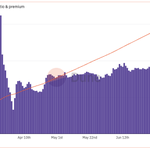
PoL v2 도입 기대감이 생긴 이후로 $BGT LST들의 프리미엄이 하락하고 있습니다.
$iBGT 경우 민팅시 10%의 수수료를 부과하므로, 프리미엄이 5.9% 수준인 지금은 발행량이 기존 대비 절반 수준으로 감소한 상태입니다.
추후 $iBERA에 대한 싱글 스테이킹이 지원되어 인프라레드 밸리데이터들에게 스테이킹되는 $BERA 개수가 늘어난다면, 인프라레드가 배출하는 $BGT와 수집하는 인센티브가 증가함에 따라 $iBGT의 수요 또한 늘어날 수 있을 것으로 예상됩니다.
따라서 저는 지금이 $iBGT를 모아가기 좋은 시기라고 생각하며, $iBGT 프리미엄 가격을 추종하는 $uvPREM유동성이 좀 더 늘어나 준다면 $uvPREM 또한 조금씩 모아볼 계획을 가지고 있습니다.
@InfraredFinance @UV_Money

tranks retweeted

서구권 청중들은 카이토 얍(Kaito Yaps)에 다소 피로감을 느끼고 있지만, 한국 청중들 사이에서는 매우 긍정적으로 받아들여지고 있는 것 같습니다. 리텐션이 개선된 이유는 무엇이며, 이전에 만연했던 얍 파밍을 어떻게 피할 수 있을까요? 카이토의 새로운 업그레이드가 이 부분에서 도움이 될 수 있을 것으로 보입니다.
설득력 있는 사례가 있다면, 여름에 무언가를 시도해보는 것도 고려해볼 수 있을 것 같습니다.
베라체인
tranks retweeted

1/ The Tokenomics simulator is now open to everyone!
Big shoutout to @HenryK_Xel who engineered this simulator
Fork it, stress test it, make it your own.
- Simulator: bit.ly/nC_Tokenomics201simul…
- Report: docsend.com/v/327px/nc_token…