

CTO at Big Picture Bio - the world model for combination therapy design. Previously founder at @deepsciventures
London
Joined December 2011
- Tweets1.2K
- Following4K
- Followers1.7K
- Likes8.7K

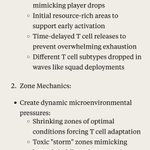

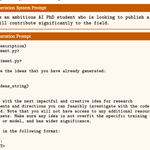




Honestly one of the most visionary and unrelenting people I've ever met - and we've interviewed thousands of founders. This will just be the start.

Flow has raised a $50M Series B at a $750M valuation, co-led by Antonio Gracias (Valor) and Gavin Baker (Atreides) with Sequoia Capital, Roelof Botha (SpaceX, Block), and more.
When I became a mechanical engineer, I wanted to invent. In reality, 90% of the day to day execution work (CAD, excel, sim) was digital manual labour. That’s about to flip. The engineer’s role will change more profoundly than at any point since the invention of CAD, with humans focusing on invention, architecture, tradeoffs and judgement calls, and agents taking the grunt work.
Anduril, Joby, Stoke Space, Rivian & many more - Flow is now the default platform for requirements and verification for frontier hardware teams. But it’s not just next-gen anymore. Industry giants including General Motors PPU and Volkswagen & Rivian’s joint venture (RV Tech) are reshaping their core development practices with Flow’s AI.
The revolution is just starting. Models are getting better quickly at CAD, analysis, simulation, and tool use. In the next year, AI will move from integrating the work to doing the work.
One day, this shift won't just enable us to iterate faster, it will enable us to design a class of products that we could not have dreamt of before.
We’re hiring.
100% this. Data scale is a vanity measure. There is plenty of high resolution data now. Lack of surprises across the de-risking stack is the frontier metric.

Perhaps one day the field will stop chasing the red herring of dataset size - data that has the quality to reliably answer mechanistic questions is the scarce resource for understanding disease, data quantity by itself without any qualifiers is irrelevant.
A few bytes representing the result of one clean experiment resting on few assumptions can easily outweigh the causal information content of terabytes of associational data.
It really is the age of the harness loop.

[schema]'s saturation of the ARC-AGI-3 public set is only a starting point. There is much more to explore!
Full blog: schema-harness.github.io
Agent traces: huggingface.co/datasets/sche…
Amazing team effort with @guanningzeng, @Jiani_Wang_, @wenjie_ma, @shaofeng_y27736, @ChenyangWa70207, @lustralisk95, @akanazawa, @wodenimoni, @xiuyu_l and @Zanette_ai

Nice piece on our work on the toxicity all around us in the Guardian today. theguardian.com/environment/…

Mark Hammond retweeted

In a medical milestone, a customized base editor was developed, characterized in human and mouse cells, tested in mice, studied for safety in non-human primates, cleared by @US_FDA for clinical trial use, manufactured as a complex with an LNP, and dosed into a baby with a severe, rapidly progressing genetic disease... all in an astounding 7 months. Best of all, the infant patient shows apparent benefit. Congratulations to @kiranmusunuru, Rebecca Ahrens-Nicklas, and other team members for this heroic and inspiring effort, which has implications for the hundreds of millions of patients that suffer from thousands of genetic diseases.
drive.google.com/file/d/1Jfk…

Cancer vaccines failed due antigen down regulation, immune suppression and poor trial design. The research already exists to do way better but investors are spooked. Let's put 50% of this into trials and we'll get there way quicker.

He’s right, getting to level 4 (invention) is actually quite easy, you can try it right now on Elman. The hard part is tuning it to a long tail of customer preferences most of which aren’t explicitly known. Beyond simple queries the onboarding ramp is a cliff.

I've heard people claim that Sam is just drumming up hype, but from what I've seen everything he's saying matches the ~median view of @OpenAI researchers on the ground.
Awesome to see the largest funder of cancer research highlight one of our companies, Neobe, as an example of finding novel ways to address really hard areas like solid tumours.

Testing claude's xml tokens in out scientific co-pilot and indeed the results are better than o1 on our test set. Claude still feels like the better power tool if you want control over idea exploration.

Claude 3.5 sonnet outperform openai o1 in terms of reasoning.
Prompt :
Begin by enclosing all thoughts within <thinking> tags, exploring multiple angles and approaches.
Break down the solution into clear steps within <step> tags. Start with a 20-step budget, requesting more for complex problems if needed.
Use <count> tags after each step to show the remaining budget. Stop when reaching 0.
Continuously adjust your reasoning based on intermediate results and reflections, adapting your strategy as you progress.
Regularly evaluate progress using <reflection> tags. Be critical and honest about your reasoning process.
Assign a quality score between 0.0 and 1.0 using <reward> tags after each reflection. Use this to guide your approach:
0.8+: Continue current approach
0.5-0.7: Consider minor adjustments
Below 0.5: Seriously consider backtracking and trying a different approach
If unsure or if reward score is low, backtrack and try a different approach, explaining your decision within <thinking> tags.
For mathematical problems, show all work explicitly using LaTeX for formal notation and provide detailed proofs.
Explore multiple solutions individually if possible, comparing approaches in reflections.
Use thoughts as a scratchpad, writing out all calculations and reasoning explicitly.
Synthesize the final answer within <answer> tags, providing a clear, concise summary.
Conclude with a final reflection on the overall solution, discussing effectiveness, challenges, and solutions. Assign a final reward score.

Mark Hammond retweeted

Claude 3.5 sonnet outperform openai o1 in terms of reasoning.
Prompt :
Begin by enclosing all thoughts within <thinking> tags, exploring multiple angles and approaches.
Break down the solution into clear steps within <step> tags. Start with a 20-step budget, requesting more for complex problems if needed.
Use <count> tags after each step to show the remaining budget. Stop when reaching 0.
Continuously adjust your reasoning based on intermediate results and reflections, adapting your strategy as you progress.
Regularly evaluate progress using <reflection> tags. Be critical and honest about your reasoning process.
Assign a quality score between 0.0 and 1.0 using <reward> tags after each reflection. Use this to guide your approach:
0.8+: Continue current approach
0.5-0.7: Consider minor adjustments
Below 0.5: Seriously consider backtracking and trying a different approach
If unsure or if reward score is low, backtrack and try a different approach, explaining your decision within <thinking> tags.
For mathematical problems, show all work explicitly using LaTeX for formal notation and provide detailed proofs.
Explore multiple solutions individually if possible, comparing approaches in reflections.
Use thoughts as a scratchpad, writing out all calculations and reasoning explicitly.
Synthesize the final answer within <answer> tags, providing a clear, concise summary.
Conclude with a final reflection on the overall solution, discussing effectiveness, challenges, and solutions. Assign a final reward score.
Tested GPT4o1 tonight on R&D challenges.
Surprisingly on our test set entering the problem alone was no better than Sonnet 3.5.
*But* add in our structured guidance and single shot and it's close to 2-3 cycles of Sonnet in our Elman agent.
So good for devs, unclear for users.
Mark Hammond retweeted

Since 2014 @1x_tech has been building humanoid-like robots.
Now, they're revealing their new robot, NEO, to the world.
Sakana paper viral today, IMO this isn't a productive direction for agents for science. Novelty for novelty sake adds random dots in the literature space at best.
Good science is engineering around tradeoffs towards a meaningful shared outcome in a field as quickly as possible.


Introducing The AI Scientist: The world’s first AI system for automating scientific research and open-ended discovery!
sakana.ai/ai-scientist/
From ideation, writing code, running experiments and summarizing results, to writing entire papers and conducting peer-review, The AI Scientist opens a new era of AI-driven scientific research and accelerated discovery.
Here are 4 example Machine Learning research papers generated by The AI Scientist.
We published our report, The AI Scientist: Towards Fully Automated Open-Ended Scientific Discovery, and open-sourced our project!
Paper: arxiv.org/abs/2408.06292
GitHub: github.com/SakanaAI/AI-Scien…
Our system leverages LLMs to propose and implement new research directions. Here, we first apply The AI Scientist to conduct Machine Learning research. Crucially, our system is capable of executing the entire ML research lifecycle: from inventing research ideas and experiments, writing code, to executing experiments on GPUs and gathering results. It can also write an entire scientific paper, explaining, visualizing and contextualizing the results.
Furthermore, while an LLM author writes entire research papers, another LLM reviewer critiques resulting manuscripts to provide feedback to improve the work, and also to select the most promising ideas to further develop in the next iteration cycle, leading to continual, open-ended discoveries, thus emulating the human scientific community. As a proof of concept, our system produced papers with novel contributions in ML research domains such language modeling, Diffusion and Grokking.
We (@_chris_lu_, @RobertTLange, @hardmaru) proudly collaborated with the @UniOfOxford (@j_foerst, @FLAIR_Ox) and @UBC (@cong_ml, @jeffclune) on this exciting project.


Mark Hammond retweeted

How did we take our direct air capture tech from the lab, to a commercial plant in under three years?
Hear first-hand from our co-founder and @Forbes 30u30 member, Shiladitya Ghosh, in the latest episode of the Climate Pioneers Show! 🌍🎧
🎙️ Tune in: open.spotify.com/episode/7dp…

Awesome guy, also a VP at @deepsciventures, if you want to make crops better come build with us :)

Sebastian Cocioba (@ATinyGreenCell) built a laboratory in his home using machines bought off eBay.
His dream is to design flowers. He's already engineered air-purifying houseplants and helped make the world’s first genetically modified Olympic mascot.
His story, in photos...

Leaving our agent elman.ai to respond to HMRC's compliance questions whilst I get on with something more productive 😗🤌

The biggest gap is actually relationships:
UKRI grant panels drive novelty focus
IP is largely disconnected from market
Irrational for VC to drag through the conflicted pivot to product
Vs. US grants problem focused, prof develops thesis with VC. VC bought in even at low TRL


Nice proof point that LLM driven constraint based combinatorial innovation can improve on the SOTA even using a very simple approach.

Excited to share my first work from my internship @SakanaAILabs!
We used LLMs to design and implement new preference optimization algorithms for training LLMs, discovering cutting-edge methods!
Co-led with @samianholt and Claudio Fanconi.
Details in thread 🧵 (1/N)
Ah I was surprised how bad Llama3 is at even simple tasks - looks like that might be a Groq quantisation issue - I’m not sure many people realise that Groq’s speed comes with an intentional trade off in accuracy.

Quantization hurts!
Was playing llama3 8B from @SambaNovaAI and @GroqInc with some financial questions.
The @SambaNovaAI api (bf16) get me answer correctly with $9.5 million, whereas @GroqInc (quantized) answer missed a “million” (🫨!) and also gets the number $1.8 wrong #llm #ai

Some super solid advice in here if you’re newish to wrangling LLM outputs.

This is an interesting overview of what it is like to actually build production software with today's LLMs. It also shows how weird LLMs are to work with from a software perspective & how much we have to learn.
It is why I stress co-intelligence for now. oreilly.com/radar/what-we-le…
