

Lecturer @hslu, Computer Science and Information Technology // Former @CSS_ETHZurich/@ETH, @ECFR, @Pacificforum // all cyber op flavors, IW, CEMA, space 🃔
Zurich (Switzerland)
Joined October 2013
- Tweets11.2K
- Following769
- Followers2.2K
- Likes4.3K



Pinned Tweet
My latest for @lawfare on the "Cyber Corps: Ukraine's least understood cyber actor."
"By the summer of 2024, the Ukrainian military intelligence service (GUR) was one of the closest-watched actors in the Russia-Ukraine war. News outlets reported extensively about the service’s maritime drone campaign against Russia’s Black Sea fleet and drone strikes against Moscow’s strategic early-warning radar network. At the same time, the GUR had begun to self-attribute its offensive cyber operations, an unusual departure from the traditional secrecy of other intelligence services. Yet, on July 1, 2024, another development connected to the GUR passed almost unnoticed. A small band of hacktivists calling themselves the Cyber Corps (Кіберкорпус) quietly appeared on Telegram, claiming the group “was created by officers of the GUR of the Ministry of Defense.”
Whether the Cyber Corps is genuinely affiliated with the Ukrainian military intelligence service cannot be answered definitively. But a series of indicators and circumstantial evidence suggest some form of organizational relationship. To date, the GUR has neither endorsed the Cyber Corps’ claim that GUR officers created it, nor repudiated the corps’ claims taking credit for cyber operations the GUR officially conducted. Curiously, the Cyber Corps’ distributed denial-of-service (DDoS) activities also increasingly overlapped with, and ultimately led to the absorption of, parts of the IT Army of Ukraine."
Link: lawfaremedia.org/article/the…

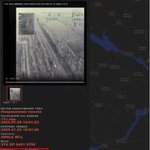
Just leaving this October 28, 2026, capture of the Cyber Corps' all-time leaderboard here for another write-up.


Reuters: "Pentagon treating military base freezer malfunctions as suspected cyberattack, officials say" reuters.com/technology/penta…

Stefan Soesanto retweeted

#ESETresearch released the latest #ESETAPTActivityReport (Apr–Sep 2026): 🇧🇾 Belarus-aligned APT groups are converging with Russia'’s war priorities; for the first time, we documented a destructive cyberattack by a Belarus-aligned group in 🇺🇦 Ukraine web-assets.esetstatic.com/wl… 1/3


Stefan Soesanto retweeted

Міжнародна розвідувальна спільнота InformNapalm у співпраці з аналітичною групою Ukrainian Militant ексклюзивно публікує результати CYBINT-дослідження масивів даних, здобутих хактивістами групи @256CyberAssault.
Серед отриманих для дослідження матеріалів — документи, особисте і службове листування, фотографії та інші файли, пов’язані з діяльністю співробітників російської Служби зовнішньої розвідки (рос. Служба внешней разведки, СВР). Аналіз цих даних допоміг встановити зв’язок між особами, причетними до російської зовнішньої розвідки, та підготовкою публічних акцій у Будапешті на підтримку будівництва атомної електростанції «Пакш-2», яке здійснюється за участі російської державної корпорації «Росатом».
«Активка» для Росатома: слід СВР у підготовці мітингу за «Пакш-2» в Угорщині 🇭🇺
informnapalm.org/ua/aktyvka-…
Запрошуємо читати та поширювати це дослідження українською, пізніше на сайті також будуть доступні інші мовні версії цього матеріалу.
🤣😂🤣

Sorry everyone... We're announcing a 0-Day vuln in QUIC that allows anyone to remotely turn off a server running these libraries. I swear we didn't plan this.
foxio.io/blog/header-accordi…

Stefan Soesanto retweeted

Dozens of court hearings in Russia were disrupted due to “technical malfunctions” after strikes by Ukraine’s armed forces on Yandex data centers.
meduza.io/en/news/2026/10/16…

Stefan Soesanto retweeted

Scoop: The US has begun the process of selecting leaders for its private-sector offensive cyber program, sources say. But questions remain about how companies will be paid and who bears responsibility if operations go wrong.
nextgov.com/cybersecurity/20…

Stefan Soesanto retweeted

Turns out there was a cyber attack on a publicly exposed Danfoss refrigerator controller in Russia in February 2022, just after the start of the war. Hackers switched temp from −24 to +30°C but damage was avoided
HT @ElenaChernenko for the find
1prime.ru/20220228/836207752…

There are countless targets one can hit in cyberspace in peacetime to create discernible effects on an adversary's economy and inflict harm on its population.
Imagine if we transpose that same targeting approach into wartime. We would never run out of targets to hit. Never run out of targets that are vulnerable. Never run out of targets to create impact.
There are three fundamental constraints in the current architecture of stability in cyberspace that stand in the way of this kind of warfighting. Our laws, our morals, and our current capacities. The first two are highly likely to come under intense strain - and maybe even crumble - during a major conflict. Meanwhile, existing capabilities will likely prove insufficient and unable to scale fast enough to exploit the full range of targeting opportunities.
The question that militaries and intelligence services everywhere will have to contend with is whether they are willing to fight a major war in cyberspace with the ferocity, violence, and scale necessary for survival, or whether they believe in a better version of themselves and their adversaries.

Hundreds of French supermarkets have been hit by a cyber-attack that caused their fridges and freezers to heat up. Read more: bbc.in/4i0Dy77
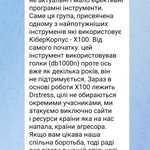
In April 2026, the IT Army of Ukraine faced an internal crisis over unexplained and potentially unlawful targets appearing in its DDoS targeting lists.
Tool developers demanded an audit. Operations were temporarily suspended. Soon after, prominent IT Army DDoS contributors and tool developers migrated to the Cyber Corps, a little-known group with apparent ties to Ukraine’s military intelligence service (GUR).
In my latest article for @lawfare , I take a closer look at the Cyber Corps: Where did it come from? What operations has it conducted? And what evidence links it to Ukraine’s military intelligence service?
The findings raise broader questions about the relationship between volunteers, intelligence services, and the control of cyber operations during armed conflict.
lawfaremedia.org/article/the…
Maybe of interest to others is also the fact that the IT Army of Ukraine's tooling/infrastructure was compromised:
"An internal crisis within the IT Army in April 2026 caused the user migration to the Cyber Corps. It is unclear what happened in late April as the IT Army administrators deleted most of the relevant Telegram messages. The remaining evidence points to a major disagreement between the group’s tool developers. In one now-deleted announcement, an IT Army administrator stated that “over the past few days, we have been forced to investigate a possible compromise of part of our infrastructure. At this time, we still have serious concerns regarding the security and transparency of our current operating environment. Therefore, we ask you to temporarily stop your devices and servers until a separate announcement from us.”
As part of the investigation, several developers demanded a full audit of the IT Army’s tooling and infrastructure. This demand was initially rejected due to concerns that such an audit might expose sensitive information and user data that could potentially lead to arrests by Ukrainian law enforcement. The dispute escalated when one administrator began banning people from the Telegram channel. On April 25, the official IT Army administrator account acknowledged that “the cause of the crisis was the refusal to allow even a minimal audit of the targets, after which the community was placed on pause. The community’s operations have now resumed after uninterrupted access for the audit was obtained.” The statement suggests that some aspect of the IT Army’s centrally managed DDoS target update mechanism was potentially interfered with.
Three days later, the IT Army proposed developing a new open-source tool that would allow transparent auditing. On May 11, OleksandrBlack released his CyberOwl DDoS tool, and two weeks later, the IT Army published its new community-developed DDoS framework, known as the BaseTool.
A longer post by the official IT Army administrator dated May 25 sheds more light on a possible GUR connection. According to the account, the dispute began over the discovery of several targets in their DDoS list whose strategic objective was either unclear or potentially unlawful, prompting the internal team to demand a full audit of the target designation pipeline. When access was eventually granted, the group around OleksandrBlack “took away all the tools, paralyzed our work here, and recruited volunteers from here while posing as intelligence agencies.” The post went on to question what kind of Ukrainian intelligence agency would be interested in shutting down the work of the IT Army—which then-Minister of Defense Mykhailo Fedorov created—and why the group in question was not officially recognized by any of the intelligence services. The post also raised concerns that IT Army volunteers could face criminal charges elsewhere in Europe if they unknowingly participate in DDoS attacks against unlawful targets."
