





iraw retweeted

There are two types of people. Those who create & do things (Jensen Huang), and those who play an imitative role in a performative game &, on the occasion, execute things.
But Markets figured it out.
iraw retweeted

Buy when the VIX spikes, not when the headlines clear
A sharp rise in the VIX has repeatedly been followed by solid equity returns. The pattern is clear enough that it is worth revisiting after the latest episode.
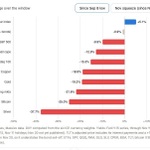
On 20 November the VIX jumped 9.29 points to 37.73. The S&P 500 fell 3.43 per cent and the Nasdaq 100 dropped 5.95 per cent. Since the start of 1996 there have been 90 sessions in which the VIX rose by more than five points in a single day.
In the periods that followed those days, the median forward return for the S&P 500 was 5.62 per cent over three months, 10.86 per cent over six months and 19.87 per cent over one year. The Nasdaq 100 recorded corresponding median gains of 8.40 per cent, 16.66 per cent and 31.14 per cent. Returns are measured from the close on the day of the spike.
The current volatility term structure reinforces the contrary signal. Spot VIX is above the levels priced three and six months ahead, indicating that investors are paying a premium for near-term protection. Fear is concentrated in the present.
A violent sell-off changes quoted prices immediately. It does not erase the customers, competitive positions or cash-generation capacity of sound businesses. The practical implication is selective: quality and diversified equity exposure have historically been the assets that recovered most reliably once the immediate panic subsided.
Markets rarely present attractive entry points under calm headlines. The more common setting is falling prices and elevated demand for protection. The historical record after large daily VIX increases shows that those moments have, on average, rewarded investors who were prepared to act while others were still focused on the risks that had already materialised.

iraw retweeted

The crash has NOTHING to do with AI:
Commodities are selling off alongside equities, and the main driver is the dollar. A fast move higher in the dollar pulls liquidity out of the global system. Dollar debt costs more to service, financial conditions tighten, and funds have to raise cash and cut leverage by selling whatever is liquid.
Leverage levels say little about timing. They say a lot about how much forced selling can follow once prices turn. U.S. margin debt is around $1.45 trillion, roughly 58% of currency in circulation and 6.2% of M2.
Gold gets sold in this phase too. It's liquid, so it's one of the first things funds sell to meet margin calls and cover losses elsewhere.
The longer the squeeze runs, the harder it is for the U.S. to carry its debt, because the system has come to depend on negative real rates. If something breaks, central banks will likely respond with rate cuts and more liquidity. Real rates falling back below zero, with debasement concerns returning, is the setup where gold can move sharply higher after the initial selling.
The same liquidity squeeze that's hurting us now is creating the conditions for a massive rally.
iraw retweeted

1. LLMs are just stochastic parrots.
2. Fine, articulate parrots. Still just predicting the next word.
3. They can’t even multiply.
4. Fine, they can multiply. Try olympiad math.
5. Fine, they can compete. Try winning gold.
6. Fine, gold. Someone already knew the answers.
7. Fine, an open problem. Try a Millennium Prize Problem.
8. Fine, but it wasn’t Riemann.
9. Fine, Riemann. but did it understand the proof?
10…
iraw retweeted
Buy when there is blood in the streets!
Extreme fear is setting up the next leg higher
The S&P 500 has fallen 11.6% from its October high in seven straight sessions. Friday’s close sat 4.1 standard deviations below the 50-day average, the most oversold reading since August 2015. The Arms Index posted back-to-back capitulation readings. This is what extreme fear looks like, and extreme fear has historically marked buying opportunities, not the start of bear markets.
The market closed the week at 6,910, right on 6,900, the key Fibonacci support level of this year’s rally. Fast V-shaped recoveries form within days of capitulation, and corrections that hold support don’t become bear markets. From 6,900, the strongest past fast-V recoveries delivered 12-month gains of up to 38%, which puts 9,500 within reach. The timing adds to the case.
The market is entering the sweet spot of the four-year presidential cycle, and the S&P has been higher a year after every midterm election since 1950.
Add a Fed pivot, and 10,000 is still in play. S&P 500 earnings will reach $450 in 2027, so the only argument is over the multiple. With the energy crisis passing, the 10-year Treasury yield will head to 4%, and the Greenspan Fed model then implies a multiple of 25.
Even 22 times earnings gets the index to 10,000. Nothing has changed except the level of fear. There is no recession and no financial crisis, and investors will come to see AI not as a three-year buildout but as something like the railroads.
Fear flips to greed, as it did in 1998. After the Asian currency crisis and the Russia and LTCM shock, the S&P 500 fell 19% from its July peak. The Fed cut three times, the index regained its high by late November, and a year after the October low it was up 39%. When the Fed has eased after a no-recession sell-off, as in 1998, 2019 and 2025, the median 12-month gain has been 33.7%.
Many cite the 1990s to argue that the supply of AI capacity is outstripping demand. That’s wrong. The real lesson of the 1990s is the one Alan Greenspan drew: productivity gains let an economy run hot without stoking inflation. In 1995, after the Fed pivoted from hiking to easing with no recession, the S&P 500 gained 34.1%, the best pre-election year since 1950.
Leveraged products now amplify every swing between fear and greed, and this week’s selling was fear at full volume. The old saying is to buy when there is blood in the streets. Today there is no recession and no financial crisis, the energy shock is ending, and productivity and earnings are growing strongly. A Fed pivot is coming, and the market is cheap.
That’s the time to buy.

iraw retweeted
AI Is a Railroad, Not a Telecom Bust
Wall Street is nervous. It treats AI as a typical cycle, not secular growth, and uses the 1990s telecom bust as its guide instead of the railroads.
Wrong history. The railroads ran for 60 years because the build matched the traffic. The only question is whether demand for compute, memory and power is real, and whether it has peaked. It is real, and it hasn’t peaked.
Nvidia beat on every line. Revenue hit $ 115.8 billion, up 103%. It raised its fiscal 2028 growth target to 75%. Demand still exceeds supply. On one major platform, token volume is up 25 times since January while prices fell as much as 70%.
Even the forecasts the bears cite show AI chip spending rising from $ 392 billion this year to $ 758 billion in 2028. Memory stays tight. Power is short. That’s a funding problem, not a demand problem. Capital discipline shortens the line. It doesn’t empty the restaurant.
Supply is disciplined too. TSMC is adding about 20% at its leading nodes. There is no flood of capacity. Productivity grew 3.6% last quarter, refuting bears who say AI will never deliver.
Data centres are now political. Democrats swept the midterms, and Gina Hinojosa won Texas. Her pause on new permits isn’t a ban, and approved projects will get built. If Texas slows the queue, Alabama or Florida will take the overflow.
The risk is Democrats returning to the extreme progressive playbook they ran on climate change, sacrificing jobs and tax revenue to virtue signalling. Republicans lost because America First wasn’t front and centre and Iran was framed as an affordability crisis, not because voters turned on growth.
This is national security. AI is the new arms race, and compute is its ammunition. Every data centre blocked in America is capacity handed to Beijing.
Then there’s the Fed, Mission Creep. Its talking heads weighed in on AI, just as they did on climate change and crypto before abandoning both. A Fed that can’t put theory into practice or read the data objectively has no business ruling on AI. A rogue Fed about to make a generational policy mistake needs structural change and needs to stay in its lane.
The cycle isn’t over. It’s slower, smoother and longer.


iraw retweeted

Ok I do have a view on NVIDIA without Jensen.
I’ll tell you the real reason $NVDA will likely fail without him and why the frontier labs and hyperscalers are the biggest winners. (Elon has been in a really good mood recently. Have you noticed?)
The biggest threat to NVIDIA is its own customers, the frontier labs. NVIDIA has to become a frontier lab faster than frontier labs are becoming chip companies. And with Jensen out, they likely won't maintain the momentum to get there.
With recursive self-improvement (RSI), every frontier lab and hyperscaler must become a chip company or lose the AI race. It's that simple, and they've all laid the groundwork (Google TPUs, OpenAI and Meta building custom ASICs with Broadcom, Anthropic building an in-house silicon team, and SpaceX/xAI/Tesla building Terafab).
That's because software-only RSI has clear physical limits. Software can reduce how much computation and data movement a model needs, but it can't change the chip's physical bandwidth, memory capacity, or interconnect. Custom silicon gives labs another way to improve performance: designing the memory system, compute, and networking around their own workloads.
To get the real compounding effect of RSI, you have to co-design the model and the silicon so it becomes a two-way feedback loop: smarter models design better custom chips, and those chips train and run the next model faster. You can't do that on off-the-shelf NVIDIA GPUs because you get zero proprietary edge buying the same chip as everyone else, and getting your next-gen architecture into NVIDIA's silicon means sharing your roadmap with them years before tape-out (which they then sell to your rivals). Plus, AI now automates writing compilers and porting CUDA kernels to other chips, which kills the CUDA moat.
Jensen argued custom ASICs aren't more cost-efficient than GPUs because models change too fast for fixed hardware, and partners like Broadcom charge fat margins too. But hardware doesn't fall behind model changes when AI co-designs the next model and chip together instead of humans designing them separately (which Google and OpenAI are already doing). And labs aren't building custom silicon just to save on NVIDIA's 75%+ gross margins. Closing that hardware-software loop is the main goal, though the cost savings are still massive since RSI requires 24/7 internal inference where custom ASICs are way cheaper and more power-efficient than general-purpose GPUs.
That's why NVIDIA has been trying so hard to become a frontier open-weight lab, buying Groq (fast inference IP), Poolside + Nemotron (internal coding models), and Hugging Face (distribution). If closed labs win, enterprises just call their APIs running on the labs' own custom silicon and NVIDIA gets cut out. Subsidizing free open-weight models is the only way to make enterprises buy or rent NVIDIA GPUs to run the models themselves.
With Jensen gone, it's unclear if the Hugging Face deal even survives DOJ approval (can a GPU company own the whole stack?), and a non-founder is unlikely to take the massive risks needed to become a frontier lab: putting billions of capex into internal clusters and free open-weight models instead of just selling GPUs, while competing directly with its own biggest customers $GOOG, $META, $SPCX, $ANT, $MSFT

No view on $NVDA but If you've been buying it during this sell-off but didn't bother to buy in march or much of last year when the stock traded lower, you'll have to explain how the fundamentals are better today than they were then.


I think the dollar’s sharp rise could explain a lot of the selling we’re seeing. So much debt around the world is owed in dollars. When the dollar goes up, that debt becomes harder to pay for people earning in other currencies. They need more cash, and selling investments is often the quickest way to get it.
That could be why everything seems to be falling together. I don’t think investors suddenly decided copper, tech stocks, and gold were all bad investments in the same week. Some may simply be selling whatever they can. When you need cash urgently, how easily you can sell something matters more than what you think it’s worth.
Borrowed money probably makes things worse. U.S. margin debt is around $1.45 trillion—about 58% of the currency in circulation and 6.2% of M2, a broader measure of money in the economy. That doesn’t tell us when the market will fall, but it shows how much borrowing could add to the selling. If you bought stocks with borrowed money and prices drop far enough, your broker can demand more cash or sell your shares. That pushes prices down further and can force other investors to sell too.
Gold falling might seem strange because it’s supposed to be a safe place during trouble. But that may be exactly why people are selling it: it had held up, and it’s easy to turn into cash. If you get a margin call, you may have to sell something you’d rather keep.
If that’s what’s happening, things getting cheap may not be enough to stop the selling. We may need the dollar to settle down and the pressure to raise cash to ease. Another possibility is that something breaks badly enough for the Fed to step in.
With so much government debt, there’s also pressure to keep borrowing costs down. If the Fed cuts rates and adds money to the system, interest rates could fall below inflation, which has often helped gold. We saw something similar in 2008: gold initially dropped about 30%, then rose from around $700 to $1,900 over the next three years.
So the same pressure hurting gold now could help set up its next rise. I could be wrong, especially about the timing, but that’s how I’m making sense of it right now.
Any ways, many perma bears always tries to find alt-answers like `everyone was buying` , `seasonality`, `parabolic highs`. You can spot these people when they call for such state for year or more. A broken clock is right twice a day.
teapaw.org/EWFTaha/status/2124159…
unavailable
99
iraw retweeted

Nvidia dispelled fears of the AI trade slowing with one simple number: FY28 revenue growth is guided to be 75%, up from 70%, despite a higher FY27 base. Rubin’s first quarter is nearly double Blackwell’s at $20B vs $11B.
But let’s talk about what’s on everyone’s minds – is the AI trade over? Or perhaps equally concerning, is AI slowing to the point the glory years are behind us?
Psychology is a major component of successful investing, and there is not a more important time to protect your mindset than when valuations are at a multi-year low.
Case in point, you’d have to go back nearly a decade to find $NVDA trading at these multiples; therefore, it’s reasonable to assume that many years could go by before investors see some of these valuations again.
With that in mind, below are five reasons we believe the current panic may be presenting investors with a rare buying opportunity, rather than signaling the end of the AI trade.
io-fund.com/ai-stocks/nvidia…

iraw retweeted

June 18: 🇺🇸Trump buys up to $500K in Boeing stock. Same day Boeing gets $880M US Navy contract.
June 24: 🇺🇸Trump buys up to $250K in Palantir stock. Same day Palantir gets $45.8M government contract.
In any functioning democracy, this would be called massive corruption and he would have faced at least 2 years in jail.
iraw retweeted

BREAKING: A source close to Iranian officials says Tehran has documented a pattern of oil market manipulation tied to Axios reports and Trump administration insiders, including evidence of a $9 billion insider trading operation linked to Jared Kushner and Steve Witkoff.
Some of the documented timeline from the $9 billion insider profit:
Between April and May 2026, a series of suspiciously timed trades in oil futures markets preceded major Iran war announcements—each tied to reporting by Axios.
On March 23, approximately $500–580 million in shorts were placed 15 minutes before Trump announced he was postponing strikes on Iran. Oil dropped.
On April 7, roughly $950–960 million in shorts were placed hours before Trump announced a two-week ceasefire with Iran. Oil fell around 15 percent.
On April 17, around $760 million in shorts were placed 20 minutes before Iran's foreign minister announced the reopening of the Strait of Hormuz. Oil dropped.
On April 21, approximately $430 million in shorts were placed 15 minutes before Trump extended the ceasefire. Oil dropped again.
On May 6, nearly $920 million to $1.7 billion in crude oil shorts were placed approximately 70 minutes before an Axios scoop claimed the U.S. and Iran were near a "14-point agreement." Oil dropped 12 percent. Traders made an estimated $125 million. Iran called the report "the Americans' wish list."
Previously, a senior Iranian official told investigative outlet Drop Site News that Tehran privately warned JD Vance during Switzerland talks that Jared Kushner and Steve Witkoff were "abusing" negotiations—"more interested in exploiting insider knowledge to profit in financial markets than reaching a deal."


iraw retweeted
🇺🇸 If McConnell's "proof of life" photo wasn't enough to convince you he's doing fine, how do you explain this video? 🤔
Clearly the man is healthy as a horse.
Writer: Michael
iraw retweeted

Introducing Sakana Fugu: A full multi-agent orchestration system accessible via a single model API.
Our ‘Fugu Ultra’ model matches the performance of Fable and Mythos, delivering frontier capability without the risk of export controls.
Try it: sakana.ai/fugu 🐡