

Ateneista. Asturiano en Madrid. Este perfil puede no representarme. CDO en @SpainmediaEs, @Forbes_es, @TapasMagazine, @Highxtar_, @NautikMagazine...
Asturiano en Madrid
Joined March 2010
- Tweets27.9K
- Following2.1K
- Followers1.3K
- Likes87.1K








Esto no tiene ningún sentido con lo que ha dicho Mbappé...

Desde LALIGA lamentamos profundamente las declaraciones de Kylian Mbappé que han causado malestar y ofensa en China. Entendemos el daño ocasionado y, en nombre de LALIGA, quiero trasladar nuestras sinceras disculpas al pueblo chino.
Durante muchos años hemos construido una relación de respeto, confianza y cooperación con China, sus autoridades, sus instituciones deportivas, sus operadores audiovisuales y millones de aficionados al fútbol español.
No podemos permitir que una actuación individual empañe esa relación ni perjudique a los más de 20 clubes de nuestras competiciones profesionales y a millones de aficionados chinos.
Estamos adoptando las medidas a nuestro alcance y trabajando directamente con nuestros socios e interlocutores en China para superar esta situación.
Nuestro compromiso con China, su pueblo y sus instituciones es firme. Una relación construida durante tantos años no puede quedar dañada por un episodio individual.
Readers added context they thought people might want to know
Contexto importante: Mao Zedong fue efectivamente un dictador.
es.wikipedia.org/wiki/Mao_Zedong
iS retweeted

Impresionante los resultados de este estudio científico. Explica muy bien por qué tanto estúpido termina dirigiendo una empresa, una ciudad o un país.
“Este artículo explica por qué los «idiotas seguros de sí mismos» dirigen el mundo.
(…)
Los incompetentes gozan de una certeza absoluta y cegadora. Su cerebro los protege de su propia ignorancia, permitiéndoles tomar la palabra antes que nadie, exigir autoridad y no cuestionar jamás sus propias decisiones.
(…)
La persona que más ruido hace en una sala es la que suele recibir ascensos, financiación y el uso del micrófono; no porque sepa lo que hace, sino porque es físicamente incapaz de percibir aquello que desconoce”.

This paper answers why confident idiots run the world.
Cornell University published a psychological paper that explains every terrible boss, every loud influencer, and every broken corporate hierarchy.
It’s called “Unskilled and Unaware of It.”
they tested participants across logic, grammar, and humor to measure the gap between actual performance and self-perception.
And the results are wild.
participants scoring in the bottom 12th percentile consistently believed they were operating in the 62nd percentile.
they were not lying. they were literally incapable of recognizing their own incompetence.
the paper revealed a brutal paradox:
the exact skills required to master a domain are the exact same skills required to accurately evaluate your own competence in that domain.
if you lack the skill, you inherently lack the cognitive capacity to realize you are failing.
this creates a dangerous systemic loop.
the incompetent are blessed with absolute, blinding certainty. their brain protects them from their own ignorance, allowing them to speak first, demand authority, and never second-guess their decisions.
meanwhile, the actual experts suffer the exact inverse.
top performers in the study consistently underestimated their rank. because a task was easy for them, they falsely assumed it was easy for everyone else.
they hesitate. they obsess over nuance. they assume they have nothing unique to add.
we are biologically wired to confuse confidence with competence.
the loudest person in the room gets promoted, gets funded, and gets the microphone, not because they know what they are doing, but because they are physically incapable of seeing what they don't.
the only defense mechanism is building systems that stop rewarding absolute certainty and start demanding proof of work.

iS retweeted

Sam Altman, CEO de OpenAI: "no encuentro palabras lo suficientemente dramáticas para describir el problema que se avecina" xatakamovil.com/movil-y-soci…

iS retweeted

How is the internet less private than in 2006, when the whole family shared one computer?
Back then, the internet was weird, personal, and all of ours.
So, we got your favorite meme legends back together to say it louder: What happened to the internet? 1/3
Patti Smith cuenta a Dua Lipa la emocionante sorpresa que vivió en Asturias: “A Fred le habría encantado” elpais.com/gente/2026-10-26/… a través de @el_pais

AstraZeneca informa un gran avance en el tratamiento del cáncer de estómago, con su fármaco experimental reduciendo el riesgo de muerte en un 53% en comparación con la quimioterapia en un ensayo de fase avanzada…

Lula logra una remontada histórica en Brasil y da la victoria a la izquierda frente al avance ultra de los Bolsonaro elpais.com/america/2026-10-2… vía @elpais_america

iS retweeted

Bill Gates says the next 20 years will be "as tumultuous a period as there's been in human history." bit.ly/3UGwBjM


iS retweeted
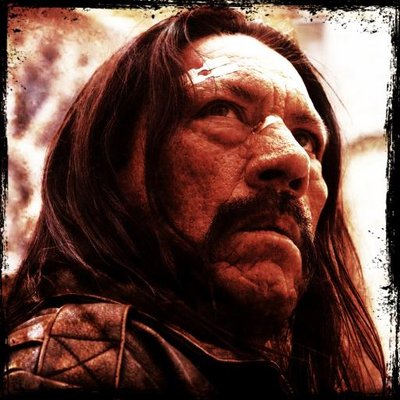
Had a great time on the Canary Islands for the new movie I'm in Juntas hasta la Muerte! What a beautiful place and wonderful people 🇪🇸 Thankful to God for the opportunity to travel, work is what I love.


iS retweeted

BREAKING: Japanese scientists developed a new cancer killer!
This molecule is palladium catalyst wrapped in blood protein, it detects excess carbon monoxide in cancer cells and triggers them to synthesize a toxic compound within the cancer, killing it.
This reaction keeps the normal cells safe, and has been tested on liver, breast, and other human cancer cells successfully. This is all proof of concept, but an exciting breakthrough!

iS retweeted

Most Western democracies have been hacked. Not with code. With institutional architecture. Let me show you how it works, using the most advanced example: the European Union.
First, how it works. Once every five years, you vote for a European Parliament that cannot even initiate legislation. The body that proposes laws is the Commission: 27 commissioners nobody elected, appointed after backroom bargaining between heads of state. Bills are then negotiated between the Commission, Parliament and Council in "trilogues", closed-door meetings where the real decisions get made. A law that will apply to 450 million people goes through corridors that 99.9% of them will never see.
Now look at who's in those corridors. Brussels has become the lobbying capital of the world: nearly 18,000 organizations on the transparency register, tens of thousands of lobbyists, more than 50 for every single MEP. And that's just the declared part. Add the revolving door: a former MEP only has to wait six months before becoming a lobbyist to the EU himself.
The real problem is distance. A national MP who votes for a law that ruins the farmers in his district runs into them at the market on Saturday. In Brussels, the decision-maker never meets the people who live with his decisions. But he meets lobbyists every day: at lunch, at cocktails, at conferences. So the system doesn't optimize for the wellbeing of the people. It optimizes for the interests of whoever is in the room. You don't even need corruption for that, incentives are enough. Although sometimes, as Qatargate showed, there's corruption too.
The result: the system has a structural incentive to accept things the people would never vote for.
Take Mercosur. Twenty-five years of negotiations. France votes against it in the Council in January 2026 and gets outvoted. To keep national parliaments from blocking it, the Commission splits the deal into two texts, including a trade agreement that only needs a vote in Brussels. The European Parliament itself writes, in black and white, that this split circumvents the right of national parliaments, and refers the deal to the EU Court of Justice. The Commission's response: it has been applying the agreement provisionally since May 1, 2026, without waiting for the Court's opinion. Farmers were protesting outside Parliament. They lost anyway.
And remember the one time the people were actually asked about Europe directly: in 2005, France and the Netherlands rejected the European Constitution. The text came back two years later as the Lisbon Treaty, ratified by parliaments. No more referendums.
But the worst of it is immigration. In 2015, relocation quotas were imposed by qualified majority on countries that had voted against them. Since June 12, 2026, the Pact on Migration and Asylum applies across the entire Union, with its "mandatory solidarity" mechanism: you take people in, or you pay. Not a single European people has ever been consulted directly on this, even though it's the issue that is transforming our societies most profoundly.
And this is where we have to talk about the most sophisticated piece of the machine: George Soros.
Soros understood before anyone else that you don't need to win elections if you shape the ecosystem around the people who make decisions. His network, the Open Society Foundations, describes itself as the largest private funder of advocacy groups in the world. In Brussels, it runs its own lobbying arm aimed at EU institutions, the Open Society European Policy Institute.
Here's what we know from internal documents leaked in 2016: a document titled "Reliable allies in the European Parliament" listed more than 200 MEPs. Strategy papers described building "inside-track groups" to caucus "internal allies" who could advance their goals in their daily work. Training sessions were organized for MEPs on how to counter so-called populist parties.
The mechanism is brutally elegant. Think tanks produce the "expertise". NGOs produce the "demand from civil society". Legal NGOs litigate in the courts. Funded media outlets produce the narrative. The Brussels decision-maker, cut off from the population, hears the same message from every direction and ends up believing that this is what people want.
And the craziest part: the institutions fund the loop themselves. Between 2021 and 2023, the EU paid around €7.4 billion to NGOs, and the European Court of Auditors found the use of that money insufficiently transparent. It even came out that the Commission had funded NGOs to lobby MEPs in favor of its own Green Deal legislation. The institution pays "civil society" to ask it to do what it already wanted to do.
All of this is legal. That's exactly what makes it a hack and not a crime. The system works exactly as designed, except nobody designed it for the people anymore.
The patch is simple to state and hard to impose: bring decisions back closer to the people who bear them, hold referendums on issues that change a civilization, create a mandatory register for every influence actor, NGOs included, with their funding sources, and shut the revolving door. Until that happens, European democracy will remain what it has become: a user interface sitting on top of a system that runs for someone else.
🤖 Made with AI

iS retweeted

Si yo fuera asturiana, viviera fuera de mi tierra y escuchara esto, me tiraría tres días llorando

Más que baja, bajón.
Preparen el paraguas.

Courtois, baja de última hora.
realmadrid.com/es-ES/noticia…


iS retweeted

España está viviendo una operación de intoxicación masiva. Iván Redondo funciona como operador político de Sánchez con la anuencia o la ignorancia de no pocos informadores @pablopombo elconfidencial.com/espana/cr…

iS retweeted

La alegría de Nacho Cases, exjugador del Sporting citado por Leonor en su discurso sobre Messi: “Te sientes como cuando marcabas un gol” lne.es/sporting/2026/10/24/a…
