

discretionary l/s generalist defy the odds
Joined July 2009
- Tweets17.8K
- Following1K
- Followers328
- Likes15K









essam retweeted

MGS4 depicts the next generation of proxy wars and war economies waged by unmanned weapons and PMCs. A future where parties do not fight, but are represented by drones, proxy soldiers and corporations. In this future, those who sell or rent weapons introduce SOPs to take full control of the battlefield. The concept of "arms laundering" will also emerge, which will allow the parties to escape from the SOPs. Also, by suppressing SOPs, the battlefield can be controlled.


essam retweeted

got a higher-paying job and immediately started making frivolous purchases #FancyPepperGrinder #ReallyNicePepperGrinder
essam retweeted


The benefits of abundant intelligence will accrue far outside of San Fransisco.
Spent the last year writing about capital, sovereignty, and the coming reordering of economic power.
THE COMMANDING HEIGHTS
Commanding-Heights.com

essam retweeted

The scale of the danger North Korea poses to crypto has become impossible to ignore.
This is the story of the investigators exposing North Korean operatives working inside the industry.
You think you know who your developer is.
But do you?
🎬 Introducing THE DEVELOPER.

we've had trump, big Druck and Elon shill the Hyperliquid trade. I wonder where the next incremental dollar can come from? (still Long HYPE btw)

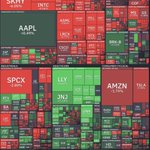
the trenches of nasdaqistan are hot

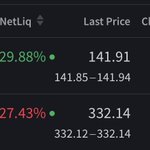
BREAKING: Intel stock, $INTC, crashes over -22% after reporting weaker than expected earnings.
Intel blamed weak earnings on "softness in the PC market."


entropy capital is diversifying from the AI trade. we like: victoria's secret, offshore drilling operators, a canadian space company, eli lilly, and ZCASH.
first canary that AI CapEx spend is peaking as ORCL forecasts it's spending will peak in FY29. ORCL is the only "neocloud" that can actually self-fund their growth via their legacy data business. Probably not great news for the semi's trade. other Neoclouds are bouncing off this news because mOmEntUm(?)
Oracle $ORCL is projecting a nearly $54B turnaround in annual free cash flow over 3 years
Now expects to turn FCF positive in the H2 of FY28 & generate at least $30B in FY29
Expects its massive AI data center spending to peak in FY27-FY28 before declining in FY29
By FY29, Oracle says its growth will be self-funded.


essam retweeted

There’s a really pronounced divide between people who are on the AI side of things and people who are on the biology side of things. Even among people working in AI, the divide persists based on where they’re focused.
The AI side, adherents of scaling laws and the bitter lesson, believe that AI getting better means AI being more capable of novel discoveries in medicine (that go beyond discovering new drugs in well understood targets or speeding up dry lab work etc).
The biology people think the idea of a bitter lesson in biology is kind of ridiculous and that regardless of AI’s capabilities it’s going to be at least 5-10 years until you could hope to reliably simulate human toxicology in silico (right now AI/ML can’t even reliably simulate in vivo studies like binding affinities or functional assays).
Even the most AI pilled of them, who will list all the areas that AI can reduce the time spent on various areas, don’t think the concept of AI discovering novel targets or generating new understanding of causal biology is realistic in the near term. Most, in fact, will readily characterize the assumption that even an “ASI” level model could find cures hidden in our current understanding (without expanding that understanding with significantly more biological data) as patently false.
This was a big part of why we wanted to experience it ourselves by using AI for a (very) small portion of what it can do in biology. It was both mind blowing and revealed some poignant insights into how different the problem of making AI better at something like coding is to the problems of biology.
Even if it unlocked the ability to generate new molecules at a stunning pace, its simulation (in silico) of binding only had 49% accuracy. And if we wanted to improve that, we’d need to feed it back the data from the lab - data that took about 30x as long to get as it took to generate the molecules. And these were tests in a test tube (turn of phrase), imagine how long it would take if we wanted to improve the model with data that required recruiting humans and monitoring their reactions.
Human biology is very complex, and adding a drug - especially a novel drug and doubly so for a novel drug acting on a novel mechanism - means mapping interactions that have nth-order-effects that we don’t have the data to predict. Virtual cells have made advancements enabled by AI, but the perturbations equate to a small fraction of the possible.
This is before you even get into curing disease, especially uniquely human diseases. Brain function involves cellular identities that are unique to humans, meaning animal studies are of little use.
How long does it take to understand what the side effects of chronic administration of a drug in humans are? AI can speed up analyzing the data, or designing the trial or even getting it approved…but it can’t make a 6 month trial complete in 3 months.
I think its important to point out that significant advancements can be made in AI that contribute to biology, while also being realistic about how much it speeds up something as complex as curing a specific cancer or diseases of the brain.