

farm kid turned PhD candidate in @kristyredhorse lab | NSF GRFP Fellow | #FGLI | 🏳️🌈 (he/him) | working on:🤰🏻🔬🫀🧬🐭 🧫
Stanford, CA
Joined March 2023
- Tweets53
- Following270
- Followers90
- Likes748




James Zwierzynski retweeted

If you’re interested in PIK3CA mutations and vascular anomalies, you won’t want to miss this one. A tour de force by my amazing team and collaborators. This has been an amazing journey together @aangulou @CarrerasIJC @icreacommunity @FundlaCaixa
nature.com/articles/s41586-0…

James Zwierzynski retweeted

Happy to share here our latest story on how Venousization enables angiogenesis in the absence of VEGFR signalling. nature.com/articles/s41586-0….

James Zwierzynski retweeted

Recruiting a postdoc to help establish my group with me at Fred Hutch Cancer Center in Seattle, early 2027. We'll develop data-driven methods with machine learning, genomics and statistical physics to study pressing questions in cancer biology! Please Repost :)
A wonderful past two weeks, presenting my work at the 10th Anniversary @HHMIJanelia / @embl Imaging Mouse Development Conference, submitting the DP5, and doing plenty of hiking after turning the big 3-0 and celebrating with a visit from my mom! Onto the best decade yet!


James Zwierzynski retweeted

The Koh Lab at Yale School of Medicine is hiring! We are recruiting motivated post-graduate associates, graduate students and post-doctoral fellows to join us on our exciting exploration of specialized bone marrow niches in craniofacial bones!
medicine.yale.edu/profile/bo…
Looking to join a collaborative team studying coronary artery development? Love taking pretty microscope images? The Red-Horse lab (@hhmi_science/@Stanford) is hiring for a senior scientist to research coronary & collateral artery development apply below!:
tinyurl.com/5d85xjze


James Zwierzynski retweeted

Why do guinea pigs have so many natural bypass arteries?
In our preprint, we use this ischemia-resistant mammal + in vivo Perturb-seq to ask how protective collateral arteries are built.
The surprise: more collaterals may come from turning down “artery repressor” pathways, including WNT, hypoxia-response, and TCA cycle.
Knocking down selected repressors increased pial collaterals in mouse brain.
@RonghaoZhou @kristyredhorse @jengreitz @BRaftrey @PamR33 @ChenMaggieSY
biorxiv.org/content/10.64898…

James Zwierzynski retweeted

If this work is interesting to you, we're hiring for a Senior Scientist with post-doctoral experience and a background in RNA molecular biology or whole organ imaging and analysis to join our small, collaborative team!
Apply here: careersearch.stanford.edu/jo…

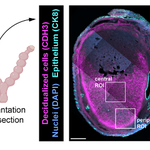
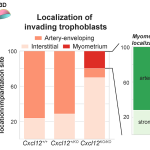
Excited to share our preprint, reviving @kristyredhorse's interest in the placenta from her PhD ~20 years ago! We find using 3D imaging that the mouse placenta is far more invasive than previously thought. Furthermore, we find a surprise from our favorite chemokine CXCL12...🧵:

Excited to share our preprint, reviving @kristyredhorse's interest in the placenta from her PhD ~20 years ago! We find using 3D imaging that the mouse placenta is far more invasive than previously thought. Furthermore, we find a surprise from our favorite chemokine CXCL12...🧵:

3D imaging of the pregnant uterus reveals an extensively invasive mouse placenta requiring CXCL12-CXCR4 signaling biorxiv.org/content/10.64898… #biorxiv_devbio
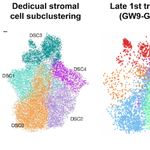
We were surprised by CXCR4-activated decidual cells in these mice, given the paucity of analysis of this receptor in these cells. However, beautiful work out this week in Nature shows a population of CXCR4+ decidual cells associated with blood vessels and pregnancy complications.
