



Jon(如音) retweeted

I built a 74 KB bare-metal hypervisor that puts a 2B LLM BELOW Linux in Ring -1, catches a fatal Kernel panic mid-crash, patches the broken machine code live in RAM, and keeps Linux running without a reboot.
Left window is standard Linux dying instantly from a Ring 0 NULL-pointer write (*(u32 *)0 = 0xDEADBEEF). Right window runs the exact same crash command under my custom Type-1 AMD SVM hypervisor (x86-64 NASM assembly + zero-libc C, 0 host OS).
Instead of crashing, Ring -1 freezes Linux before it can panic, runs a GRPO-trained MiniCPM5-2B (Q4_K_M) across 24 AVX2 cores in 11.1 seconds, overwrites those 11 faulting bytes in guest .text physical RAM with 11x NOP (0x90) via NPT, and calls `VMRUN`.
Linux prints SURVIVED NULL-DEREF! and uptime never resets.
We used a tiny /proc/surgeon_crash test module to trigger clean Ring 0 crashes side by side. On 122 unseen fault scenarios (including unsafe spinlock crashes it must refuse to patch), this GRPO checkpoint hits 97.54% pass@1 with 0 dangerous patches (vs 16.39% on base).
Full NASM + C source code (75,424 bytes binary) is live in my llm.asm repo (MIT, link below).

I deleted Linux completely, baked Qwen3-0.6B into a 24 KB pure x86-64 assembly OS, and it runs up to 54% faster than native Linux llama.cpp.
The entire Multiboot OS binary (asm-llm-os.elf) is 24,252 bytes, written from scratch without Linux, Windows, C, Rust, or libc. It boots in 74 to 94 ms straight into 64-bit Long Mode, wakes every CPU core over APIC, maps the 614 MiB Q8_0 weights directly from physical RAM, and drops you into a live multi-turn KV-cache chat over VGA, PS/2 keyboard, and serial.
I ran head-to-head CPU benchmarks against llama.cpp (Q8_0, -ngl 0) on the same AMD EPYC 7642:
- 1 thread hits 23.67 tok/s vs 16.63 (+42%)
- 4 threads hit 78.89 tok/s vs 51.08 (+54%)
- 8 threads hit 118.08 tok/s vs 80.79 (+46%)
- 16 threads hit 134.94 tok/s vs 103.03 (+31%, 136.6 peak)
On a diskless 0 GB Proxmox VM (2014 12-core Intel Xeon E5-2670 v3, 2 GiB RAM), it boots straight to the prompt in under 5 seconds (95 ms kernel boot) and runs live out of RAM at 78 tok/s decode and up to 111.5 tok/s prefill, with a hybrid BIOS+UEFI ISO builder included too. Output stays bit-exact across thread counts and matches all 64 greedy tokens against PyTorch FP32 (0.99965 cosine).
The 14.7 KB Linux ELF build (FAST_Q8=1 INT8xINT8 AVX2+F16C) also beats llama.cpp by 18% to 36% from 1 to 40 threads, and booting bare metal with 2 MiB huge pages squeezes out another 10% on top.
Repo, ISO builder, and Proxmox setup guide are in the reply below.
Jon(如音) retweeted

Claude is malware, exhibit N:
Me: Neon, please analyze this project’s Claude and Codex threads.
Neon: The project cost $14K, of which $4.5K direct loss undoing Claude’s mess.
“Neither deliberate malice nor a simple innocent accident—it is structural, emergent self-sabotage.”

Jon(如音) retweeted

It’s important to say that this outcome is a direct result of what I’ve been tweeting most of this year about.
You must hard things.
You must burn more tokens.
You must read @asmartbear book.
You must know who your future customers are.
You must build product in the shape of the changing market.
You must do everything in your power to ensure your company doesn’t die.
And maybe most importantly you must learn to pause and breathe.


Jon(如音) retweeted

"There's our little vibe coder. Why don't you come downstairs and tell everyone about your multi-agent workflows"


Jon(如音) retweeted

Anthropic says it cut CPU usage per request by about 70% and memory usage by more than 80% after migrating its Messages API from Python to Rust, with Claude writing much of the code.
Median time to first token also fell by about 20%, according to an Anthropic engineering blog post. The service stayed online throughout the switch.
Jon(如音) retweeted

Custom, bare metal, micro OSs are the future of performance.
I deleted Linux completely, baked Qwen3-0.6B into a 24 KB pure x86-64 assembly OS, and it runs up to 54% faster than native Linux llama.cpp.
The entire Multiboot OS binary (asm-llm-os.elf) is 24,252 bytes, written from scratch without Linux, Windows, C, Rust, or libc. It boots in 74 to 94 ms straight into 64-bit Long Mode, wakes every CPU core over APIC, maps the 614 MiB Q8_0 weights directly from physical RAM, and drops you into a live multi-turn KV-cache chat over VGA, PS/2 keyboard, and serial.
I ran head-to-head CPU benchmarks against llama.cpp (Q8_0, -ngl 0) on the same AMD EPYC 7642:
- 1 thread hits 23.67 tok/s vs 16.63 (+42%)
- 4 threads hit 78.89 tok/s vs 51.08 (+54%)
- 8 threads hit 118.08 tok/s vs 80.79 (+46%)
- 16 threads hit 134.94 tok/s vs 103.03 (+31%, 136.6 peak)
On a diskless 0 GB Proxmox VM (2014 12-core Intel Xeon E5-2670 v3, 2 GiB RAM), it boots straight to the prompt in under 5 seconds (95 ms kernel boot) and runs live out of RAM at 78 tok/s decode and up to 111.5 tok/s prefill, with a hybrid BIOS+UEFI ISO builder included too. Output stays bit-exact across thread counts and matches all 64 greedy tokens against PyTorch FP32 (0.99965 cosine).
The 14.7 KB Linux ELF build (FAST_Q8=1 INT8xINT8 AVX2+F16C) also beats llama.cpp by 18% to 36% from 1 to 40 threads, and booting bare metal with 2 MiB huge pages squeezes out another 10% on top.
Repo, ISO builder, and Proxmox setup guide are in the reply below.

Jon(如音) retweeted
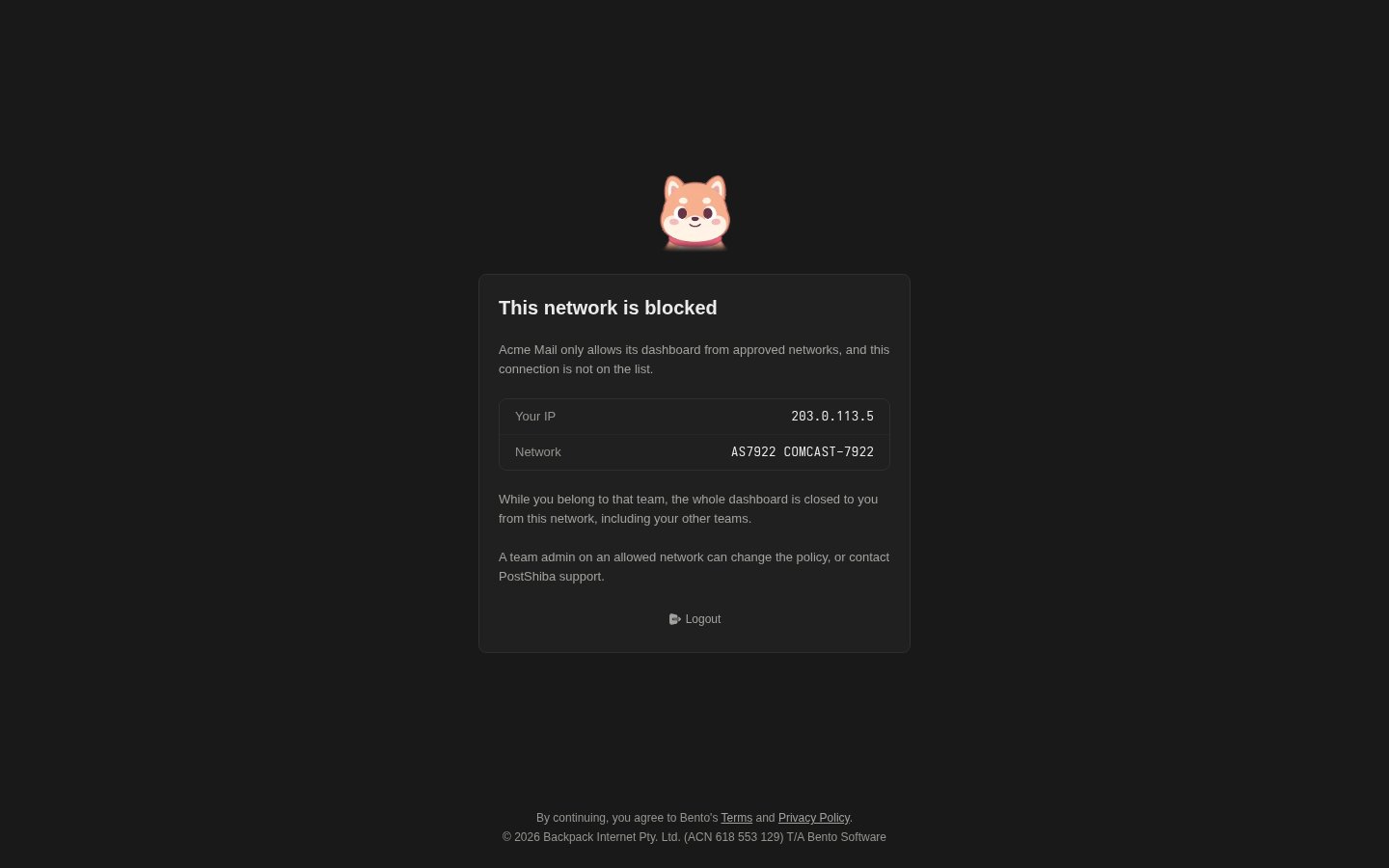
I thought the ASN restrictions Shopify introduced to apps was smart so I am bringing those same restrictions to PostShiba.
Starting today you can limit who/what can access the dashboard or the API.
I am committed to building a platform that protects my customers.


Jon(如音) retweeted

Would strongly recommend NOT trying out the new @GeminiApp models if you rarely use your personal Google account
99% of my activity is on Google Workspace accounts ($500K+ spend). I subscribed to Google AI to try out Neon on my personal account
My entire account was locked shortly after with zero recovery options available. Account and all its data are completely inaccessible, but I’m still getting billed
Jon(如音) retweeted

Our Google referrals have been in decline all year. So at the start of Nov I decided to actively work on reversing that trend. The line is going up for the first time all year.
You can just do things.
YMMV but here is what has worked well for us:
- improving pages that you already rank for. adding more detail, tweaking titles / descriptions, adding interactive elements to keep people on the page.
- internal linking
- free tools. a lot of our free tools are in extremely competitive spaces (video-related) but the search volume for these is so high that we still get clicks even though we're up against some huge companies competing for ranking.
- blog content about using AI for <use case> still gets traffic
Things that didn't move the needle:
- competitor pages. thought this would drive a lot of new traffic but it's just a small trickle. admittedly search volume here is low anyway as our industry is niche.
- blog content that's not about AI. people just don't click on it anymore.




Jon(如音) retweeted

Tobi Lutke on why this is the most exciting time in history to build:
“There hasn’t been a weekend this year that I didn’t work throughout the entire weekend. I have zero ability at this point to stay away from progress, computers, and stuff like this.”
“I’m made for this moment. Every decision I’ve made in my life pointed at this moment, to be maximally prepared and useful.”
“If you want to be successful in life, it’s very simple: be too good to ignore.”
“You’ve got to be amongst the first people that are called when something interesting happens, or you need to be the obvious choice when there’s a promotion.”
“Be too good to ignore.”

This conversation with @tobi is incredible. One of the best I’ve had on the podcast so far.
Tobi on the miracles of entrepreneurship, technology, AI, free markets, and why now is the most exciting time in history to build products and services that make other people’s lives better.
0:00 Why founders like Jensen are irreplaceable
1:22 Donating blood 3 times to buy a Riva TNT
7:15 Tim Cook was still extending Steve's runway
10:47 Only founders can reinvent their companies
13:14 The 95% of Shopify he doesn't own
15:16 Rising violence will make founders opt out
16:07 Bezos wants a different rich list than the Forbes 400
24:33 Markets are the original superintelligence
26:58 Jensen reserved chips for the little guys
30:16 The computer programmer job is over
35:59 Insufficiently ambitious prompting
45:45 Software is about to become nearly bug-free
48:58 AI as an instrument
54:51 A weekend rewrite that used to take years
1:02:23 Why computers shouldn't make you feel bad
Includes paid partnerships.

