

Web3 BD | Ex Growth & Partnership Manager @DIDbased - Helping Crypto Projects build strategic partnerships across VCs, DAOs, Launchpads & Ecosystems.
earth
Joined January 2022
- Tweets12.2K
- Following1.3K
- Followers397
- Likes24.4K




JB8 retweeted

Please bring him on Arise TV too, Nigerians deserves to know what the crook Amupitan has been cooking!

Mundus let's do a series on my podcast where you tell Nigerians all you have [email protected]
JB8 retweeted

Be like Obi don spoil my life cos I repost everything he posts before I read🤣 😂

NIGERIANS, GO AND VERIFY (7)
LIFTING THE VULNERABLE : ANAMBRA’S BLUEPRINT FOR POVERTY ALLEVIATION AND SUSTAINABLE EMPOWERMENT (2006–2014)
Economic growth that does not translate into improved living conditions for ordinary citizens is incomplete. This is one of our fundamental concerns with President Bola Ahmed Tinubu's government. Development must ultimately be measured by its impact on human lives, particularly those of the poor and vulnerable. This was underpinned by the Anambra Integrated Development Strategy (ANIDS). We believed that infrastructure, education, healthcare, agriculture, and social protection must reinforce one another. Poverty was not merely a shortage of money; it was also a lack of access to opportunities, productive resources, and the basic conditions necessary for a decent life.
Our poverty alleviation strategy, therefore, went beyond temporary handouts. It focused on restoring dignity, creating economic opportunities, and equipping vulnerable citizens with the means to become self-reliant.
Our approach attracted recognition beyond Anambra. In May 2010, Magnus Kpakol, then National Coordinator of the National Poverty Eradication Programme (NAPEP), commended our commitment to poverty reduction, declaring: “We are prepared to support you in the excellent work you are doing in Anambra State.”
1. POVERTY MAPPING: KNOWING WHERE POVERTY LIVES
We recognised that poverty could not be effectively addressed without knowing where it was concentrated and what caused it. We, therefore, undertook a poverty-mapping exercise to identify the most deprived local government areas and communities.
The exercise revealed that some of our poorest communities were also important food-producing areas. Their challenges included poor access to markets, agricultural inputs, electricity, water, and other economic opportunities.
Areas including Anambra West, Orumba South, Awka North, and Ogbaru required particular attention. The findings informed our development priorities, enabling us to direct roads, agricultural support, and social interventions toward neglected communities.
2. EMPOWERING WOMEN, WIDOWS, AND COOPERATIVES
We recognised that rural women, widows, and indigent households bore a disproportionate burden of poverty. Across the 21 local government areas, we provided financial assistance and productive support to thousands of beneficiaries.
Our administration provided financial assistance to support the establishment and expansion of small businesses and farming activities. We also introduced revolving loan schemes to promote enterprise development, economic self-reliance, and improved livelihoods.
We distributed productive equipment, including sewing machines, generators, ovens, cookers, hair dryers, shoe-making machines, and welding equipment. The objective was to help beneficiaries establish sustainable livelihoods rather than remain dependent on government assistance.
We also promoted access to microcredit and cooperative financing to enable small entrepreneurs to expand their businesses, improve their incomes, and create employment.
Our philosophy was simple: rather than merely giving people money to survive today, the government should help them acquire the means to earn a living tomorrow.
3. AGRICULTURE AND FADAMA: MAKING RURAL COMMUNITIES PRODUCTIVE
Agriculture was central to our poverty-reduction strategy because many rural households depended on farming.
Through partnerships with the Federal Government, the World Bank, and other development partners, particularly under the FADAMA programme, we supported farmers with finance and productive assets.
In November 2009, our administration disbursed millions to FADAMA Community Associations across the state. By October 2010, the National FADAMA office was commending Anambra’s commitment. Its National Project Coordinator, Buka Tijjani, represented by Charles Ugwuona, described Anambra as the leading state in the programme.
JB8 retweeted
This is exactly how he built Lagos only that he did not build ONE BRIDGE, or New Schools, or Hospitals, nor New roads, just looting and Propaganda!
A PROPER CONMAN! 😂

JB8 retweeted

Peter Obi's blueprint for poverty alleviation and sustainable empowerment
NIGERIANS, GO AND VERIFY (7)
LIFTING THE VULNERABLE : ANAMBRA’S BLUEPRINT FOR POVERTY ALLEVIATION AND SUSTAINABLE EMPOWERMENT (2006–2014)
Economic growth that does not translate into improved living conditions for ordinary citizens is incomplete. This is one of our fundamental concerns with President Bola Ahmed Tinubu's government. Development must ultimately be measured by its impact on human lives, particularly those of the poor and vulnerable. This was underpinned by the Anambra Integrated Development Strategy (ANIDS). We believed that infrastructure, education, healthcare, agriculture, and social protection must reinforce one another. Poverty was not merely a shortage of money; it was also a lack of access to opportunities, productive resources, and the basic conditions necessary for a decent life.
Our poverty alleviation strategy, therefore, went beyond temporary handouts. It focused on restoring dignity, creating economic opportunities, and equipping vulnerable citizens with the means to become self-reliant.
Our approach attracted recognition beyond Anambra. In May 2010, Magnus Kpakol, then National Coordinator of the National Poverty Eradication Programme (NAPEP), commended our commitment to poverty reduction, declaring: “We are prepared to support you in the excellent work you are doing in Anambra State.”
1. POVERTY MAPPING: KNOWING WHERE POVERTY LIVES
We recognised that poverty could not be effectively addressed without knowing where it was concentrated and what caused it. We, therefore, undertook a poverty-mapping exercise to identify the most deprived local government areas and communities.
The exercise revealed that some of our poorest communities were also important food-producing areas. Their challenges included poor access to markets, agricultural inputs, electricity, water, and other economic opportunities.
Areas including Anambra West, Orumba South, Awka North, and Ogbaru required particular attention. The findings informed our development priorities, enabling us to direct roads, agricultural support, and social interventions toward neglected communities.
2. EMPOWERING WOMEN, WIDOWS, AND COOPERATIVES
We recognised that rural women, widows, and indigent households bore a disproportionate burden of poverty. Across the 21 local government areas, we provided financial assistance and productive support to thousands of beneficiaries.
Our administration provided financial assistance to support the establishment and expansion of small businesses and farming activities. We also introduced revolving loan schemes to promote enterprise development, economic self-reliance, and improved livelihoods.
We distributed productive equipment, including sewing machines, generators, ovens, cookers, hair dryers, shoe-making machines, and welding equipment. The objective was to help beneficiaries establish sustainable livelihoods rather than remain dependent on government assistance.
We also promoted access to microcredit and cooperative financing to enable small entrepreneurs to expand their businesses, improve their incomes, and create employment.
Our philosophy was simple: rather than merely giving people money to survive today, the government should help them acquire the means to earn a living tomorrow.
3. AGRICULTURE AND FADAMA: MAKING RURAL COMMUNITIES PRODUCTIVE
Agriculture was central to our poverty-reduction strategy because many rural households depended on farming.
Through partnerships with the Federal Government, the World Bank, and other development partners, particularly under the FADAMA programme, we supported farmers with finance and productive assets.
In November 2009, our administration disbursed millions to FADAMA Community Associations across the state. By October 2010, the National FADAMA office was commending Anambra’s commitment. Its National Project Coordinator, Buka Tijjani, represented by Charles Ugwuona, described Anambra as the leading state in the programme.
JB8 retweeted

Rotate to $BONK, the greatest memecoin on Solana


JB8 retweeted
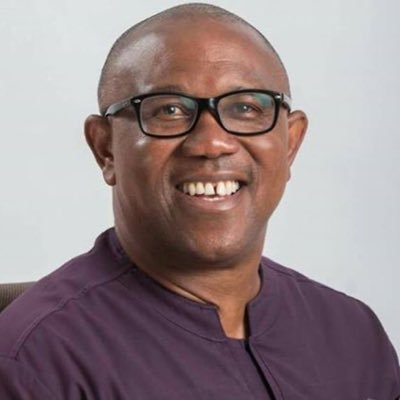
SmartBallot : Towards credible and Transparent Ballot
I have consistently believed that technology, combined with the creativity and resourcefulness of young Nigerians, can help reinforce our democracy and advance free, fair, and credible elections.
I am pleased to endorse SmartBallot (smartballotapp.com), a platform developed to facilitate grassroots mobilization, civic engagement, and election monitoring.
I urge our supporters and NDC candidates to register on SmartBallot and examine how its tools can assist them in organizing their communities, coordinating voters and polling unit agents, expanding grassroots engagement, and supporting transparent election monitoring.
Through the effective use of technology and collective action, we can reinforce our democratic institutions and help ensure that every vote is counted.
Credible elections require preparation, active participation, and peaceful vigilance. Let us make full use of every available resource to create a more organized, engaged, and empowered electorate.
A New Nigeria is Possible. -PO


JB8 retweeted

For the sake of this man, I am pleading with all Yorubas with anything they worship to reject Tinubu..

JB8 retweeted

Get paid in CKB from Bitcoin Lightning.
Lightning wallets pay Lightning invoices, so CKBolt issues a hold invoice (HTLC) on one hash.
Customer pays in sats. Hub sends CKB or RUSD to the merchant's Fiber node, same hash. The preimage settles both, or the payer is refunded.

JB8 retweeted
Real Men of God 🙏🏾🙏🏾

‘Using Solar Panels After Promising Nigerians Electricity Deserves Impeachment’ — Catholic Bishop Calls for Tinubu’s Removal parallelfactsnews.com/cathol…

JB8 retweeted

Reasons why Tinubu must not win the next election.
Under his tenure
- 10, 217 k*lled, 12,562 abducted, 7.8bn ransom paid, 3.8m displaced from their homes.
- Fuel from #185 to #1,215.
Your earning power hasn’t kept up with the rising cost of living. Worse, there’s no 24/7 electricity, so you spend a fortune on petrol just to survive in a country already battling extreme poverty.
- Naira from #460 to #1,400
Because we depend heavily on imports, the medication your mother used to buy for ₦5,000 in 2023 could now cost ₦15,000 or more. Even basic necessities have become luxuries.
- They increased the minimum wage to ₦70,000 and expected us to celebrate. But let’s be realistic, that’s barely enough to survive a week, yet someone is expected to feed a family, pay transport, cover bills and still afford school fees with it.
- 63% of Nigerians are now living in poverty.
And this is the reality we’ve found ourselves in. Poverty has become so widespread that two out of every three people you meet could be struggling financially, and there’s a chance you’re one of them without even admitting it.
- 14.06% inflation.
They’ll use that statistic to make it sound like things are getting better, and technically, it isn’t. But it simply means prices are increasing at a slower rate. Nothing is getting cheaper. Food, transport and basic necessities are still eating deep into people’s pockets. We’re still struggling, just at a slower pace.
- $5.2bn to $11.6bn in debt
Now look at how much debt is being accumulated in your name, and these are figures from their own records. Whatever they choose to call it, this isn’t borrowing to build the country; it’s borrowing just to keep it running.
- 27% of our #58.18 trillion budget goes to debt.
And that’s money spent before a single classroom is built or a nurse is paid. More than a quarter of what the country earns goes towards servicing debt rather than improving the lives of the people who generate that revenue.
- 119 Minors dragges to court on treason charges 2024.
They showed up in court weak from hunger, with some collapsing right there before everyone. The charges were eventually dropped and an investigation ordered, but that didn’t erase the months those young people had already spent behind bars simply for speaking out about the hardship millions of Nigerians were experiencing.
- Now look at how he responds when Nigerians are mourning. In Plateau, victims had to be brought to the airport to meet him. In Benue, he visited the injured in hospital but never made it to Yelwata. In Oyo, the governor says the President never even called him. Three tragedies, countless lives lost, yet questions remain about the level of presidential engagement with the affected communities.
- 315 children were taken from st Mary’s school, papiri in one night.
In Oyo, 46 of our pupils and teachers spent 56 days in the bush and two never came home. We have recorded over 2,400 school abductions in twelve years, and sending your own child to school is now a risk you sit down and calculate.
- January 16 2027 take that same frustration and disappointment to the polling unit. Get your Permanent Voter’s Card (PVC), make your voice count, and vote for the candidates and party you believe can deliver the change Nigeria needs. Stay at your polling unit until your vote is counted and the results are properly recorded.
C: DANIEL OTABOR
JB8 retweeted

They rigged 2023 because nobody had proof.
In 2027, we will have proof.
Photograph your EC8A at your polling unit. Upload it. Get a receipt.
If they try to change the result, we will show the world the original.
Don't just vote. Protect your vote. #ProtectYourVote 🇳🇬
JB8 retweeted

Fellow Nigerians,
If INEC announces APC as the winner despite clear irregularities, that declaration should not stand. We must all fall to overturn that decision.
We should not accept a fraudulent result. We must reject it through every lawful means available. We must stay alert and refuse to be silent.
The final decision still belongs to the people.