





in grad school we learned the cautionary tale of a hospital radiation machine with a race condition that intermittently applied a lethal dose
now, machines have a secondary mechanical fail safe to limit max dose
we are about to see everything get a secondary fail safe
yes, nuance matters

Immigration policy must be driven by the present, not the past, and business leaders are too terrified of the left AND the right to acknowledge this.
Recent H1B discourse revolves around a longstanding immigration sleight-of-hand. H1B proponents point to exceptional people who came here decades ago as if they represent the current state of the program in the same way that advocates for low-skill/illegal immigration point to very favorable immigrant crime/welfare/education/etc statistics that do, in truth, have them beating native-born Americans on many fronts.
It is all a sham. The world that created those statistics, people, and businesses no longer exists. Brilliant but desperate Vietnamese fathers who fled communism have nothing in common with young men from Honduras, and the crime rates/economic acccomplishments/integration of the former should not be used to justify mass migration of the latter.
Nor should the accomplishments of people who managed to get an H1B visa in the 90s (when the program was capped to just 65,000 visas) be used to justify staffing agencies and tech companies using the program to replace American jobs for less money. The obvious abuse going on is politically suicidal and something that even the most ardent supporters of the visa should want to crack down on, no immigration program can possibly survive the obvious and widely known reality of what is going on. I am a longtime outspoken advocate for stealing the best people from other countries to make our own better, runaway abuse of existing programs robs the government of the worker trust required to do so.
Lots of people in the tech space know this. Even the dumb people are smart enough to see it. Nobody actually believes these are all incredible people with unique talents performing jobs no American can. Everyone knows the guy in Cubicle Bay 7 doing mediocre but functional web design for half the salary of his American peers is no savant and doesn't meet the statutory requirements for his H-1B visa.
Unfortunately, most people with power or profile are terrified that any public statement or acknowledgement will get them attacked by the right (You guys have been screwing over American workers for years with visa abuse, you damn hypocrite!) or the left (You are racist, sexist, misogynist, and sucking up to this fascist administration!). Or, more likely, both. I know too many tech execs in particular who feel trapped, like the only winning move is to stay silent.
JD is blowing the whole thing wide open by putting facts and stats front and center that nobody wants to engage with. Critics will talk about anything and everything else but these damning facts and this obvious truth, that H1B visas serve neither their original purpose, legal purpose, invented purpose, or the American people.
what financial engineering has to happen where this AI wealth translates to a normal person custom CNC machines custom marble fireplaces and spiral staircases in their homes like the monks in Wyoming

as a thought experiment, consider if Rockefeller had put all his shares directly in American children's accounts instead of forming the Rockefeller Foundation
Is your gut reaction "yay for kids" or "most people can't be trusted" or "we need elite philanthropy"?

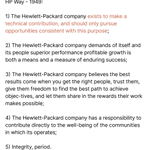
Reminder: When Rockefeller reflected on his life, he valued friendships over any of his possessions:


Annual reminder that Columbus believed (or at least wrote to the queen) that God made him the messenger to help fulfill the Biblical prophecy of New Heaven and New Earth
None of this was mentioned in my public school history

unfortunately, it does look like AI is a nearly perfect weapon to trick, scam, and exploit the elderly
someone is going to have to build AI defense for them
jefflab retweeted

Assorted things I've been mulling over regarding agents in the economy:
• Companies are in some sense the original superintelligence. It's often the case that they can use their amortized cognitive surplus to advance their interests against those of certain consumers: relative to the optimization capacity of companies, consumers can be inattentive, underinformed, irrational, etc. (Think, say, of some of the classic insurance upsells at the end of a booking process, which is typically priced substantially above what a regular policy would cost.) Herbert Simon introduced the idea of bounded rationality, and firms often end up benefiting from it. Thanks to personal agents, we will probably get somewhat more rational in how we engage with companies.
• How exactly will outcomes change? Well, certain kinds of price discrimination will work less well (how do coupons work if every agent hunts fastidiously for them?), and certain kinds of customer cross-subsidy will change (today, people who forget to cancel subscriptions subsidize those who don't). Taken across the economy as a whole, I'm not sure what the incidence of all of this will be.
• In corporate strategy, people have long debated the relative importance of distribution and product quality. Perhaps you've made something better, but does anyone know about it? Won't people just continue to buy the ACME Corp Mousetraps? Personal agents will, I think, act as a kind of structural subsidy for product quality. How would markets look different if individuals always spent at least 10 hours researching their purchases? On the margin, focusing on making a product better is, I think, going to become a more effective strategy for companies. This is good!
• It true, a corollary is that information about product quality will become more important and impactful. Today, most people have very limited ability to aggregate and integrate such data, but agents will have insatiable thirst for such signals. (It's often said that data is becoming more valuable because it helps in the training of models. That's obviously true, but I think there's a secondary way in which it's more valuable simply as a complement to cheaper intelligence.)
• A big question is whether agents will increase superstar effects (rational agents all settle on the same product) or increase dispersion (because everyone has slightly different tastes and preferences, which agents are good at eliciting, finally overcoming the artificial clustering we've been subjected to).
• Many internet companies have monetized demand routing, which is in turn often predicated on short attention spans. "I'll click on the first thing I see." This has led to some amount of inefficiency, as companies try to propitiate capricious ranking algorithms and incur various placement fees. It's not all deadweight loss (willingness to pay is itself a kind of signal, which is valuable to buyers), but it's not great. How will the nature and value of this routing change in a world of personal agents? I don't know the answer, but I think that the effects might be pretty big.
• Much of what I'm writing hinges on the assumption that personal agents will be on the consumer's side. I suspect that that will be the winning strategy, but whether it's true, and what it means to be true, involves a lot of other questions.
Taken as a whole, the market is a massively parallelized, decentralized, and highly imperfect value attribution machine, and, taking stock of all of the effects, it seems to me that the quality point may well be the biggest: that agents will change the nature of the backpropagation such that the rewards for better products increase. Maybe this is too optimistic, but I suspect (and hope) that companies that make things that they're proud of will feel that the universe is a little more partisan in their favor.
What if this is the Tower of Babel metaphor
Men could not use a shared language to communicate and collaborate, so society fractured into geographically regional economies


Many people will ask their Dot, Muse, GrokBot “Make a voting guide for me… I care about issues X, Y, Z”
The bot can subtly put a finger on the scale


jefflab retweeted

“Chesterton had written it as early as 1908: the modern world is full of old Christian virtues gone mad, because they've been separated from one another. Scientists who love only truth, and whose truth is pitiless. Humanitarians who love only pity, and whose pity is often dishonest.
Wokism is exactly that. Girard had seen it coming in 1999: concern for victims is the supreme Christian inheritance, and the new totalitarianism doesn't fight it - it claims it as its own, until it turns it into a permanent inquisition. It kept the victim and threw out everything else. Compassion without truth. Sin without forgiveness. Confession without absolution.”
The west needs its faith to thrive; these crowds in France are optimistic.

J'ai énormément réfléchi à une question : pourquoi notre monde est-il aussi profondément malade ?
Je crois avoir compris. Et ce qu'on a vu samedi à Paris avec le pape me rend plus optimiste que je ne l'ai été depuis longtemps.
Je ne parle pas d'une crise économique ou d'un mauvais gouvernement. Je parle de quelque chose de plus profond. Une immigration de masse qu'on a refusé de regarder en face pendant des décennies. Une tolérance infinie pour tout ce qui contredit le réel, et aucune pour ceux qui osent le décrire. Des évidences qu'il faut nier en public pour rester fréquentable.
Tout ça, ce sont des symptômes. La maladie, c'est que notre rapport à la vérité s'est cassé.
Pour comprendre, il faut remonter le fil. Au début du XXe siècle, la révolution prolétarienne échoue partout en Occident : les ouvriers ne suivent pas. Une partie de la gauche intellectuelle en tire une conclusion simple. Si on ne peut pas prendre l'économie, il faut prendre la culture.
Gramsci théorise l'hégémonie culturelle. L'école de Francfort déplace le combat de l'usine vers l'université, les médias, la famille. Horkheimer et Adorno font le procès de la raison elle-même, accusée d'être un instrument de domination. Et la tolérance à sens unique dont je parlais a même une date de naissance : en 1965, Marcuse écrit que la vraie tolérance consisterait à être intolérant envers la droite et tolérant envers la gauche. Deux ans plus tard, Rudi Dutschke appelle à la « longue marche à travers les institutions ».
Ce n'était pas un complot. C'était une stratégie, assumée et écrite noir sur blanc. Et elle a fonctionné.
La French Theory prend le relais. Pour Foucault, la vérité est un produit du pouvoir. Derrida déconstruit tout ce qui tient debout. En 1979, Lyotard définit la condition postmoderne comme « l'incrédulité à l'égard des métarécits ». Plus de grand récit, plus de vérité commune. Seulement des points de vue, des rapports de force, des identités.
C'est ça, la généalogie du wokisme. Et au fond, elle repose sur une seule idée : la nature humaine n'existe pas. Tout est construit, donc tout peut être déconstruit. Or quand il n'y a plus de vérité, il ne reste que le pouvoir. Celui qui tient les institutions décide de ce qui est réel.
Regardez les dates. En février 1974, Soljenitsyne signe « Vivre sans mentir », daté du jour même de son arrestation. Un chrétien sorti du Goulag, qui a compris que tout le système soviétique tenait sur le mensonge et que la seule arme d'un homme libre était de refuser d'y participer. Au même moment, nos élites décident que la vérité n'est qu'un récit parmi d'autres.
À l'Est, on découvre que la vérité est la dernière chose qui résiste. À l'Ouest, on décide qu'elle n'existe pas.
Ce n'est pas un hasard si la stagnation technologique dont parle Thiel, le moment où le monde des atomes cesse d'avancer, commence à la même époque.
Pour mesurer ce qu'on a perdu, il faut comprendre ce qui a fait l'Occident. Et ce qui a fait l'Occident, c'est le christianisme.
L'Évangile de Jean s'ouvre sur ces mots : « Au commencement était le Verbe ». En grec, le Logos. La parole, la raison. Si le monde vient d'une raison, alors le monde est lisible. Il a des lois. Il mérite d'être compris.
Jésus dit : « La vérité vous rendra libres. » Il dit aussi : « Je suis le chemin, la vérité et la vie. » La vérité n'est pas une opinion. On ne la négocie pas, on ne la vote pas. On la cherche toute sa vie, et elle nous oblige.
Avec le christianisme, le temps cesse aussi d'être un cycle éternel. L'histoire a un début, une direction, un sens. Sans ça, l'idée même de progrès est impensable.
Toute la civilisation occidentale découle de cette conviction : il existe une vérité en toute chose. Dans les lois de la nature, dans la justice, dans la beauté. Les cathédrales sont des traités de géométrie en pierre. Les universités naissent dans le giron de l'Église, à Bologne, à Paris, à Oxford. Nicolas Oresme, évêque de Lisieux, montre plus d'un siècle avant Copernic que rien n'interdit de penser que la Terre tourne. Mendel, moine augustin comme Léon XIV, découvre les lois de l'hérédité. Lemaître, prêtre belge, propose ce qu'on appellera le Big Bang.
Ces hommes ne cherchaient pas la vérité malgré leur foi. Ils la cherchaient à cause d'elle.
La révolution industrielle n'est que l'écume de cette vague. Mille ans passés à croire que le réel est intelligible et qu'il faut s'y soumettre plutôt que le plier à nos désirs. Le capitalisme en est le prolongement direct : un marché est une machine à dire la vérité. Comme l'a montré Hayek, les prix transmettent une information qu'aucun planificateur ne possédera jamais. Les pertes sanctionnent les erreurs. Le réel finit toujours par gagner.
C'est pour ça que les bâtisseurs ont un rapport si particulier à la vérité. On peut mentir à un plateau télé. On ne ment pas à une fusée.
Que se passe-t-il quand on coupe une civilisation de ses racines ? Elle devient un bouquet de fleurs coupées : encore belle quelques jours, puis elle fane.
Chesterton l'avait écrit dès 1908 : le monde moderne est plein de vieilles vertus chrétiennes devenues folles, parce qu'on les a séparées les unes des autres. Des savants qui n'aiment que la vérité, et dont la vérité est sans pitié. Des humanitaires qui n'aiment que la pitié, et dont la pitié est souvent mensongère.
Le wokisme, c'est exactement ça. Girard l'avait vu venir en 1999 : le souci des victimes est l'héritage chrétien par excellence, et le nouveau totalitarisme ne le combat pas, il le revendique comme sien, jusqu'à en faire une inquisition permanente. Il a gardé la victime et jeté tout le reste. La compassion sans la vérité. Le péché sans le pardon. La confession sans l'absolution.
Et c'est précisément pour ça que je suis optimiste.
À Pâques, 13 234 adultes ont été baptisés en France, plus de trois fois plus qu'il y a dix ans. Avec les adolescents, plus de 21 000 : un record historique. Et 42 % de ces adultes ont entre 18 et 25 ans. Ce n'est pas la France de nos grands-parents qui retourne à la messe. C'est une génération qui a grandi dans le vide et qui cherche quelque chose de vrai.
Samedi, entre 700 000 et 800 000 personnes se sont rassemblées place de la Concorde. Sur la place même où la Révolution a guillotiné son roi.
La veille, à l'UNESCO, devant les représentants du monde entier, le pape a fait écho à la parole du Christ : « seule la vérité nous rend libres ». Il a affirmé qu'il existe une nature humaine commune, exactement ce que cinquante ans de théorie se sont acharnés à nier. Et à la Concorde, il a rappelé que « l'être humain est fondamentalement un être de désir », un désir qu'aucun bien matériel ne pourra jamais combler. Un girardien ne peut pas lire ça sans sourire.
Croyant ou non, là n'est pas la question. La vraie question, c'est de savoir si une civilisation croit encore qu'il existe une vérité. Une civilisation qui y croit recommence à chercher, à bâtir, à transmettre. Une civilisation qui n'y croit plus se contente de gérer son déclin. C'est très probablement par là que tout va redémarrer.
Les cathédrales, les universités, la machine à vapeur, les fusées. Tout vient de la même source.
L'Occident n'est pas en train de mourir. Il est en train de se souvenir d'où il vient.