

Automated science, high-throughput biology, and oral microbiology. @UMBME
University of Michigan
Joined June 2015
- Tweets67
- Following179
- Followers211
- Likes81


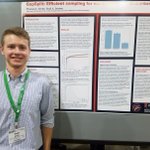


The mutacins are controlled by their own quorum sensing system! Streptococcus mutans has multiple "MutRS" pathways that show inter- and intra-strain crosstalk. Our paper also analyzes the relationships between 483 MutRS, ComRS, and Rgg-Shp systems.

The MutRS quorum sensing system controls lantibiotic mutacin production in the human pathogen Streptococcus mutans biorxiv.org/cgi/content/shor… #biorxiv_micrbio
1
234
Jensen Lab retweeted

U-M's Paul Jensen, Assistant Professor, BME and ChE, recently received an NSF Faculty Early Career Development (CAREER) grant for his study, “Learning mechanistic models with automated experiments.” Read more: bme.umich.edu/paul-jensen-re…
@UMengineering @UMichChE @UMichMedSchool

Valeri, Krishnan, and Collins wrote a great analysis of our BacterAI article for @NatureMicrobiol.
nature.com/articles/s41564-0…
rdcu.be/ddJvv
Jensen Lab retweeted

NEW: “AI could run a million microbial experiments per year” by @JLynchpin Automation uncovers combinations of amino acids that feed two bacterial species and could tell us much more about the 90% of bacteria that humans have hardly studied.] [article] news.engin.umich.edu/2023/05…

Meet BacterAI, an AI system that uses laboratory robots to perform autonomous experiments. BacterAI can study microbial metabolism without human knowledge.
Congrats to Adam, Kevin, Danielle, Annamarie, Noah, and Kenan on our new paper.
nature.com/articles/s41564-0…

Jensen Lab retweeted

Check this out 🤩:
BacterAI maps microbial metabolism without prior knowledge 💻
@jensen_lab
nature.com/articles/s41564-0…
Congrats to Brendan Brasch for completing his Masters thesis on "Improving constraint-based metabolic models with deep learning". @BIOENGatIL
1
206
Jensen Lab retweeted

Interested in doing a PhD? Thinking about Biomedical Engineering? Come join us for our PhD Application Workshop! Use the QR code to register.

ALT Graphic for the University of Michigan's Biomedical Engineering PhD Application workshop. A virtual event where you can talk to faculty & students, learn about research opportunities and how to apply to a PhD! QR code is included to register.
Jensen Lab retweeted

Crosstalk between paralogous ComRS quorum-sensing systems diversifies the competence/bacteriocin networks of oral streptococci biorxiv.org/cgi/content/shor… #biorxiv_micrbio
Oral streptococci have multiple ComRS systems! Our new paper (led by Jinbei Li) dissects ComRS paralogs in seven species. Some separate competence and bacteriocin production, but S. mutans has a second ComRS system that activates competence via crosstalk.
biorxiv.org/content/10.1101/…

Ben's paper on an optimized rRNA depletion assay is published in SLAS Technology: sciencedirect.com/science/ar…
It's our first paper with @SLAS_Org since the society's journals moved to #OpenAccess.
Looking for a textbook to prepare students for machine learning? "Linear Algebra: Foundations of Machine Learning" is available for free at jensenlab.net/teaching/. The book covers matrices, optimization, linear/logistic regression, SVM, SVD and more at a sophomore level.
The book was used to teach BIOE 210: Linear Algebra for Biomedical Data Science at @BIOENGatIL. Course materials are available at jensenlab.net/teaching/#bioe….
Great article about @BIOENGatIL and @UMBME grad student Ben David using AI to guide RNA-seq experiments

2022 SLAS Graduate Education Fellowship Grant recipient Benjamin David plans to fine tune the process to help the life sciences find new ways to explore combinatorial spaces within the genome. New from Electronic Laboratory Neighborhood: slas.org/publications/electr….

2
Congrats to Ryan Wyllie for defending his PhD thesis: "Strategies for the genetic characterization of the oral streptococci".
8
Congratulations to Benjamin David, Ph.D. candidate (University of Michigan), for being awarded the 2022 SLAS Graduate Education Fellowship Grant!
Read more about David and his research: slas.org/news-highlights/new….

Jensen Lab retweeted

Congratulations to Benjamin David, Ph.D. candidate (University of Michigan), for being awarded the 2022 SLAS Graduate Education Fellowship Grant!
Read more about David and his research: slas.org/news-highlights/new….
There's always room for improvement: Our new paper optimizes a multifactorial protocol using only 17 experiments. Lower cost, fewer reagents, and better results!

Improving an rRNA depletion protocol with statistical design of experiments biorxiv.org/cgi/content/shor… #biorxiv_sysbio
2
Just published: OligoRL uses reinforcement learning to 1.) design barcode pools without restriction sites, 2.) find degenerate 16s rRNA primers, and 3.) create Not-So-Random primers for scRNA-seq libraries. All with one algorithm! academic.oup.com/bioinformat…

4