
Machine Learning Researcher. Science Enthusiast. Poetry Lover. "The creative adult is the child who survived"
California, USA
Joined April 2013
- Tweets404
- Following921
- Followers365
- Likes2.3K





Pinned Tweet
Check out our preprint on using anchoring to improve generalization of ViT!
When we first explored anchoring for UQ (NeurIPS 2022), we hypothesized that it can improve generalization. However, the benefits have been rather limited in practice. A thread on how we fixed it! 1/n
Interested to learn about anchored transformers? Stop by our spotlight poster at the East Exhibit Hall A-C #2006 today at 4.30 PM #NeurIPS2024

Check out our preprint on using anchoring to improve generalization of ViT!
When we first explored anchoring for UQ (NeurIPS 2022), we hypothesized that it can improve generalization. However, the benefits have been rather limited in practice. A thread on how we fixed it! 1/n
1
11
311
Super elated that our paper on improving generalization using anchored ViTs accepted as a spotlight at #neurips2024. Excited about the potential opportunities of leveraging anchoring for large scale pre training and multimodal models
✨⭐️✨If you are at #ICML2024, check out PAGER, a new approach for proactive failure detection in deep networks (both regression and classification)!
Paper: tinyurl.com/pager-paper
Session: tinyurl.com/pager-ICML
@VivekSivaraman1 @puja_computes @RUSH1L
@Livermore_Comp

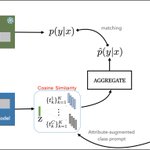
#ECCV2024 New paper alert: We introduce PRIME to detect failures in vision models using priors from LLMs and VLMs. PRIME produces SoTA results under covariate shifts, style changes, spurious correlations and class imbalance. Preprint & codes coming out soon! @Livermore_Comp

PRIME uses LLMs to identify task-relevant core attributes and builds a debiased classifier by aligning its features to these attributes using a VLM, and detects failures by comparing original and debiased predictions. Joint work with @kowshik0808 @rakshith_subra @VivekSivaraman1
2
138
Jay Thiagarajan retweeted

Doing a giveaway of a Kindle copy of one of the most interesting books I read in the last couple of years.
Just retweet this tweet to be eligible for the giveaway. One person chosen at random wins it - will announce winner at 8 PM tomorrow (14 June)✨

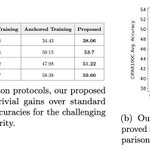
In addition to demonstrating stable convergence across both convnets and transformers, anchored training provides (a) complementary benefits to conventional data augmentation strategies and (b) improved resilience to label noise. 5/n

1
2
152
In addition to improving OOD accuracy, anchored models demonstrate superior safety (e.g., anomaly rejection, OOD calibration) and transferability characteristics. Our holistic analysis evidences the utility of anchoring as a generic protocol for vision transformers. 7/n

1
2
142
Preprint: arxiv.org/pdf/2406.00529
Codes will be released soon!
Joint work with @VivekSivaraman1 @kowshik0808 @RUSH1L #YamenMubarka #WesamSakla
3
151
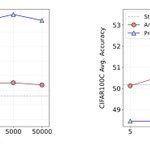
Insight 1: Anchoring is not effective at leveraging the diversity of large reference sets (full train data is used as the reference set in practice).
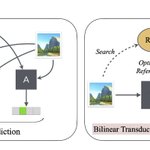
Insight 2: The limitation of anchoring cannot be fixed via sophisticated inference protocols (e.g., bilinear transduction) 3/n

1
2
141

What is anchoring? It is an architecture-agnostic training principle that re-poses an input x into a tuple comprising a reference r and the residual d = x − r, and concatenates the tuple elements along feature axis for vector-valued data or the channel axis for images. 2/n

1
2
125
Interested in using deep learned surrogates to close the gap between simulations and experiments?
✨ Our recent @MLSTjournal paper provides new insights into transformer adaptation and model selection with extremely limited data!! ✨
@Livermore_Lab @Livermore_Comp

Great new work by @jjayaram7 @RUSH1L Weng-Keen Wong et al @Livermore_Comp @LLNL_SciTech @EngineeringOSU -'#Transformer-powered surrogates close the ICF #simulation-experiment gap with...'- iopscience.iop.org/article/1… #machinelearning #AI #nuclearfusion #plasmas #compphys #datascience

Super excited to present G-ΔUQ for improving GNN calibration under shifts at #ICLR2024 . Using stochastic centering and graph anchoring, G-ΔUQ achieves SoTA calibration in node and graph classifiers!
Poster session 2 (Tue. 4.30 PM) - Halle B #253
Link: tinyurl.com/6usn2cj3

Happening now!! Stop by our #ICCV2023 Poster 064 in room Foyer Soud and learn about our work on limited angle CT reconstruction using diffusion models. Also do ping lead author @Jiaming__Liu who could not be here in person. Joint work with @RUSH1L @ukmlv #HyojinKim #AdityaMohan

Here comes G-∆UQ, a scalable uncertainty quantification method for graph neural networks!! check the preprint and reach out to us if you want to try this or apply this to your problems!!

🚨In need of accurate uncertainty quantification for graph classification under distribution shifts? Look no further with G-∆UQ, a scalable and accurate epistemic uncertainty estimator introduced in our new paper (arxiv.org/abs/2309.10976)!! 🧵1/n #NewPaperAlert
9
601
Is it just me or are the #neurips2023 reviews pretty harsh this time? Not even the scores. But the reasons given for low scores!!!