
Biology + Machine Learning.
Joined April 2018
- Tweets25
- Following8
- Followers272
- Likes24

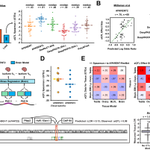

The Borzoi manuscript is now out in Nature Genetics: doi.org/10.1038/s41588-024-0…
Borzoi predicts RNA-seq profiles in many tissues & cell types from DNA sequence as its only input. With it, we can score the impact of genetic variants on a number of gene-regulatory functions. 1/
Finally, we apologize for the confusion and wasted time early users experienced due to a training script bug that caused us to misstate the train/valid/test splits of the model in the preprint. The published manuscript and github now accurately describe the split. 7/
1
2
519
Johannes Linder retweeted

Check our new paper “Predicting RNA-seq coverage from DNA sequence as a unifying model of gene regulation”. biorxiv.org/content/10.1101/…

Johannes Linder retweeted

New preprint w/@anshulkundaje introducing CPA-Perturb-seq! We systematically perturb regulators of cleavage and polyadenylation, and explore post-transcriptional changes at single-cell resolution. Led by @mh_kowalski @harm__w and @jjohlin (🧵)
biorxiv.org/content/10.1101/…

Johannes Linder retweeted

Very excited for MP3-seq, a new high-throughput Y2H approach we use to screen de novo protein heterodimer interactions. Fantastic work by Alex Baryshev, Alyssa La Fleur, @benjaminbgroves,@CirstynMichel, David Baker @UWproteindesign, @AjasjaLjubetic
biorxiv.org/content/10.1101/…

Johannes Linder retweeted
Excited to highlight @Calico’s 2023 summer internship program, which my group will be participating in! If you’re interested in gaining experience with deep learning models in regulatory genomics, consider applying to join us here: calicolabs.com/careers?gh_ji…

Johannes Linder retweeted

CaRPool-seq from @satijalab, @nevillesanjana and colleagues makes use of the RNA-targeting CRISPR-Cas13d system to perform combinatorial perturbations in single-cell screens. nature.com/articles/s41592-0…

Johannes Linder retweeted

@vagar112 & @drklly describe Saluki, which is capable of predicting the effects of mRNA sequences and genetic variants on mRNA stability 50% more accurately relative to existing models in mammals.
genomebiology.biomedcentral.…

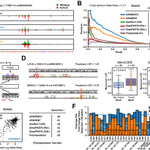
APARENT2, our latest model for scoring and interpreting the effects of variants on 3’ UTR polyadenylation, was published in Genome Biology: genomebiology.biomedcentral.…. Great collaboration with @seeliglab, @anshulkundaje and @SamanthaKoplik.

In this peer-reviewed version of the paper, @SamanthaKoplik experimentally assayed clinically relevant 3’ UTR variants in an MPRA in multiple cell lines and validated many of our predictions.
Figure 5: When performing in-silico mutagenesis of all human polyA signals, we find that loss-of-polyA is depleted among common variants. In contrast, we detect an enrichment of gain-of-polyA mutations in individuals with Autism in WGS cohort data. (4/4)

APARENT2: An improved model for predicting and interpreting the functional impact of genetic variants in human polyadenylation signals. Preprint: biorxiv.org/content/10.1101/… (1/4)


