

Dean Business, Tourism & Entrepreneurship Division, UAGM ||Professor Int. Business & Marketing | Associate Editor European Business Review
Puerto Rico
Joined March 2012
- Tweets3.1K
- Following2.3K
- Followers1K
- Likes2.5K





Excelente experiencia en @cladeaorg 2026, en Montevideo. Participé como Co-Chair del Coloquio Doctoral, en Meet the Editors representando a European Business Review y en la presentación de dos investigaciones. Lo mejor, reencontrarme con amigos, coautores y colegas. ¡Hasta el próximo CLADEA!


66
Hemos romantizado tanto el emprendimiento tecnológico que a veces olvidamos lo esencial. Una panadería, una ferretería o un pequeño restaurante también crean riqueza, generan empleos y sostienen nuestra vida diaria. Nuestros países necesita unicornios, sí, pero también buenos negocios de barrio.

1
57
Singapore is paying people to read, but the real experiment isn't about money. It's whether a small incentive can help people rediscover the pleasure of reading. Getting someone to open a book is one thing. Getting them to keep reading when the reward disappears is another.

2
177
Crumbl es un caso interesante. Creció gracias a la viralidad, la novedad constante y una expansión agresiva. Pero una cosa es lograr que millones hablen de tu marca y otra conseguir que regresen a comprar. El crecimiento no siempre es señal de un negocio sostenible.

Crumbl’s Sales Are Crumbling and the CEO Says ‘It’s My Fault’
Read more: entrepreneur.com/buying-a-fr…

199
Yo compro libros, los leo y los conservo. Siempre pienso que algún día los volveré a leer, aunque casi nunca ocurre. Pero me pasa algo curioso: cuando camino frente a mi biblioteca y veo un título, recuerdo algo de aquella lectura. A veces pienso que los libros también guardan parte de nuestra memoria.
¿Cuándo debemos dejar que la inteligencia artificial decida y cuándo debemos intervenir?
Investigadores de @MITSloan proponen una matriz que me parece muy útil para las organizaciones y sus líderes. Distingue cuatro tipos de decisiones según su nivel de riesgo y ambigüedad:
• Rutinarias: automatizar y supervisar.
• Exploratorias: experimentar y aprender.
• De alto impacto: asegurar confiabilidad y control.
• Estratégicas: mantener una supervisión humana continua.
La distinción importa. No todas las decisiones requieren el mismo grado de intervención humana, pero tampoco todo lo que puede automatizarse debería automatizarse.
Para quienes toman decisiones, el reto no es simplemente incorporar más IA, sino saber cuándo delegar, cuándo intervenir y quién asume las consecuencias.
Hay algo que me preocupa particularmente: podemos mantener a los humanos formalmente a cargo de las decisiones y, al mismo tiempo, acostumbrarnos tanto a las recomendaciones de la IA que dejemos de cuestionarlas.
¿De qué sirve conservar la última palabra si poco a poco perdemos el criterio para ejercerla?
Fuente: MIT Sloan School of Management (2026), A framework for determining when AI can make decisions. mitsloan.mit.edu/ideas-made-…

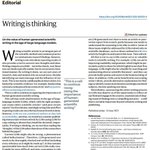
After years of publishing, I’ve learned that you don’t always write because you have something figured out. Sometimes you figure it out because you write. Writing is not just communicating our thinking. It is part of how we think.

1
227
Manchester City is fighting two battles now: one in the appeals process, and another in the minds of fans, sponsors, and the public.
In a brand crisis, a legal victory can reverse a ruling. It can’t automatically restore trust.


678
One of my most recently published papers, co-authored with Juan Carlos Bustamante (Tecnológico de Monterrey, Mexico), Fabiola Monje-Cueto (Universidad Privada Boliviana), and Jorge Bullemore (Universidad de los Andes, Santiago, Chile), explores how marketing–sales collaboration translates into performance through CRM capabilities.
One idea stands out: having a CRM system does not create alignment between marketing and sales.
Collaboration creates value when it becomes an organizational capability, sharing information, coordinating decisions, and acting on customer knowledge.
Technology enables. Organizational capability transforms.
Published in the Journal of Business-to-Business Marketing. tandfonline.com/doi/full/10.…

2
261
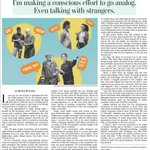
Technology keeps removing friction from our lives. Sometimes it also removes the small human encounters that make life richer.
Convenience saves time. Connection gives it meaning.

116
Una agencia puede hacer muchas cosas y, aun así, alejarse de su misión.
En las Comunidades Especiales, el éxito no debería medirse solo por reuniones, visitas o ayudas entregadas, sino por el poder que tienen las comunidades para organizarse, participar y decidir.
La actividad no siempre implica impacto.

76
We keep asking what children should learn earlier.
Maybe the better question is what they shouldn’t lose along the way.
Independence. Curiosity. Patience. Helping others. Taking turns.
Education should prepare children for the future without removing the skills that help them become people.


1
232
This may be one of the most consequential tables in the world right now. Politics at the center. Technology on both sides. And much of the global economy somewhere in between.

2
224
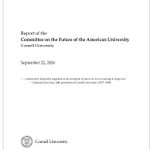
This new Cornell report on the future of the American university is worth reading, not because it has all the answers, but because it asks some of the right questions.
Five ideas stood out to me:
1) AI changes the educational problem. It can create the appearance of learning without learning actually taking place. The challenge is no longer simply producing outputs, but developing reasoning, discernment, and judgment.
2) Universities cannot respond to disruption by defending the status quo. Some structures, incentives, and practices need to change because they no longer adequately serve the university’s purpose.
3) The crisis of trust is not primarily a communications problem. As the report puts it, “Trust is not simply a communication problem, it is a relationship problem.” Universities need to demonstrate their value through meaningful engagement with the communities they serve.
4) The university has become a “multiversity.” More missions, units, and specialization have increased institutional capacity, but they have also fragmented institutional purpose. When every part optimizes its own metrics, the whole can lose sight of why it exists.
5) Human judgment may become the real differentiator. Cornell places sound judgment; slow, evidence-based discernment that resists the quick answer at the center of what universities should cultivate.
My takeaway: For years, we have asked how technology can improve the university.
AI is forcing us to reverse the question: What should universities do that we should not delegate to technology?
That may be where the real conversation about the future of higher education begins.
provost.cornell.edu/_files/i…

166
Good rebranding doesn’t always require reinvention. Sometimes a small change in typography is enough to make a brand feel different.
Same name. Same symbol. Different personality.
This quoted post is unavailable.
125
Comparto mi artículo “Políticas públicas y digitalización para la sostenibilidad empresarial: estrategias, desafíos y recomendaciones”, publicado en Economía Industrial, revista oficial del Ministerio de Industria y Turismo de España.
La reflexión que atraviesa el trabajo es bastante sencilla: digitalizar no implica, automáticamente, avanzar hacia un modelo más sostenible. La tecnología puede acelerar esa transformación, pero necesita algo más: políticas públicas coherentes, infraestructura, talento, incentivos adecuados y colaboración entre el gobierno, las empresas, las universidades y la sociedad.
El artículo analiza diversas experiencias y enfoques en Europa, Estados Unidos y América Latina. Ahí está, para mí, parte de su utilidad: los países y las regiones no tienen que copiar modelos; tienen que entender qué condiciones hacen que funcionen y adaptarlos a sus propias capacidades y realidades.
En última instancia, el reto no es ser más digitales. Es utilizar lo digital para construir economías más competitivas, resilientes, inclusivas y sostenibles.
Artículo de acceso abierto: mintur.gob.es/Publicaciones/…

107
Fareed Zakaria makes an important point in The Washington Post: we may be asking the wrong question about AI.
The debate tends to focus on whether AI is moving too fast. I’m increasingly interested in something else: Are we giving these systems autonomy faster than we are developing the ability to oversee them?
We have learned this lesson before in organizations. Delegation works when responsibility, oversight, and accountability grow with it.
AI should be no different.
The goal shouldn’t be to slow down innovation. It should be to make sure our ability to govern AI keeps pace with our ability to build it.
That may be one of the defining management challenges of the next decade.

67
José Juan Ruiz plantea hoy en El País una idea que me parece especialmente relevante: mientras discutimos cuánto y cuán rápido aprende la inteligencia artificial, hablamos bastante menos de cómo estamos aprendiendo nosotros.Ese puede ser uno de los problemas menos visibles de esta transición. La IA nos permite hacer muchas cosas mejor y más rápido, pero esa facilidad también puede reducir el esfuerzo que implica comprender, cuestionar y desarrollar criterio propio. No creo que el reto sea frenar la tecnología. Es evitar que nuestra capacidad de aprender avance más lentamente que las herramientas que hemos creado. Al final, quizás la brecha importante no sea entre quienes usan IA y quienes no. Será entre quienes la utilizan para aprender más y quienes terminan dependiendo de ella para aprender menos.

