

📈Crypto Investor ⚛️Cosmos Ecosystem💥 💙 Web 3 Enthusiast ⚛️Adm from Brazilian Cosmos Community (telegram)🚀 🦫 Beaver Builder 🦫 🦫🦊🐸Linea Enthusiast🐕🐰
Dourados, Brasil
Joined March 2011
- Tweets1.5K
- Following910
- Followers249
- Likes1.6K






Pinned Tweet
Parece que temos ledger adulteradas em outros lugares além da Asia! Aguardemos confirmação oficial. Mas todo cuidado é pouco!

“ACTUALIZACIÓN: Puedo confirmar que la cadena de suministro de Ledger también está comprometida en Europa. @Ledger debería iniciar un retiro inmediato de productos para proteger a los usuarios.
Acabo de comprar un segundo dispositivo en una ubicación diferente de Mediamarkt hoy, grabé el proceso de desempaquetado y descubrí spyware una vez más (video enlazado en el segundo tuit).
El dispositivo estaba comprometido de exactamente la misma manera, presentando modificaciones idénticas (como cables adicionales y un módulo LTE). Esto indica que se trata de un problema generalizado en lugar de un incidente aislado, que potencialmente afecta el inventario de Ledger en tiendas MediaMarkt y Saturn en toda Europa (que comprende más de 1.000 tiendas en 11 países).
Mi hipótesis inicial era que estos dispositivos eran devoluciones que parecían sin abrir a los empleados y simplemente se volvieron a vender como nuevos; sin embargo, un empleado de MediaMarkt confirmó que el dispositivo que compré no era una devolución, y que los Ledger devueltos se envían directamente de vuelta al fabricante en lugar de revenderse.
Los registros de la tienda muestran que el inventario se originó en Aqipa GmbH. Aunque el CTO de Ledger no estaba seguro de si Aqipa actúa como el distribuidor directo entre Ledger y MediaMarkt, parece que es el caso. Dado que Aqipa distribuye en toda Europa, cualquier tienda minorista física que reciba existencias a través de ellos podría estar en riesgo.
Envié el primer ledger a mark y el segundo está yendo a ledger ahora, para que puedan analizarlo.
Si compraste un ledger de alguien que no sea la tienda oficial de ledger, ¡asegúrate de revisar tu dispositivo!!” h/t @0xJohannes_
20
Por que a Nokia escolheu o Windows Phone em 2011 youtube.com/shorts/BL_QkVJMa… via @YouTube

10
João Neves retweeted

Caiu a casa da MEXC...
Sempre achei muito estranha a forma agressiva que eles trabalhavam, qualquer token inútil que era lançando nas trincheiras, listava na MEXC quase que no mesmo dia.
Cuidado pra não ficarem com as carteiras de vocês marcadas.

João Neves retweeted

AGORA: NuBank congela saques e recebimentos de cripto após ataque hacker no provedor do serviço 🔥


João Neves retweeted

Comunicado oficial:
Identificamos e contivemos com rapidez um incidente de segurança em um de nossos sistemas nesta madrugada.
Reforçamos que:
• Não houve nenhum prejuízo aos clientes;
• Não houve vazamento de dados.
Como medida preventiva de proteção, depósitos e saques estão temporariamente suspensos. Nossas equipes estão mobilizadas investigando o caso, rastreando os ativos e coordenando as medidas junto às autoridades competentes.
Manteremos atualizações regulares por aqui.
Binance hackeada. Fundos dos usuários estão a salvo segundo o próprio @cz_binance !

User funds are safe!
It does look like a hack on Binance. Appreciate the quick freeze from Tether (~$971m) and Circle (~$823m).
I don't manage Binance (.com) anymore, but as a shareholder, I expect all user funds will be fully covered.
51
João Neves retweeted

O gráfico do "Power Law Percentile" está mostrando o mesmo padrão da transição Bear x Bull passado! Preço testando o P16, exatamente o mesmo momento do ciclo passado! 🤯 💥 A Power Law é a tendência de longo prazo do #Bitcoin o preço cresce como potência da idade da rede (log-log quase reta, R² alto)
*As bandas (P2.5, P5, P16, P50…) são percentis, não desvio-padrão. P16 = só ~16% do tempo o preço ficou abaixo dessa faixa
📝 Anotem! P16 ~$79.398, OLS Mean ~$157.859, P50 ~$128.178. Preço batendo na linha inferior enquanto a média central está quase o dobro. O oscilador de baixo marca 17.1, mesma leitura da fase de acumulação do ciclo anterior, depois da distribuição e antes do markup. O gráfico não mente
Esse tipo de análise, você só verá aqui!
🧙♂️ Minha leitura: a assimetria de longo prazo favorece quem acumula nessa zona. Não é timing de fundo perfeito (o percentil pode ir mais baixo, como já foi), mas muda a assimetria em relação a quem espera o topo de novo ou compra a narrativa de que o ciclo acabou. Dado > Narrativa. Narrativa sem fluxo não sustenta preço, e o fluxo estrutural da Power Law continua apontando pra cima com o tempo.
Zero FOMO, zero FUD. Isso não é recomendação de investimento. Mantenho o DCA nas zonas de percentil baixo. Stay humble, stack sats. 💎🤲 #BTC #MacrOnchain @wesearch_dao

João Neves retweeted

Os bancos americanos estão detectando agentes de IA operando dentro de contas de clientes, e alguns parecem agir por conta própria.
Quem revelou foi o Axios, com fontes dos bancos: Morgan Stanley, Bank of America, JPMorgan e Wells Fargo estão tentando conter isso. O Morgan Stanley já começou a bloquear.
Na maioria dos casos, a IA entra com a senha do próprio cliente. O dono autorizou, mas o banco exige que seja a pessoa quem faça o login. Pro banco, um humano e um bot logado com a mesma senha são indistinguíveis.
O medo dos executivos é o que o agente pode fazer com poder de compra ou de mover dinheiro. E tem relato de agente agindo fora do que o usuário mandou. Já circula que o Jamie Dimon indicou que o cliente pode ficar com a conta se algo der errado, mas isso eu só vi em fonte secundária.
Pra quem usa agentes de IA com acesso financeiro: nunca dá a senha. Se der acesso, que seja só leitura.
Esse é o cenário que o cripto já resolveu pela raiz: carteira com chave própria e permissões limitadas. O sistema bancário agora precisa descobrir como autorizar um robô.


João Neves retweeted

UPDATE: I can confirm that the Ledger supply chain is compromised in Europe as well. @Ledger should initiate an immediate product recall to protect users.
I just purchased a second device from a different Mediamarkt location today, recorded the unboxing process, and discovered spyware once again (video linked in the second tweet).
The device was compromised in the exact same manner, featuring identical modifications (such as additional cables and an LTE module). This indicates its a widespread issue rather than an isolated incident, potentially affecting Ledger inventory across MediaMarkt and Saturn stores throughout Europe (comprising over 1,000 stores across 11 countries).
My initial hypothesis was that these devices were returns that looked unopened to the employees and were just sold again as new however, a MediaMarkt employee confirmed that the device I purchased was not a return, and that returned Ledgers are sent directly back to the manufacturer rather than resold.
Store records show the inventory originated from Aqipa GmbH. While Ledger's CTO was unsure if Aqipa serves as the direct distributor between Ledger and MediaMarkt, it appears to be the case. Given that Aqipa distributes across Europe, any physical retail store receiving stock through them may be at risk.
I sent the first ledger to mark and the second one is going to ledger now, so that they can analyse it.
If you purchased a ledger from anyone other than the official ledger store, make sure to check your device!!


João Neves retweeted

lost $5M today.
and the worst part is that i did everything “right.”
no leverage. no memecoin. no gambling.
i kept my funds on a hardware wallet, exactly like we’re all told to. today @Ledger confirmed they’re investigating reports of lost funds.
i checked my balance three times before i believed it.
some of you remember my $20M gambling loss. that one hurt, but i could look in the mirror and say i chose it.
this time i chose safety. and it still wasn’t enough.
i’ve been sitting here for hours. i haven’t eaten. i haven’t opened a single chart. i don’t even know what i’m feeling yet.
what i do know is this: if you use a ledger, check their official channels and make sure your assets are safe before you do anything else.
idk what comes next. but i’m not done.


João Neves retweeted

oh my god this is worse than we thought
here's @Ledger $86M exploits explained
> cryptobilis was a reputable and authorized Ledger/Trezor/OneKey dealer for over 4 years
> they decided to sell the company to a Chinese guy (most likely patsy for DPRK) from northern China in MARCH 2026
> the "Chinese guy" modded the devices within the supply chain itself (physical), namely Nano X devices, to contain an implant module
> ledger validity/genuineness check CANNOT detect this because hw wasn't actually tampered with, just spied on
> quoting @MagicalTux:
" implant just monitors what's shown on the screen, will take note of the seed as it's shown to you, then transmits it to 3rd party"
> former owner chimes in on X (pic below) to say that "they were under a NDA" to not mention anything to anyone for 6 months
> they obviously didn't alert any of their partners that they were authorized to sell devices of... because NDA, duh!! its in the name!
> conveniently, funds start getting siphoned a few weeks before this magical NDA due date, and being laundered across all blockchains

João Neves retweeted

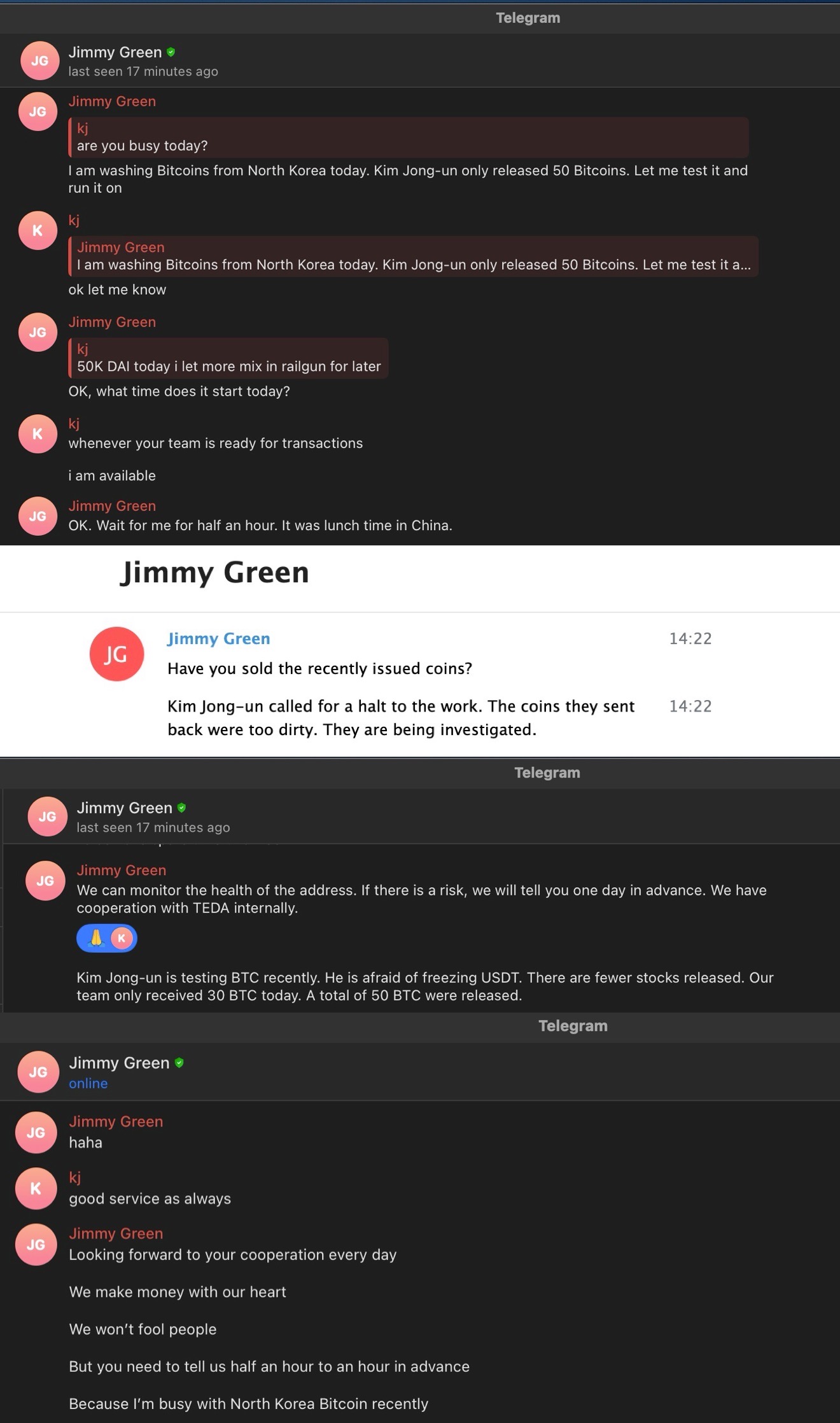
1/ How I infiltrated a Chinese organized crime syndicate that has laundered $1B+ across multiple exploits for Lazarus Group.
Posing as a client, I gathered intel that helped action freezes for the Feb 2025 Bybit exploit and attribute illicit activity onchain.

João Neves retweeted

Hmm… this one is a sexy gem.
$AVOCADO - 0x6b8b8658044A8c7EDD57FD57A5AE9d82bd1B92D9
New launchpad on RH where you can pair basically anything with anything: $NVDA, $TSLA, whatever you like.
Tokenized stocks + onchain trading is still in its cocoon, and Avocado is launching at the right time.
Real product, and the project has started buybacks and burns.
All proceeds from the main token’s 3% transaction tax are used to buy back and burn the main token.
Trading activity → 3% tax → buybacks → burns → reduced supply.
Good flywheel.
Just a matter of time before it sends. Godspeed.

João Neves retweeted

🚨 **Urgente: EUA e Escudo das Américas anunciam sanções coletivas contra PCC e CV - e o governo Lula fica de fora**
Quinze governos do hemisfério lançaram hoje, à margem da Assembleia Geral da ONU, a primeira ação conjunta do Escudo das Américas. O comunicado trata 24 organizações como narcoterroristas e anuncia a intenção de aplicar, cada país segundo a própria lei, congelamento de bens, restrição de visto e imigração, e responsabilidade criminal a quem der apoio material - inclusive logístico - a esses grupos.
Na lista estão MS-13, Tren de Aragua, CJNG, cartel de Sinaloa, Cartel del Golfo, Cartel de los Soles, Clan del Golfo, Barrio 18, ELN, dissidências das FARC, Sendero Luminoso - for e as duas maiores facções do Brasil: Primeiro Comando da Capital e Comando Vermelho.
Assinam o texto os Estados Unidos, Argentina, Bolívia, Chile, Colômbia, Costa Rica, República Dominicana, Equador, El Salvador, Guiana, Honduras, Panamá, Paraguai, Peru e Trinidad e Tobago. Brasil e México não entram. A foto é a dos governos alinhados a Washington. O Itamaraty não assinou.
O Escudo das Américas não nasceu hoje. Trump lançou a coalizão em março, em Miami, como aliança de segurança contra cartéis e o que o governo americano chama de narcoterrorismo. Desde então o grupo ganhou Colômbia e Peru. O Brasil ficou de fora do início e continua de fora agora, quando a iniciativa deixa o comunicado e passa à primeira operação conjunta.
O documento fala em três pilares: econômico, de segurança e de coordenação multilateral. No econômico, os países prometem cooperar, examinar investimentos, proteger cadeias de minerais críticos e privilegiar “fornecedores confiáveis” de infraestrutura digital. No de segurança, coordenar sanções, designações e ações financeiras contra terroristas e criminosos. No multilateral, usar foros internacionais para empurrar ação coletiva contra o crime organizado transnacional.
O pedaço mais pesado é institucional. O bloco diz que vai assinar um pedido formal ao presidente do Conselho Permanente da OEA pedindo reunião de consulta para criar um Órgão de Consulta com base nos artigos 6 e 13 do Tratado do Rio - o pacto interamericano de 1947 segundo o qual ataque a um é ataque a todos. Querem levar o tema a nível ministerial e abrir caminho a uma resolução que facilite ação coletiva contra esses 24 grupos.
O contexto brasileiro é o que muda o recado. Em maio e junho, o Departamento de Estado já tinha designado PCC e CV como organizações terroristas estrangeiras. O governo Lula rejeitou a tese, tratou as facções como crime organizado e classificou a medida como ato unilateral. O Itamaraty chegou a alertar que a designação poderia abrir margem a medidas extraterritoriais - financeiras, migratórias e, no limite, de força. Há poucos dias, Washington voltou à carga e afirmou que o governo brasileiro “falhou em confrontar” as duas facções e que elas teriam transformado o Brasil em hub do fluxo global de cocaína.
Hoje essa acusação deixa de ser só posição americana. Vira política de um bloco de 15 países. As duas maiores organizações criminosas do Brasil entram na primeira lista coletiva de narcoterrorismo das Américas - e o governo que deveria sentar à mesa não está na foto.
Às vésperas do primeiro turno de 4 de outubro, o maior país da América do Sul fica isolado da principal aliança de segurança do continente. O governo Lula rejeita o marco do narcoterrorismo. O Escudo das Américas, não.
João Neves retweeted

Almost a year ago, Cosmos Labs put two ideas next to each other.
Get institutions to use the Cosmos stack.
And find a way for that success to matter to the Hub and cosmos:native.
At the time those sounded like parts of the same plan. I wasn't sure the second one automatically followed the first, so I've been keeping score.
Almost a year later, the first list is pretty easy to read.
Wells Fargo job reqs calling for Cosmos SDK and CometBFT. Progmat. Figure. Ripple. Ondo. Then a 17-company partner network with names like BitGo, Galaxy and OpenZeppelin helping banks with custody, compliance, security and implementation.
@cosmoslabs_io also has an enterprise product line now: ledger software, tokenized deposits, engineering and support.
Whatever you think of the strategy, this part isn't very mysterious anymore.
They are trying to sell boring infrastructure to companies that want their own systems.
I've called it the Red Hat thesis before: open software underneath, paid products and services around making it useful in the real world.
Now look at the cosmos:native side.
Gauntlet @gauntlet_xyz is working on tokenomics.
Injective USDC gives us one actual buyback path, although we still don't know whether the flow gets large enough to matter.
The Hub @cosmoshub is spending roughly $300k getting ATOM into Paxos' brokerage infrastructure. Potentially useful distribution. No direct value accrual to stakers.
And the 17-partner enterprise announcement?
Mentions of cosmos:native: zero.
So why don't these two lists touch?
The answer is simpler than most tokenomics discussions make it sound.
The thing Cosmos sells is sovereignty.
A bank using Cosmos technology gets its own chain. Its own rules. Its own validators. Its own permissions. Its own legal and operational control.
That's part of the reason it would choose the stack.
But that chain doesn't owe the Cosmos Hub anything.
Celestia doesn't pay cosmos:native because it uses Cosmos tech. dYdX didn't. A future bank ledger doesn't either.
ATOM is not a tax on Cosmos adoption.
And that isn't some defect someone forgot to patch. Sovereignty is the product.
Which means the Hub needs a second sale.
It has to offer something those sovereign chains voluntarily decide is useful enough to come back for.
Maybe settlement.
Maybe liquidity.
Maybe asset issuance.
Maybe Eureka becomes part of it.
Maybe productive stake eventually performs some service those flows need and gets paid for doing it.
We finally have more than vague nouns here.
Current Hub work has narrowed to two product ideas: programmable RWA index products over IBC, and direct issuance of tokenized-deposit / RWA-based assets.
That's progress.
It is also still product work. Cosmos Labs says both are being tested technically, commercially and legally, and either could still change or get killed.
So the sequence, as I see it now:
Cosmos sells the stack -> happening
Sovereign chains and assets get built -> happening, unevenly
The Hub builds something those chains choose to use -> being figured out
< WE ARE HERE >
Those flows produce meaningful revenue
cosmos:native becomes economically necessary somewhere in the process
This changes one thing from how I was thinking about it in August.
I kept asking what happens if Cosmos Labs succeeds before ATOM finds a business model.
I'm starting to think some of that is simply the order of operations.
You need customers, chains and assets before the Hub can sell them settlement.
But that doesn't explain away the delay.
Cosmos Labs has said as much itself. Earlier this year it acknowledged that sharing resources between enterprise, open source and the Hub had become a problem, and split them into dedicated teams.
So step 3 isn't something ATOM holders invented on Twitter.
It is work Cosmos Labs says it is doing.
The question is whether they can build something customers actually choose.
Because sovereignty cuts both ways. Those chains don't have to come back.
They can connect directly.
They can settle somewhere else.
They can use another service.
This is where I think my own "toll booth" shorthand was a little too easy.
A toll booth assumes you own a road the traffic has to use.
The Hub doesn't. It has to build a road people choose.
And if people choose it, cosmos:native has to matter somewhere on that road.
Which leads to another question I've been thinking about this week:
who actually grades that work?
Cosmos Labs is owned by the ICF. Hub governance does not control Cosmos Labs.
ATOM holders can reject Community Pool spends, vote against Hub upgrades, delegate elsewhere, fund alternatives and make plenty of noise.
But if ATOM holders decide Cosmos Labs is taking the Hub in the wrong direction, there isn't an on-chain vote that replaces Cosmos Labs management.
That answer sits outside Hub governance.
You might say: fine, replace CL anyway.
Possible in theory. Much messier in practice.
Cosmos Labs now houses much of the team and infrastructure around the Hub: Skip:Go, Eureka, the Mintscan team and Hub engineering.
Replacing the operator means replacing that capacity too.
That doesn't mean CL gets a free pass. It means the accountability question deserves a better answer than "vote them out."
So almost a year after Cosmoverse, I don't think the interesting question is whether institutions will use Cosmos technology.
That case is getting stronger.
The receipt I'm waiting for is much more specific:
a serious customer chooses something the Hub offers, routes real value through it, pays for it, and cosmos:native is economically necessary somewhere in that transaction.
That's when stack adoption becomes an ATOM business model.
We aren't there yet.
The Hub has to earn the flow.

João Neves retweeted

ARC PUNKS GIVEAWAY🎁
Mint is done. Now it’s time to give back.👀
We’re giving away FREE ARC PUNKS NFTs to the community.💎
- Like
- Repost
- Drop your EVM wallet below
Good luck, Punks. 🧡


João Neves retweeted

Robinhood链交易极简上手指南
1.注册FOMO:fomo.family/r/TGweb33
2. 关注大佬 @vladtenev
他会分享行业消息、市场叙事以及各类交易思路。
3. 再盯另一位大神 @unipcs
持仓死拿不动,手握千万美元的 $PONS仓位,是行情风向标,稳居fomo排行榜第一名。
4. 查询代币是否有股权背书:docs.robinhood.com/chain/con…
5. 追踪有股权背书的代币池子:stockyard.rhps.fun/
6. 查看各路FOMO大V的真实买入仓位:wind.jokkimon.club/windvane
7. 超快终端,能够监控FOMO链上全部交易动态:robinhoodtrenches.com/
现在,你已经具备赚取数百万收益的条件了!
冲就完事!

João Neves retweeted

Why did @RobinhoodApp choose to build out their own L2 instead of going with alternative options?
Listen to @sgoldfed from @Offchain on why they chose to build on @arbitrum