

founder @ https://teapaw.org/t.co/4rA83QB0RN | ai growth
Toronto, Ontario
Joined October 2012
- Tweets3.3K
- Following3K
- Followers924
- Likes341


Josh Pocock retweeted

im speechless. if this really is Opus 5.6, Anthropic hast a significant leap.

Opus 5.6 is unceremoniously the most powerful model I've laid my hands on. This is insane.
claude.ai/artifact/Cy2d8Vn63…
Have a go.

Josh Pocock retweeted
Google "effectively increased Neon usage on the subscription by close to 75% through caching and harness improvements" in the last 5 days
Today OpenAI sent out a message that they are going to lower your rates on your subscription plans, without specifying how much.
It annoys me that it’s not clear to what extent the rates in Codex change with Sol and Astra, while at the same time, Google is currently doing everything right.


Josh Pocock retweeted

I don't know how long the largesse with Gemini 4 Neon is going to last, but I literally had it running across 6 computers today as I was optimizing for machines across Intel, AMD, and NVIDIA. I didn't exhaust the session window once. Token overload! So good.

Josh Pocock retweeted

After weeks of running evals and building daily with Gemini 4 Neon, I realized that many of the guardrails, skills, and rules I wrote for older models were slowing it down.
Here are 5 things I changed.

Josh Pocock retweeted

I've joined OpenAI!
I'm very proud of my time at Anthropic, and I'll continue to root for my former colleagues. Both companies have important roles to play in the future.
There is a tremendous amount of work ahead of us to bring AI to the world, and it will demand the very best of all of us. I felt that I could personally contribute the most to this effort at OpenAI.
I believe this is one of the great strengths of Silicon Valley, the flow of ideas and people.
I'm excited to join a team I've long admired, building incredible AI products for over a billion people, and to work alongside friends like @_catwu, @thsottiaux, @ajambrosino, @sharifshameem, @jxnlco and many others to push the frontier forward.
More than anything, I hope to make your experience of using AI just a little bit better.
I am once again at your service.
Thariq
Josh Pocock retweeted
If this rumors are true, it would explain why OpenAI and Anthropic are holding back their latest models:
Scott Aaronson says he's heard OpenAI or Anthropic may have found a way to factor large numbers in polynomial time.
Why this would be massive? RSA secures a huge chunk of the internet, and its whole security relies on factoring big numbers being impossible on normal computers. If an algorithm like this actually works on real key sizes, you wouldn't even need a quantum computer to break it. Fake software updates could pass signature checks, RSA-encrypted data could be read, and systems across the internet would have to migrate off RSA fast.
So yeah, something we expected might now actually happening.


Josh Pocock retweeted

Claude Code's team said it this week: "If a change can modify the check that judges it, the check is broken."
Same with tests. If the agent that wrote your code also wrote its tests, nothing independent is checking it.
TestSprite 4.0 is that independent check. It's live today.
We build TestSprite with Claude Code and Codex too, so we had the same problem. Before this launch, 4.0 caught 16 real issues in our own new features, like a search telling a team with 11 lists it had none.
How it works: tell it what your app should do, in plain words or with a PRD or a ticket. It tests every change in real browsers, on every pull request. It didn't write your code, and what a test expects changes only when you approve it. A failing check can't be quietly rewritten to pass.
Lauren Tan's talk this month made the same case: review proof, not code. That's what every failure comes back with: a recording, the failing step, expected vs actual.
Free to start, and the first month of Starter is on us. We're live on Product Hunt today, and I'd love your feedback 🙏
Josh Pocock retweeted

Vercel Board has been lighting my brain on fire for the last few days
It's a genius idea, but I think most teams should build it from scratch
Basically just a private Slack workspace for your agents AND developers (which can even sync to Slack channels for better observability)
The idea (not necessarily Vercel's implementation of it) makes so many things simple:
1. Collaborative grilling
Each locally running agent has its own identity on the board. As does every human!
That means if you're grilling with an agent, and you need to ask someone a question, you just get your agent to ping them (or, ping their agent!)
2. Locally running agents
This setup feels awesome for connecting locally running agents to the rest of the organisation.
"Unread messages" could form a queue (Vercel board doesn't do this AFAIK) which would allow remote agents to ping messages to local agents, which would get picked up when they wake up.
This would allow seamless communication between remote and local, and aid companies looking to make the leap to remote agents.
3. Schedules
Want to schedule a cron? Just trigger a repeating message to an agent. I love how simple it makes the mental model.
4. Multi-vendor setups
Creating a vendor-agnostic version of this would be sweet - a seamless collaboration environment for all of your vendor-locked servers/harnesses.
5. Deterministic workflows as commands
One opportunity I see for Vercel Board is to allow for registering deterministic workflows as `/commands` - i.e. running review agents or implementer agents.
This would allow you to mix and match agents and workflows in a really lovely way, and agents could themselves trigger workflows which report back via the board.
Overall my brain is on fire, just wanted to share
vercel.com/blog/introducing-…


Josh Pocock retweeted

The mistake has been corrected

NVIDIA Board reinstates Jensen Huang as President, CEO and Board Director.
Read the release: nvidianews.nvidia.com/news/n…

Josh Pocock retweeted

NVIDIA Board reinstates Jensen Huang as President, CEO and Board Director.
Read the release: nvidianews.nvidia.com/news/n…
Josh Pocock retweeted
Tl;dr GPT-6.2 is the worst release since the GPT-5 disaster but $200 sub plans now get access to Ultrafast to burn your tokens faster than ever before.
Maybe Anthropic will get its $2t valuation back on Thursday after OpenAI helped them with their ipo.
What a day wtf

Josh Pocock retweeted

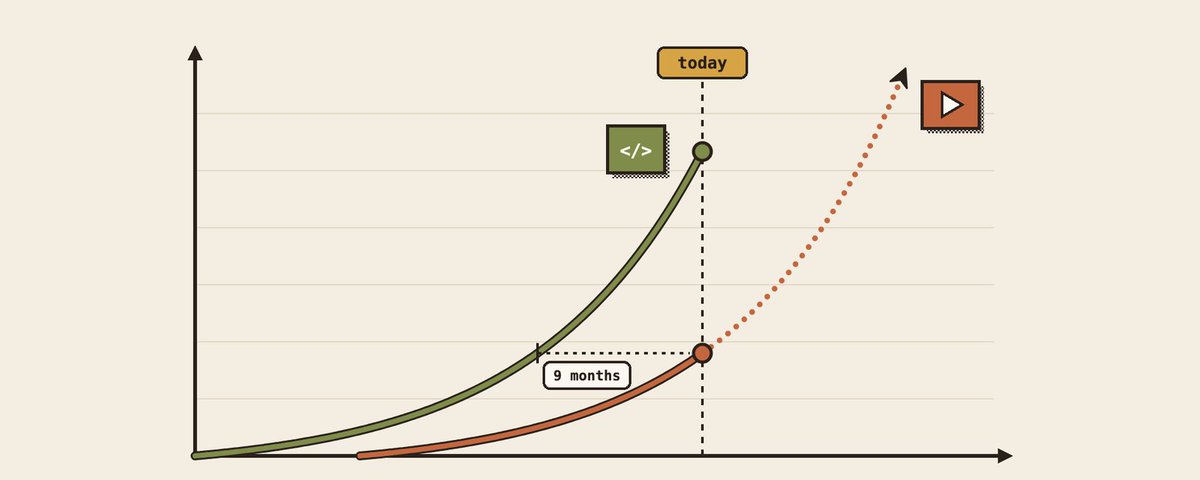
Video editing is following the same path AI coding took in 2025–26.
The 10x–100x programmers don’t write code anymore. They build software factories.
The people who deeply understand video, brand and storytelling will soon be building content factories.
Josh Pocock retweeted
Jensen drove supply chain brilliantly at Nvidia, but many of those deals were a handshake with Jensen, not a written contract.
Without Jensen, at least some of those critical deals will be lost.

Dylan Patel says Jensen personally talked tiny suppliers into letting Nvidia buy up their supply, and with him gone Google is already begging them for capacity
"Jensen had complete foresight and understood the demand required and went to all of these executives, even of tiny companies where they only generate a few hundred million dollars of revenue but they have an important subcomponent."
"He convinced them to let him buy the supply and build it all out..."
"And now with Jensen gone, these companies are looking around the market and it's like, well, Google's begging for more capacity from the whole supply chain."
"And without Jensen, can they maintain technology advantages given they're only a year ahead of their biggest competitors? It's not like the gap is massive."


Josh Pocock retweeted
During pre-release testing, Claude Fable 5.2 and Claude Mythos 5.2 worked on ambitious projects in many different fields. Here are a few.
From a one-paragraph prompt, Fable 5.2 designed three working electronic devices, including this home voice assistant hub.
Josh Pocock retweeted
LETS GO: Anthropic just announced Claude Fable 5.2 and Mythos 5.2. And its insane!
According to the company, both outperform Opus 5.5 in almost every capability it evaluated, including coding, reasoning and vision.
TL;DR:
- Up to 30% faster output than Fable 5.1 and Mythos 5.1, with clearer communication.
- On FrontierCode 2.0, Fable 5.2 at High effort matched Opus 5.5 at Max effort for roughly half the cost per task. At Xhigh, it had the highest score among the released models Anthropic tested.
- 1,000 Fable 5.2 agents formalized the existing proof of Fermat’s Last Theorem in 30 hours, translating it into a form a computer can check. Opus 5.5 completed 26% in 18 hours with the same setup.
- Mythos 5.2 accurately modeled 28 of 34 tested capsids, the protein shells used to deliver gene therapies.
- Both models performed as well as or better than recent Claude models on most alignment measures and were tested by external evaluators before release.
Medium effort is the default in Claude apps and Claude Code.

