

PhD in Preaching student at Baylor University
Joined November 2009
- Tweets1.4K
- Following538
- Followers488
- Likes687





Jonathan S. Nason retweeted

Reading the Old Testament in light of Christ is like watching 𝘛𝘩𝘦 𝘚𝘪𝘹𝘵𝘩 𝘚𝘦𝘯𝘴𝘦 for the second time.
I miss @TimKellerNYC.
Jonathan S. Nason retweeted

I went from thinking the Bible was the most boring book ever to seeing the magic in it.
Years ago, I realized that the Bible is the foundational book of Western civilization. If I was going to be an educated person, I needed to know what it said. Though I was motivated to learn about it, I didn't have the patience to read it or the knowledge to understand it.
Generally, I try to follow my 4th-grade English teacher's advice to read things first-hand. But the Bible seemed too hard, too boring, and too confusing to read on my own. It was a snooze fest. The stories felt outdated in a world of smartphones and fast Internet. Living in the modern world, shouldn’t I be rooting my life in modern books, modern studies, and modern authors?
At the time, I was living in New York when a friend introduced me to the work of Tim Keller. I reluctantly found time to put down the self-help and picked up two of his books instead: The Reason for God and Making Sense of God. It was around that time when I discovered Keller's Questioning Christianity lecture series.
Instead of focusing on the Bible directly, Keller focused on Christianity's relationship with culture and the modern world. He spoke to career-driven Gordon Gekkos who were driven by the glories of the material world, but sensed the emptiness at the heart of such a single-minded pursuit. Instead of referencing scripture directly, he spoke about big-picture themes like identity and purpose, morality and meaning.
This was back when I thought all Christians had the intelligence of sidewalk pigeons. I would scoff at church-goers because I didn’t understand why anyone would worship a sky fairy or follow rules from thousands of years ago. Keller was the guide I needed.
For the first few years, I looked at faith through a cultural lens instead of reading the Bible directly. I literally knew nothing about Jesus or Christianity — and I came to realize how little I knew about my own atheism too. In school, while studying the Declaration of Independence, I’d learned that it’s “self-evident” that “all men are created equal.” Turns out, this defining American ideal is only self-evident if you assume that every person has inherent worth because they’re made in the image of God. I was stumped. Where did my moral compass come from? Do people have inherent value? And if so, is it because every human is a child of God?
In addition to advocating for the life of Jesus and the truth of his message, Keller revealed the many assumptions underlying my own atheistic worldview. He taught me that every worldview requires a leap of faith. Sure, Christianity couldn’t perfectly explain everything in the universe, but then again, neither can any worldview. Astrophysicists say that much of the universe is made up of “dark matter,” which is a scientific-sounding way to talk about a leap of faith
Though I did some Bible studies, I never enjoyed them. They felt more like reading tedious academic papers than drinking directly from the fountain of God’s wisdom. Instead of reading Scripture directly, I joined a small Christian reading group where I was the only non-believer. By showing me coherent ways to interpret reality besides my science-based materialism, books like The Story of Reality and I Don't Have Enough Faith to Be an Atheist loosened the screws on my atheism.
My palate was beginning to change. Like a fine wine, the same flavors that were once repulsive to me started to appeal to my intellectual taste buds. I surrounded myself with wise Christians who were orthodox about scripture and eager to answer my hardest questions about faith. I asked them to dinner and invited myself to Church with them.
This marked a new era. Once again, I found some guides: books, Internet sources, and an in-person leader to show me the way. On the Internet, I'd turn to The Bible Project to answer my big-picture thematic questions. I picked up the ESV Study Bible, which I still read every day on the white boucle couch in my living room (if you like reading on the computer, I recommend The Bible Study App by Olive Tree).
For years, I’d stiff-armed the Bible. Now, I was skipping to a 7am Bible Study led by a devout believer who'd been reading God's word every day for almost a quarter-century, and wasn’t afraid to rebuke my theology.
What surprised me most was how carefully we read. I admired the integrity of our study. We live in a culture of binge-reading where people boast about how many books they can complete in a given year. We did the opposite. We never read more than ~20 verses in a single session and dissected every word, every verse, and every story. (I once spent two hours studying John 1:1-4 — just four verses at a strip mall Schlotzsky's in the Texas Hill Country.)
Never in my life had I read so deliberately. I spent months in the books of Ephesians, Romans, John, and 2 Corinthians, and there's no way I would've known how to read the Bible so diligently on my own. I learned to look beyond English translations, and I use the BibleHub to look up the original Greek and Hebrew whenever possible.
For a translation, I recommend the English Standard Version (ESV) (no, you don’t need to read the King James Version). And If you're going to pick two books, I recommend the Gospel of John and the Book of Romans. Either find a guide to read them carefully with you or follow along with The Bible Project and The ESV Study Bible. Whatever you do, read slowly.
I used to be a serial consumer who’d brag about how many books I read every year. I’d pick up anything and everything. The more, the merry. But the more I study the Bible, the more careful I’ve become about who I read and listen to. Gone are my days as a serial consumer. Frauds, charlatans, and false teachers abound, so be skeptical and vet your sources. In all this time, I’ve had no more than ten serious teachers. Fortunately, that’s all you need.
I became a believer on March 20th of this year, four years after attending my first Tim Keller lecture, and the Bible is alive for me now like no book I've ever read.
These days, I read the Bible and basically nothing else.
Opening it up is the best part of my daily routine. The words twinkle. The stories are supernatural. It's a living, breathing document, and I wholeheartedly believe it's the Word of God, which makes every other book feel dim by comparison.

Jonathan S. Nason retweeted
Sahil Bloom has gained 1 million Twitter followers in 36 months.
He did this with a unique mix of stories, data, and an intense work ethic.
Here's what he's taught me about writing, discipline, and his plan to reach one billion people:
1. Bill Gates popularized the idea of a “think week” because he needed to read, write, think, and sit with ideas. Maybe you need a version of that.
2. The most creative ideas stem from periods of space and stillness. You’re bored, your mind wanders, your thoughts mingle—creative insight strikes.
3. Aim for inception. A writer’s greatest achievement is implanting an idea that takes root in the readers’ minds and reshapes their life.
4. If you're serious about online writing, there's no substitute for showing up every day. Make writing a rule, not an option.
5. Less is more. The 280-character limit on Twitter forces Sahil to be direct and precise. And it’s not just about Twitter…there’s always been a positive relationship between constraints and creativity. Take Dr. Seuss, for example…
6. Dr. Seuss wrote The Cat in the Hat using just 236 words. His publisher believed that was the absolute limit of simplicity and he couldn’t write a book with fewer words. To prove his publisher wrong, he wrote Green Eggs and Ham using only 50 words. It became one of the best-selling books of all-time.
7. Parkinson's Law says that work expands to fill the time allotted for it, so if you want to write more, set strict time constraints.
8. The Centipede’s Dilemma. A centipede’s hundred feet worked in perfect unison, right until a toad asked him: Hey, which feet moves after which? Pausing to consider this short-circuited the centipede’s brain, and he forgot how to move. This is not about toads or centipedes, but the cost of “hyper-reflection.”
9. Warren Buffett is the OG content creator. When you think of a “content creator,” you think of a Youtuber with an iPhone, but Warren Buffet has created “content” (annual letters) for decades and turned it into financial and social capital.
10. The Creative Cliff Illusion. You start inspired, but then ideas stop flowing. You think: that’s it for the day; my creativity has fallen off a cliff. But that’s the creative cliff illusion. Keep going and you will see your creativity ramp up again, and hit greater heights. But if you give up too soon, you will never catch the second wind.
11. No fancy tools. No fancy note-taking apps. Just a dotted journal that fits in his palm.
12. Sahil has one rule though: every time he writes a note, he has to talk about it with someone in 24 hours. This helps him consolidate and clarify what originally caught his attention.
13. The Persuasion Paradox. Have you noticed that argumentative people rarely persuade anyone of anything? Persuasive people don’t argue—they observe, listen, and ask questions. Argue less, persuade more. Persuasion is an art that requires a paintbrush, not a sledgehammer.
14. The biggest gains in life don't come from finding better answers, but asking better questions.
15. Physical wandering unlocks mental wandering. Many of history's greatest thinkers, entrepreneurs, and writers unlocked creative ideas by going on long walks. What’s stopping you? Now you even have a podcast to listen to…
I've linked to my full conversation with @SahilBloom here.
You can also find it on Apple, Spotify, and YouTube by looking at the replies below.
Jonathan S. Nason retweeted

Although we must not be performers, we must be proficient rhetoricians. —@JSNason solaecclesia.org/articles/do…

Jonathan S. Nason retweeted
How you communicate the message is not as important as the message, but it is still important. —@JSNason solaecclesia.org/articles/do…
Jonathan S. Nason retweeted

Want to improve your productivity? Consider developing "Deep Work" habits . . .
jvfesko.com/blog/2023/10/25/…
Jonathan S. Nason retweeted
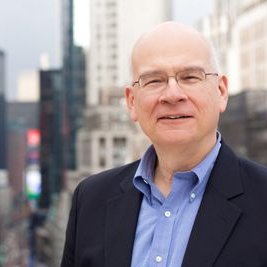
Public faith means going public with what’s in your heart, with humility and respect for others, as we speak of the truth of the gospel.


Jonathan S. Nason retweeted

Hey, friends in New York!
My team is hiring two people to serve with Redeemer City to City in the City Ministry Program. CMP is a strategic urban education that equips present and future leaders for churches and non-profits across metro NYC.
1/
Jonathan S. Nason retweeted
Don’t go to church to be entertained.
Don’t go to receive a spiritual jolt.
Don’t go to meet a quota.
Don’t go to keep God happy.
Don’t go because you “feel” like it.
Go because you need it. You need your family, and they need you. Go because the Savior you share is worth it.
Jonathan S. Nason retweeted

Why would we think a healthy family requires regular loving discipline but a healthy church family does not?

Jonathan S. Nason retweeted

We’re giving away two @CrashPunks NFTs –based on Snow Crash, the original metaverse!
We’ll announce the winners in our weekly newsletter. To enter:
1. Follow us & RT this tweet
2. Sign up for our newsletter (in bio)
Winners announced in next week’s newsletter on Mon, Dec 20th!
Jonathan S. Nason retweeted

It's amazing to me how many Christians who rail against #cancelculture have cancelled their church membership over disagreement with their church leaders this past year over things that, compared to the gospel, will probably seem rather insignificant in light of eternity
Jonathan S. Nason retweeted
One Question Survey! Would you help me with a research project? Thanks.
survey.app.do/theology-29707…

Jonathan S. Nason retweeted

Maybe -- just maybe -- four decades of gospel-deficient, application-focused preaching and teaching isn't good for us. Maybe pragmatic Christianity makes pragmatic Christians with pragmatic theology.

A new survey finds that a majority of people who describe themselves as Christian accept a “works-oriented” means to God’s acceptance. thegspl.co/3kpHijH
Jonathan S. Nason retweeted

My response on the decision by Grace Community Church’s elders to engage in civil disobedience. 9marks.org/article/a-time-fo…

Jonathan S. Nason retweeted

"If a pastor or theologian can't distinguish "black lives matter" from Black Lives Matter, I sure can't trust you to handle the hypostatic union, the sacraments, or other fine points of theology that require significantly deeper levels of thought and study."
Jonathan S. Nason retweeted

“We are asking almost half the population of our state to salute a symbol that has (undeniably) been used for well over a century to indicate their own country’s and state’s rejection of their humanity and equality. That is utterly unconscionable.” thegspl.co/2A1mblA