

Make Informed Medical Decisions | Sourced from .gov websites. | For informational purposes only. | Not medical advice.
Joined October 2020
- Tweets473
- Following36
- Followers2.8K
- Likes490



Pinned Tweet
Welcome to “Well Considered”—the podcast that brings clarity and confidence to the medical decision-making process. Listen now on Spotify and Apple!

I've been taking a break from X. Sign up for my weekly newsletter to stay in the loop on some culture-shifting, game-changing, and monumental projects I'll be announcing soon...
justtheinserts.myflodesk.com…
Alexandra | Just the Inserts retweeted

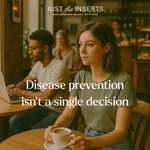
Disease prevention isn’t a single decision. It’s a daily rhythm.
It’s what we eat, how we sleep, the way we manage stress, spend time outside, and care for our bodies and minds. These small, consistent choices may not make headlines, but over time they add up. They either support our ability to prevent illness or quietly wear it down.
This isn’t about choosing one path over another. Whether you accept, delay, or decline vaccines, the conversation in our latest podcast episode is relevant to everyone. Because protecting your health isn’t about one product. It’s about the full picture.
It’s a lifestyle. One that’s built day by day, choice by choice.
Listen to the latest episode of “Well Considered” to explore how your everyday choices can work with or without medical products to create real protection for your body, your family, and your peace of mind.
podcasts.apple.com/us/podcas…
When we talk about informed consent, especially around vaccines, it’s important to step back and look at the bigger picture of disease prevention. Because making an informed decision means understanding all the tools available to you, not just the pharmaceutical ones.

In Part Two of our conversation with environmental toxicologist Ashley Everly, we move from the “what” of vaccine shedding to the “now what.” If you've felt uneasy after learning that transmission can occur after certain vaccinations—even ones not traditionally discussed—this episode is your compass for living with clarity and confidence, not fear.
Ashley shares down-to-earth, practical ways to strengthen your family’s health in a world where shedding may be possible. From building immune resilience and supporting natural detoxification to understanding the power of birth, breastfeeding, and emotional wellbeing—this episode is packed with encouragement and actionable insight.
Testing the waters? Many vaccines on the CDC schedule have equal or worse adverse reactions listed on FDA-regulated manufacturer inserts. If this is a sign of taking vaccine safety seriously, a slew of vaccines are about to be pulled from the market.
This Post is from an account that no longer exists. Learn more
I had no idea when I recorded this video eight months ago that it would be of our future FDA Commissioner and US Surgeon General.
Sure, there is still much work to be done, but it’s truly incredible how far we’ve come in less than a year!
Congrats @CaseyMeansMD
Informed consent isn’t just about saying yes or no—it’s about having the freedom to choose what’s best for you.
I tend to focus on those who delay or decline, since they often run into more roadblocks, but everyone’s welcome here.
If you’ve ever used “Just the Inserts” before choosing to move forward with a medical product, I’d love to hear how it helped!
Before Part 1 of our two-part podcast series drops on Tuesday, meet Ashley Everly: a toxicologist with a degree in environmental toxicology and experience working in toxicology at California’s Environmental Protection Agency (EPA).
So, government-owned mRNA? As stated in this article, transmission prevention hasn't been accomplished with past mRNA medical products. Why invest even more taxpayer dollars in this tech when it hasn't been effective in the past?

News: @HHSgov, NIH launch next-generation universal vaccine platform for pandemic-prone viruses go.nih.gov/KlW2PD8
For those wanting to verify Sec Kennedy’s statement about MMR vaccines and aborted fetal cells, here’s a great listen with an infectious disease scientist:
podcasts.apple.com/us/podcas…


Kennedy delivered a sharp, measured response. First, he pointed out that measles is a far smaller problem in the U.S. than it is globally.
He explained, “Right now we have about 842 cases, Chris. And Canada, they have about the same number. They have one-eighth of our population. Europe has ten times that number. Our numbers have plateaued.”
He noted that for years, the CDC has insisted the only way to manage measles is through universal vaccination. But Kennedy challenged that approach.
He argued that people who have concerns about the MMR vaccine—whether it’s due to aborted fetal debris or DNA particles—deserve access to treatment options.
“And that’s what we’re developing at CDC right now,” Kennedy said, “protocols for treating measles.”