

trying to post useful stuff more often
Joined August 2023
- Tweets5.4K
- Following862
- Followers518
- Likes69.6K


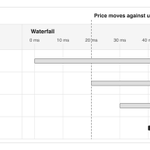
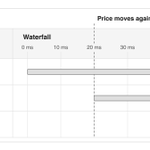






you’d want to focus on “spamming” more at the time when it’s most likely to be cancelled successfully after your order placement, this way you can save up on your request budget.
8
Then with enough data on this cancelling path, you can build a rough model for when you’ll get back the cancel response,
2
9


Also, you don’t want to be cancelling then sitting still and waiting for a reply to comeback that says we can’t find your order. You can make your system better by utilizing fully your api rate limits.
1
10
In these scenarios again you want to design your system so that you can cancel the order, before the exchange sends back the response of your order placement.
1
8
Getting into more of the details, there are also cases where you send in an order and by the time the response comes back from the exchange the price is already adverse.
1
8
Then B’s best ask jumps to 54¢. Our 52¢ quote is still live, but now we’d lose 2¢ per share if it fills and we hedge at the new price.The new hedge price already tells us what to do. Cancel the maker quote first, then work out where to quote next.

1
10
Say we’re making on Exchange A and taking on Exchange B. We post a sell order at 52¢ on A. If it fills, we hedge by buying immediately at B’s best ask of 50¢, making 2¢ per share before fees.
1
14
The time between seeing a price move against your quote and sending the cancel is crucial. Measure it and drive it down. Every extra millisecond is another millisecond someone can trade against a quote you already know is bad.
1
17
As soon as the price is adverse, you don’t want your system to sit there and recalculate the fair, run some models, run some risk check code etc.
1
30
Cancels are an important part of market making. If you don’t get them right, you will lose greatly. You want to design your system in a way such that as soon as it is adverse you want to send the cancel order to the exchange right away.
1
53

