
At the Edge of Robotics.
Joined February 2010
- Tweets46.3K
- Following535
- Followers2.4K
- Likes173
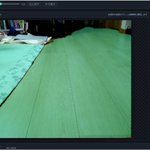


#tipronTips もはや黒魔術過ぎて何も言えないんだけど、Tipronをウェイクアップワードに対応させた。
アレクサだと家のAlexaとバッティングするので「ハロー、エモパー」になった。
Tipron内部のmsm8909で動いてる。すげえ嘘くさいんだけど本当。 – at Funabashi-shi, Chiba
Tipron深度センサついてるんだから、そっちで認識すりゃいいじゃんって気がするんだけど、Tipronの無線が年々つながりにくくなっていて・・
可能であれば、USB-Wifiを別付けしてそっちでやりたいんすよね・・
TipronのUSBと深度センサは排他。
1
87
yoneken retweeted

全世界のロボット研究者「知ってた」

フッ
短い夢だったな
ヒト型ロボ、普及の現実解は「車輪式」 トヨタは世界の工場に導入へ - 日本経済新聞 nikkei.com/article/DGXZQOUC1…

yoneken retweeted

KiCad基板設計、AIが配置・配線方針を学習
🔹基板245枚でQwen2.5-Coder-32Bを追加学習
🔹AIが配置・配線方針を生成し、専用ツールが実際の処理を実行
🔹未見23枚中19枚で全ネット接続、11枚でDRCエラーゼロ。Gemini・Claudeを上回る
開発:Simon Bullock氏
情報元はリプ欄。


yoneken retweeted

github.com/pf-robotics/kacha…
GitHubカチャカAPIのQ&A。
一時期回答者がいない状態でしたが、最近私が主導して回答するようにしていました。
カチャカという製品の成功は、製品そのものの性能もさることながら、APIを使った開発者のエコシステムで育てられたところが大きいので、大事にしたいと思います。

さてさて、ぼちぼち収束させていきます〜
参加検討している方は、そろそろ確定させてください。
12/23(水) 新宿です! – at Chiyoda-ku, Tokyo

ロボ忘年会2026を開催します!
12/23(水)で場所は新宿。ロボット屋さん(自称可)であればどなたでも歓迎ですので、参加よろしくお願いします!
robonomi.connpass.com/event/…

yoneken retweeted

『”せーの”で運ぶヒューマノイドたち』
heaveho-humanoid.github.io/
リーダーの音声で動きを同期し、各機体が全身を制御。
2台で学んだ制御を再学習なしで実機4台・シミュレーション10台へ展開。
#humanoidrobot #PhysicalAI #MultiRobot #collaboration #locomotion #manipulation #HeaveHo
yoneken retweeted

現場で結局車輪式が導入されるからといって,二足歩行のヒューマノイドを開発に意味がないということはない.それは研究=未来の可能性への投資だから.
nikkei.com/article/DGXZQOUC1…
yoneken retweeted

We enable open-source VLM to control robot in real-time !
Check our local-hosted Qwen3.8-Flash-Next to zero-shot control xarm in 5hz high frequency without any real-robot data training!
This is 1x speed video without any editing:
yoneken retweeted

汎用モデルでロボットアーム制御するやつをまとめてみた。一口に言ってもいろいろあって混沌としてるし、わかりにくいので自分の整理のために。観点変更とか新しい話が出てきたらアップデートしていく。まとめ途中なので真実は1次情報参照して判断してください。
masatoka.craft.me/7ehfu3Jz1h…

yoneken retweeted

ムーンショット目標3 河原塚MIRAIヒューマノイドでは技術資料を公開していきます。
第一弾として、Unitree G1の安全な実験には欠かせない、 緊急停止スイッチの実装方法を紹介します。
github.com/mirai-humanoid/pu…
ぜひご活用ください!

SAMだけでだいぶいいかんじに認識してくれるんだけど、カメラ自体の周辺減光やほんの少し惜しいところを修正して、低スペックCPUでも低レイテンシで動かしたい、自宅の環境でというワガママをかなえるためにせっせとアノテーション職人してる。
ちなみにこのツールはGPTが作ってくれた。

1
3
392
yoneken retweeted

Two years ago, we released Genesis, a universal physics engine for robotics.
Today, I’m excited to announce 🍎 Eden — a robot learning framework built from the ground up for agents, unleashing full potential of Genesis.
One task definition. From simulation to real robots. Sim-to-sim and sim-to-real just got easier.
Coding agents build tasks 1.6–4× faster than in Isaac Lab.
🧵 1/11

yoneken retweeted
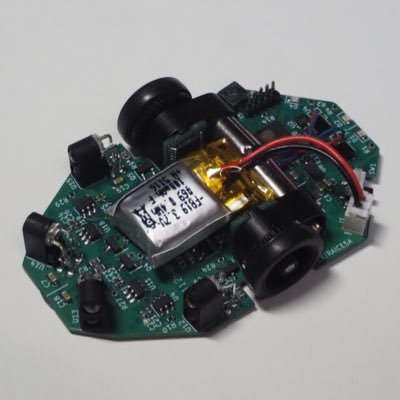
「オレ達は昔からフィジカルだった」ってキャッチコピー考えたの誰ですか?天才ですか?
ロボ忘年会2026 を公開しました! robonomi.connpass.com/event/… #robonomi
yoneken retweeted

CoRL 2026 just wrapped in Austin, and the message from the robot learning community is clear: the bottleneck is no longer the policy architecture. It's data and compute economics.
Context: 2,094 submissions (~3x last year), 687 accepted (32.8%).
The papers I think matter most 👇
🏆 SuperMimic (UC Berkeley) — Best Paper
Instead of brute-forcing humanoid motion tracking with massive parallel sim RL, it learns one differentiable world model of the dynamics shared across an entire motion library, then trains the policy through short imagined rollouts.
→ ~3 hours on a single H100, vs. ~21K GPU-hours (128 GPUs × 7 days) for NVIDIA's SONIC
→ Fails on 25 of 129,514 motions (baseline: 179)
→ Transfers to a real Unitree G1
GRAIL (NVIDIA, UCLA) — Best Paper finalist
Generates 20K+ humanoid loco-manipulation sequences from 3D assets + video priors, without ever filming a person. G1 policies hit 84% pick-up and 90% stair-climbing success.
EgoScale (NVIDIA, UC Berkeley, UMD)
A VLA pretrained on 20,854 hours of action-labeled egocentric human video. Validation loss drops log-linearly with hours (R² ≈ 0.998), a clean scaling law for human-to-robot transfer. +54% avg success on a 22-DoF hand.
DreamZero (NVIDIA)
A 14B world action model running at 7 Hz. Reports >2x generalization vs. leading VLAs, and adapts to a new robot body with ~30 min of play data.
π0.7 (Physical Intelligence)
Conditions training on *how* a task was done: speed, a 1–5 quality score, mistakes, control mode. Failed rollouts and interventions become training signal instead of getting deleted.
RoboTTT (NVIDIA, Stanford, et al.)
Test-time training stretches visuomotor context to 8,000 timesteps. The only model tested that finishes a 5-minute, 10-stage assembly.
T-Rex (UC Berkeley, et al.)
Puts ~100 hours of tactile data directly in the action loop: 30%+ higher avg success than the best baseline across 12 contact-rich tasks.
ATHENA
Makes data-influence scoring for a billion-parameter VLA ~313x cheaper, and matches full-data fine-tuning with only half the demos in sim.
My takeaways:
1. Human video is now a real scaling axis, but action labels matter more than raw hours.
2. World models are becoming either the policy itself (DreamZero) or the training engine (SuperMimic).
3. Training compute is collapsing. On-robot inference latency is the new bottleneck.
4. Curation beats collection. Knowing which data to keep (ATHENA, π0.7) is worth as much as getting more.
5. Touch is the next data layer.
Caveat: most numbers are author-reported from 2026 preprints and not yet independently reproduced.
Physical AI is shifting from "scale the model" to "engineer the data flywheel."
#CoRL2026 #PhysicalAI #Robotics #RobotLearning