

Founder & creative director The editing team creators dream of working with. @cr8tornick @jadecap_ @lindenchasteen
Join the waitlist ➜
Joined November 2021
- Tweets5.3K
- Following1.1K
- Followers3.7K
- Likes7.9K





How this startup got 4 million views!!!!!
Chill out buddy, an agency charged $14k for it.
$2k went into making the actual video
$1.4k went into paid retweets to impress investors
The rest is history.
I swear X is becoming the next linkdin.
YouTube hit 15.8% of all US TV watch time in August.
Netflix was at 7.7%.
MrBeast says his videos doubled to around 25 min.
Most of you still edit like the viewer is a 19 year old watching a dude perfect video on their phone.
A growing chunk of the audience is a 55 year old on a couch with a remote.
AI made our editors and animators faster. It didn't make them better.
Here's the split we see right now:
Fast now:
- Transcripts and rough assembly
- Captions
- Finding the best moments in a long stream
- First-pass cleanup and masking
- Versioning one video for every format
Still human:
- Pacing
- Knowing when to hold a shot one beat longer
- Timing an animation to the voice
- The joke landing
- Finding the story in the footage
The editors winning right now hand AI the first list so they can spend all day on the second.
Everything Grok Bot did for me this week.
I run 3 creative companies & my content runs on a team of AI agents (built on Grok Bot).
Here's what they handle:
Content brain: holds my story, clients, results and voice. Every post starts there, so nothing sounds generic.
Weekly writer: every Tuesday it writes next week's posts and schedules them.
Reply bot: any post that passes 20 likes gets a reply with the right link. It answers commenters too.
Reference learner: I send it posts and reels I like. It tells me what fits my brand and saves the lessons.
Quote post writer: I paste a post plus my side of the story and it writes my take.
Graphics: builds every visual in my own style (this one included).
Fact checker: strips any claim I can't back with real numbers.
Chief of staff: shares my rules across every bot, so one fix applies everywhere.
Learning coach: turns the YouTube channels I learn from into a searchable brain.
Outreach heads: one per company, finding clients while I make content.
I bring the story (they ship it).
How are you using AI for your content?


If you think Thumbnail matters more than Editing.
YouTube's thumbnail test picks the winner by watch time, not clicks.
So the platform is literally grading your thumbnail on how good your edit is
Exactly what happened with one of our clients.
The niche was easy but very competitive, so we flipped the angle slightly
Validating this took 2 years though.
Was just a matter of time before we started winning.

Nowadays, everyone understands Outlier Theory.
Everyone knows how to "Niche Bend".
Anyone can use tools to find breakthrough channels the moment they take off.
So why do so many still struggle to build successful YouTube channels?
Because finding opportunities is easy. Validating them is the hard part.
I've spent years mastering this skill, and it's why I've consistently identified winning opportunities for clients starting from zero.
It's why I've taken three channels from 0 to 100k+ subscribers: Justicul, Out Of Bounds, and Agent Flappy.
And why a client who started from zero is now on track for her first $8–10k month, just three months after monetization.
How? Time in the market.
I've been doing this for years, and one thing I've learned is that frameworks, tools, and trendy terminology come and go.
But the ability to recognize patterns and validate opportunities is what consistently produces results.
It's why I was sharing successful channels two years ago, and why I'm still sharing new ones today.
This skill has been the biggest reason I've managed to stay relevant and consistently produce results while other gurus come and go.
My biggest advice? Watch YouTube every day. Study what works, learn to recognize patterns, and master validation.
That's how you ACTUALLY get ahead of 99% of people..


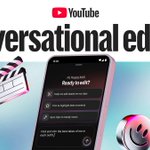
YouTube just announced a chat-based editor that trims pauses and fixes pacing for free.
If your editing service is "removing the ums", your competitor is now a button.
Nobody's automating the part where you decide what the video is actually about.

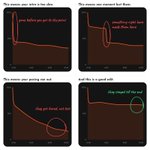
This metric is telling you exactly what's wrong with your video.
Here's how to read it.
- Steep drop in the first 30 seconds = your intro is too slow
- One sudden cliff = one moment lost them
- Slow slide to the bottom = your pacing ran out
- Flat line to the end = a good edit
Save it so you can check against your next video.

I watched Farza's 47 min @ycombinator talk on launch videos so you don't have to.
What he says in the video:
• Stop calling them launches. Ship demos every week.
• Views aren't the metric.
• Run the "did my eyes stop?" test.
• Script every line, then rehearse until it sounds off the cuff.
• Track conversion per channel.
• Targeted beats viral.
• Beats, not edits.
• Audio matters more than anything.
His challenge: 10 minutes a day, film what you worked on with your phone, post it for 30 days straight.
Full video: 👇

There’s a misconception that a successful launch video needs to cost tens of thousands of dollars and feel like a high production commercial. But @FarzaTV has a different approach.
Farza is the founder of @heyclicky and previously built Buildspace, one of the largest online schools for people working on their own ideas. He’s been making videos for over a decade, and today his posts regularly get millions of views. Rather than treating launches as rare, high-stakes moments, he’s made them part of the everyday process of building a company.
Farza sat down with YC’s @aaron_epstein to share his playbook for turning demos into stories people actually want to watch. He breaks down how he scripts videos that still feel off the cuff, why founders should launch constantly, and and how to figure out which channels actually convert.
01:44 — Launch Constantly
03:38 — Start Shipping Demos
05:02 — Show the Process
06:07 — The Clicky Launch
07:43 — Write a Hook That Stops the Scroll
10:30 — Why Farza Scripts Every Video
12:04 — Designing the First 10 Seconds
15:15 — Demo-Driven Development
17:25 — You Have to Take a Thousand Shots
20:48 — Farza’s Formula for Videos That Convert
23:01 — Turning Demos Into Stories
24:53 — Show What You're Actually Building
29:11 — Finding Customers on Social Media
31:02 — Which Platforms Actually Convert?
39:01 — Why Farza’s First Hire Was a Filmmaker
40:49 — The Video Stack
45:41 — The 30-Day Launch Challenge

How to make a YC demo that actually helps your application (backed by evidence).
It shouldn't look like an ad. It should look like a founder who knows exactly what their product does.
What I'd show:
• The product doing one real job, start to finish
• Your actual screens, even if they're rough
• A real user moment if you have one (a signup, a workflow, a result)
What I'd avoid:
• Glossy animation covering a product that isn't there yet
• A voiceover selling a "huge market"
• Mockups dressed up as a finished product
And you don't need a polished product to make one. If you're early, walk through the problem and what you've learned.
If you've launched, show people using it.
Don't fake a UI you haven't built.
I do video and feature demos for startups, and the ones that get in are the ones that make it ridiculously easy to understand what they're building (and why someone would want it tomorrow).
A few controversial things I believe after years of editing and animating for other people:
1) Pacing beats polish. A fast, clear edit beats a beautiful slow one.
2) Most motion design is decoration. Good motion design is explanation.
3) The best edits are invisible. If the viewer notices the transition, it failed.
4) Streamer editors are the most underrated editors on the internet. They find a story in hours of footage nobody planned.
5) Sound design does more for retention than any zoom effect ever will.
6) The best clients argue about the story. The worst ones argue about the font.
Metrics that matter on each platform.
X = Bookmarks and Saves
Instagram = Shares and Saves
YouTube = Retention
Optimize these to 10x your results.
If you're making videos just to fill a space.
Then my friend has a good point.
But if you're a company that cares about how it's perceived by customers and investors.
That placeholder Ai video does more harm than good.

he just doesn’t get it 😂
everyone knows a skilled motion designer will most likely do a better job than AI.
but there’s something called “good enough.”
AI motion design might not be as polished as what a professional would create, but the real question is, does it look decent enough and communicate the message effectively?
if it does, then it has served its purpose.
the argument was never that AI motion design is better. it’s simply a cheaper alternative that can still get the job done.
and for some people, that’s all they need.
A designer just got 2.6M views on animated explainers made with Claude and code.
No After Effects.
I run a motion studio, so people keep asking if this scares me.
It doesn't.
AI made the first 80% cheap (and the last 20% is where clients pay).
Taste, timing and knowing what the founder actually needs.
That part still needs a person.

holy f*ck this designer got 2.6M views making animated explainer videos with Claude
→ 10 videos posted
→ 1.6M+ views on Instagram
→ ~1M views on TikTok
→ no After Effects
→ animations made with code
and the crazy part?
he turned the entire workflow into reusable Claude skills
you pick a visual style, give Claude a topic, and it writes, storyboards, and animates the video for you
4 different animation styles, from clean 3D explainers to abstract motion graphics
he even made one free to try
supply.madebyoversight.com/v…
save this and try making your first animated video 🚀

ALT Screenshot showing he made 1.4 million views in the last 15 days

ALT Screenshot showing he made 800 K views in last 20 days in TikTok