

status: 😴 papers: https://xitter.cf/t.co/ZbZv6Cetlw thank @papers_anon for keeping the dream alive
Joined June 2023
- Tweets3.5K
- Following495
- Followers3.3K
- Likes24.5K






Pinned Tweet
3 days ago i set out to build an NES emulator in a couple of hours
i'm a couple of days short, but here it is
kaiokendev.github.io/nes/


meeting many who do not have either good instinct, good taste, or good discernment
they wont survive
even fewer who can distill those into a distributable framework - cogs in the machine, them
kaio ken retweeted

We’re sharing a solution to the Navier-Stokes Millennium Prize Problem, one of the deepest problems at the frontier of mathematics.
The proof was produced by a group of agents, using an OpenAI next-generation model significantly more capable than GPT-6 Astra.
The problem concerns whether the description of smooth three-dimensional fluid motion modeled by the Navier-Stokes equations can break down. It has remained unresolved for roughly 90 years.


kaio ken retweeted

Introducing Atlas:
The world's first multimodal world model that generates image and video frames with pixel-perfect camera control and reconstructs them in 3D.
Model the world, move the camera, and simulate space & time.

kaio ken retweeted

Melee.c - super smash bros melee, decompiled and reverse engineered into 5000 lines or so of c
All done with deepseek flash 0731, from my phone, while I'm hanging out with my newborn

kaio ken retweeted

Introducing InfiniteDiffusion, my independent paper accepted to #SIGGRAPH2026!
I have one RTX 3090 Ti. No funding, advisors, or team. By day I'm a new grad SWE at Walmart.
The paper has two main contributions:
- InfiniteDiffusion: a new approach to infinite generation with diffusion models.
- Terrain Diffusion: the world’s first learned procedural terrain generator.
Here’s why this matters, and how they are connected. 🧵
kaio ken retweeted

I’m excited to share that I’ll be joining OpenAI and look forward to working with the exceptional team there.
It was a difficult decision to move on. I’m incredibly proud of the amazing team at Google and everything we’ve built together. It has been an honor and a pleasure to work with all of you.


kaio ken retweeted

1/ You can shrink a language model's KV cache by 200×, in a single forward pass, and it still answers correctly.
At 256k context that's 36 GiB of cache down to ~360 MiB, with no change to the base model.
Here's how we did it 👇

kaio ken retweeted

Fable 5 is state-of-the-art on nearly all tested benchmarks, with exceptional performance in software engineering, knowledge work, scientific research, and vision.
The longer and more complex the task, the larger Fable 5’s lead over our other models.

ALT Benchmark table titled Mythos 5 & Fable 5, comparing Claude Mythos 5 and Fable 5 against Claude Mythos Preview, Claude Opus 4.8, GPT 5.5, and Gemini 3.1 Pro.


kaio ken retweeted

Why are generative models so data-hungry?
Maybe because we ask them to predict raw tokens/pixels when predicting in latent space can yield an exponential gain in sample complexity!
Proud of our new work with @alesfav and @MatthieuWyart 🧵

kaio ken retweeted

『METAL SLUG』の開発中、魔法使いと呼ばれていた天才プログラマー、ANDY君が作ったドット絵エディター『キャメル』。
それは、まさにドッターたちにとって、夢のようなツールでした。
その名前は、当時ANDY君が好きだったタバコ『Camel』から取ったもの。
ツールのアイコンには、タバコのパッケージに描かれているヒトコブラクダ『オールドジョー』を、ANDY君自らドット絵で描き起こしたものを使っていました。
アイレムで使っていたドット絵エディター『さだやんペイント』には、『海底大戦争』でSUSUMU君が表現していた水中背景の揺らめきのような、ラスタースクロール表現を簡単に作れる機能があったんです。
その機能は『キャメル』にも引き継がれており、『METAL SLUG』でも、砂漠の遠景を陽炎のように揺らす表現などに使っていました。
その機能を使い、さらに一歩踏み込んだ表現として作られたのが、UFOが放つトラクタービーム等のエフェクトです。
トラクタービームの絵は、ビームの形と重なる背景の絵をそのまま使い、その絵のカラーパレットを、発光して見える数種類のカラーに入れ替えながら、さらにラスタースクロールをかけることで、ビームを通して見た背景が揺らいで見えるように表現しているんです。
このエフェクトを作ったのは、ドッターのTOMO君なんですが、UFOと背景の座標を完璧に一致させないと、なんちゃって半透明に見えなくなってしまうので、TOMO君は敵配置担当のmeeher君に、こう念を押しました。
「ビームエフェクトを1から作り直しになってしまうから、UFOと背景の座標は絶対に変更するなよ!」
すると、meeher君は、
「わかった、絶対に変えない」
と言っていたんですが、数日後UFOの位置を変えてしまいます。
meeher君は、TOMO君が、とんでもない手間を掛けてあのエフェクトを作っていたことを理解していなかったようで、めちゃくちゃ怒られていました。
あの頃のTOMO君はスケジュール度外視で、納得がいくまで時間を使ってしまうドッターだったので、通常の担当作業に組み込むのは難しかったんです。
そこで、後輩たちの絵の手直しや、クオリティアップに繋がる作業を、やりたいようにやらせていました。
手が遅くても良い仕事をするクリエイターには充分な時間を与え、作品全体のクオリティアップに努めてもらう。
そういう贅沢な人員配置も、メタスラの拘りの一つかもしれません。
あの半透明に見えるエフェクトは、そうやって時間を気にせず動ける存在と、『キャメル』があったからこそ生まれた表現なんでしょうね。
#METALSLUG #PixelArt #retrogaming
kaio ken retweeted
Introducing Claude Opus 4.8: it builds on Opus 4.7 with sharper judgment, more honesty about its own progress, and the ability to work independently for longer than its predecessors.
Available today at the same price.

ALT Benchmark table showing how Claude Opus 4.8 compares to its predecessor and to other models on tests of coding, agentic skills, reasoning, and practical knowledge work tasks.
kaio ken retweeted
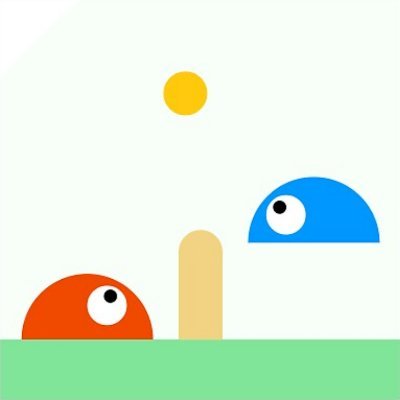
For over a decade, we’ve accepted that end-to-end backprop is the only way to train deep networks. But holding the entire network in memory all at once is why AI training is hitting a resource wall.
We found a new way to break the network into blocks and train them independently. The trick? Treating the network’s forward pass like a diffusion model denoising a signal.
This reinterpretation slashes the memory needed to train deep models. In our #ICLR2026 paper (arxiv.org/abs/2506.14202), we matched end-to-end performance across ViTs, DiTs, and LLMs. We did this while training just one isolated block at a time.


Introducing DiffusionBlocks: Block-wise Neural Network Training via Diffusion Interpretation
pub.sakana.ai/diffusionblock…
What if we didn’t have to hold an entire neural network in memory to train it?
Standard neural net training optimizes all parameters jointly. As a result, the memory required during training grows linearly with the depth of the network.
In our #ICLR2026 paper, we propose DiffusionBlocks, a principled framework to train networks one block at a time, drastically reducing memory requirements while matching end-to-end performance.
With DiffusionBlocks, we split the network into blocks and train them one at a time, so you only need memory for a single block.
How? We explicitly assign each block a role: to move the representation a little closer to the target than the block before it did. That role turns out to be precisely what a diffusion model does, step by step. Each block only needs to optimize its own objective and can be trained independently.
We validated this across five different architectures:
• ViT
• DiT
• Masked diffusion
• Autoregressive transformers
• Recurrent-depth transformers
In each case, performance is competitive with end-to-end training while using a fraction of the memory.
This perspective also extends naturally to recurrent-depth (Looped) transformers, which apply the same network iteratively and normally require expensive backpropagation through time (BPTT). Viewed through DiffusionBlocks, we can replace those multiple iterations with a single forward pass during training.
Read our paper and code, to learn more.
Paper: arxiv.org/abs/2506.14202
GitHub: github.com/SakanaAI/Diffusio…
🐟
kaio ken retweeted

🚨New Optimizer Paper
AMUSE: Anytime MUon with Stable gradient Evaluation
AMUSE combines Muon with Schedule-Free-style gradient evaluation for stable anytime training without LR decay.
• Stronger 124M / 720M / 1B pretraining
• Strong ImageNet / ViT fine-tuning performance.

kaio ken retweeted

Everyone is always rooting for you. Your parents want you to be a great son. Wife wants you to be a great husband. Your boss wants you to be a slam dunk hire. Every first date you’ve ever been on they’ve been rooting for you to get laid. Every time you started to tell a joke people hoped it would have a hilarious punch line. Your proximity to anyone is a reflection of themself, meaning the deck is never stacked against you, and your failures are completely your own

