

全球社会与经济观察 永远的产品经理 | Used to be a legit PM AI builder,X Building & observing
Huntington Beach, CA
Joined January 2010
- Tweets12.8K
- Following7.4K
- Followers9.2K
- Likes4.2K






Trump's tolerance for his dear Putin is even higher than MAGA's tolerance for their dear Trump.
He reportedly brushed off Russia's earlier incursions into Poland as "little missiles, by mistake." Hours later, Russian missiles landed in Poland again.
Poland calls it a deliberate provocation. What will Trump call it this time?
1
1
44

Bitcoin Breaks $59,000:
The Trump Story Is Over
Bitcoin is trading around $58,800, below $59,000 and at its lowest level since September 2024. In the past 24 hours, more than 290,000 traders were liquidated, $1.89 billion in total, and 91% of it was longs.
In my view, Bitcoin is, at its core, a Trump trade.
Its most decisive rally began when Trump ran for a second term and embraced Bitcoin on stage at the Bitcoin Conference. People placed their bets. Then he won and returned to the White House, and the price kept climbing. The stories grew bigger along the way: $1 million a coin, even $10 million.
But think it through, and that cannot happen.
First, Bitcoin cannot be a national reserve.
Anything a country holds in reserve must have a clear origin. Bitcoin's creator is still unknown, and is estimated to hold about 1 million coins that have never moved.
If a country truly held Bitcoin as a reserve, a stake as large as a sovereign's own would sit in the hands of someone nobody can identify.
No country that cares about its own financial stability would take that path. El Salvador did, but it had no currency of its own to begin with.
Second, Trump's promises were about making money.
He can launch his own coin. On this issue, every promise he made and every step he took was about making money. As for turning Bitcoin into a U.S. reserve, he has made plenty of promises. This one deserves no more weight than the rest.
So why did Bitcoin break $60,000, then $59,000, so fast? In one sentence: the market thinks the Trump story is over.
Does that mean Bitcoin goes to zero?
I don't think so. It is already too big for anyone to ignore. It will survive as a trading instrument.
Many trading instruments in history worked this way. They may have had no real value, and some went to zero in the end. But for a long stretch of time, they were something people traded.
So the key is to be clear: is Bitcoin an asset, or a trading instrument? Don't confuse the two.
It has no anchor of value. How high it can go, and how low it can fall, is very hard to predict. No one can call the short-term moves. But in the long run, it will not become an asset.
That is my view.
The Bitcoin you hold: are you holding it as an asset, or trading it?
86
兄弟们,跟大家说一声
这段时间冲得比较猛
每天大量评论、串门
认识了很多好朋友,很感激
接下来想换个节奏
少一点刷屏式的互动
多分享一些日常见闻和投资上的思考
希望能给大家带来点真东西
老朋友们,咱们照常聊
2
147
Nvidia Under SEC Scrutiny:
An Enron Moment for AI, or Just a Panic?
On Friday, Reuters reported, citing two sources, that SEC enforcement staff are examining potential accounting issues at Nvidia.
Nvidia closed down about 14%, wiping out roughly $491 billion in one day. The stock is now down nearly half from its October high. The Nasdaq fell 5.3% and erased all of its 2026 gains.
The SEC declined to comment. Nvidia has not responded. There is no official word on what is being examined.
In my view, the market is not afraid of one set of books. It is afraid of two questions beneath the entire AI supply chain.
First, circular financing.
Nvidia now backs about $118 billion in AI infrastructure guarantees, up $9.5 billion in a single quarter. Around $105 billion of that supports one data center campus in Ohio, where Nvidia systems are leased long-term to OpenAI.
Put simply: Nvidia stands behind its customers' financing, and those customers use the money to buy Nvidia chips.
If part of your revenue is built on money you guaranteed yourself, how real is that revenue?
Second, where the chips actually end up.
According to The Information, at least $7.5 billion worth of Nvidia chips flowed through companies in Singapore and Malaysia to Chinese firms. Singapore is investigating one of those companies, which denies any wrongdoing. Nvidia has said it found no evidence of illicit transfers.
My question: when a company sells hundreds of billions of dollars of chips a year, is it truly unable to track where they go? Or did it not try hard enough, or simply look the other way?
In 2001, Enron used off-balance-sheet entities to hide debt and dress up profits. Within months, a Wall Street star was bankrupt.
These two questions point straight at what killed Enron: the quality of revenue, and whether risk was honestly disclosed.
That said, it is far too early to draw conclusions.
The SEC looks into many companies, and most are never charged. Nvidia discloses its guarantees in its filings, and they only kick in once the data centers are built. That is not the same as hiding debt off the books.
But markets have never cared only about what is legal.
For three years, Nvidia has been the biggest shovel seller of the AI gold rush. Now people are asking: who is really buying the shovels, and who lent them the money?
So, is this AI's Enron moment, or just a panic?
What do you think?
2
2
150

The Three-Stage Theory of AI
The AI industry is following the same path as the power industry: equipment and construction, generation and supply, then usage and applications.
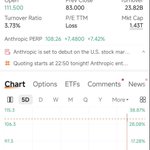
Anthropic's IPO marks AI's move from stage one into stage two.
This week's violent swings are not a bubble bursting. The market is repricing where value sits in the chain.
Start with the facts.
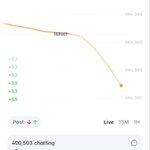
Anthropic listed at $83 a share, closed its first day at $97.17, and was valued at about $1.76 trillion. On day two, the heaviest selling hit upstream instead: SoftBank fell 14.5% in a single session, Taiwan and the Nikkei each dropped more than 5%, and Nvidia slid to its lowest level since June 2025.
Seen through the power industry, the logic is clear.
Stage one: equipment and construction.
The power industry started with buying generators and building plants. In AI, that means GPUs, memory, optical modules and data centers. This stage is all capex with almost no end output, so the profits flow to equipment suppliers. Over the past three years, Nvidia has been the biggest winner of this stage.
Stage two: generation and supply.
Once a plant is online, it sells power continuously. Anthropic and OpenAI are AI's power plants, turning compute into intelligence billed by usage.
In the power industry, equipment revenue is one-off, while electricity revenue is recurring. Over the long run, operators capture more value than equipment makers.
Anthropic's IPO is the first major power plant to be priced in the public market. Capital is naturally shifting from equipment makers to operators.
Stage three: usage and applications.
Once electricity spread, the biggest value was created downstream: appliances, manufacturing, and every service built on power. The industries that use electricity are far larger than the power industry itself.
AI will likely follow the same path. But stage three has not taken shape yet. Which companies win, and with what business model, is still unclear.
That said, stage two has only just begun. Anthropic posted an operating loss of about $567 million in Q3, and its profitability as a power plant is unproven. Equipment demand will not vanish overnight either; plants are still being built.
So, is this an AI bubble bursting, or a shift in where value sits in the chain?
My answer is the latter. The center of gravity has started to move.
The real question is not whether AI is in a bubble. It is where capital flows next.
Equipment makers, operators, or applications: if you could bet on only one stage, which would you choose?
2
1
143