

Human rights upholder, interests in Shipping and Communications #IStandWithRogerWaters
Harwich
Joined February 2009
- Tweets12.1K
- Following2.4K
- Followers718
- Likes16.4K






Keith Tully retweeted

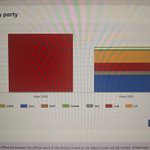
Water belongs to all of us, not US hedge funds
People over profit. Public ownership now.

🚨BREAKING: Green Party MPs come out against deal handing Thames Water to US hedge funds
Can you make sure your MP opposes this dangerous deal?
Email them now: vist.ly/5tira

Keith Tully retweeted
We live in Rip Off Britain.
People face soaring bills, rents and prices while wages remain low.
Labour says it wants to give people breathing space.
By cutting benefits for disabled people to spend more on weapons?
It's offensively ridiculous.
Keith Tully retweeted
Labour will work with Reform.
Labour will work with the Tories.
But not the Greens, even when local people want it.
Standing up for Palestinians is a red line. Working with Reform isn't.
Want a party that won't pick on disabled people & taxes the rich?
Join.greenparty.org.uk

Keith Tully retweeted

The BBC Israel Would Say Files. The full results are in for both broadcast and articles.
Analysis of 267 broadcast interviews between October 2023 and October 2026:
- BBC presenters put Israel's case, in Israel's name, to guests criticising Israel's conduct in Gaza in 252 separate interviews.
- They put the Palestinian case, in its name, to guests defending Israel's conduct in 15.
- To better portray this disparity, our compilation of the BBC defending Israel in their own words now runs at 48 mins 12 secs. Our compilation of the BBC defending Palestinians in their own words runs at 2 mins 38 secs.
- The plainest form, “Israel would say”, was put to critics in 75 interviews. “Palestinians [or any Palestinian group] would say” was put to defenders in 4.
- 10 of the 15 Palestinian cases came in the first six weeks after 7 October 2023, and 5 in the three years after. Presenters were still putting Israel's case to critics in 2026.
- The above point suggests an editorial shift to stop conveying what Palestinians are saying, but to continue conveying what "Israel would say".
Analysis of 1,618 written articles, from October 2023 to October 2026:
- When an article reported criticism of Israel's conduct in Gaza, the BBC added Israel's position 49% of the time (1,771 of 3,648 claims).
- When an article reported Israel's claims, the BBC added a Palestinian or UN position 38% of the time (914 of 2,431). A Palestinian position alone: 25%.
- Put the two official sides side by side. When the authorities in Gaza made a claim against Israel, the BBC added Israel's position 58% of the time (334 of 575). When Israel's government or army made a claim, the BBC added a Palestinian or UN position 39% of the time (855 of 2,165).
- Article by article: 71% of the articles reporting criticism of Israel gave Israel's position at least once. 53% of the articles reporting Israel's claims gave a Palestinian or UN position.
- In other words, in almost half of the articles where Israel makes a claim, it goes completely uncontested.
The full report, including every single broadcast and article in the corpus, can be found here, completely free of charge: newscord.org/editorials/bbc-…

Keith Tully retweeted

NEW: 260 British Jews – among them British Israeli historian Avi Shlaim, human rights barrister Margaret Owen OBE and journalist and politician @andrewfeinstein – have accused the @BoardofDeputies of genocide denial in an open letter.
Keith Tully retweeted

All the aura to the winner of the New Mexico governorship with those outfits. Deb Haaland, the first Native American woman to govern a state in United States history.

Keith Tully retweeted

ONE casualty of the GENOCIDE in Gaza is mainstream media in UK
MILLIONS have realised it was not properly informing them of the truth about Gaza & THEN realised it is not properly informing them about the truth on so much else
CENTRAL to this loss of credibility is @BBCNews


Keith Tully retweeted
Congratulations to President Lula on a stunning, historic re-election.
A political comeback that will be remembered for generations to come.
This is a victory for the people, for the planet and for peace.


Keith and Bill two of the greatest musicians to ever walk on stage !!

Happy 90th Birthday, Bill!
One love, Keith...
@bill_wyman
📷 #1 Bill Rasic
#2 Ethan Russell
#3,4 J.Bouquet


1
21
Keith Tully retweeted
Will Labour next week in the budget tell us sad stories about "difficult decisions" and how there's "no money left?"
Or will this Labour Government challenge the broken economic thinking that has lead us to this place? And tax the assets of multimillionaires & billionaires?
👀

Keith Tully retweeted
Important News: @Ofgem’s just launched a ‘consultation’ about switching on the Market Stabilisation Charge as soon as November. It doesn’t sound a big deal, but it could be, it ain’t good for consumers and I don't want it to slip under the radar.
In a nutshell, it means if wholesale energy prices drop sharply, the cheap fixes and switcher’s deals offered will be a lot more expensive, in order to protect energy firms’ profits.
That’s because any firm taking on a new customer, including on a cheap fix or other specialist tariff, will have to pay compensation to that customer’s old supplier, if they switch. It's basically a form of switching penalty.
While technically this is a consultation, it’s one of those where Ofgem has made up its mind, but is required to consult - it will almost certainly happen. Below is my ‘first look’ explainer on this...
------------------------
How it works (simplified to make it easy to understand):
Ofgem decided to put this power back into suppliers’ licences in May, so it could switch it on quickly if needed, and now it is trying to do just that.
It means if wholesale prices drop more than 10% below the level built into the Price Cap (and remember the January Price Cap is currently predicted to be 25% higher than now), and someone switches supplier from that or any tariff, the new firm must pay the old one 85% of the drop in wholesale rates beyond that 10%.
So very roughly, say the wholesale energy in the Price Cap costs £1,000 (a made-up number, to keep it simple. This is about proportions, not exact amounts):
- If prices drop to £900, there’s no Market Stabilisation Charge.\
- If prices drop to £800, you get the first £100 drop, but 85% of the next £100 (£85) goes to your old supplier.
So almost certainly the new firm will make you pay the difference, meaning the tariff will be up to £85 more than it would otherwise have been (other factors could affect the amount, but this is a rough illustration)
In other words, the new supplier can’t pass a chunk of the saving from lower wholesale rates on to you, because it has to hand much of it to your old supplier.
Why Ofgem says it’s doing this
Its argument is that the Price Cap requires suppliers buy energy in advance. If wholesale rates fall sharply and people leave in large numbers, those suppliers would be left out of pocket, and it doesn’t want suppliers who did the right thing by buying energy in advance to be penalised.
My View
I don’t like it. This is a ‘Market Stabilisation Charge’ but the supplier market is pretty stable, and I doubt we are at the domino risk of suppliers going bust in the way they did in the early twenties. A good few energy firms have made large profits since then, and protecting them over winter by effectively dampening competition because it’s ‘not their fault’ feels raw.
After all we don’t take their profits off them when they make them ‘through no fault’. Until now, my hope had been that at some point the Middle East situation would de-escalate, wholesale rates would drop. While it would take months for that to feed into the Price Cap, other cheaper tariffs would be available to switch to. That would still happen, but the savings could be no-where near as good as otherwise.
------------
As noted, these are my provisional thoughts and this has only just come out. I will need to do more looking/thinking.
Keith Tully retweeted

I am a member of the Norwegian Nobel Committee.
There are five of us. Five people, appointed by a parliament most of the planet could not find on a map, who decide, once a year, which human being the world has agreed to call good.
I know. I know. I think about it on the tram.
We meet in a building on Henrik Ibsens gate, a street named after a man who wrote almost exclusively about people discovering they are frauds, which nobody on the committee finds funny except me. There is a room with a long table and the portraits of the dead laureates looking down, Mandela, the Dalai Lama, a great many earnest men in spectacles, and one portrait we do not discuss, which is Kissinger, 1973, awarded while the bombs were still falling, after which two of our predecessors resigned and the satirist Tom Lehrer said political satire was now obsolete. We keep him on the wall. A reminder. Every family has the uncle.
It is October in Oslo, which means the sun gives up around four in the afternoon like a civil servant, and it rains the particular Norwegian rain that isn’t quite falling, just hanging there, judging you. I arrive with wet shoes. I always arrive with wet shoes. There is coffee, because this is Norway and there is always coffee, we drink more of it per person than almost anyone alive, and someone’s wife has sent kanelboller, the cinnamon buns, and we sit, five Norwegians, damp, caffeinated, sugared, and we decide the moral standing of the entire species.
Let me tell you how it actually works, because the world imagines a cathedral and it is, I promise you, a book club with a mandate.
287 nominations this year. 208 people, 79 organizations. Anyone can nominate, that’s the secret nobody understands: a professor, a parliamentarian, a former laureate, so the “nominee” list is meaningless, it’s a suggestion box, and every autumn some congressman nominates his own golden retriever and the press writes “SHORTLISTED.” Nobody is shortlisted. There is no short list the public ever sees. There is us, and the coffee, and the rain, and the portraits, and a Norwegian stubbornness that is older than the prize itself.
We read reports. The institute’s advisers write them, thick dull documents, and we argue. Our chairman told the BBC once that in the final meeting “there is a high temperature.” High temperature, for a Norwegian, means someone slightly raised an eyebrow and then apologized for it. We don’t do high temperature. We do a long silence, and then Kristin says “well,” and everyone knows exactly what “well” meant, and it’s settled. That’s our shouting. “Well.” You’d have to be raised here to hear the violence in it.
Now. This year. I will not say the name, because we never say the name, but you know the name.
A certain head of state wanted this prize the way a child wants a thing in a shop window, which is to say loudly, and in public, and with the full belief that wanting it was itself the argument. He said he deserved it. He said he’d ended eight wars, a number that grew most times he said it, like a fish. He had other heads of state phone us. Israel’s prime minister posted it on the internet, “Give him the Nobel.” The leaders of Cambodia and Pakistan announced they’d nominated him, as though announcing it were part of it, as though we tally mentions. A man flew around the globe collecting endorsements for a Norwegian committee the way you’d collect signatures for a petition to the council about a noisy dog.
And here, uff da, is the detail I treasure, the one that makes me smile into my coffee. The nomination deadline is the 31st of January. He took office on the 20th. So for all the phone calls, all the posts, all the gilded lobbying, the only nominations that could possibly count for this year’s prize were filed in the first eleven days of his term, before he had, by his own arithmetic, ended a single one of the eight wars. He campaigned all year for a prize whose window had shut while he was still hanging up his coat. We didn’t have to reject him. The calendar did. We just watched. Norwegians are very good at watching. We have long winters.
People think we sit there weighing his deeds. We don’t. That’s the thing I can’t make the world understand. We’re not grading his homework. We don’t owe anyone the prize for a ceasefire, however real, however loud the announcement. “He made peace” is not a sentence that ends in a medal, the way he believes it does, the way he believes every good thing ends in his name on it. The will of a dead Swede says the prize goes to whoever did the most for fraternity between nations. A dead Swede, I should add, who made his entire fortune inventing dynamite and selling arms, and spent his last years horrified at his own obituary, which called him a merchant of death, and so bought his way to immortality as a man of peace. The whole prize is one guilty arms dealer’s attempt to launder his name. We are, all of us, administering a dead man’s public relations. I find this clarifying. It keeps me humble. It should keep everyone humble, and it keeps, by my count, no one humble at all.
So who did we give it to?
An eighty-five-year-old woman. A judge. Born in Durban, under apartheid, granddaughter of a Tamil man who came to South Africa as indentured labor, a bus driver’s daughter from the poor Indian quarter, who became the first non-white woman to run a law practice in her province, who defended Mandela’s people when defending them was dangerous, who sat on the Rwanda tribunal and the court at the Hague, and who, at eighty-five, is right now a judge weighing whether a genocide is a genocide. When we told the world, our chairman said the rule of law “underpins the system we have set up to ensure peace,” and that “peace requires justice.” She wasn’t even in Oslo. She was in Nuremberg. In courtroom 600. The actual room where they tried the Nazis. You cannot stage that. God staged that, and God, it turns out, is a better satirist than any of us.
She did not phone us. She did not post. No prime minister demanded it for her on the internet. She had, as far as our deliberations are concerned, the one qualification the loud man could never manufacture, which is that she wanted the work and not the medal. The medal finds those people. It flees the ones who chase it. This is not a rule we wrote. It’s just the only pattern the hundred-odd years of our mistakes has ever shown.
The reaction from across the ocean was immediate. His spokesman posted that we “place politics over peace.” Ja. Perhaps. We’re five damp pensioners in a rainy city; of course it’s political, it was always political, it was political when we gave it to a sitting American president nine months into his first term for the promise of things he had not yet done, and we have been quietly embarrassed about that one for fifteen years, so believe me, we had a particular reason this year to prefer a woman with fifty years of verdicts behind her over a man with eight wars in front of him and a deadline already behind him.
Here is what he will never understand, the thing I’d tell him on the tram if he ever took one. We are the one prize he cannot buy, cannot post his way to, cannot have a friendly dictator phone in for him. Not because we’re incorruptible, nei, we’re as vain and wrong and human as the portraits on our wall. But because the entire point of the thing, the only power a small cold country’s book club has ever held, is that it goes to the person not performing the wanting. The moment you demand it, you’ve proven you don’t understand what it’s for, and proving that is itself the disqualification. He ran the most expensive campaign in the history of the prize and the campaign was the reason. He was never losing to Navi Pillay. He was losing to the concept.
It’s dark now. Four o’clock dark. The buns are gone. Kristin said “well” an hour ago and we all went home. I’m on the tram with my wet shoes, and somewhere across the water a very powerful man is explaining to a camera that the prize is rigged, that we’re corrupt, that he’ll win it next year, and he genuinely might, we’re only five idiots and we’ve been wrong before, Kissinger is still on the wall.
But not this year. This year an old woman in Nuremberg, in the room where the law once stared down the exact kind of man who thinks wanting a thing loudly enough should make it his, got a phone call she didn’t ask for.
That’s the job. We don’t reward the man who ends the war and announces it.
We reward the woman who spent fifty years deciding what a war was.
He’ll never see the difference. That’s rather the whole point of him.
Takk for i dag. I have to change trams.

Keith Tully retweeted

Four newborn kittens trapped under the rubble in Gaza, their mother waiting as if pleading with passersby to save her little ones.
Keith Tully retweeted

Your reminder that the UK government received evidence from French security services of Israeli interference in this May's Scottish elections.
Burnham has suppressed the evidence and refused FOI requests in the interest of relations with Israel.
