







Pinned Tweet
In this brief, fleeting moment, I am experiencing signs of happiness as a trader. It comes as a sharp contrast from being miserable few days ago when the bounce was not bouncing. It was difficult to hold $NQ $TQQQ through Thursday night and Friday weakness. Today got lucky with some nice $NVDA entries.

Kelan retweeted

I believe the @nvidia board is not acting in the best interest of shareholders nor in a manner consistent with their fiduciary duties.
What we know is that the board fired Jensen or forced his resignation for violating company policy and/or in response to the accusation of an affair with a spy.
They did so without careful consideration of the impact on the company, its customers, its shareholders or other stakeholders.
They rushed to judgment without the benefit of careful due diligence or even with a basic understanding of the facts.
How do we know this?
We know this by how quickly Jensen was fired and how little was known at the time of his firing.
It takes time to convene a board meeting. There was time, maybe, for one Zoom.
And this is a decision that should have been made by a board sitting in person and carefully deliberating the facts once they are known.
And they should have slept on the decision and met again the day after to discuss the facts, the risks and the other implications of their decision.
The timing and lack of information did not allow for careful board deliberation.
While boards can fire a CEO for an inappropriate relationship with a subordinate, it should not be an automatic decision. That is why we have boards comprised of humans and not agents.
A board should consider whether or not such a relationship was consensual or whether it was an abuse of power dynamics. And a board has to consider what the impact of the firing is on all stakeholders.
If I were in this board, I would not have rushed to judgment based on articles in the media. I would have made sure the board had all of the facts so it could make a careful and informed decision.
Boards of Delaware companies have a duty of care which means they must make informed, prudent and good faith decisions. This clearly did not happen here.
What law firm is advising this board?
Or is the board even taken good legal advice?
It doesn’t look like it.
And now the board is compounding its failures by insisting that there is no possibility for Jensen’s return as CEO.
Why is it in the best interest of the company to foreclose the possibility of Jensen’s return and to do so before all of the facts are known? This is yet another breach of their duty of care.
Furthermore, the board has launched an investigation whose scope is unknown. Investigations can be extremely damaging to a company and should be carefully targeted to address whatever facts need to be known rather than be overly broad in scope.
In short, this looks like a series of major governance failures by directors that panicked due to headlines in the media. They likely felt compelled to do something because they were afraid of looking bad in the media, not because it was the right thing for them company.
They couldn’t stand the heat.
The board’s conduct here is shocking for a company of this scale and importance to our country and the world at large, particularly at this moment in history.
Kelan retweeted

Over the past week, I’ve been overwhelmed by the love and support of friends, industry colleagues, and people I've never met. Thank you to everyone who has shown kindness to my family and me. It means the world to me.
I came to the United States 53 years ago, and becoming an American citizen is one of the greatest gifts and proudest moments of my life. NVIDIA has been my life’s work. Building it into the company it is today alongside my colleagues has been a privilege and an honor. Nowhere but in America could a company like NVIDIA be possible. I love our country, and I love NVIDIA.
I did not live up to the standards expected of everyone at NVIDIA, and I have made serious mistakes in my personal life. I created problems for the Board that I deeply regret. I own my mistakes completely, and I am committed to cooperating with the Board’s independent investigation.
Since my departure, I’ve seen an outpouring of calls from NVIDIA’s employees, investors, business partners, and customers for me to return as CEO. Many continue to reach out to me directly as the company navigates complex technology, market, competitive, and geopolitical dynamics. NVIDIA is a once-in-a-generation company. If the Board of Directors decides that my return is in the best interest of our shareholders, our employees, the company, and America, I would be honored to answer these calls and return as CEO.
Thank you again to everyone who has shared their good wishes. I am profoundly humbled by your support. To my family: I love you, and I will spend the rest of my life being worthy of yours.
Jensen

Kelan retweeted

Entirety of last week’s selloff in Tech retraced…
Except, everyone is now underweight the group & degrossed at the lows.


For anyone discussing today’s low volume (It was actually average), markets melt up on low volume & bottom on high volume. Enjoy the incoming ‘most hated rally’ ever, followed by a massive releveraging event in Q1 (Because funds have beaten down puppy syndrome and are afraid to add risk so they’ll wait a quarter).
Kelan retweeted

President Trump is determined to bring an end to this horrible war, which has caused enormous loss of life, destruction, and suffering. We are working hard to find a negotiated solution that can deliver lasting peace and create the conditions for a sovereign, secure, and prosperous Ukraine within a more stable European security environment.
Before beginning the two days of trilateral talks with Ukraine and Russia in Abu Dhabi, @SEPeaceMissions and I will meet with our partners from Ukraine, the EU, NATO, Germany, France, the United Kingdom and Italy to continue the close consultation and coordination we have undertaken on European security and Ukraine’s postwar future over the past several weeks.
These will be the first trilateral talks since February. Building on our separate consultations with both sides, our objective is to bring Ukraine and Russia together to discuss directly their postwar security concerns, proposals, and potential solutions. We hope these discussions will identify areas of common ground, advance practical solutions, and build momentum toward the next phase of negotiations.
Ultimately, achieving a comprehensive and lasting settlement will also require direct engagement between Russia and our European partners on the broader security arrangements that affect them. We hope the discussions in Abu Dhabi will create the conditions for that engagement to begin in the near future, as part of a broader multilateral process.
Our work has focused on four interconnected priorities: ending the fighting, developing credible postwar security guarantees and arrangements that reduce the risk of renewed conflict, preparing a comprehensive economic and prosperity plan for Ukraine, and advancing humanitarian measures to alleviate suffering and address the human consequences of this war.
Together with Ukraine, the EU, and other European partners, we are working to address Ukraine’s substantial postwar fiscal and reconstruction needs, support critical infrastructure, attract private investment, and create the conditions for long-term economic growth and self-sufficiency.
We are also working with the parties on important humanitarian issues, including the return of prisoners and civilians, and practical measures to alleviate suffering and reduce the human cost of this conflict.
An important part of this process is encouraging all parties to begin thinking seriously about what comes after the war. By discussing postwar security, economic recovery, and the mechanisms needed to prevent future conflict, we hope to shift the focus from managing the war toward building the foundations for a durable peace.
The existing European security agreements and institutions provide an important foundation for this work. We want to build upon what has worked, identify where existing mechanisms have fallen short, and what practical improvements are needed to make them more effective in the future. Our discussions will focus on stronger consultation, reliable crisis communications, greater military transparency, and reciprocal measures to reduce escalation risks, while fully respecting the sovereignty and independent decision-making of every nation.
This is an extraordinarily difficult and complicated conflict. We recognize the difficult decisions ahead and are approaching these discussions with determination and realism. Our hope is to make meaningful progress, establish a practical pathway forward, and help create the conditions for a lasting peace.

Kelan retweeted

After DOGE, Elon came to a conclusion most people missed.
He tried to reform the state from the inside. He failed. And he said it plainly: the government can't fix its own deficit. Nobody in power actually wants to cut. The machine protects itself.
So he drew the only logical conclusion. If the state can't be reformed, there are only two ways this ends.
Either global bankruptcy. Debt keeps compounding, interest payments eat the budget, and the system collapses under its own weight.
Or robots. AI and robotics grow the economy so fast that the debt becomes manageable, and abundance makes the old fights over scarcity irrelevant.
Here's the part almost nobody sees.
For two centuries, capitalism has had a marketing problem. Its gains are real but slow and invisible. 2% growth a year doesn't feel like anything. Your life gets better over 30 years and you never connect it to the system that did it. Meanwhile, the left's promises feel immediate and concrete: a check, a subsidy, a benefit. That's why the left wins on promises even when it can't deliver them. Capitalism produces the wealth, socialism takes the credit.
Robots break that asymmetry.
When productivity doubles in a few years instead of a few decades, people will see it. Things get cheaper, services get better, opportunities appear, in real time. For the first time in history, people will connect capitalism and their rising standard of living directly, almost instantly. The causal chain becomes visible.
And that changes everything politically.
So there are two scenarios.
Scenario one: we stay in the current inertia. No breakthrough, or a breakthrough we regulate to death. The debt wins. Living standards stagnate, then fall. A frustrated electorate turns to whoever promises the most, and that pushes toward a hard collectivist left. But collectivism fails, as it always does. And when it fails, the most organized, most disciplined collectivist force left standing isn't the old left. It's radical Islamism. Bankruptcy, then communism, then something worse.
Scenario two: robots win. Abundance arrives, and it arrives visibly. The link between free enterprise and prosperity becomes obvious to everyone. And this is the key point: it becomes obvious to everyone, including the minorities the left was counting on. Because their long-term incentive is the same as everyone else's. A kid in the suburbs gains infinitely more from a booming, abundant West than from a bankrupt state handing out promises it can't keep. Abundance is the most powerful integration machine ever built.
That's the Western renaissance.
The West doesn't need to win the culture war by arguing. It needs to win it by delivering. And for the first time, it has the technology to deliver fast enough for people to notice.
The race isn't left vs right anymore. It's robots vs bankruptcy.
Kelan retweeted
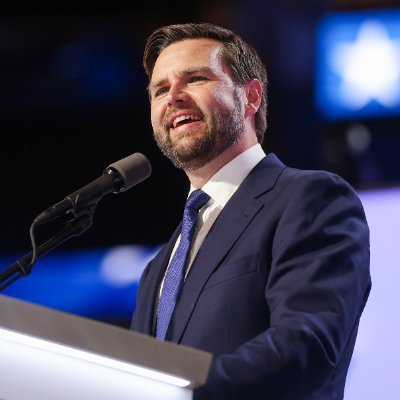
One of the things the data analysts on our side obsessed over was "composition"—whether the electorate looked close enough to 2024 for Republicans to win. And despite polls that showed a Democrat blowout, the data kept on telling us the same story: in some states turnout was merely OK, in other states it was downright amazing, and in no state was it catastrophic. There was a genuine sense of optimism on our team: our people were showing up.
So, I asked the smartest data guy I know, does that mean we're going to shock the world? "No," he told me. "We might do better than the polls suggest. But the data is telling us that a lot of Trump/Vance 2024 voters are pissed and planning to vote for the other guys. Our voters are turning out, but they may not vote for us."
Well, that looks prophetic now. Our voters did show up. In Florida, for example, the electorate was 9 points more Republican than Democrat, just a couple points worse than 2024. Undoubtedly there were places we could have done better on turnout. But the main problem is not turnout. The main problem is that many people who voted for Trump/Vance in 2024 voted for Democrats in 2026.
There will be a lot of infighting and arguing over what happened and why that is. One of the pollsters I really respect told me that our economic messaging wasn’t sharp enough down the stretch. I’m sure that’s true.
But the real reason we lost is obvious to almost everyone.
Another pollster—one of the smartest people I know in politics, told me yesterday we’d lose the generic ballot by 13 points. I felt negative going into Tuesday, but even I was shocked by this. In his polling, he saw that a lot of Trump 2024 voters were angry and planning to vote for Democrats. He asked those voters who had abandoned us what would cause them to come back on our team. The top four answers, accounting for nearly all of the responses were:
1) End the war
2) Focus on cost of living/inflation
3) Put America First
4) Change our relationship to Israel
Our voters showed up. And the above four reasons are why many of them voted for Democrats. This is according to a pollster who nailed the results. While many spent Monday attacking Rachel Campos Duffy for calling for a diplomatic resolution to the conflict, it turns out her political advice was sound. (She’s also a great person.)
In the next few months, there's going to be a lot of gaslighting. Expect to hear any number of establishment politicians say the solution to our woes is amnesty. I'm open to the idea that we should change enforcement—by focusing more on businesses that hire illegal labor, for instance. But anyone pushing amnesty is lying to you.
The reason we lost is the war. The president himself said so last night.
If you'd like to argue it was worth it, that losing the Senate for the next 6 years was worth it, then do so. Argue it was a worthwhile cost to pay. Agree or disagree, that's at least honest.
But everyone knows why we lost. And any honest conversation about where we go from here must start there.
I remain hopeful about our country. To the people who are pissed off and want to say, “I told you so”: you’re right, you did tell us so. Take that energy into electing Republicans who share your worldview. To the people who are just pissed at the results, you should be. Let’s take that anger and get back to the work of saving our country.


The Friday price action on $NQ and tech stocks generally does indeed look like massive deleveraging rather than some fundamental shift, or reaction to "new information."


The unwind in Hedge Fund equity exposures this year has been the biggest since at least 2017.
Active de-grossing (reduction in long + short positions) by global hedge funds has now hit over 8% of total gross exposure since June, according to the Morgan Stanley Prime Brokerage Content team.
This has taken gross leverage for US long/short funds down to the 10th percentile versus the last year.

1
4
1,184

I shared one Star Wars politics or markets meme (share copy-link) and now my ENTIRE feed is full of Star Wars memes. Since the share copy-link is a very heavy weight for the X algo, assume whatever you are sharing you will get a lot more of.
705
Kelan retweeted

There is nothing special about this pullback.
Much of the panic surrounding neoclouds, AI capital expenditures, and the sustainability of the infrastructure buildout is simply the market searching for explanations for falling stock prices.
When AI stocks were rising, record capex was evidence of extraordinary demand. When those same stocks started falling, suddenly the same spending became evidence of an impending financial disaster.
One fact with two interpretations that depend entirely on the price action of the market.
Go back to August 1998.
The technology bull market had been running for about three years.Amid fallout from the Asian financial crisis and Russian ruble crisis, earnings expectations were deteriorating, valuations were elevated, and investors were becoming increasingly concerned about unprofitable Internet companies.
On August 6, the New York Times published an article titled "Market Gyrations May Point to Shift in Investor Strategy." One fund manager declared, "Boring is going to outperform sexy."
Investors were supposedly abandoning momentum and speculative technology shares in favor of profitable businesses, balance sheets, dividends, and traditional valuations.
Russia defaulted on its debt. The Asian financial crisis was spreading internationally. The yen carry trade had imploded as the USD plunged 8% against the yen in a single day. US embassies were being bombed.
President Clinton ordered missile strikes against Afghanistan and Sudan while simultaneously facing a scandal that would result in his impeachment. Major financial institutions suffered enormous losses, and the spectacular collapse of Long-Term Capital Management threatened the stability of the global financial system.
Corporate earnings forecasts were falling. Investors feared a U.S. recession. Many of the same technology companies that had driven the bull market were now leading the decline. Many of them had fallen 40-60% from their 1998 highs.
Even the Federal Reserve's first interest-rate cut on September 29 initially disappointed investors. The Dow fell that day and plunged another 238 points the following session.
The news seemed almost uniformly terrible.
But the market didn't care forever.
After a violent reversal in early October, improving confidence in corporate earnings, Japanese banking reforms, and a surprise emergency Fed cut on October 15 helped restore risk appetite.
By November, the Dow was making new all-time highs. Internet stocks were exploding higher again.
What had looked like the end of the internet trade was, within about a month, actually a correction preceding one of the most extraordinary speculative advances in stock-market history.
In today’s market, Microsoft just reported 48% Azure growth. Google Cloud revenue more than doubled. Meta expects $135–145 billion in capex this year and has announced plans for a potentially record-sized $97.5 billion equity capital raise.
If the market really was that concerned over capex spending, instead of using it as an excuse to explain the pullback, the market would have sold off on the META news.
Anthropic has now filed its IPO registration statement. We have midterm elections approaching, another consequential round of earnings, and a Fed that just held rates steady even as another hike is widely anticipated in December.
There are plenty of potential catalysts over the coming two months.
More importantly, this does not resemble the sentiment backdrop of a speculative bubble climax. Generational bull markets don't die midway through a basing period, but typically after euphoric saturation and a parabolic rally in leading names.
Consensus on AI is deeply divided. Being loudly anti-AI has practically become fashionable. Some AI critics have even built enormous audiences around the idea that the economics of the industry are unsustainable. Plenty of investors seem almost eager to watch the entire trade collapse.
That isn't the sentiment or narrative around which tops are typically made.
The Internet trade didn't end in the panic of 1998. It ended after the extraordinary acceleration of 1999 and early 2000 when being bearish was the market equivalent of wearing a dunce cap.
History never repeats perfectly, and today's rate environment is very different. But I think the resemblance in investor psychology is striking.
I’d be genuinely surprised if we don't have at least one more months-long rally into new highs during this cycle.
Whether it begins into the midterms, after the elections, around Anthropic's anticipated listing, or following further earnings confirmation, I suspect this correction will eventually look more like an interruption in a generational bull market than the bursting of a "bubble."
The $NDX took four months to bottom in 1998. With the exception of a handful of leaders, most stocks that are holding up have been basing out since the May-July period. We could certainly go lower, but most of the signs point to another new high before this cycle rolls over.
However, I’d place the odds of any additional powerful rallies afterward as increasingly unlikely given the fact we are already about to enter the fifth year of this bull market. I'd be careful about buying the dips next year, at least with meaningful size.

Kelan retweeted

I am excited to be an investor in trade(xyz) as they partner with ICE to bring 24/7 perpetual futures on Hyperliquid to the United States. As a market participant, I am looking forward to to using their innovative product to enhance my investment process.
