

Consultant working to raise standards in the media. Specialise in climate change, environment, social affairs. Now spending more time under bluer skies.
Cardiff, Wales
Joined March 2010
- Tweets17.6K
- Following2.8K
- Followers1K
- Likes31.6K







Kevin Burden retweeted

I am going to describe some painful and personal things in relation to Russell Brand because I have been put in a position now where I feel that I have no choice other than to do so, given the misleading reports and speculation around the facts of a harassment injunction that was taken out to protect me and my family.
Firstly, and most importantly, I am and have always been strongly and unequivocally on the side of all of Brand’s victims. I am in awe of the courageous women who came forward at Brand’s trial, told their stories, testified and ensured justice was done. I have had my own personal experience of his violence, coercive control and abuse. I had to call the police to have him removed from my house in 2014 during a violent incident. I chose not to press charges at the time and not to go public with this, as I was worried about the impact of the press attention on my then teenage children. I have neither seen nor spoken to Brand since that period in 2014. Whilst my pain in relation to this, pales in comparison to what the women have testified in court have suffered, this was a difficult period in my life which has had a lasting impact.
Over several years, I assisted the journalists who finally exposed him; Ros Urwin, Louisa Compton and Dorothy Byrne. I also undertook to testify in court to his abusiveness, if the newspaper that published the victims’ accounts were ever to be sued.
I have spent much of my professional career trying to support unfairly demonised and silenced women, such as Monica Lewinsky and defending free speech.
In 2014, a harassment injunction was taken out against a woman called Szilvia Berki which was made final in 2015.
I fully understand the good intentions of those now advocating on her behalf online and agree with their demand for this harassment injunction to be varied, as my lawyer made clear to Berki’s lawyer in December last year.
However, the commentary and media reporting this week has presented an untrue narrative, which has opened me up to vile hatred and abuse online.
For this reason, and to correct the record, I am providing the factual background to that injunction to explain why The High Court found the campaign of harassment by Berki against me to be, "oppressive and unacceptable” and made the order permanent.
The background to this is that Ms Berki came to my house for roughly 30 minutes in June 2014, after I booked her to give a massage to Brand. By the time she arrived he had decided he didn’t want a massage and asked her to leave. She was clearly offended. I was present the whole time he was with her, and I did not see anything untoward, despite the fact that he was later found guilty of sexually assaulting other women and he later physically assaulted me. If I saw any man abuse any woman under any circumstances, I would do my utmost to stop them, without hesitation.
Ms Berki later reported to the police that Brand had pushed her in the back whilst she was leaving the house and that she also said she was “attacked” by my dog, which she described in her police statement as my dog licking her face. The police rightly investigated Ms Berki’s complaint. I cooperated fully with the investigation, provided a truthful statement about what I saw and also provided CCTV footage, which showed my overly exuberant but totally unaggressive dog jumping up.
Following an investigation into Ms Berki’s allegations, police concluded that there was no case to answer and that no criminal offence had been committed.
According to the police, at no time did Ms Berki ever state to them that she had been assaulted, threatened or falsely imprisoned.
There was also a subsequent review of the investigation by the IPCC and Thames Valley Police Professional Standards which found that the original police investigation had been correct in its findings.
In the meantime, several untrue stories appeared in the tabloid papers. Ms Berki forwarded an email to me confirming a payment for one such story she had received from The Sun newspaper. Articles were also published in The Telegraph, The Mail and The Mirror at Ms Berki’s instigation which contained her account of the alleged incident.
Then having at first said in a story published by the Daily Mail that she had found me to be “really very nice, very, very nice,” she later embarked on a campaign of vicious antisemitic and threatening abuse online and in emails.
Below is just a sample of some of those tweets and messages sent over many months (which were submitted to the judge who granted the harassment injunction)-
(Jemima is a) “deeply rotted JEWISH Bitch”
“Did you know that if your life is in danger you can LAWFULLY kill your attacker as defence?! … by now I could have lawfully kill at least 5-6 people who were hurting me”
“Also happy birthday (Jemima). I hope you have more. In other words I hope you don’t die this year.”
EMAIL- “If you make me very upset…you can expect the worts from me – I think you know this – without that I need to remind you”
“What is going on in Britain is a dictatory of J evils. English Jewish Evil dictatory”
“Would like to see justice, and I do not think that I should do it myself but what can I do when every organisation is scared of Jevils! ;)”
“They say … Do not hate all Jews because you know a few Jewish evils. They are on top always decadent and evils”
“Fortunately there are many mansions outside of the UK where Jewish money aristocrats are still not welcomed
#Germany #Austria #Italy #Hungary”
"Judge on High Court: I ordered her to shut up Jew. Do I have a case or not? soon we will kill her then".
“A pity that I was in the UK. BB In Hungary if you would report the Police they would for sure find it without an investigation already that the Jews are guilty. Sad”
“Every organisation is scared of JEVILS”
“When my great grandparents see what Jews did to me they do something in heaven to solve this. I will not make my hand dirty with Jews.”
“J evils … Rob, lie, crime”
“I am so happy I am free from the English Jewish Evil dictator and outside of England the High Court cannot rule”
“Probably I wait a bit more and than go public. What is going on in Britain is a dictatory of J evils.”
She sent an enormous volume of similarly disturbing emails and tweets to or about me, to my family, to my workplace, to journalists from the national media to members of my family, to UNICEF UK where I had been a goodwill Ambassador for decades, and to organisations my ex-husband was associated with, and to MPs.
She began disseminating on social media wild and untrue allegations about me, ranging from kidnap to cyberhacking, to having someone bump into her and laugh at her in the tube station, having her followed by two men, bribing the police, paying off a judge, and other false and alarming conspiracy theories based on my Jewishness.
The number, tone and content of these messages was extremely frightening. It was distressing for my then teenage children and my family. I was concerned that Ms Berki was potentially a real danger to my family and me. I have had stalkers before and this behaviour felt similarly threatening.
Although I was at this point no longer in contact with Brand, I agreed to the suggestion by his lawyer of a harassment order. My sole reason was to stop Ms Berki targeting me and my family. The harassment injunction was upheld by the High Court and Court of Appeal on several occasions.
I engaged a lawyer of my own when I was made aware that Berki was applying to the court to vary the terms of the injunction. And I instructed my lawyer in December last year to approach Ms Berki’s barrister to say that I agreed to vary the injunction so that she could speak to the police again if she wanted to. I also instructed my lawyer to engage on her other requests.
I did this despite my real fears that the harassment would re-commence and that her threatening antisemitism, if again unleashed, might exacerbate the danger to my children and me that we continue to face because of our Jewish heritage and their father’s political career and incarceration in Pakistan.
Her barrister has not responded to my lawyer since May of this year despite trying to engage him. I was informed by her lawyer that any change to the injunction must also be agreed by Brand. I have no ability to compel Brand in this matter, as I have not seen or spoken to him in over a decade.
I hope this information will help clarify speculation about my involvement in the anti-harassment order.
I am glad and relieved that Russell Brand has finally faced justice.
Kevin Burden retweeted
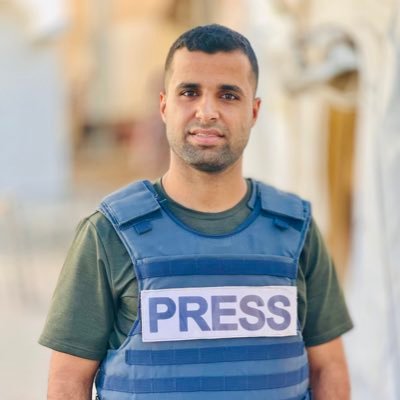
⚠️ Palestinian Health Minister Dr. Majed Abu Ramadan:
“What is happening in Gaza is not a passing winter crisis. I urgently call on the international community, the United Nations, and health, humanitarian, and relief organizations to intervene immediately to save the lives of hundreds of thousands of displaced people in the Gaza Strip, following the flooding of thousands of tents with rainwater and the absence of basic safe shelter conditions.
I warn of a catastrophic deterioration in health and environmental conditions, alongside growing risks of the spread of diseases and epidemics.”
Kevin Burden retweeted

I admit that I completely broke down today. I cried uncontrollably. I couldn’t hold myself together after witnessing what I saw with my own eyes.
Today, we went to film a journalistic report inside the displacement tents along the seashore. I swear, what we witnessed was beyond what any human being should have to endure.
I saw men crying bitterly. Men I had never seen cry when they lost their children or when their homes were destroyed. Today, I saw them crying because they were powerless to do the simplest thing: protect their children from the water and the cold.
We spoke to families who told us they had spent the entire night carrying their children in their arms after floodwater covered the floors of their tents and soaked their mattresses. They couldn’t find a single dry place to put their children. They couldn’t even give them a few hours of sleep.
I saw children no older than five, without proper clothes to protect them from the cold, without heating, and without a dry place to sleep. Children shivering inside tents that cannot keep out the rain, protect them from the wind, or provide even the most basic sense of safety.
What more must happen for this world to act? How much more suffering must people endure before someone remembers that they are human beings?
I am sick of this world. I am sick of its hypocrisy and empty slogans. To hell with a world that talks endlessly about human rights while leaving children to drown inside their tents. To hell with everyone who has witnessed this suffering and chosen silence, and to hell with the governments and institutions that have the power to act but continue to turn their backs on us.
Kevin Burden retweeted

This account by @DanNeidle of Russell Brand's use of an injunction to silence (and bankrupt) a woman who accused him of assaulting her is shocking.
She wasn't even allowed to talk about it to the police or to medics other than named individuals.
taxpolicy.org.uk/2026/11/07/…

Kevin Burden retweeted

On Thursday I wrote about the 2014 injunction Russell Brand obtained against a woman who accused him of assault.
I've now obtained the final order. It's breathtaking.
She had no lawyer. No trial. Yet she was silenced for life - even barred from speaking to the police.
🧵:

Kevin Burden retweeted
Now Russell Brand's been convicted of rape, we need to talk about Sylvie Berki. Because she can't speak for herself.
In 2014, Ms Berki said she'd been assaulted by Russell Brand.
But if she talks about it, even now, she risks jail.

Kevin Burden retweeted

Extraordinary and *very* heated ding-dong between @TheNewsAgents' Lewis Goodall & @Channel4News Krishnan Guru-Murthy about TV news and what makes good journalism. It sounded about an inch away from actual fisticuffs.
@krishgm wins 1-0, hands down. Long live actual journalism.
bbc.co.uk/sounds/play/m0033g…

Kevin Burden retweeted

Wales has a colony in Patagonia because a people who sailed there to grow wheat were kept alive by hunters who brought them meat.
In 1865, 153 Welsh men, women and children left Liverpool on a converted tea clipper called the Mimosa. They had been promised a new Wales across the Atlantic, beyond the reach of English landlords and the English language, and the men who scouted it had come home describing green country by a river. They were going to plough it and sow wheat.
They landed on 28 July. It was winter. In front of them was gravel, dry scrub and a wind off the steppe that did not stop. There was almost no fresh water near the bay, and the river they had been promised was a long walk south. Some of the first arrivals sheltered in caves dug into the cliffs.
They reached the river valley and planted. The first harvests failed. They were people from chapel valleys who knew how to farm Welsh weather, set down where it barely rained. Within months they were rationing, and then they were starving.
Then the Tehuelche came.
The Tehuelche were the hunters of that steppe. They lived on guanaco, the wild cousin of the llama, and on rhea, the big flightless bird of the plains, run down on horseback and brought down with bolas, stones on cords whirled and thrown at the legs. They had no reason to help a camp of strangers in black coats, and they helped anyway.
They traded. Meat and hides for whatever the Welsh could spare, and the Welsh could spare a little bread. They taught the young men to ride after guanaco and throw the bolas. The colony began to eat.
The Tehuelche liked Welsh bread so much they took the Welsh word for it home. They came to farmhouse doors asking for bara, and the word passed into the talk of the steppe.
In 1867 a woman called Rachel Jenkins watched the river rise and suggested its water could be led out across the dry ground. Her husband Aaron dug the first channel. Irrigation came. The wheat came after it, eventually, and the colony stuck.
Gaiman, in Chubut, still serves Welsh tea and bara brith to tourists, and Welsh is still spoken there. The guidebooks tell it as a story of irrigation and chapels and stubbornness, and it was.
It was also a story of the years when the wheat failed, and the only food in that desert was running about on four legs and two, and the people who knew how to catch it decided to share.

Kevin Burden retweeted

This innovative Dutch farm grows food with minimal water, no soil and zero pesticides.
This is where I find hope. In solutions being implemented all over the world. Let's speed it up. #ActOnClimate
#climatesolutions #climate #energy #farming #GreenNewDeal #nature #hope
Kevin Burden retweeted

“There are different ways to commit murder. They chose to strangle us,” journalist Dmitry Muratov tells me, after Russia’s most prominent independent newspaper Novaya Gazeta is forced to close. Our report from Moscow. Producer @BBCBenTavener
Kevin Burden retweeted

This is quite something ! Serbian RTV channel starts yesterday's bulletin by apologizing to viewers👇
"For years, we failed to fulfill our duty. We kept silent, turned a blind eye, reported events one-sidedly and failed to ask necessary questions. We owe our viewers an apology”
Kevin Burden retweeted
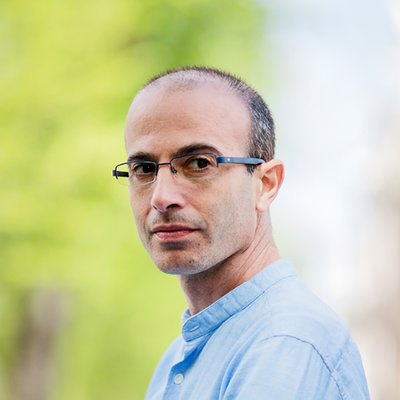
"We are the cows of the future... Just as cows can't understand the financial system that controls their lives today, we will not be able to understand the AI financial system that will control our lives in 10 or 20 years."
Watch the whole conversation with @DanielStach for @hpcivilizace on @Vedact24 here: bit.ly/YNH-HPC
Kevin Burden retweeted

It is an extraordinary failure that the BBC has the resources to do genuine public interest journalism that is much less viable commercially (from foreign correspondents to long-form local reporting) but instead we get relentless lowest common denominator nonsense

GTA 6: Can you cheat on someone with a video game character? bbc.in/4egQBjw

Kevin Burden retweeted

Much punchier accusations from Sir Malcolm Rifkind - a former defence and foreign secretary:
"I choose my words very carefully. I think this week Donald Trump has shown himself as a person to be repulsive; as a President of the United States to be a disgrace to his own people as well as to his international responsibilities.
"We all know his actual reasons for this are a grubby attempt to win a few more votes in the midterms by trying to get oil prices down.
"In order to achieve that, he has not only betrayed Ukraine in the middle of a war, fighting for its very existence, but he is also directly - not indirectly - directly responsible for the deaths of many Ukrainians who will not now be protected by the attempts that have been successfully made using intelligence provided indirectly by the United States."
teapaw.org/breeallegretti/status/…
Kevin Burden retweeted

Neither Cartier-Bresson, Banksy nor Cold War Steve could have come up with such an image. Absolutely perfect composition and lighting (even the road signs are perfect)! 😍

Kevin Burden retweeted

The NUJ BBC Audio chapel said:
“The BBC’s decision to cut You and Yours alongside other much-loved TV and radio programmes utterly undermines the BBC’s core mission to ‘act in the public interest’ and provide ‘high-quality and distinctive output.’”
nuj.org.uk/resource/bbc-cuts…

Kevin Burden retweeted

So I've got a hot take on this...
The problem is Proctor & Gamble and Kimberley Clarke.
They are the two biggest products of "absorbent hygiene products"(nappies, pads, continence wear) in the UK, and they're an absolute bloody menace.
🧵A thread, if you will indulge me:
Why are so many four-year-olds not potty-trained before school? bbc.in/4zrC3Wu

Kevin Burden retweeted

I am a member of the Norwegian Nobel Committee.
There are five of us. Five people, appointed by a parliament most of the planet could not find on a map, who decide, once a year, which human being the world has agreed to call good.
I know. I know. I think about it on the tram.
We meet in a building on Henrik Ibsens gate, a street named after a man who wrote almost exclusively about people discovering they are frauds, which nobody on the committee finds funny except me. There is a room with a long table and the portraits of the dead laureates looking down, Mandela, the Dalai Lama, a great many earnest men in spectacles, and one portrait we do not discuss, which is Kissinger, 1973, awarded while the bombs were still falling, after which two of our predecessors resigned and the satirist Tom Lehrer said political satire was now obsolete. We keep him on the wall. A reminder. Every family has the uncle.
It is October in Oslo, which means the sun gives up around four in the afternoon like a civil servant, and it rains the particular Norwegian rain that isn’t quite falling, just hanging there, judging you. I arrive with wet shoes. I always arrive with wet shoes. There is coffee, because this is Norway and there is always coffee, we drink more of it per person than almost anyone alive, and someone’s wife has sent kanelboller, the cinnamon buns, and we sit, five Norwegians, damp, caffeinated, sugared, and we decide the moral standing of the entire species.
Let me tell you how it actually works, because the world imagines a cathedral and it is, I promise you, a book club with a mandate.
287 nominations this year. 208 people, 79 organizations. Anyone can nominate, that’s the secret nobody understands: a professor, a parliamentarian, a former laureate, so the “nominee” list is meaningless, it’s a suggestion box, and every autumn some congressman nominates his own golden retriever and the press writes “SHORTLISTED.” Nobody is shortlisted. There is no short list the public ever sees. There is us, and the coffee, and the rain, and the portraits, and a Norwegian stubbornness that is older than the prize itself.
We read reports. The institute’s advisers write them, thick dull documents, and we argue. Our chairman told the BBC once that in the final meeting “there is a high temperature.” High temperature, for a Norwegian, means someone slightly raised an eyebrow and then apologized for it. We don’t do high temperature. We do a long silence, and then Kristin says “well,” and everyone knows exactly what “well” meant, and it’s settled. That’s our shouting. “Well.” You’d have to be raised here to hear the violence in it.
Now. This year. I will not say the name, because we never say the name, but you know the name.
A certain head of state wanted this prize the way a child wants a thing in a shop window, which is to say loudly, and in public, and with the full belief that wanting it was itself the argument. He said he deserved it. He said he’d ended eight wars, a number that grew most times he said it, like a fish. He had other heads of state phone us. Israel’s prime minister posted it on the internet, “Give him the Nobel.” The leaders of Cambodia and Pakistan announced they’d nominated him, as though announcing it were part of it, as though we tally mentions. A man flew around the globe collecting endorsements for a Norwegian committee the way you’d collect signatures for a petition to the council about a noisy dog.
And here, uff da, is the detail I treasure, the one that makes me smile into my coffee. The nomination deadline is the 31st of January. He took office on the 20th. So for all the phone calls, all the posts, all the gilded lobbying, the only nominations that could possibly count for this year’s prize were filed in the first eleven days of his term, before he had, by his own arithmetic, ended a single one of the eight wars. He campaigned all year for a prize whose window had shut while he was still hanging up his coat. We didn’t have to reject him. The calendar did. We just watched. Norwegians are very good at watching. We have long winters.
People think we sit there weighing his deeds. We don’t. That’s the thing I can’t make the world understand. We’re not grading his homework. We don’t owe anyone the prize for a ceasefire, however real, however loud the announcement. “He made peace” is not a sentence that ends in a medal, the way he believes it does, the way he believes every good thing ends in his name on it. The will of a dead Swede says the prize goes to whoever did the most for fraternity between nations. A dead Swede, I should add, who made his entire fortune inventing dynamite and selling arms, and spent his last years horrified at his own obituary, which called him a merchant of death, and so bought his way to immortality as a man of peace. The whole prize is one guilty arms dealer’s attempt to launder his name. We are, all of us, administering a dead man’s public relations. I find this clarifying. It keeps me humble. It should keep everyone humble, and it keeps, by my count, no one humble at all.
So who did we give it to?
An eighty-five-year-old woman. A judge. Born in Durban, under apartheid, granddaughter of a Tamil man who came to South Africa as indentured labor, a bus driver’s daughter from the poor Indian quarter, who became the first non-white woman to run a law practice in her province, who defended Mandela’s people when defending them was dangerous, who sat on the Rwanda tribunal and the court at the Hague, and who, at eighty-five, is right now a judge weighing whether a genocide is a genocide. When we told the world, our chairman said the rule of law “underpins the system we have set up to ensure peace,” and that “peace requires justice.” She wasn’t even in Oslo. She was in Nuremberg. In courtroom 600. The actual room where they tried the Nazis. You cannot stage that. God staged that, and God, it turns out, is a better satirist than any of us.
She did not phone us. She did not post. No prime minister demanded it for her on the internet. She had, as far as our deliberations are concerned, the one qualification the loud man could never manufacture, which is that she wanted the work and not the medal. The medal finds those people. It flees the ones who chase it. This is not a rule we wrote. It’s just the only pattern the hundred-odd years of our mistakes has ever shown.
The reaction from across the ocean was immediate. His spokesman posted that we “place politics over peace.” Ja. Perhaps. We’re five damp pensioners in a rainy city; of course it’s political, it was always political, it was political when we gave it to a sitting American president nine months into his first term for the promise of things he had not yet done, and we have been quietly embarrassed about that one for fifteen years, so believe me, we had a particular reason this year to prefer a woman with fifty years of verdicts behind her over a man with eight wars in front of him and a deadline already behind him.
Here is what he will never understand, the thing I’d tell him on the tram if he ever took one. We are the one prize he cannot buy, cannot post his way to, cannot have a friendly dictator phone in for him. Not because we’re incorruptible, nei, we’re as vain and wrong and human as the portraits on our wall. But because the entire point of the thing, the only power a small cold country’s book club has ever held, is that it goes to the person not performing the wanting. The moment you demand it, you’ve proven you don’t understand what it’s for, and proving that is itself the disqualification. He ran the most expensive campaign in the history of the prize and the campaign was the reason. He was never losing to Navi Pillay. He was losing to the concept.
It’s dark now. Four o’clock dark. The buns are gone. Kristin said “well” an hour ago and we all went home. I’m on the tram with my wet shoes, and somewhere across the water a very powerful man is explaining to a camera that the prize is rigged, that we’re corrupt, that he’ll win it next year, and he genuinely might, we’re only five idiots and we’ve been wrong before, Kissinger is still on the wall.
But not this year. This year an old woman in Nuremberg, in the room where the law once stared down the exact kind of man who thinks wanting a thing loudly enough should make it his, got a phone call she didn’t ask for.
That’s the job. We don’t reward the man who ends the war and announces it.
We reward the woman who spent fifty years deciding what a war was.
He’ll never see the difference. That’s rather the whole point of him.
Takk for i dag. I have to change trams.
Kevin Burden retweeted

COP31: one month to go - what do you need to know?
Are you or a colleague covering COP31? Get specialist daily briefings on essential news and behind-the-scenes intel from the climate summit, 9-20 November.
Sign up here >> mailchi.mp/eciu.net/roadtoan…

Kevin Burden retweeted
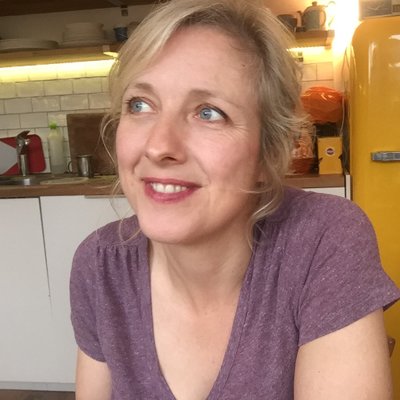
When the Guardian went on strike to protest the Observer sale, I became a de facto spokesperson. Later a Tortoise employee I’d never met wrote to me to cancel my 20-year contract. No goodbye & no pay-off. This is how they now take credit for my work..but write me out of the story


