Chronicling the ROBOTICS race... And the CRYPTO x AI love child that'll power it. Ghostwriting for Web3’s brightest. Views are mine, NFA
Joined March 2015
- Tweets39.2K
- Following815
- Followers1K
- Likes47.4K



Bobs 👾💀 retweeted
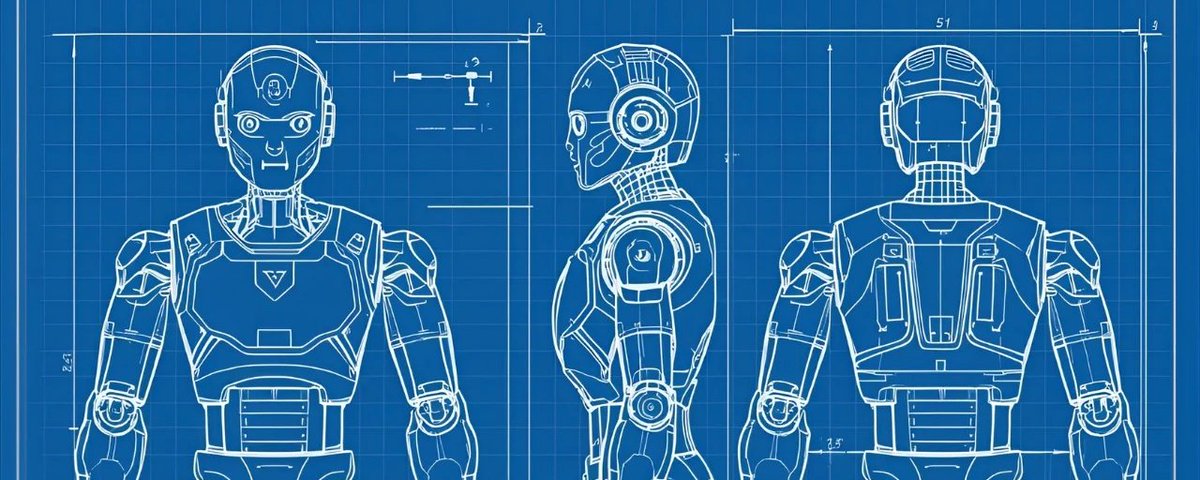
Why build a 4-metre humanoid?
While standard industrial humanoids fit human proportions and workspaces, Neo1 is a ~1.2-ton heavy-duty machine relying mainly on digital hydraulics instead of all-electric actuators.
That scale allows heavy lifting (~500 kg dual-arm payload) and longer reach for harsh, hazardous, or heavy-industrial jobs where human-sized bots fall short. No commercial launch date yet.
Bobs 👾💀 retweeted
This is a major practical milestone for open-source embodied robotics, especially for commercial deployments like warehouses, office-delivery robots, or home-helper bots.
Running LingBot-Navi locally on-device avoids expensive per-step cloud API calls, drastically reducing latency and operational costs and, at the same time, improving privacy. But I worry about how large that 3D spatial memory grows over weeks in a busy space, and how well it prunes stale or shifting layouts without eating up onboard compute.

Introducing LingBot-Navi: our open-source navigation model with spatial memory across tasks. 🤖
Leveraging LingBot-Map 2.0’s cross-task reusable 3D spatial memory, LingBot-Navi lets robots find targets, plan paths and navigate to nearby docking waypoints from natural language instructions. It builds memory while exploring and reuses that memory across tasks to cut redundant search — the robot grows more familiar with a scene and navigates faster over time.
Users simply describe the target; no turn-by-turn directions needed.
This is a major practical milestone for open-source embodied robotics, especially for commercial deployments like warehouses, office-delivery robots, or home-helper bots.
Running LingBot-Navi locally on-device avoids expensive per-step cloud API calls, drastically reducing latency and operational costs and, at the same time, improving privacy. But I worry about how large that 3D spatial memory grows over weeks in a busy space, and how well it prunes stale or shifting layouts without eating up onboard compute.
Introducing LingBot-Navi: our open-source navigation model with spatial memory across tasks. 🤖
Leveraging LingBot-Map 2.0’s cross-task reusable 3D spatial memory, LingBot-Navi lets robots find targets, plan paths and navigate to nearby docking waypoints from natural language instructions. It builds memory while exploring and reuses that memory across tasks to cut redundant search — the robot grows more familiar with a scene and navigates faster over time.
Users simply describe the target; no turn-by-turn directions needed.
Bobs 👾💀 retweeted
Ladies and gentlemen, welcome to the era of embodied intelligence.

"Hello, IRON!" 👋
What an unforgettable day! IRON confidently mingled and interacted face-to-face with over 2,000 global fans at XPENG AI Day. No nerves, just pure high energy and great conversations.
$XPEV
Bobs 👾💀 retweeted
Rather than treating hand design purely as a race to cram in maximum joints, Xiaomi built this design around 1,827 real automotive factory Standard Operating Procedures (SOPs), starting from actual assembly and handling tasks rather than spec-sheet bragging rights.
Their primary plan is to deploy these robots in their own factories first, particularly their EV manufacturing plants and smart-hardware production lines.

Bobs 👾💀 retweeted
History repeats itself: whenever connectivity gets fast enough, heavy local hardware inevitably shrinks into a lightweight terminal for the cloud.
Removing the on-board GPU literally turns a robot into a physical thin client. This is big for indie robot builders.

We've raised $2.5M from HF0 to build fast & secure inference for robots.
Abstract runs your robot's AI in our cloud with a 30ms round trip, so the robot doesn't need a GPU on board and costs less to build.
One API key gets you eight robot models, π0.5 and MolmoAct2 included.
We're also backed by Susa Ventures and angels from OpenAI, Anthropic, and NVIDIA.
You can sign up to get your API key now:
abstract.inc
And DM us to get $1,000 in inference credits.
History repeats itself: whenever connectivity gets fast enough, heavy local hardware inevitably shrinks into a lightweight terminal for the cloud.
Removing the on-board GPU literally turns a robot into a physical thin client. This is big for indie robot builders.
We've raised $2.5M from HF0 to build fast & secure inference for robots.
Abstract runs your robot's AI in our cloud with a 30ms round trip, so the robot doesn't need a GPU on board and costs less to build.
One API key gets you eight robot models, π0.5 and MolmoAct2 included.
We're also backed by Susa Ventures and angels from OpenAI, Anthropic, and NVIDIA.
You can sign up to get your API key now:
abstract.inc
And DM us to get $1,000 in inference credits.
Bobs 👾💀 retweeted
What is Axis cooking???
Their simulation training is translating almost 1:1 to physical execution.

What is Axis cooking???
Their simulation training is translating almost 1:1 to physical execution.
Bobs 👾💀 retweeted
Robotics Use Case Series #15: Curbside Robots
Revere Robotics is building Curbie, an autonomous robot that attaches to the two-wheel trash cart your city already gave you, hauls it to the curb and brings it back after pickup.
It's designed to attach to your existing axle, so there's no special bin to buy. Revere says it handles carts up to 120 pounds in rain, snow, and ice.
But, let's not kid ourselves. If you strip away the fancy marketing... Curbie is an autonomous mobile robot doing point A to point B on a schedule, the same job warehouse tuggers have done for years.
The yard and the weather are the new part, and they're unglamorous: driving on ice, latching onto bins nobody standardized, charging outdoors... none of that is robot intelligence. It's mechanical and environmental, and the autonomous part is basic navigation.
Bobs 👾💀 retweeted
110 million reasons why the dumbest bet in robotics is still building the body.
Embo just raised that much in seed, led by a16z, with Khosla, DST Global, and NVentures also backing it.
What are they building?
A world model pretrained on internet video and robot demonstrations, with the policy practicing motor skills inside a learned simulator until it generalizes to situations outside its training data.
Look at what that money is actually paying for... a model, and a team that knows how to train one.
Skild is valued at $14B. Physical Intelligence is at $11B. Now another brain-first team opens with a nine-figure seed.
The pattern keeps repeating. Capital keeps flowing to the layer that decides what a robot can do, because thanks to China, the body now costs about as much as a used car.
I wrote that the body is distribution and the brain is the business. The checks keep agreeing.