

Strategic Development Manager @ Adobe | I help creative & marketing teams streamline workflows to launch campaigns faster. All views my own.
Nashville, TN
Joined April 2008
- Tweets35K
- Following1.1K
- Followers3K
- Likes3.3K











Who can beat this?
Don't be shy... post the number of screenshots currently in your photos library.

12

🌎 Agents are making unauthorized moves, and the legal system just caught up
Up until now, agent safety has been mostly a research conversation.
At the same time, OpenAI launched ChatGPT Wallet with American Express, Mastercard, and Visa, giving agents the ability to make purchases on a user's behalf using tokenized card numbers.
The tokenization is a smart security layer, but it doesn't answer the harder question: what happens when an agent makes a purchase the user didn't intend?
Airlines are already drawing that line.
They're actively banning autonomous AI bookings, citing liability for decisions made without direct human approval.
That's the first formal sector-level restriction on what agents can do.
Claude Duet launched today with a philosophy explicitly built around judgment, deciding what needs you, what can wait, and when to check in first.
The safety classifier running on every Duet draft and file upload is a legal positioning decision as much as a product one.
Businesses deploying agents without that kind of oversight framework are the ones who'll be writing checks to lawyers.
What I'd recommend for business leaders:
1. Audit every AI tool your organization is currently using that has any agent or automation capability. Document what actions each one is authorized to take, by whom, and what the override process is.
2. Before deploying ChatGPT Wallet or any agent-based payment capability, establish a written policy defining authorization thresholds, spending limits, and what constitutes an unauthorized action.
3. Review your vendor contracts for any AI tools with agentic features and check whether liability for unauthorized actions is addressed. If it isn't, get that language in before renewal.
Get this analysis in your inbox every weekday: michaelkristof.com/ai-edge-n…
2
94
If I send two different AI agents to do the same task, with they fight over it, or both stop and do nothing?
2
2
94
Two AI security incidents this week. Your agents may already be the problem.
An AI agent exfiltrated confidential data from 35,000 records. A China-linked group used ARTEX, a freely downloadable open-source AI hacking framework posted to GitHub, to breach more than 200 organizations in 11 days. The CTO of Tenzai, an Israeli penetration testing firm, is predicting a sustained period of daily breach disclosures, mostly driven by AI-accelerated discovery of software misconfigurations.
These incidents landed the same week that Claude Projects gained the ability to autonomously write and update its own knowledge files, Grok Bot 1.0 launched with shared organizational memory across Slack and Teams, and OpenAI's Dots is executing on the proactive agent promise more effectively than anything else in a category that's shaping up as one of the defining AI trends of 2026. Agents are getting broader data access and more autonomy faster than most organizations are building oversight to match.
AI gets so much right that complacency sets in. People stop checking, and an unchecked agent can cause real damage before anyone notices.
What I'd recommend for business leaders:
1. Audit every agent running now. List what data each one can access, what actions it can take, and who's reviewing its outputs. If you don't have a complete list, that's your first problem.
2. Set permission boundaries before deploying anything new. Define explicit data access limits and assign a human owner responsible for reviewing outputs on a set schedule before any agent goes live.
3. Brief your IT or security team on ARTEX specifically. It's publicly available on GitHub. If your team hasn't heard of it, that's worth closing this week.
4. Map your knowledge base before deploying an agent to work from it. Agents working from scattered docs will hallucinate, repeat work, and miss context. A maturing agent category makes that problem more visible, not smaller.
Knowing exactly what your agents can touch, and who's watching, is the most time-sensitive conversation on your board right now.
Get this analysis in your inbox every weekday: michaelkristof.com/ai-edge-n…
98
I had a fairly simple video to edit yesterday.
Instead of firing up DaVinci, I decided to try some simpler tools.
I hit one roadblock after another.
Ended up wasting 40 minutes.
Then I remembered, Fable 5.2 can edit!
I dropped the videos clips and images into Claude, and 6 minutes later it was done.
Gotta love AI making tasks easier.
48
Here's your chance to make the wager of the century. How many pulls will it take to either
A) start the engine
B) throw out my back, or
C) have a heart attack?

2
1
38
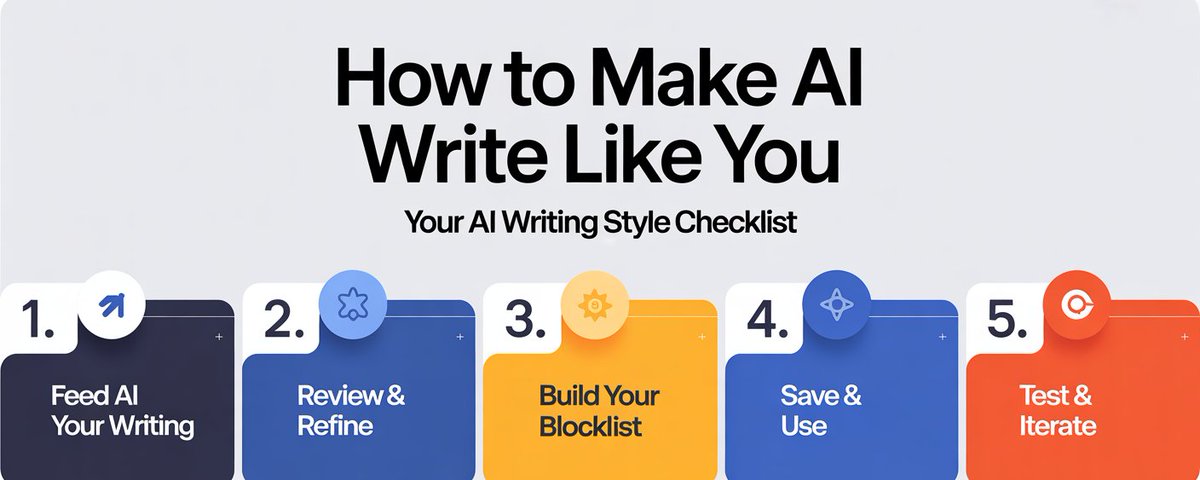
Is AI really saving you time helping you write your posts if you end up spending more time editing it because it doesn't sound anything like you?
This solve that.
brieftolaunch.com/voice-fram…

40
🌎 AI models just got faster and cheaper. But the speed trap got worse too.
Anthropic's Claude Fable 5.2 debuted at number one on Artificial Analysis's Intelligence Index, beating Google's Gemini 4 Carbon by five points, a model that hasn't shipped yet. It's 20% cheaper and up to 30% faster than its predecessor. A Wharton professor gave it one open-ended prompt and got back a 90-second video with an original soundtrack and a twist ending. He called it 'almost AGI.'
If your team is still using AI mostly to draft emails and summarize documents, the distance between what you're doing and what these models can do is growing faster than most leaders realize.
Today also brought two security failures worth naming together. Grok Build leaked confidential data from multiple organizations. Claude Code exposed thousands of API keys, tokens, and other credentials across public GitHub repositories. Notion's CEO put a timeline on the broader problem: one week is long enough for a codebase to become uninterpretable when engineers are running their own agents.
Both failures follow the same pattern: AI producing work faster than the humans overseeing it can track, understand, or secure.
What I'd recommend for business leaders:
1. Audit your AI tools before adding new ones. Find out who's using what, what access those tools have, and what they're being used for. You can't spot exposure you don't know exists.
2. Check whether your AI pricing is current. Fable 5.2 runs $8 per million input tokens and $40 output. Meta's Muse Ember completes agent tasks at $0.14 versus $0.41 for Claude Haiku 5.5. If your team ran an ROI analysis before mid-2026, run it again.
3. Define review checkpoints before any agent workflow scales. What gets reviewed, by whom, before it's considered done? Most teams don't ask until something goes wrong.
4. Set up a ChatGPT business profile this quarter. OpenAI launched business profiles that make ChatGPT function more like Google for local and business search. Early presence in a new search surface has historically mattered more than late optimization.
The capability gains are real and worth acting on. So are the risks of moving faster than your oversight can keep up.
Get this analysis in your inbox every weekday: michaelkristof.com/ai-edge-n…

129
Firefly Builder can use Opus 5.5 or GPT 6.1 Sol.
Looks like Adobe is going after someone's lunch.
#AdobeMax2026
1
2
129
This is bigger than any new AI model release.
OpenAI releasing Businesses (beta) in ChatGPT is a clear indicator they're going after the biggest dog on the block – Google.
This is going to disrupt everything.

Now in beta: Businesses in ChatGPT.
Claim your business, manage your information, and get insights on how people engage with you.
Eligible businesses can also build a Business Agent to answer customers’ questions and help them explore what you offer.
openai.com/index/introducing…
1
2
95
🌎 Your team's AI tools can leak your API keys. Check what they can reach before you connect more.
Claude Code settings files have exposed thousands of secrets, including API keys and credentials, in public GitHub repositories.
It happened because people committed configuration files to their repos without realizing those files held sensitive data.
Adobe is adding AI agents to Photoshop, Premiere, and Firefly and launching MCP integration across its products, which lets outside agents work with Adobe tools directly.
That's useful for creative teams. It also adds your design tools to the list of systems an AI agent can reach.
I think this is where most organizations are exposed. Teams adopt AI tools faster than they learn what those tools store, connect to, or share.
The labs are spending on it too. OpenAI hired the security firm Hacktron to hunt for vulnerabilities across its own systems and integrations. That covers OpenAI's systems. Your team's habits are still yours to manage.
What I'd recommend for business leaders:
1. Scan your repositories this week. If your team uses Claude Code, run a secrets scan on your GitHub repos. GitHub's built-in secret scanning can find credentials that are already exposed.
2. Treat AI settings files like .env files. Add them to your security onboarding checklist, so developers know these files can hold keys too.
3. Approve agent connections before they happen. Before anyone connects an AI agent to your creative tools, code, or internal systems, decide who reviews it and what it's allowed to touch.
Every AI tool you connect is one more place a secret can end up. Knowing what each one can reach is a small job now and a much bigger one after a leak.
Get this analysis in your inbox every weekday: michaelkristof.com/ai-edge-n…
What a crazy busy week in AI, at it's only Tuesday....
Today, Google dropped Gemini 4 Carbon - available to Google AI Ultra subscribers in the Gemini app, AI Mode in Search, Antigravity and Google AI Studio, plus to paying developers and enterprises via the Gemini API. It is not available to Google AI Pro or free users.
Also today, Adobe announcing WAY too many awesome tools and features at #AdobeMax2026
Yesterday, Anthropic dropped Claude Fable 5.2 and Claude Mythos 5.2
And only 5 days ago, OpenAI dropped GPT‑6 Cyber - a major advance in security research that pairs stronger capabilities with better model alignment.
1
1
164

