

staff writer @TheEconomist. prev in China
London
Joined June 2013
- Tweets446
- Following4.1K
- Followers1.4K
- Likes17.4K




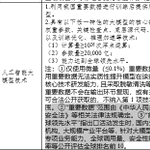

Anthropic says it stopped distillation on its own platform on September 19. Is it possible that the very large jump in OpenRouter traffic is related?


End of history update: Secretary of the Suzhou Municipal Committee, met with Chinese freestyle skiing athlete Eileen Gu, who came to Suzhou to attend the Vogue Fashion Power event

Corbin Duncan retweeted

Moonshot is taking a very interesting approach to cyber for its new Kimi 3.1 Pro model.
Instead of adding safety guardrails during post-training, they removed cyber-related data in mid- and post-training. This tries to address the problem of people fine-tuning away the safety guardrails for cyber for the open-weight model.
At the same time, Moonshot still has a more powerful internal version of the model with full cyber capabilities. Now, like the US, China’s true AI frontier is no longer public.

Corbin Duncan retweeted

When preparing for a podcast this week on effective altruism and business, I wondered who might make a good guest.
Then the obvious answer came to mind: the most famous EA of all time, Sam Bankman-Fried. Notes from our conversation for @TheEconomist. (The full interview is on "Money Talks", out yesterday.)
economist.com/finance-and-ec…


China’s universities are rich. But they're getting squeezed
economist.com/china/2026/10/…
from The Economist


Corbin Duncan retweeted

Interesting new speech from PBOC governor Pan Gongsheng. Covers a range of issues including e-cny. Also echoes what we've been saying @ACGeoEcon - most accurate way to look at international payments is not through Swift alone:
pbc.gov.cn/en/3688110/368817…
cc: @JessicaHoversen @daniel_mcdowell


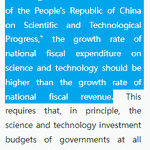
Bit of a narrative violation. China's public spending growth on education and sci-tech is slowing, mainly driven by local governments' poor finances:

Corbin Duncan retweeted

Incentives and outcomes strike again.
FT decided to dig in to the biggest drag on growth this country has. We have a new record of a 72% marginal tax rate.
If you are evenly remotely above average, it increasingly feels like Britain is not the place for you.
I know many people caught in this. You either need household income closer to £500k or someone to stop working for this to make any sense. Yet again, the middle gets punished for doing the thing that the economy and country functions on (working, having a family).
I try to be optimistic here but I don’t see this being fixed. It’s too small of an issue to be a vote winner and high-risk for any politician who’s trying to appeal to the average earner in third world Britain.


Britain’s £100,000 tax trap ft.trib.al/PozWvDe

Corbin Duncan retweeted

China releases Q3 GDP tonight. In nominal terms, AI is a big part of China’s export boom. Chips and computers account for more than 40% of the recent export increase. But on a net basis, AI trade is weighing on China’s trade surplus. The surplus growth comes from vehicles and other machinery.
The chip export boom is also mostly about prices. In September, China’s chip exports rose 136% in value from a year earlier, but the number of chips rose only 1%. Most of that is memory chips, where the global shortage has driven up prices. So AI trade isn’t adding much to real export growth. If net exports boosted real GDP growth in Q3, it wasn’t because of AI.


This month China's government released new guidelines for its innovation policy. They include this line:
"Construct a technology monitoring, risk warning, and emergency response system to ensure that artificial intelligence is safe, reliable, and controllable."
nda.gov.cn/sjj/swdt/xwfb/100…
An AI bust would be pretty bad for China’s economy. Data-centre inputs are probably ~40% of ytd export growth, and of course the second order effects of a generalised slowdown in foreign consumption would hit exports further


Chinese firms have emerged as the biggest losers of the faltering global AI trade, a setback for Beijing’s efforts to use stock markets to supercharge its ambition of technological supremacy bloomberg.com/news/articles/…

Corbin Duncan retweeted
My initial reaction to China's new AI export controls:
They're confusing because they seem to be creating restrictions for China AI exports while simultaneously signaling continued "automatic" approval for open-source models.
I don't think it's about leverage. I think China is generally worried about cyberattack potential for Chinese AI systems and don't want these proliferating outside China and then potentially hitting Chinese critical infrastructure or government systems.
So the toughest restrictions--the prohibitions 禁止出口--are on AI autonomous malicious code generation. But there are also broad restrictions 限制出口 on AI models of above certain performance thresholds. Ministry of Commerce later said open-source models would be "automatically" approved upon registration, but then it does lay the groundwork for a more systematic monitoring of models and possible real restrictions later on.
The part that's confusing to me is that AI systems that can help produce malware basically include all the top Chinese open-source models. And yet they're simultaneously "automatically" approved?
It seems like this set of new export controls were created by one part of the bureaucracy that's worried about proliferation of harmful AI capabilities but then another part is trying to say "but actually we still support open-source."
This is at least my initial reaction--my views may change as I re-read and re-analyze.
Distillation campaigns being responsible for 5-7% of Anthropic's revenue is mad. Revealed preference would suggest that distillation is q important for Chinese progress ft.com/content/11632d03-358c…

Beijing implemented its rare-earth controls on paper before Trump took office. It may not exercise these powers right away, but it’s giving itself the tools to close off its frontier models. Probably because it thinks it will need to use them at some point
Beijing just took a big step towards closing the Chinese frontier. The rules could give China's government the power to restrict AI developers from releasing their most advanced open-weight models.
It proposes banning exports of AI technologies that autonomously generate and modify malicious code. It also wants to restrict exports of AI-assisted vulnerability-discovery technologies. Giving a model away for free, ie open-weight, could qualify as an export.
Crucially, the rules distinguish between technologies already in the public domain and those not yet released. It specifically exempts existing open-source models. But new releases could potentially trigger export controls.
Providing foreign customers with access to models through APIs (ie, closed models) is generally exempt, whereas restricted models being served overseas could require a licence.
Beijing promises essentially automatic licensing for open-source releases, allowing developers to publish almost immediately after notification. But it's unclear whether this applies to those capabilities proposed for outright export prohibition.
If intelligence generalises, how can China's AI labs distinguish between a smart model and one that has the capabilities proposes for restrictions?
mofcom.gov.cn/zwgk/zcjd/art/…
Implications:
Investors worried about cheap Chinese models hurting returns from AI capex. Might be less of a concern
AI safety advocates might applaud controls on cyber-capable models
Many middle powers have been betting that Chinese open-weight gives them an outside option to American AI. Probably not now
A lot of CN messaging has focussed on open-weight being a gift to the world. Already we were seeing a nuancing of this language (see below), expect much more so now

More striking if subtle shifts on open source AI in the Chinese discourse—
The prominent scholar Zheng Yongnian (previously a pretty full-throated advocate of open source) now says:
"We cannot simply say that closed models are good and open models bad, or vice versa. Openness and closedness are themselves relative concepts..."
"If we ignore these boundaries and insist on unrestricted openness, managing the risks becomes a major problem. Governments can use artificial intelligence, and so can non-governmental groups. Constructive forces can use it, and destructive forces can use it too. A balance needs to be found here."
h/t @JFarquhars92862 sinification.org/p/gung-ho-d…
