

I make small dev teams ship like big ones. CPO at TEX (Helping bring more opportunities to high school students).
Sydney, New South Wales
Joined February 2010
- Tweets3.6K
- Following1K
- Followers574
- Likes3.6K

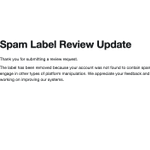



Just dodged a bullet here.
My X account got flagged for spam (not sure why 🤯)...
Thankfully, the review found my ramblings cannot be AI generated 😆

1
1
64
When writing becomes cheaper, reading becomes more valuable.
Comprehending and internalizing content quickly and being able to make sense of diverse opinions, facts and ideas - will become a critical skill.
23


Good primer. If "software factory" sounds big, start small: decide what an agent must show before a person reviews its work.
For measuring it, the number I watch is bugs from new releases. Ours are down by more than half.
teapaw.org/BHolmesDev/status/2123…

Software engineering is becoming factory engineering.
If you're new to that term, let's discuss:
- What problems a "factory engineer" tries to solve
- What a software factory loop includes
- How to use metrics to measure and improve your agent's quality

15
Vercel launching Boards is probably the next infrastructure piece that was missing.
Many of us are building our own version of it and it's good that someone is tackling it holistically.
teapaw.org/cramforce/status/21234…

How my software factories use Vercel Board:
1. Vulnerability fixing factory:
- We're syncing Linear tickets into the board as tasks
- Nudging devs for approvals is a big part of getting things merged, so those are tracked on the board to prevent over-nudging
- Inbound messages (comments on GH, Linear, replies to nudges) from devs are put on the board and processed by a dedicated agent to determine future actions
- A needs-you board is used for agents to ask questions to the factory owners
- Agents running on Vercel Sandboxes use a comms channel to communicate and give each other tasks. E.g. there is a dedicated agent that makes sure PRs stay green over time.
- The board data is mined for a gamification dashboard (Thanks to @vvoyer for being number 1)
2. New secret project factory
- This is a project focused on agent swarm hill-climbing
- All agents log their decisions to a central board for knowledge sharing
- When agents develop a hypothesis for an improvement as part of their work, they post it to the board for other agents to pick up
- Each sandboxes log files are posted to the board and full agent traces are attached so that post-mortem debugging is fruitful
- The factory has a daily run where it inspects the logs and traces to improve its own behavior
- I'm currently interacting with the factory from claude, but all the sandboxes run fx. This type of inter-harness comms is just completely seamless with the board.
- And much more. Screenshot attached over how the board is visualized.
Notably, this is all prompted together and works just great. The agents just love using the board and the emergent behavior is delightful
vercel.com/blog/introducing-…

14
Agreed. But the amount of architects required will be far fewer than software engineers graduating every year.
It is becoming difficult to recommend students to take up Computer Science as we are just not sure what will they do at entry level.
teapaw.org/mihail_eric/status/212…

The computer science major is going through an identity crisis.
Claude Code can finish any programming assignment with a single prompt so what's the value of teaching students how to write a function in Python?
Here’s the point: we still need architects, not button-pushers.
The next decade will belong to people who understand theory and how to break complex systems into smaller components even without Wifi.
Imagine a degree that drills algorithmic thinking. Weekly closed-book exams. CLRS becomes the most important book in the major.
And software development? You’ll exercise that muscle only at internships and real jobs.
The computer science major will look more and more like a math degree.

1
15
Speed up one step and the queue just moves to the next one.
Worth asking every few months: where does work wait now?
For us, AI pre-review took code review from 1–2 days to < an hour.
So review stopped being the place to look. teapaw.org/GergelyOrosz/status/21…

Wait until Harvard resarchers will find 12-18 months later that the bottleneck shifted from code review to CI/CD (first) and then to code verification + o11y
22
Everyone assumes that AI means less work for developers.
Twelve months into agent-led development, our team isn't working less.
We're working harder, but on different things.
What's taking more of your team's time than it used to?
20
Agree. Code is cheap to write now. Understanding it is where the time goes.
What worked for us: creating Claude Artifacts for test scenarios that tracks the status of each entry. All team members can see the same thing and easily understand where things stand. teapaw.org/zeeg/status/2122767883…

while everyones focused on funsies skills and shit
the most useful thing you can do to accelerate your company is to make LLM generated artifacts easier to understand
whether thats a review walkthrough (read: not a mermaid diagram or more markdown text), or better visuals to explain things, thats whats needed to go faster and have trust
1
25
AI coding agents love rebuilding things your codebase already has: a new button here, a new dropdown there.
Reminding them doesn't stick. What worked for us: put the rule where the agent reads it, and add a check that fails the build when it slips.
Here's the rule 👇
1
25
Before building any UI component, check whether the codebase already has one. If it does, use it.
Why: the existing one already handles keyboard use, focus and screen readers. A rebuilt copy almost always misses something.
To make it stick, put this in your agent instructions file, and add a lint check in CI so new copies fail the build.
7
Typing this on Wispr Flow via mobile is clunky but it does the job so well. It understands the intent and drafts properly. It is not just voice-to-text but voice-to-readable output and that difference matters a lot.
The Wispr Flow team really understands its users well.
I'm currently whispering into this app because my kid is sleeping in the same room and I'm sure I will be able to send this text without editing it much.

WisprFlow is the best example that no one really knows anything.
Plenty of reputable folks called it "just a feature in apps”. And can’t be a standalone app someone would pay for.
Yet, they’re worth $2B. And that’s not even the best argument.
The best is that I wouldn’t be able to live without it. I go through friction to use it when I could just one-tap Claude’s voice button.
Don’t fall for the hype. Reason about the value your product offers rationally, then talk to your customer.
That is the true long-term alpha.
1
32
Grok Bot is becoming the only AI tool I am talking to regularly. It's doing everything for me, starting with:
- managing my inbox
- managing my task list
- managing my finances
- handling my follow-ups
- recording my transcripts
- doing marketing for us
- software development
- ticket management
- project management
- and so on
Every week I add one bot, for an area of work where a specialized bot would help, define all the processes, skills, and routines for it, and just start giving it one task at a time. If it sticks after a couple of weeks, I keep the bot.

Grok Bot (and ChatGPT Dots) are going to do to every job that Claude Code did to engineering.
I am seeing it at small startups where instead of doing ops, sales, support manually people are mostly managing agents to do it for them.
1. It’s time for everyone to learn these tools to get ahead
2. Going to see productive booms across these roles
3. Token demand is going to get even higher in the next 12 months.
Jobs will no longer be to do the thing but, to train and manage agents that do the things.
1
29
Excellent take from someone who is building on the edge of possibility with Applied AI.
I am finding that slowing down in the short term is actually increasing the sustainable speed of development over time.
What does slowing down look like:
- investing in engineering best practices
- burning down tech debt
- implementing bleeding edge systems
- upskilling yourself and the team
- removing shortcuts and building libraries and uniform architecture
- taking back control from the agents and make some choices yourself
- simplifying rather than complexify
- running multiple experiments and adopting what works and discarding what doesn’t
It is good to take the speed gains from the agents and instead of being greedy for more speed, focus on building a sustainable operation.

I just finished talks about my software factories at two conferences. Afterwards a bunch of people came up and told me what they were surprised about. Here is a distillation of what people thought were hot takes from my two talks.
First hot take: I tell everyone to slow down. Most speakers go on about how fast they're going, but I strongly believe in pacing AI outputs to human speeds. I regularly tell AI-pilled CIOs and CTOs to chill: almost nobody is _actually_ going fast with AI. Engineering still moves at engineering speeds, and business moves even slower. The ones pushing too hard are starting to see downtime for it.
If you don't pace your AI to human speeds, everything starts breaking around you, even at small operations like my online video game. I only have about a dozen humans working with my factory, and only a few hundred active old-timer players in the community who get along well, and still, introducing AI has still been very rocky.
My agents have, at times, overwhelmed my players with features, my accountant with emails, my merge queue with tickets, and my machines with load. Agents have pissed off my admins, resulting in name-calling, they've made messes in the game, and they've launched broken OSS without permission. The list goes on.
I can get away with all this chaos because everyone involved in my operation is very forgiving. They're excited by the potential. But even so, I had to learn to slow down, real fast. And so that's what I preach.
Hot take #2: Should you buy a software factory? Do you even need one? No. You probably don't need one. Factories take an extraordinary amount of upkeep. They turn into garbage mountains unless you put a frightening amount of time and tokens into curating them. I had to burn my previous five factories down since it eventually became cheaper to rewrite them than to fix them. So I'm not out there advocating for software factories or swarms just yet. If you do want one, be aware that it is a significant commitment of both money and human leadership to keep one running.
Several people told me that I was the only one who stood up onstage, at either conference, and said Build, don't Buy. But my experience is that software factories grow to be highly bespoke to your domain. Mine is super tangled up with my game, and I think that's inevitable. Because the factory is not just building my product, it's supporting it too. It's a company in a box. And they're easy for Claude to build for you.
Third and arguably hottest take: Next year will have a lot of human/agent and agent/agent office drama, resulting from bringing in AI employees, and it will be gloriously funny, but also frustrating.
Many of you are already on this bandwagon, but everyone next year will have a personal chief-of-staff agent. Busy people, even hobbyists, will have whole entourages of helper agents. The hot take is that people will become so dependent on these little private entourages, that they'll bring them to work. Your people will talk to my people, etc. Whole protocols will emerge for private entourages negotiating work between humans, inside companies big and small.
Nearly all humans will wind up having to start working with AI employees next year, and it'll be the beginning of the biggest cultural change we've seen in a hundred years.
So that's the hot takes. Slow down. Only build a factory if you think you really need one. And focus on empowering yourself with your own agentic chief of staff (or team). Your entourage will define how you work with others, so start by perfecting how you work with them yourself.
12
Step one of my AI-led development flow hasn't changed: speak to customers and find the pain point, not the feature request.
I also record and transcribe those calls.
The easy-to-miss patterns often show up only across several calls. That's the highest value feedback we get.
19
13 questions sat unanswered for up to 20 days as repo issues.
We now file them in the team's issue tracker. The first answer came back this week. About an hour later the routine merged the tests and filed two bug tickets.
Here's the prompt to give your agent the same loop 👇
1
23
Set up an agent that files open questions as tickets and picks the answers up.
When you are writing tests and cannot tell what the code should do:
1. File one ticket per merged pull request in the team's issue tracker, not as a repository issue.
2. Put it in a shared awaiting-spec view, and record the ticket on that pull request.
3. Write each question in plain words a person can answer, like "Question 1: Option A". Tag exactly one option as what happens today, and only when that is true on every code path. If the paths differ, say so and ask about the path in question.
4. Mark the agent's own comments so they are not read as a person's answer.
On each later run:
5. Pick up answered tickets first.
6. If the answer says what the code should do, write the test, link the test pull request on the ticket, and close the ticket once that pull request has merged and every question is settled.
7. If the answer says the code is wrong, file a bug ticket. Never write a test for that, and never file it as a repository issue. Keep the bug ticket out of the awaiting-spec view.
Don't invent an answer. If nobody has answered yet, leave the ticket open and move on.
9
Very helpful prompt. Give the post to your Chief of Staff bot and see the change👇

You need to run the prompt below in Grok Bot/Duet/Dots
It's saved me more time than any other single prompt I've run
The biggest issue with agents is you use it to 1% of it's capability. You only automate 1% of the work it can actually take care of
This fixes that
Prompt:
My goal for working with you is to lighten my cognitive load. I want to get more work done, but with less effort on my part. Based on what you know about me and what we do together, what are some things we can do, systems we can implement, subagents we can build, or routines we can create to accomplish this goal?
This will cause your agent to review everything it knows about you and the work you've done together, and come up with systems that 'lighten your cognitive load'
For me this is the biggest benefit of AI
I don't even care about getting more work done. I just want to get the same amount of work done, but have more head space I can spend on things I enjoy
Everything I do with AI is in an effort to reach this north star
Use this prompt and watch the magic happen (feel free to just send this post to your agent)
21
There's no single prompt, model or tool that makes AI coding work.
When you see someone at a frontier lab merging 200 PRs in a day, you're not seeing a trick. You're seeing a system they've built over months.
It's a hundred small things that compound:
- a new line in AGENTS.md every time an agent gets something wrong
- a check so the same mistake can't merge twice
- skills for the jobs you repeat
- code review that leads with what needs a human
- questions sent to where people actually answer them
None of them is impressive on its own. Together they're the difference.
What does that look in practice: This week two of our branches broke a naming rule that only lived in existing filenames. Now it's written down, and CI fails if anyone breaks it.
Don't expect it to work out of the box. Start with the mistake you fixed twice this week.
1
38
Two of our branches broke a naming rule everyone on the team "just knew".
The rule was never wrong. It only lived in the filenames, and the written version was vaguer. Agents follow what's written, not what's implied by the folder.
The fix: write the convention down exactly, then lint it so CI fails when it's broken.
Here's the prompt to find the unwritten rules your agents will break 👇
1
18
Audit this repository for conventions that exist only in practice, not in writing.
Look at file and folder naming, numbering or ordering schemes, migration and config patterns, test layout, and anything where existing files follow a pattern that no doc states exactly.
For each one, compare it with what AGENTS.md, the README, contributing docs and agent rules actually say. Flag every case where the written rule is missing, vaguer than the real pattern, or contradicts it.
For each gap, give me:
the convention as it really works, with two examples from the repo
one exact sentence I can paste into AGENTS.md
a cheap automated check (lint, pre-commit hook or CI step) that fails when it's broken, and a helper that prints the next valid value if it's a sequence
Rank them by how likely a new agent or teammate is to break them on their first change.
Don't change any files yet. Just give me the list.
7