
made for war, doing powerpoint.
Berlin, Deutschland
Joined April 2007
- Tweets14.2K
- Following971
- Followers898
- Likes9.9K










Pinned Tweet
Eines Tages, wenn alle Circles voll sind und jedes Tun geliked wurde, werden sie merken, dass Vernetzung noch keine Verständigung ist.
hannes kunstreich 🇩🇪🇪🇺🇺🇦 retweeted

I don't think the American mind is ready to comprehend that European football tourists are working class.

Let’s be very clear: the European middle-class is not traveling to the US. They can’t afford it.
These are rich European traveling and being amazed at the wealth of the American middle class.
European middle class earns € 2200/mo. After expenses they have €500/mo left at best. This is nowhere near enough disposable income to go on a multi week trip to the US.
The middle class European stopped being able to travel internationally years ago.
hannes kunstreich 🇩🇪🇪🇺🇺🇦 retweeted

Mates, please.
Just stop with this BS: "175,000 people die from heat in Europe every year, while in the US only 3,000 do."
The comparison is bogus.
If we compare apples to apples, the numbers are much closer, and the US does not necessarily come out looking the best.
Let me explain.
I'm an AC-loving emu, but I'm also a perfectly objective emu, so let's go!
For starters, the 175,000 figure covers the WHO European Region, which includes countries such as Russia and the nations of Central Asia. It's basically a catch-all region with nearly a billion people, and some of those countries are hot, autocratic, and relatively underdeveloped.
But that's not the biggest problem.
The biggest problem is methodological.
The American "small" figure of roughly 3,000 comes from death certificates. Heat must be listed as a cause of death or a contributing factor. I don't know exactly how the coding works, but essentially someone qualified has to look at the deceased and conclude, "Yeah, heat defo played a role."
The European 175,000 figure is based on statistical modelling. Analysts estimate how many deaths are correlated with high temperature and then convert that relationship into an annual number of heat-related deaths.
This methodology does not require a coroner to explicitly identify heat as a contributing factor.
The European method naturally produces higher estimates.
The American method naturally produces lower estimates.
So if we want a genuine apples-to-apples comparison, we need to apply the same methodology to different countries.
And researchers have done exactly that.
A 2015 Lancet study estimated temperature-related mortality across multiple countries. While it included only four European countries: Italy, Spain, Sweden, and the UK, it allows for a more meaningful comparison.
Using a similar methodology and adjusting for population, the United States would come out somewhere in the middle. It would have roughly 10,000 heat-related deaths per year—lower than Italy and Spain, but HIGHER than Sweden and the UK.
So the AC-abundant Yanks seem to be sitting right in the middle of their AC-deprived "Europoor" counterparts.
Kind of an anticlimactic conclusion, but that's usually what happens when you're being perfectly objective.
Stay cool! Or warm, depending on which season your hemisphere is currently enjoying!


hannes kunstreich 🇩🇪🇪🇺🇺🇦 retweeted

A German friend told me today he was struck by how Ukraine seemed to be regaining control over the dynamics of the war. I would not call it a strategic turn yet. But the shift is real. Here are three reasons why👇
hannes kunstreich 🇩🇪🇪🇺🇺🇦 retweeted

When the EU caved in to Trump on trade in July, many of us warned that this type of extorsion never stops
Now Trump threatens 10% (25% in June) tariffs on 8 European countries opposing a US takeover of Greenland
It is time to unleash a radical response:
Tariffs for oligarchs🧵
hannes kunstreich 🇩🇪🇪🇺🇺🇦 retweeted

I think the time has come for me to write my take on @daveckang's entire research ouvre--its strengths and the limitations I find in its central arguments.
I do think that his new piece in IO really rests on ideas and assumptions of this earlier work, even if they are not cited.
hannes kunstreich 🇩🇪🇪🇺🇺🇦 retweeted

TREFFT UNS MORGEN BEI CAFE KYIV!
Die Veranstaltung beginnt mit Eröffnungsreden, und unser herausragendes Vorstandsmitglied @evsenasviti wird eine der Rednerinnen sein. Wir sehen uns um 10:00 Uhr!
Hier eine Erinnerung an unsere Panels:
1️⃣ Weapons of Slow Destruction: Russian State Propaganda (In Kooperation mit @bpb_de)
🕑 15:30–16:30
📍 CINEMA 10
2️⃣ Decolonizing the Discourse on Europe’s East (In Kooperation mit @BoellStiftung)
🕑 11:00–12:00
📍 CINEMA 10
UPD: Valentyna Sotnykova kann ebenfalls nicht an der Podiumsdiskussion teilnehmen. Stattdessen begrüßen wir erneut Kateryna Demerza.
3️⃣ Premiere der Dokumentation “Zinema”
🕑 19:15–21:00
📍 CINEMA 2
UPD: Leider kann Kornii Hrytsiuk nicht an der Podiumsdiskussion teilnehmen. Stattdessen freuen wir uns, Kateryna Demerza, Philosophin und Leiterin des Kommunikationsteams von Vitsche, willkommen zu heißen.
📌 Das vollständige Vitsche-Programm findet ihr im reposteten Thread ⬇️


hannes kunstreich 🇩🇪🇪🇺🇺🇦 retweeted
📢 VERBREITE DIE DEMO!
Am Sonntag sind wir in Berlin – für ein starkes Europa, gegen Autokratie und Diktatur!
Jeder Repost bringt Menschen auf die Straße! Gemeinsam machen wir Druck auf die neue Regierung – für mehr Unterstützung für die Ukraine und eine vereinte, starke EU!
Komm vorbei und bring alle mit:
📍 Brandenburger Tor, Berlin
🗓 9. März 2025, 17:00
🇺🇦 Jetzt erst recht: #StandWithUkraine!
Am 9. März demonstrieren Vitsche und @campact gemeinsam in Berlin:
👉 Weil die Ukraine Europas Sicherheit verteidigt.
👉 Weil Autokraten unsere Demokratien bedrohen.
👉 Weil Freiheit keine Selbstverständlichkeit ist.
👉 Weil ohne Europas Unterstützung der ukrainischen Bevölkerung weiterer Terror, Unterdrückung und Massenmord drohen.
Während die USA die Ukraine im Stich lassen, müssen wir in Europa Verantwortung übernehmen.
Für die Ukraine. Für unsere Freiheit. Für ein starkes Europa.
Unsere Forderungen:
✔️ Uneingeschränkte Unterstützung der ukrainischen Souveränität
✔️ Mehr militärische und humanitäre Hilfe – inklusive Taurus
✔️ Verwendung eingefrorener russischer Vermögenswerte zur Unterstützung der Ukraine
✔️ Aktiver Schutz von Demokratie und Sicherheit in Europa
✔️ Investitionen in eine unabhängige, gerechte und nachhaltige Zukunft
📍 Brandenburger Tor, Berlin
🗓 9. März 2025
17:00
Gemeinsam zeigen wir:
#Europa zusammen ist stärker als seine Feinde.

hannes kunstreich 🇩🇪🇪🇺🇺🇦 retweeted

Quick service-post to the non-German-speakers on the substantial 🇩🇪defense & infrastructure package which the lead negotiators of the potential new 🇩🇪gvmt coalition of CDU/CSU and SPD @cducsubt @spdde, @_FriedrichMerz @larsklingbeil @EskenSaskia and @Markus_Soeder just announced:
1) all expenses in our defense budget above 1% of BIP will be exempted from our national debt brake. Hypothetical example: were NATO to decide that defense expenditures increase to 3%, then 3%-1% = 2% of BIP would be exempted. Current BIP = €4.400bn, so €88bn would be exempted. 1%, i.e. €44bn would still count towards our debt brake.
2) a special Infrastructure fund will be set up to fix our outdated infrastructure. It will be exempted from our debt brake - volume €500bn over 10 years
3) in addition, our 16 Federal states will receive an exemption from our debt brake of 0,35% of BIP - i.e. for this years‘ BIP that would amount to €4.400 * 0,35% = €15,4bn.
4) acceleration of planning and permissioning for new defense projects to allow rapid deployment of the new defense funds
5) establishment of an expert commission to make proposals for long-term reforms to our debt rules to incentivize more investments 👇
ardmediathek.de/video/phoeni…
hannes kunstreich 🇩🇪🇪🇺🇺🇦 retweeted

Ukraine is Europe!
We stand by Ukraine.
We will step up our support to Ukraine so that they can continue to fight back the agressor.
Today, it became clear that the free world needs a new leader. It’s up to us, Europeans, to take this challenge.
hannes kunstreich 🇩🇪🇪🇺🇺🇦 retweeted

Nobody wants peace more than the Ukrainians do. Therefore we are working on a common path to a lasting and just peace. Ukraine can rely on Germany – and on Europe.
hannes kunstreich 🇩🇪🇪🇺🇺🇦 retweeted
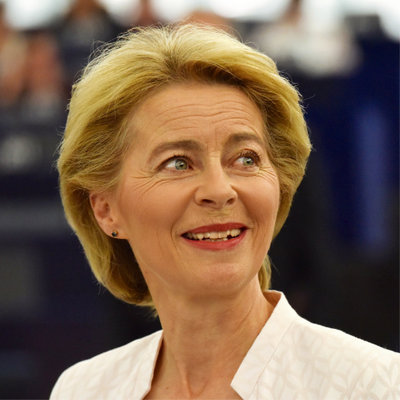
Ваша гідність вшановує хоробрість українського народу.
Будьте сильним, будьте сміливим, будьте безстрашним.
Ви ніколи не будете самотнім, дорогий Президенте @ZelenskyyUa
Ми продовжимо працювати з Вами заради справедливого і сталого миру.
hannes kunstreich 🇩🇪🇪🇺🇺🇦 retweeted
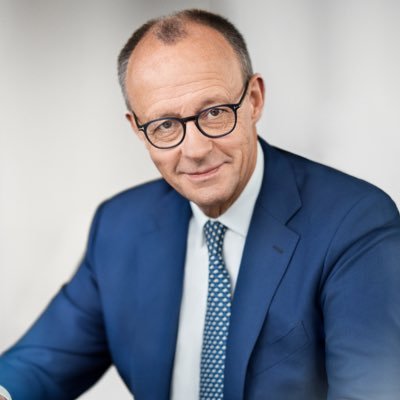
Dear Volodymyr @zelenskyyua, we stand with #Ukraine in good and in testing times. We must never confuse aggressor and victim in this terrible war. (FM)
hannes kunstreich 🇩🇪🇪🇺🇺🇦 retweeted

Ucrania, España está contigo.
Ukraine, Spain stands with you.
Україно, Іспанія з тобою. 🇺🇦 🇪🇸
hannes kunstreich 🇩🇪🇪🇺🇺🇦 retweeted

Dear @ZelenskyyUa, dear Ukrainian friends, you are not alone.
hannes kunstreich 🇩🇪🇪🇺🇺🇦 retweeted

This was in response to the president-elect saying the use of military force to seize Panama or Greenland was on the table.
So let's talk briefly about why geopolitics and military force are not, in fact, analogous to poker. 1/

hannes kunstreich 🇩🇪🇪🇺🇺🇦 retweeted

The HUGE piece of the grooming gangs story that is given limited attention in the UK and hardly understood by any foreign commentators is the class dimension. The class aspects probably explain authorities' failures even more than racial aspects, very important though those are.
hannes kunstreich 🇩🇪🇪🇺🇺🇦 retweeted

This is a thread about remaking the tech sector.
Silicon Valley still claims the mantle of “disruption”, as if it is made up of competitive small companies rushing to innovate in order to edge into established industries. The truth is that Silicon Valley is now home to the largest corporations humanity has ever seen. At the beginning of the 20thcentury, when US society and lawmakers were alarmed about the growing power of “trusts” (large corporations), the two leading companies, Standard Oil and US Steel, had market capitalizations of around $1 billion, which in today’s currency would be worth about $32 billion. In comparison, Alphabet/Google’s and Amazon’s market valuations are hovering around $2.3 trillion, Apple’s is above $3.6 trillion, and Microsoft’s is close to $3 trillion. Today’s tech giants also have revenues that are more than 100 times those of early 20th century trusts, including Standard Oil and US Steel.
Tech boosters might argue that this is because of the innovativeness of these companies or an inevitable consequence of network economies, generating winner-take-all dynamics for companies that acquire the biggest clientele or the largest amount of data about users. The truth is more nuanced.
Tech companies have been innovative. Nevertheless, there is recent evidence suggesting that they have done so by employing a large fraction of the supply of innovators and scientists, and once an innovator starts working for these large corporations, they are less innovative than they used to be in smaller companies: ufukakcigit.com/s/Akcigit_Go…
Worse, tech giants have also grown their size partly by aggressively acquiring rivals: ftc.gov/system/files/documen…
Numerous acquisitions, like Facebook’s purchase of Instagram, did not just help tech giants grow rapidly. They may have also extinguished competition:
(see sciencedirect.com/science/ar…
or insights.som.yale.edu/insigh… also papers.ssrn.com/sol3/papers.…
for the contrary view).
My overall assessment from this evidence is that these companies have grown so much at least partly because of a failure of antitrust in the United States and Europe.
A tradition dating back to US Supreme Court Justice Louis Brandeis recognizes that a failure of antitrust will not just mean higher prices for consumers and bigger distortions. It would also pose a challenge to democracy, as these companies wield oversized political and social power. This is what we have to come to accept as normal today, with the tech sector becoming the second-largest vendor on lobbying in the United States (after pharma) and the values and viewpoints of Silicon Valley dominating every part of our social lives, including unfortunately journalism. (The data on lobbying expenditures come from Open Secrets, opensecrets.org/federal-lobb…).
Two key antitrust cases against Google’s monopoly in advertising on the two sides of the Atlantic could reshape the web and in the process kickstart a turnaround in antitrust philosophy and practice. (See npr.org/2024/10/09/nx-s1-514… ec.europa.eu/commission/pres…).
It is about time.
The background to the story is very well known. Digital ads dominate the web, and Google/Alphabet dominates digital ads (with Meta/Facebook being a distant second). The question is whether this state of affairs reflects Google’s amazing innovativeness in AdTech (the marketplace for digital advertising) or whether it also reflects the company’s monopolistic abuses. Lawmakers on both sides of the Atlantic are converging to the latter interpretation and are accusing Google of abusing its market power to generate monopoly profits and harming consumers, publishers and competition as a result.
US judge Amit P. Mehta ruledin August that Google had illegally monopolized the search engine market, among other things, by paying billions to be the default search engine on various platforms. After years of tech giants consolidating their hold over key markets, this could be a first step towards limiting this growth or even a prelude to a series of breakups.
True, the incoming Trump administration has promised to be much more friendly to various parts of the tech eco-system, and especially to artificial intelligence (AI) and crypto currency. Nevertheless, there is no love lost for Big Tech among some Trumpers. VP-in-waiting JD Vance, for example, recently praisedthe current head of the FTC, Lina Kahn, who is partly responsible for reenergizing anti-trust in the United States: fortune.com/2024/08/11/jd-va…
Next will be Europe’s turn. EU moved early against Big Tech, fining them for competition breaches and passing the Digital Markets Act and Digital Services Act. Yet the tech sector is as consolidated as ever and European consumers are still dependent on these mega platforms. EU could take a more decisive step towards ending the dominance of these tech companies with the Google AdTech case.
The root problem is Google’s overwhelming dominance of the entire AdTech ecosystem, which enables the company to act simultaneously as buyer, seller, and market-maker in an industry worth over $800 billion today and projected to grow to $2.5 trillion in the next several years: fortunebusinessinsights.com/…
Google’s control over the entire market leaves advertisers and publishers with little choice but to accept its terms.
This dynamic has been ruinous for many industries, including journalism. Independent publishers are a cornerstone of any democratic marketplace but can no longer survive squeezed by Google. In 2023, Google accrued 237 billion dollars from its AdTech monopoly, while the revenues of independent publishers and newspapers have declined. As a result, we have a new phenomenon: news deserts, which are areas where communities lack access to credible local news sources, once again damaging democracy and civic citizenship: cmpf.eui.eu/news-deserts-on-…
Big Tech defenders have historically claimed that breaking up these companies will harm consumers, slow innovation, and lead to economic stagnation. But monopolies are typically bad for innovation. If the AT&T monopoly wasn’t broken up in 1982, the digital and then the subsequent Internet revolutions may not have taken place. Why should the dominance of today’s Big Tech be any different?
Breaking up tech giants wouldn’t by itself be sufficient for a competitive marketplace in new technologies. In the US, bipartisan draft legislation proposes structural firewalls to prevent companies from operating on both sides of the AdTech market. Portions of the Digital Markets Act mandates ad transparency. If adopted on both sides of the Atlantic, these measures could help but are not sufficient.
I have argued repeatedly that the key challenge for today is to innovate in new technologies that provide better information and services to consumers and create new tasks and productivity-enhancing for workers: amazon.com/Power-Progress-Th…
Yet, such technologies are unlikely to be forthcoming rapidly when digital ads are the only game in town and most of the revenues online are from digital advertisements. This isn’t just because of the social negatives of massive data collection and the attention economy undergirding huge digital ad revenues, which are now well understood. It is also because the current structure is anti-competitive.
New companies experimenting with new technologies and business models are at a disadvantage relative to big platforms when they can only raise revenues by monetizing data via digital ads, because they have less data than established incumbents. Worse, as unknown quantities, they cannot develop new business models based on subscription fees or sales of new services when leading platforms are making money using digital ads.
One way of breaking this cycle is to impose a sizable digital ad tax in order to increase competition in the online economy, as Simon Johnson and I have argued. We proposed a tax of 50% for all ad revenues above $500 million a year, which EU can unilaterally impose, changing the whole digital game at one fell swoop: shapingwork.mit.edu/research…
Other reforms are also necessary. The future of the Internet and AI is entangled with creating a fair data economy, as a new report under the auspices of the Project Liberty Institute argues (to which I also contributed): projectliberty.io/news/proje…
To make such an aspiration a reality, we need new laws that simultaneously protect the privacy of individuals and lay the foundations for more inclusive markets, in which individuals and data collectives (or data unions) can control data, so that large platforms and AI companies cannot expropriate people’s information and the fruits of their labor.
I believe that this shouldn’t be bad for tech companies. The right architecture of data markets would ultimately help the tech sector by encouraging people to invest in and produce higher-quality data, which are a key input for more useful AI tools and more valuable online services. But there would be a lot of opposition from many tech companies today against any attempt to protect people’s data and introduce property rights over data.
Here, too, Europe can play the leading role, not only disrupting the current oligopoly in the tech sector but also taking steps towards a new, more productive, more competitive and fairer data economy.
hannes kunstreich 🇩🇪🇪🇺🇺🇦 retweeted

German MPs have been briefed by the Federal Civil Protection Agency that if Ukraine crumbles within the next 6 months, millions of Ukrainians will head West. The official estimate: 10 million, 2 of them to Germany. Unofficial: up to 18 million, 3-4 million to Germany 1/
Readers added context they thought people might want to know
The German civil protection agency (BBK) denied that such briefings were given.
x.com/bbk_bund/statu…
hannes kunstreich 🇩🇪🇪🇺🇺🇦 retweeted

Why do East Germans vote for the far-right AfD? We may have a new answer. It turns out, East Germans misperceive the grievances *other* citizens hold. The good news: if you tell East Germans that grievances are not as bad, AfD vote intentions go down. Here’s the experiment we ran
