


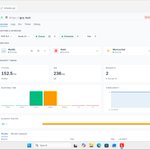




Queue workers, the scheduler, Horizon, Reverb, a Stripe listener and a Vite dev server, multiplied by every project you have open, add up to a lot of CPU and memory for code nobody is using.
Lerd's idle-suspend watches each site for activity: web requests, CLI commands, AI tool calls and file saves. After a timeout it suspends that site's workers, and brings them back the moment you load a page or run a command.
You keep every project linked and ready, and your laptop stays cool.
#Laravel #Horizon

Lerd for Windows will be released next release, you can check it out here github.com/lerd-env/lerd-des…

Use this installer and leave a feedback on github github.com/lerd-env/lerd-des…
Freelancers and agencies end up with dozens of local sites, and a flat list stops being useful around the twentieth one.
lerd groups sites into workspaces. Make one per client or per project, drag sites into it, and the dashboard, the TUI and the CLI all show your sites grouped. Fold the workspaces you aren't working on.
Mark a workspace private and streaming mode keeps it off your screen when you share it.
#webdev #freelance

Thanks! I don't run Rust projects myself, so good to see host-proxy used outside PHP. If something in your workflow would make Lerd better for Rust, a PR or a plugin (coming in 1.38) is very welcome.
Sometimes one site needs one nginx rule the others don't: a larger upload limit, a rewrite, a header, a location block.
In lerd each site and each worktree can carry its own nginx override, and you edit it from the address bar in the dashboard, with a proper code editor. lerd reloads nginx when you save, and Reset puts its generated config back if you go too far.
The override follows the site through domain renames, and frameworks can ship their own nginx rules in the store.

Sure, we just released the installer if you want to try. Let me know how it works.
github.com/lerd-env/lerd-des…

PHP put out an advisory yesterday: keep session.upload_progress.enabled=0 until the next bugfix release, to close an unlikely RCE path left over from this week's security fixes.
In Lerd that's one line in the shared ini, under System > PHP. It applies to every PHP version at once, and it's a real php.ini setting, which matters because the advisory says ini_set() and .user.ini don't count.
The versions in the screenshot are already the patched ones, the new builds arrived without a Lerd release.

Native Windows is hard with Podman as the backbone. Next release ships a Windows app that talks to WSL for you, so it works like any other OS: notifications, CLI, dashboard, all there.

git pull is easy. What comes after it is where the afternoon goes: a new package, a changed lockfile, two new migrations.
In lerd 1.37, pulling or switching branches from the dashboard first compares the two trees and shows what's coming in: the commits, the files, and the steps the change needs. composer install, your JavaScript install and the framework's migrate command are each ticked when the incoming changes call for them.
Before anything runs, lerd snapshots the database, tagged with the branch you're leaving, so a failed migration is one click from undone. Uncommitted work that would be overwritten holds the pull back.

Tinker is the fastest way to poke at a Laravel app, and lerd puts it in the dashboard.
The Tinker tab is a PHP REPL with your application booted, on the site's own PHP version. It has a real editor with autocompletion, shows the result of each line next to it, renders queries inline, and goes full screen when you need room.
Save the scripts you run often as snippets: lerd reads them from your project, from your home folder, and from .tinkerwell/snippets, so existing Tinkerwell snippets just show up.
#Laravel #PHP

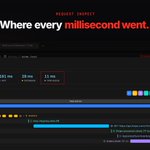
When a page feels slow you usually guess: is it the database, the PHP code, or the server? Now you open the request and see. Every recent request in the dashboard has an Inspect button, and it opens on a summary of what that request cost: the response time nginx measured, the peak memory PHP used, the time split between your app and its queries, and how long it waited in the PHP-FPM queue for a free worker.
No package to install and no code to change. Turn on debug capture and every request is ready to inspect.

LerdPHP retweeted

The PHP security team is giving advance notice: Upcoming security release Wed, Oct 21st 2026, 14:00UTC, two critical vulnerabilities, both rated CVSSv4 9.2.
PHP users are encouraged to prepare to update. Earlier release if details become public or active exploit evidence.

