
Director/Head of CSIRO's Data61; Conjoint Full Prof, UNSW
Sydney, Australia
Joined June 2008
- Tweets602
- Following65
- Followers640
- Likes215


Pinned Tweet
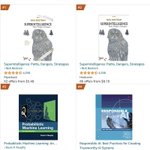
Our new responsible AI book is effectively #3 for AI books globally! Shoutout to everyone who has supported our work! Order here amazon.com.au/Responsible-AI…
Did you know we have 6 @Data61news researchers ranked in the top 20 worldwide for responsible AI on Google Scholar? And that's across disciplines from social science to law, and software/AI engineering to AI/ML. Plus, with 2 more Australians in the top 20, that's a whopping 8 out of 20 (US:6, EU:4, UK:1, India:1). Who says Australia can't be a global leader in AI?

AI agents are evolving from frustrating interns → overconfident colleagues → powerful genies.
The alignment problem is becoming very real: getting what you asked for, but not in the way you intended.
In my new @ConversationEDU piece, I explore why “How exactly are you planning to do that?” may be a key question for agentic AI, and why @Yoshua_Bengio / @LawZero_’s promising Scientist AI approach matters: non-agentic AI that can help scrutinise and oversee agents.
Also: who should control AI safeguards, providers or the organisations and countries accountable for deploying them?
theconversation.com/the-deca…
🤖 Made with AI

Liming Zhu retweeted

I’m pleased to share the Second Key Update to the International AI Safety Report, which outlines how AI developers, researchers, and policymakers are approaching technical risk management for general-purpose AI systems.
(1/5)

Honoured to represent Australia on the Expert Advisory Panel for the International AI Safety Report led by Yoshua Bengio. A major effort in monitoring AI capability gains and safety risks through evidence, consensus & science.
𝗔𝗜 𝘀𝗮𝗳𝗲𝘁𝘆 𝗶𝘀 𝗰𝗼𝗻𝘁𝗲𝘅𝘁-𝘀𝗽𝗲𝗰𝗶𝗳𝗶𝗰. 𝗦𝘆𝘀𝘁𝗲𝗺-𝗹𝗲𝘃𝗲𝗹 𝗲𝗻𝗴𝗶𝗻𝗲𝗲𝗿𝗶𝗻𝗴 𝗰𝗮𝗻 𝗺𝗮𝗸𝗲 𝗔𝗜 𝗯𝗼𝘁𝗵 𝘀𝗮𝗳𝗲𝗿 𝗮𝗻𝗱 𝗺𝗼𝗿𝗲 𝗮𝗰𝗰𝘂𝗿𝗮𝘁𝗲.


Liming Zhu retweeted

🚀 𝗘𝘅𝗰𝗶𝘁𝗶𝗻𝗴 𝗡𝗲𝘄𝘀 𝗳𝗼𝗿 𝗔𝗜 𝗘𝗻𝗴𝗶𝗻𝗲𝗲𝗿𝗶𝗻𝗴 𝗘𝗱𝘂𝗰𝗮𝘁𝗼𝗿𝘀! The instructor slides for our new book, 𝙀𝙣𝙜𝙞𝙣𝙚𝙚𝙧𝙞𝙣𝙜 𝘼𝙄 𝙎𝙮𝙨𝙩𝙚𝙢𝙨: 𝘼𝙧𝙘𝙝𝙞𝙩𝙚𝙘𝙩𝙪𝙧𝙚 𝙖𝙣𝙙 𝘿𝙚𝙫𝙊𝙥𝙨 𝙀𝙨𝙨𝙚𝙣𝙩𝙞𝙖𝙡𝙨, are now available!🌟
research.csiro.au/ss/team/se…

Liming Zhu retweeted
Our new book "Engineering AI Systems" is now available for preorder on Amazon! 🎉
Link: amazon.com.au/Engineering-AI…
#ai #aiengineering #SoftwareEngineering #devops #aisafety #responsibleai

Liming Zhu retweeted

We are thrilled to welcome Qinghua Lu @qinghualu as a keynote speaker at the #SEA4DQ workshop! As the Principal Research Scientist at CSIRO's Data61 @Data61news, she'll be discussing Responsible AI engineering from a data perspective. Don't miss her insights on July 15 in Brazil!

I'm excited to share our new paper on AI safety evaluation (accepted at AIWare 24)!
One of the biggest challenges I've encountered in my work is the confusion caused when different communities use the same terms to mean very different things. For example, "AI testing" means one thing to policymakers, another to AI system/software testers, and yet another to AI model testers. Add terms like evaluation, validation, verification, and assessment into the mix, and the misunderstandings multiply. Even authoritative sources like the OECD, AI safety summits, and government agencies often make glaring mistakes by approaching these terms from a single perspective.
Simply defining these terms won't solve the problem, as each community has its own authoritative definitions and practical meanings. This can hinder efforts to assure AI model safety and AI system safety, leading to gaps, wasteful overlapping efforts and confusion among AI model developers, AI system developers, and AI system deployers.
Our new paper, "𝑨𝒏 𝑨𝑰 𝑺𝒚𝒔𝒕𝒆𝒎 𝑬𝒗𝒂𝒍𝒖𝒂𝒕𝒊𝒐𝒏 𝑭𝒓𝒂𝒎𝒆𝒘𝒐𝒓𝒌 𝒇𝒐𝒓 𝑨𝒅𝒗𝒂𝒏𝒄𝒊𝒏𝒈 𝑨𝑰 𝑺𝒂𝒇𝒆𝒕𝒚: 𝑻𝒆𝒓𝒎𝒊𝒏𝒐𝒍𝒐𝒈𝒚, 𝑻𝒂𝒙𝒐𝒏𝒐𝒎𝒚, 𝑳𝒊𝒇𝒆𝒄𝒚𝒄𝒍𝒆 𝑴𝒂𝒑𝒑𝒊𝒏𝒈," (Boming Xia Qinghua Lu Zhenchang Xing) aims to bridge these gaps by positioning each community's distinctive understanding in relation to each other. We also cover concepts like capability evaluation, benchmarks, red teaming, test data, test cases, and test suites to enhance AI safety from both model-level and system-level perspectives.
With the upcoming AI Safety Summit in South Korea and the imminent release of the International Scientific Report on Advanced AI Safety: INTERIM REPORT, led by Yoshua Bengio (which I had the privilege of reviewing and seeing @Data61news work being cited multiple times), this field is poised for significant growth. We hope our work clarifies directions and fosters better communication across communities and contributes to Australia's AI Safety journey.
Liming Zhu retweeted
Thrilled to share our ESG-AI investor framework project report along with a comprehensive toolkit designed for assessing and managing AI opportunities and risks through an ESG lens.
Link: csiro.au/en/research/technol…
Huge thanks to the Data61 and Alphinity team.
#responsibleai #esg

Liming Zhu retweeted
Come to meet us at our #ICSE2024 stand.If you want to promote our book lnkd.in/gsQz5swy on LinkedIn or twitter, tag authors and get a free copy when the stock lasts! @ICSEconf

Liming Zhu retweeted

@limingz highlights the necessity for a system-level perspective on machine learning models.
We are looking forward to your contributions on this at #CAIN2024. For details - conf.researchr.org/home/cain….

Arrived with anticipation...

The @dagstuhl seminar on #SoftwareArchitecture and #ML is about to start. Cannot wait longer
dagstuhl.de/en/seminars/semi…
@ICSAconf @CAINconf @ieeesoftware @ISAPSchool @frAmeLabAQ @ECSACONF

It's wonderful to see our latest work, "Right to be Forgotten in the Era of Large Language Models," garnering attention from several international media outlets. The team @Data61news discusses various implications, challenges, and potential solutions in the paper. arxiv.org/abs/2307.03941
Embarking on a 3-week adventure across Europe & Southeast Asia from Sydney! I'm thrilled for dialogues on responsible AI & cybersecurity with leaders in AI Singapore, A-STAR, HTX, NTU, SMU, Confiance.AI, OECD.ai, GPAI, EU Parliament, Digital Europe, Fraunhofer IAIS & more. Looking forward to diving deep into AI engineering at Dagstuhl Seminar, advancing the D4D program in Indonesia & fostering research collaborations in Malaysia. Let's @Data61news take the lead in responsible AI & AI transformation. Next up: tackling my 130+ to-read research papers on flight! 🌍✈️

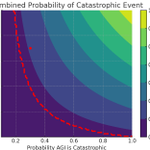
Ok. Some weekend fun. The AI debate is ongoing, and I often find that people do not differentiate between their estimated "probability of AGI/ASI being achieved by, say, 2100" and "the probability that AGI/ASI will be catastrophic" for humanity, whether due to bad actors or the AI itself. So, I asked ChatGPT's Code Interpreter to do the following:
1. Plot the combined probability.
2. Mark the 10% probability line on the plot (a hypothetical threshold above which we should start caring about it immediately).
3. Make an estimate based on its existing knowledge and mark that point on the plot. After some coaxing, it says there's a 70% chance that AGI will be achieved by 2100 and a 30% chance that it could be catastrophic.
Where would you place your point on this plot?
I suspect many might position their point near zero for various reasons.
However, I am interested in understanding at what combined probability level we should consider addressing the problem now without being deemed irresponsibly distracted.
