
Cybersecurity || community builder || shitposts || marketer || Partner of @dehub_official
MARKETING AGENCY
Joined May 2023
- Tweets9.8K
- Following450
- Followers550
- Likes20.5K





Olotu retweeted

20 GTD spots for the Wule community 👀
I recently came across @wuleNFTs and the artistic direction immediately caught my attention.
$Wule brings a collection of hand drawn generative pieces to Robinhood, with each artwork built around its own combination of traits, personality and cultural expression.
The collection will have 3,555 pieces in total.
📍 Robinhood
🎨 Hand drawn generative art
💰 Mint: TBA
📅 Date: TBA
In collaboration with @wuleNFTs, I’ve got 20 GTD spots to share with you guys.
Want one?
Follow @wulenfts
Like and RT the official post: xitter.cf/wulenfts/status/209552…
Drop your EVM below 👇
I’ll be picking the winners soon.
Good luck 🤝

This quoted post is unavailable.
Olotu retweeted
📼 FREE MINT GA 📼
The first 2000s kids on Robinhood just arrived.
Born from CRT screens, burned CDs, MSN chaos & cursed Flash websites.
📼 ROBINTARDIOS 4,444 supply
🏆 3 OG
🎟️ 7 WL
To enter:
Follow @robintardiosnft @0xInkRook
Like ❤️ + RT 🔁
Drop your wallet 👇
Welcome back to the 2000s 📺🖥️

Hello @greyfinance
I’ve been trying to resolve a verification issue regarding a transaction that is lower than my displayed daily limit. I’ve cooperated fully and provided requested information, but I’d appreciate clearer communication and assistance resolving this.
Thank you.


Olotu retweeted

Why Talisman Is Quietly Becoming One of the Smartest Wallets in Web3
Every few months, a project pops up that isn’t just “building another tool,” but actually shifting the way people experience Web3. Talisman is one of those rare projects.
What makes Talisman interesting isn’t just the multichain support, though supporting everything from Ethereum to Polkadot to hundreds of chains already puts it in a league of its own. What stands out is how intentional their design is. The wallet isn’t overcrowded. It’s clean, fast, and actually understands how users move between ecosystems.
Instead of forcing you to jump across different dashboards, Talisman gives you one smart interface where you can manage tokens, NFTs, staking, cross-chain swaps, and DeFi, all in one flow. It feels like the wallet version of a unified command center.
But the real magic is the direction they’re heading. The team isn’t satisfied with “wallets as storage.” They’re pushing toward wallets that think with you. Also embedding crypto-AI agents that can help optimize yield, automate strategies, and simplify on-chain decisions without ever giving up self-custody. That’s the kind of innovation that moves an ecosystem forward.
One thing that’s becoming clear in the Talisman ecosystem is that active users tend to benefit early. The recent rollout of the $SEEK token is a perfect example — community members who’ve been completing Quests and engaging with the platform were among the first to qualify. With Talisman pushing deeper into automation, multichain tooling, and AI-powered wallet features, staying active isn’t just smart for UX… it can put you in position for future rewards too.
In a space where most wallets look the same, Talisman is building for the next cycle:
🔹 Multichain by default
🔹 Clean UX that lowers friction
🔹 Security-first design
🔹 A roadmap leaning into intelligent automation
If you’re looking for a project shaping the next phase of wallet evolution. A project not just talking about the future, but building it, Talisman deserves to be on your radar. The multichain world is getting bigger, and Talisman is one of the few teams truly designing for that future.


Every great ecosystem has a core, a heartbeat that powers everything around it.
For @bitdealernet, that core is $BIT.
But don’t get it twisted.
$BIT isn’t tied to gambling, iGaming, or revenue buybacks. Nah.
This token is built different.
$BIT is the governance layer, staking engine, and liquidity fuel driving the entire Bitdealer machine.
It powers every launch, connects every meme, and keeps the ecosystem running like clockwork.
As Bitdealer expands, $BIT becomes the backbone of growth, aligning every launchpad project under one interoperable network.
It’s not just another token,it’s the DNA of a new asset-backed meme economy.
The memes are loud.
The liquidity is real.
The foundation? $BIT.

.@bitdealernet is a next-gen platform combining real-world gaming revenue + meme token models to build sustainable Web3 value.
play & earn meets token launches.
> The iGaming and casino sector rakes in $100s of billions globally, yet stays mostly offchain, opaque, and centralized.
BitDealer’s mission is to bring that value onchain so users can own, trade, and earn from underlying game revenue flows.

Devan is a f*cking good writer
I envy his pen game, damn!!!
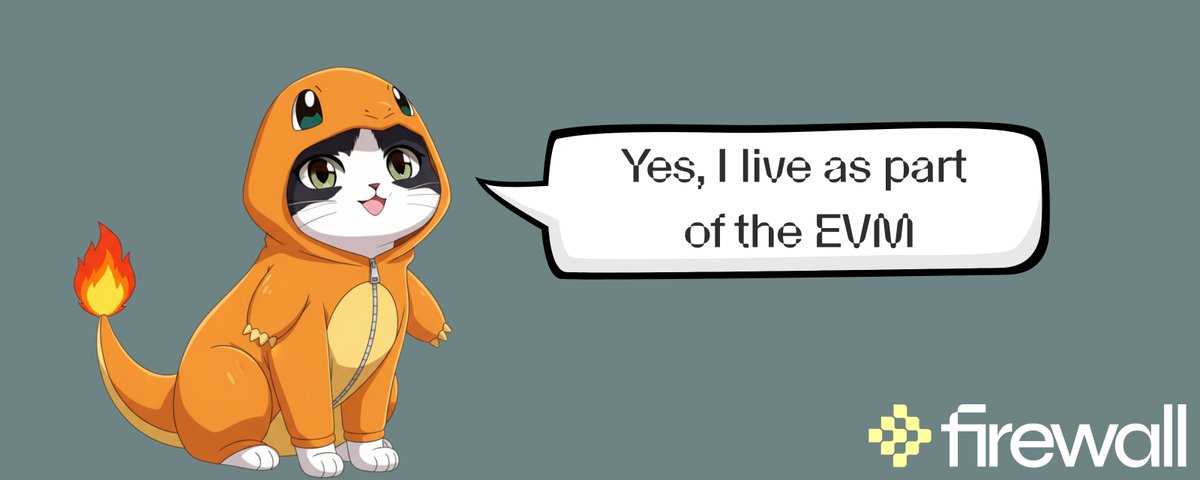
All in on @UseFirewall

Olotu retweeted

Building a shared Glock verifier on Bitcoin!
@EliBenSasson celebrates the push for an open, neutral Bitcoin economy. With Grant support from @StarknetFndn, Alpen Labs is developing a public-good Glock verifier to power open financial rails for Bitcoin.
Glock's development is progressing at a rapid pace! @Starknet @Starkware 🔥
Just as we have it, a season ends for another season to come
Before it was socialfi, socialfi ended, came testnets, now infofi with platforms like Kaito, WallChain championing it
It’s either you adapt or die

What does it mean to be early?
A good scenario is the case with @UseFirewall
Just as @iamoptmstc says, the only option is contributing transparently without any expectation of airdrop or reward.
There are only 34 OGs so far, @Dar99551 is one.
You’re still early, do whatsoever you want with this info, thank you ☺️

Let me give you a little morning hack
For daily updates on what happens on CT, follow and stick to @R2D2zen page. He’s the news broadcaster for Kaito
Number 2, read @ripchillpill posts, he will surely talk about 60-70% of R2’s post.
Alpha X alpha = alpha*2
Another day to lock in on @bitdealernet and @UseFirewall
We’ve all moved on from Monad
Disappears to go grind Discord

Not everyone uses X to onboard users to @DroseraNetwork , some of us use WhatsApp and even Telegram
We keep preaching Drosera anywhere we go!!!
Below is my conversation with folks in groups and even personally


Understanding Firewall: How It Keeps Rollups Safe from Exploits
First off — what are rollups?
Most times, we come across the word in articles and threads (even in @iamoptmstc ’s last piece). But what exactly are they?
Think of rollups as mini blockchains built on top of a bigger one like Ethereum.
They help scale the network by processing lots of transactions off-chain, then posting the summary on-chain — faster, cheaper, and more efficient.
But with all that speed, there’s still a catch 👇
•Rollups are faster, yes.
•But they inherit security risks — especially from smart contracts and sequencers (the systems that order transactions).
That’s where @UseFirewall steps in.
So what happens when you combine Rollups + Firewall?
Definitely something better.
What Firewall does (in non-technical terms)
Honestly, I’ve seen a lot of too technical write-ups on Firewall. Here’s how I like to see it:
Firewall builds a safety layer for rollups — kind of like an immune system for the blockchain.
It sits quietly between the rollup’s transaction engine and the blockchain’s base layer, scanning everything that tries to enter the system.
Let’s say you’re running a rollup — people are sending tokens, NFTs, and deploying smart contracts all the time. Firewall checks every move:
•“Is this transaction malicious?”
•“Does this contract hide an exploit?”
•“Could this code drain wallets or break the system?”
If yes → it blocks it before it causes harm.
If no → it lets it through, safely.
⸻
Why it matters
In Web3, a single exploit can drain millions — and it’s usually discovered after the damage is done.
Firewall flips that narrative: prevention first, reaction later.
Remember the Kyber exploit in November 2023?
~$56 million gone.
A single bug, a huge loss.
Now imagine if Kyber (or any rollup) had Firewall in place:
“We never let that attack through in the first place.”
That’s not just security — that’s evolution.
From post-hack response to pre-hack defense.
And that’s exactly why Web3 teams should be paying attention to Firewall.
You’re still early on this, we’re not up to 15k