
Ph.D @UCDavisARE | BA @udlap | Investigando temas de economía del desarrollo y economía ambiental | Working at @EfD_initiative
Joined November 2017
- Tweets4.1K
- Following375
- Followers1.7K
- Likes11.2K


Pinned Tweet
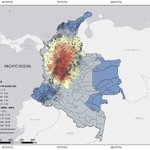
If your livelihood depends on the weather, wouldn't you be better at noticing when the climate changes?
Not necessarily.
That's one of the findings of a new paper @isaelfierros and I just published in @RiskClimate
Here's what we found.
1
5
183
Alejandro Lopez-Feldman retweeted

In the last part of the #Behavioural morning session at #NEUDC2026, Cornell University, @billywoom is presenting his research on “On the Other Side of the Creek: Historical exclusion, localized social capital, and human capital” with @mennaanayel as discussant.


Alejandro Lopez-Feldman retweeted

On the Econ Job Market? 📊
@the_IDB is hiring an Economist at the Institutions for Development sector in Washington, D.C.
🔗 Apply here: jobs.iadb.org/job/Economist-… #EconTwitter #JobMarket #DevelopmentEconomics
Alejandro Lopez-Feldman retweeted

Excluded groups and neighborhoods get less schooling for generations. Can human capital gaps outlive resource equalization? If so, why?
My JMP looks for answers on the two sides of a line drawn in 1542, with historical censuses, a survey & experiment, and a framework 🧵

#JOBMARKET (24/26)
Meet @billywoom, an EJME and JOE Network candidate presented by the Paris School of Economics on the international Job Market.
Read his JM paper and download his CV: parisschoolofeconomics.eu/en…


Alejandro Lopez-Feldman retweeted

All seven, free: feynmanlectures.caltech.edu/…
The 2009 announcement: news.microsoft.com/2009/07/1…
Alejandro Lopez-Feldman retweeted

This week, I learned about the Bradford Hill criteria, nine principles that Austin Bradford Hill proposed in 1965 to evaluate epidemiological evidence of a causal relationship between an exposure and an outcome.
I imagine that many economists are familiar with them, but I was not, so I thought sharing them here might be useful. The idea is to have a few principles to evaluate empirical evidence when we lack a sharply identified research design whose results are easy to generalize (that is, nearly always). This is particularly true in my own subfield, macroeconomics, and what I believe are the fundamental questions in economics (e.g., what makes a miracle like South Korea’s economic growth possible).
I reproduce them here, slightly adapted to economics:
1) Strength: large associations are more likely to be causal than small ones, because a confounding factor would need an even larger effect to explain them away.
2) Consistency: the same finding across different samples, countries, periods, and research designs is more likely to be causal.
3) Specificity: causation is more likely if the cause moves the outcome that theory predicts and leaves unrelated outcomes alone (the logic of placebo tests).
4) Temporality: the cause predates the outcome. In economics, date the cause when agents learn about it: with forward-looking agents, prices and decisions move when a policy is announced, not when it takes effect.
5) Treatment gradient: a stronger treatment (a higher tariff, a larger transfer, a longer exposure) leads to a larger effect.
6) Plausibility: a mechanism between cause and effect based on standard economic theory makes causality more likely.
7) Coherence: the causal claim does not conflict with other known facts (for instance, a micro estimate that, once aggregated, implies large movements in macro data that we do not observe).
8) Experiment: evidence from experiments (RCTs, lab experiments, or natural experiments) increases the likelihood of a causal relationship.
9) Analogy: if a similar cause has a known effect in another environment (another tax, another market), a causal relationship here is more likely.
Now, before you leave a comment: yes, I can think of counterexamples for each of the nine. So could Hill, who called them “viewpoints” and wrote that none of them is a sine qua non. But, taken together, Hill’s criteria seem a reasonable rubric to score many empirical papers and their claims. In fact, without being fully aware of it, I was probably already using a similar rubric as an editor and referee.
Was I exceptionally ignorant not to know Hill’s criteria? Do other researchers employ analogous criteria? I’d love to hear your thoughts.
Paper: Hill, A. B. (1965), “The Environment and Disease: Association or Causation?” Proceedings of the Royal Society of Medicine, 58(5), 295–300.

Alejandro Lopez-Feldman retweeted

Incredibly happy to see my job market paper "The unequal economic consequences of carbon pricing" out in this month's issue of the 𝗔𝗺𝗲𝗿𝗶𝗰𝗮𝗻 𝗘𝗰𝗼𝗻𝗼𝗺𝗶𝗰 𝗥𝗲𝘃𝗶𝗲𝘄.
I find that carbon pricing reduces emissions and spurs green innovation, but disproportionately burdens poorer households - not only through higher energy bills, but also through larger income losses.
Here is an earlier thread of the paper: teapaw.org/drkaenzig/status/14592…

The November 2026 issue of the American Economic Review (116, 11) is now available online. aeaweb.org/issues/867

Alejandro Lopez-Feldman retweeted

CIDE (CDMX) convoca 2 o más plazas de Profesor(a)-Investigador(a) de tiempo completo, inicio agosto 2027. Interés especial: Macro, Macro Internacional, Comercio Internacional, Teoría Micro, Org. Industrial. Límite: 5 ene 2027 → [email protected] #EconomíaCIDE

Alejandro Lopez-Feldman retweeted

Sesión organizada 2
Environmental Policy in Low- and Middle-Income Countries
Alejandro Lopez Feldman de University of Gothenburg
Claudia Aravena de Heriot-Watt University
Oscar Melo de PUC Chile
Jorge Maldonado de Universidad de los Andes


Alejandro Lopez-Feldman retweeted
🚨Ya empieza #SobreMéxico 🚨
¡El congreso está lleno de sesiones imperdibles!
Nuestros auditorios están en el Edificio S en la #IBERO.
Puedes seguir las transmisiones de las conferencias magistrales en nuestra página web
📺sobremexico.ibero.mx/
#IBERO #Economía


🚨Programa #SobreMéxico🚨
Ya está el programa del 12° Congreso de Economía y de Políticas Públicas #SobreMéxico
🗓️22 y 23 octubre
¡Habrá 2 conferencias magistrales, 2 mesas de discusión y varias sesiones paralelas!
Más info👇
ℹ️sobremexico.ibero.mx/es/cong…
#EconTwitter #EconX

Vengan a escucharnos, aún están a tiempo!
🚨Aviso #SobreMéxico
¿Quieres entender más sobre la política medio ambiental?
¡No te puedes perder la mesa "Environmental Policy in Low- and Middle-Income Countries"!
🗓jueves 22 octubre
🕑16:30 - 18:30
📍Auditorio Fernando Bustos
Otra imperdible sesión del Congreso
#IBERO
Households that depend more heavily on farming and natural resources are not necessarily more likely to report perceptions consistent with climate records.
Greater exposure to climate-sensitive conditions doesn't automatically translate into greater awareness of climatic trends.

1
48
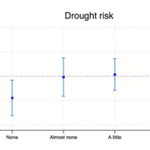
We also found that people who perceived increases in intense heat tended to report greater drought risk.
The takeaway? How people experience and interpret climate change matters for designing effective adaptation policies.
The paper is open access!
doi.org/10.1016/j.crm.2026.1…

15
Alejandro Lopez-Feldman retweeted

I am a member of the Norwegian Nobel Committee.
There are five of us. Five people, appointed by a parliament most of the planet could not find on a map, who decide, once a year, which human being the world has agreed to call good.
I know. I know. I think about it on the tram.
We meet in a building on Henrik Ibsens gate, a street named after a man who wrote almost exclusively about people discovering they are frauds, which nobody on the committee finds funny except me. There is a room with a long table and the portraits of the dead laureates looking down, Mandela, the Dalai Lama, a great many earnest men in spectacles, and one portrait we do not discuss, which is Kissinger, 1973, awarded while the bombs were still falling, after which two of our predecessors resigned and the satirist Tom Lehrer said political satire was now obsolete. We keep him on the wall. A reminder. Every family has the uncle.
It is October in Oslo, which means the sun gives up around four in the afternoon like a civil servant, and it rains the particular Norwegian rain that isn’t quite falling, just hanging there, judging you. I arrive with wet shoes. I always arrive with wet shoes. There is coffee, because this is Norway and there is always coffee, we drink more of it per person than almost anyone alive, and someone’s wife has sent kanelboller, the cinnamon buns, and we sit, five Norwegians, damp, caffeinated, sugared, and we decide the moral standing of the entire species.
Let me tell you how it actually works, because the world imagines a cathedral and it is, I promise you, a book club with a mandate.
287 nominations this year. 208 people, 79 organizations. Anyone can nominate, that’s the secret nobody understands: a professor, a parliamentarian, a former laureate, so the “nominee” list is meaningless, it’s a suggestion box, and every autumn some congressman nominates his own golden retriever and the press writes “SHORTLISTED.” Nobody is shortlisted. There is no short list the public ever sees. There is us, and the coffee, and the rain, and the portraits, and a Norwegian stubbornness that is older than the prize itself.
We read reports. The institute’s advisers write them, thick dull documents, and we argue. Our chairman told the BBC once that in the final meeting “there is a high temperature.” High temperature, for a Norwegian, means someone slightly raised an eyebrow and then apologized for it. We don’t do high temperature. We do a long silence, and then Kristin says “well,” and everyone knows exactly what “well” meant, and it’s settled. That’s our shouting. “Well.” You’d have to be raised here to hear the violence in it.
Now. This year. I will not say the name, because we never say the name, but you know the name.
A certain head of state wanted this prize the way a child wants a thing in a shop window, which is to say loudly, and in public, and with the full belief that wanting it was itself the argument. He said he deserved it. He said he’d ended eight wars, a number that grew most times he said it, like a fish. He had other heads of state phone us. Israel’s prime minister posted it on the internet, “Give him the Nobel.” The leaders of Cambodia and Pakistan announced they’d nominated him, as though announcing it were part of it, as though we tally mentions. A man flew around the globe collecting endorsements for a Norwegian committee the way you’d collect signatures for a petition to the council about a noisy dog.
And here, uff da, is the detail I treasure, the one that makes me smile into my coffee. The nomination deadline is the 31st of January. He took office on the 20th. So for all the phone calls, all the posts, all the gilded lobbying, the only nominations that could possibly count for this year’s prize were filed in the first eleven days of his term, before he had, by his own arithmetic, ended a single one of the eight wars. He campaigned all year for a prize whose window had shut while he was still hanging up his coat. We didn’t have to reject him. The calendar did. We just watched. Norwegians are very good at watching. We have long winters.
People think we sit there weighing his deeds. We don’t. That’s the thing I can’t make the world understand. We’re not grading his homework. We don’t owe anyone the prize for a ceasefire, however real, however loud the announcement. “He made peace” is not a sentence that ends in a medal, the way he believes it does, the way he believes every good thing ends in his name on it. The will of a dead Swede says the prize goes to whoever did the most for fraternity between nations. A dead Swede, I should add, who made his entire fortune inventing dynamite and selling arms, and spent his last years horrified at his own obituary, which called him a merchant of death, and so bought his way to immortality as a man of peace. The whole prize is one guilty arms dealer’s attempt to launder his name. We are, all of us, administering a dead man’s public relations. I find this clarifying. It keeps me humble. It should keep everyone humble, and it keeps, by my count, no one humble at all.
So who did we give it to?
An eighty-five-year-old woman. A judge. Born in Durban, under apartheid, granddaughter of a Tamil man who came to South Africa as indentured labor, a bus driver’s daughter from the poor Indian quarter, who became the first non-white woman to run a law practice in her province, who defended Mandela’s people when defending them was dangerous, who sat on the Rwanda tribunal and the court at the Hague, and who, at eighty-five, is right now a judge weighing whether a genocide is a genocide. When we told the world, our chairman said the rule of law “underpins the system we have set up to ensure peace,” and that “peace requires justice.” She wasn’t even in Oslo. She was in Nuremberg. In courtroom 600. The actual room where they tried the Nazis. You cannot stage that. God staged that, and God, it turns out, is a better satirist than any of us.
She did not phone us. She did not post. No prime minister demanded it for her on the internet. She had, as far as our deliberations are concerned, the one qualification the loud man could never manufacture, which is that she wanted the work and not the medal. The medal finds those people. It flees the ones who chase it. This is not a rule we wrote. It’s just the only pattern the hundred-odd years of our mistakes has ever shown.
The reaction from across the ocean was immediate. His spokesman posted that we “place politics over peace.” Ja. Perhaps. We’re five damp pensioners in a rainy city; of course it’s political, it was always political, it was political when we gave it to a sitting American president nine months into his first term for the promise of things he had not yet done, and we have been quietly embarrassed about that one for fifteen years, so believe me, we had a particular reason this year to prefer a woman with fifty years of verdicts behind her over a man with eight wars in front of him and a deadline already behind him.
Here is what he will never understand, the thing I’d tell him on the tram if he ever took one. We are the one prize he cannot buy, cannot post his way to, cannot have a friendly dictator phone in for him. Not because we’re incorruptible, nei, we’re as vain and wrong and human as the portraits on our wall. But because the entire point of the thing, the only power a small cold country’s book club has ever held, is that it goes to the person not performing the wanting. The moment you demand it, you’ve proven you don’t understand what it’s for, and proving that is itself the disqualification. He ran the most expensive campaign in the history of the prize and the campaign was the reason. He was never losing to Navi Pillay. He was losing to the concept.
It’s dark now. Four o’clock dark. The buns are gone. Kristin said “well” an hour ago and we all went home. I’m on the tram with my wet shoes, and somewhere across the water a very powerful man is explaining to a camera that the prize is rigged, that we’re corrupt, that he’ll win it next year, and he genuinely might, we’re only five idiots and we’ve been wrong before, Kissinger is still on the wall.
But not this year. This year an old woman in Nuremberg, in the room where the law once stared down the exact kind of man who thinks wanting a thing loudly enough should make it his, got a phone call she didn’t ask for.
That’s the job. We don’t reward the man who ends the war and announces it.
We reward the woman who spent fifty years deciding what a war was.
He’ll never see the difference. That’s rather the whole point of him.
Takk for i dag. I have to change trams.
Alejandro Lopez-Feldman retweeted

I'm looking to recruit a PhD student in #environmental and #development economics at Plaksha University, for Spring admissions (flexible start between Jan - Sep 2027). (1/n)
Alejandro Lopez-Feldman retweeted
A few hours ago, INEGI, the Mexican National Institute of Statistics and Geography, a government agency, published its Encuesta Intercensal (EIC) 2025 (intercensal survey 2025).
Here is the press release:
inegi.org.mx/app/saladeprens…
Page 9 reports the total fertility rate (TFR). INEGI estimates Mexico’s TFR for 2024 at 1.2 (screenshot in Spanish below). Yes, 1.2, only slightly above Japan’s level in the same year (1.15). By 2026, Mexico’s TFR could fall below Japan’s.
I don’t find words to describe this.

Alejandro Lopez-Feldman retweeted

Mixtape Sessions is coming to CDMX. @causalinf and @kyle_butts are teaching four days on DiD and synthetic control at @ITAM_mx @EconomiaITAM_ :Jan 11–14, 2027. There's an optional fifth day (Jan 15) on the hidden curriculum of applied research.
mixtapesessions.io/mexico_ci…
"We read papers, we deliberate in seminars, we come up with new models based on economic theory rather than experience... The result is a body of work that is technically immaculate and substantively thin."
indevelopmentmag.substack.co…
2
98