software developer 🖥️ 👍🏼 Lean, XP, TDD, pairing, DevOps, CI/CD, trunk-based dev., user-centric dev, domain-centric arch., Kotlin
Lisbon
Joined July 2008
- Tweets2.1K
- Following1K
- Followers424
- Likes2.5K






Luís Soares retweeted

“Your job is to help the LLM write better code faster.”
Strange: I thought the job of a software engineer was to bring value to stakeholders in an enduring, economically sustainable, and ethical fashion.
I suggest you reconsider your life choices, Bob.


The fundamental truths about software development haven't changed with AI: lsoares.medium.com/fundament…

Luís Soares retweeted

The deal with Iran will go down as one of the most incompetent ever made. The U.S. lost on virtually every point. We just don't win anymore! – at Manhattan, NY
Created an app to keep track of the current episode, which is nice if you're watching multiple shows: play.google.com/store/apps/d…
also: AI mood suggestions (ratings-based), new eps notifications, widgets, among others.
uses Trakt or Simkl.
Feel free to provide feedback.
Luís Soares retweeted

Lots of people compare LLMs to assembly, and say "You didn't look at the assembly output of your program, why would you look at the output of the LLM?".
Well, first, in the Linux Kernel we did look at the generated assembly often. But leaving that aside:
Except for the rare compile bugs, I can trust that if I write correct code, I will end up with correct assembly. I also know that the compiler will not start adding security holes on its own volition.
No such guarantees with llm.

Luís Soares retweeted

In my experience, the vast majority of waste in a software shop is time spent building things nobody wants on top of overly complex architectures that solve problems we don't have. Focus on that. Put solving your customer's actual (not imagined) problems first. And do exactly that—no bells and whistles; no futureproofing (select a change-friendly architecture instead). Forcing AI onto a customer who doesn't want it (because it doesn't solve a real or critical problem for them) is worse than waste. It drives people away. Sitting around imagining how AI can "help" your customers without understanding their specific problems is just expensive arrogance.

Luís Soares retweeted
A user story is not a code word for specification or a requirement or any description of work. It is not a ticket. It is not a to-do item. It is not something you can build. The fact that the term has been corrupted by the Jira-slinging ticket-money pseudo-Agile Scrummy culture is a real shame, because it's a valuable concept:
A "user story" is literally the user's story. It is a description of a problem, not a solution. It is not a specification. It cannot be estimated. It's the topic of conversation that we have with our users/customers to understand their problems and collaboratively develop the smallest, best solution. The story is not the solution—it's the beginning of the conversation you have to arrive at the solution.
A story describes our users' work, not ours.
The idea is that the best software solves real problems that real people have, and that, by identifying those problems, we can build something that's actually useful. By working on the software one small problem at a time, we guarantee that every release does something useful.
People who talk about user stories being dead never understood what they were to begin with. You cannot build software without them.

having a README.md filled with different goals and guides is as bad as a types.ts file. both are a hotspot for unrelated things.
Frameworks, tools, and methodologies are a byproduct of values and principles. Get those right first.
Myth: DRY means not repeating code.
Reality: DRY means not repeating knowledge (as per the original definition in The Pragmatic Programmer). This can mean more code in the end, sometimes.
Luís Soares retweeted

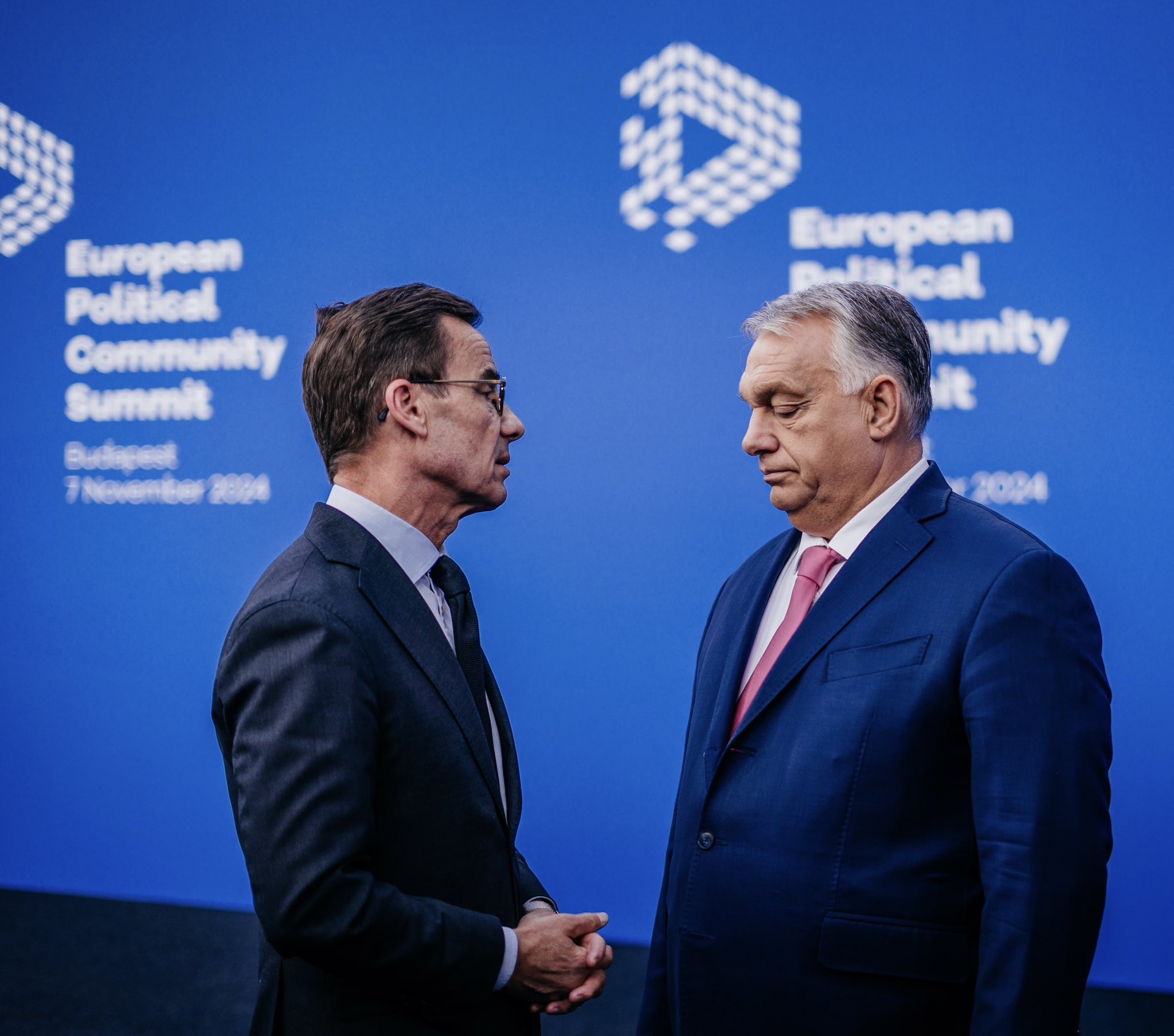
Dear Viktor,
I understand that there is an election campaign in your country, and that this time you are truly being challenged for power.
But we do not interfere in your election campaign, nor do we want to become part of it.
Sweden and the Swedish people have always been friends of Hungary and the Hungarian people, as you know. We were friends of Hungary before your government, during your government, and we will remain so after your government.
We remember when Hitler’s genocide of Jews struck Hungary, and how Sweden in 1944 sent diplomat Raoul Wallenberg on a special mission to Budapest, to save as many Hungarian lives as possible.
Tens of thousands of Hungarian Jews survived because we provided them with provisional protective passports and citizenship here in Sweden. When the Soviet Union later invaded Hungary, Raoul Wallenberg was forcibly taken to Moscow and disappeared.
The Swedish diplomat died, but tens of thousands of Hungarian lives were saved. We would do it again.
We also remember when the Soviet Union brutally crushed your Hungarian struggle for democracy and freedom in 1956, and when Prime Minister Imre Nagy was later executed for his efforts to democratize the country.
When Russian tanks crushed the Hungarian freedom struggle, the Hungarian people pleaded with the UN and all Western powers for help. Almost no one listened.
But one country that showed deep solidarity with you was Sweden.
We opened our arms to your freedom fighters and dissidents. We allowed you to build exile opposition against Soviet communism here, despite our non-alignment. It was not without risk for us. But we did it anyway—because it was the right thing to do.
Today, over 40,000 people of Hungarian descent live in Sweden, many of whom are descendants of the Hungarian refugees who came here in connection with the 1956 uprising. They are a well-integrated immigrant group in our Swedish society.
Democratic states help each other, then and now. And they stand up against countries that try to oppress others.
That is why, just as in 1944 and 1956, we support democratic countries that Russian tanks try to overrun. Back then, it was about Hungary; today, it is about Ukraine. And if we do not act, it could be about another country tomorrow.
This is also why we often express concern about the developments in Hungary in recent years. Hungary ultimately regained its freedom, but freedom must also be defended.
That is why we question when you go to have coffee with the leader of the same country that crushed your compatriots’ freedom struggle in 1956 and that today attacks your neighbour, Ukraine.
Hungary and the West are not strengthened by closing the door to their European friends or by attacking each other and the very things that distinguish us from barbarism — democracy and the rule of law.
Let me conclude with some wise words from yourself in 2007:
“As kind of a new generation of the West, our message to those younger than we is to stick to a Western type Hungary, not to let Hungary be derailed from its Western path, and to love that Hungary is a Western type country, which means that we believe in the free will of people and in the mutual responsibility towards each other that we take upon us, which are inseparable parts of Western culture.
The oil might come from the east, but freedom always comes from the west. And democracy cannot be directed from above, it can only grow from the hearts of people and in this way create a viable, Hungarian life.”
Finally, I wish to convey Sweden’s respect for the Hungarian people, and to wish your country a free, peaceful, and successful election.