




Luke Bailiff retweeted

The only change was beating Northwestern by 9 in Columbus. Same team Iowa beat by 14 in Evanston
Make it make sense

Luke Bailiff retweeted

UPDATE: We have high-confidence the threat actor has also abused these ConnectWise Cloud Management apps:
-Exchange Online (b78f6a77-d4e5-46fb-87e5-d1648bd02519)
-MS Teams (24205314-2b89-4e07-a2a4-579e898a5640)
-SharePoint Online (b2b55f5b-7758-4719-8d8f-88ae172e6bdb)
Luke Bailiff retweeted
RAPID RESPONSE: Huntress has become aware of a widespread security incident involving ConnectWise Cloud Backup (formerly SkyKick).
We’ve confirmed that an unknown threat actor abused the access they obtained in SkyKick to pivot to access customers' Microsoft 365 environments. 🧵
Fighter pilots taught me something about incident response leadership: Being right doesn't matter much if nobody trusts your direction.
One of the most valuable leadership and communication lessons I learned in the Air Force had nothing to do with cybersecurity.
I was an Air Battle Manager, responsible for assisting and directing fighter pilots in real time during their missions. Those pilots needed to trust the information and direction I was giving them.
I could be absolutely 100% correct, but if I didn't sound confident, pilots would lose confidence in me. They'd feel like they were on their own and start making their own decisions.
On the other hand, if I deliver my direction confidently. The pilots trusted me. They knew someone had their back. They followed my direction and thanked me in the debrief.
Incident response works the same way.
When you're leading an incident, everyone is looking to you for direction. If you don't project confidence, people start questioning whether you have things under control.
They start looking for answers themselves. Different teams begin taking independent actions. Before you know it, you've lost coordination of the response.
And that can be just as damaging as making the wrong technical decision.
Here are three communication techniques I've carried from military operations into incident response leadership that help me sound confident:
1. Make statements, not questions.
Pay attention to your inflection. Don't end a statement with an upward inflection that makes it sound like you're asking for approval.
If you're giving direction, sound like you're giving direction.
2. Answer the question first. Explain the caveats second.
If someone asks a yes-or-no question, start with the answer. Don't bury it under a mountain of qualifications.
For example:
"Can we have the forensics completed by Friday?"
❌ "Well, if we get the laptop by Tuesday, and the capture software works, and we don't run into any issues with support, then yeah, probably Friday."
✅ "Yes. We can have it done by Friday. I'll update you if we run into issues and that's at risk."
Same Yes answer. Very different level of confidence.
Of course, if you genuinely can't commit to Friday, say so. Confidence should never come at the expense of accuracy.
3. When you don't know, confidently explain what happens next.
You don't need to have every answer. You do need to demonstrate that there's a plan.
Imagine an executive asks, "Has the attacker been contained?"
❌ "We're still investigating, and we're not really sure yet."
✅ "We haven't confirmed containment. We're validating the remaining accounts and will provide another assessment within the hour."
Both acknowledge uncertainty. Only one demonstrates control of the response.
Confidence isn't certainty. It's demonstrating that you're in control of the process, even when you don't have all the answers.
This isn't about pretending to know more than you do or being confidently wrong. It's about giving people a reason to trust your leadership.
During an incident, your team doesn't need you to know everything.
They need to know someone is leading.
#IncidentResponse #Cybersecurity #Leadership #SecurityOperations
1
25
Luke Bailiff retweeted

JUST IN: Activity on several major U.S. political subreddits plunges following attacks on Russian data centers.


Luke Bailiff retweeted

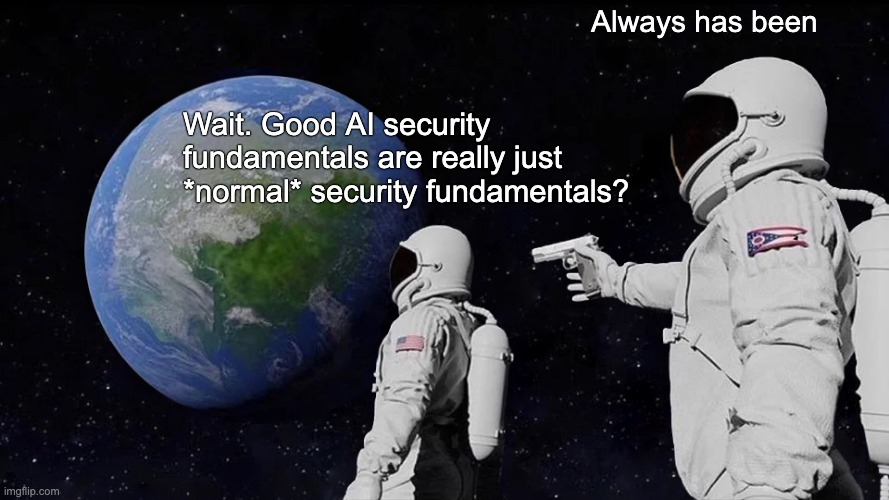
I swear I want to start every conversation lately with this exact statement and understanding.
AI IS driving “new” security requirements BUT it is more so IMO exposing the ugly facts that most places haven’t invested in the fundamentals.


Luke Bailiff retweeted
"Every day the probability of another shellshock, log4j, or heartbleed rises."
So where are they? We are many many months into this now
Azure logging is something you want to think about before the incident.
Many Azure logs have limited default retention. If you aren't exporting the logs you may need for an investigation, you could be working with roughly a 30-day window when an incident occurs.
But retention is only part of the problem.
Even when the data is still available, pulling a large volume of historical logs during an investigation can be slow due to API throttling and service limits.
That can turn:
"We have the logs."
into:
"We have the logs…but it's going to take a while to get them."
For incident response, log strategy isn't just about what you're collecting.
It's also:
Are you retaining it long enough?
Can you actually retrieve it quickly when you need it?
The middle of an incident is a bad time to discover the answer is no.
#Azure #IncidentResponse #CloudSecurity #SOC #DFIR
2
17

Luke Bailiff retweeted

"From Cloud to Chaos: Defining Shared Responsibility for AI Security" bit.ly/4oXmZf4 <- jokes and painful questions (and some answers) from CoSAI work on AI shared responsivity

💡 Did you know?
If you discover an exposed GitHub credential, you don't have to own it to help protect it.
GitHub provides a Credential Revocation API that allows anyone, unauthenticated, with the exposed token value to submit it for revocation. The credential owner is then notified, helping reduce the window of opportunity for attackers. Recently, GitHub expanded support to include OAuth and GitHub App credentials in addition to personal access tokens.
This is a great capability to integrate into:
• Secret scanning workflows
• DLP processes
• Incident response playbooks
• SOC automation
Reducing attacker dwell time isn't always about detecting compromise. It's better to eliminate the credential before it can be abused.
GitHub announcement:
github.blog/changelog/2026-0…


I would love to hear @ImposeCost take on this. I feel the argument here is what is the best way to impose costs. I don't think we do a great job imposing costs for cyber operations today. Perhaps the exhausting strategy is a better option than deterrence. We have not done a great job at deterring cyber attacks yet. IMHO.

"Exhaust, Don’t Deter: Ukraine’s Lessons for Allied Strategy Against Russia in Cyberspace".
We recommend reading the article by Oleksandr Potii, Chairman of the SSSCIP, published in The Cyber Defense Review.
cyberdefensereview.army.mil/…
53
Luke Bailiff retweeted

"Exhaust, Don’t Deter: Ukraine’s Lessons for Allied Strategy Against Russia in Cyberspace".
We recommend reading the article by Oleksandr Potii, Chairman of the SSSCIP, published in The Cyber Defense Review.
cyberdefensereview.army.mil/…
One of the most common mistakes I see during account compromise investigations is assuming that resetting a password and revoking SSO sessions fully contains the threat.
It often doesn't.
Modern environments are built on layers of trust:
1. The identity provider authenticates the user.
2. Applications establish their own sessions.
3. Tokens, cookies, and refresh mechanisms keep those sessions alive.
By the time a threat actor has authenticated through your identity provider, they may already have active sessions in email, collaboration platforms, cloud consoles, source code repositories, CRM systems, and other SaaS applications.
Resetting credentials prevents new authentication.
It does not always terminate existing sessions.
During incident response, containment should include:
• Password reset and MFA validation
• Revocation of refresh and access tokens
• Review of applications accessed
• Forced logout or session termination within affected applications
• Validation that sessions have been closed
• Verification that persistence mechanisms were not established
I've seen organizations confidently declare an incident contained, only to discover the attacker was still operating through an active application session hours or even days later.
Account compromise response isn't just about changing credentials.
It's about eliminating every trust relationship the attacker established.
Identity is where compromise begins.
Sessions are where compromise persists.
#CyberSecurity #IncidentResponse #IdentitySecurity #SecurityOperations #SOC #BlueTeam
15
ATTN: web app developers. An oldie but still relevant.
- client side input filtering is for user experience
- server side input filtering is for security
You MAY do client side input filtering. You SHALL do server side input filtering
1
20
The Pentesters that were stuck in a local political battle between the state of iowa and dallas county governments were awarded 600k for their lawsuit.
arstechnica.com/security/202…
Very cool idea. AI can speed things up but presents risk. This is a way to reduce that risk and hopefully get consistent results that still speed up processes. Should be able to use this with your locally approved AI too.

𝗝𝘂𝘀𝘁 𝗹𝗮𝘂𝗻𝗰𝗵𝗲𝗱 𝗮𝘄𝗲𝘀𝗼𝗺𝗲-𝗱𝗳𝗶𝗿-𝘀𝗸𝗶𝗹𝗹𝘀 𝘄𝗶𝘁𝗵 @fr0gger_ !
Designed to save time during investigations and everyday DFIR tasks
Thomas has built an excellent malware triage skill, and I’ve added a couple of timeline analysis skills to help you get started. Feel free to contribute and use these skills to save a ton of time, like we already do.
github.com/tsale/awesome-dfi…
Learn about skills:
- developers.openai.com/codex/…
- support.claude.com/en/articl…

2
28