

JoinCare's first DeSci pet project 🐈⬛ Inspired by Coco | FOSCC mRNA vaccine R&D × Web3 Exploring research → market → buybacks TG: https://teapaw.org/t.co/BbE0P455ZE
Joined March 2011
- Tweets20
- Following1.8K
- Followers3.9K
- Likes120




Human cancer treatment has made remarkable progress, from chemotherapy and targeted therapies to immunotherapy and mRNA cancer vaccine research.
But when the patient is a cat, the situation can be very different.
Feline oral squamous cell carcinoma (FOSCC), for example, is a highly aggressive cancer. Many cats are diagnosed at an advanced stage, when treatment options are already limited.
Human and feline cancer research share many scientific foundations. What often makes the difference is the level of research support.
Human medicine benefits from extensive datasets, established research infrastructure, and sustained investment.
Veterinary oncology, however, faces constraints related to market size, development costs, and commercial returns, making long-term support harder to secure.
Developing new treatments takes years of research and continuous investment. Yet many promising directions in veterinary medicine struggle to receive the resources they need.
For pet owners, the hope may be as simple as having one more treatment option.
That's what mRNACAT hopes to work toward.

24
Before mRNACAT, there was Coco.
She was a black cat diagnosed with oral cancer. Her family searched for treatment options and followed emerging medical research, hoping something might help.
But Coco didn't have enough time. Her story stayed with us.
Today, mRNACAT is focused on feline oral squamous cell carcinoma (FOSCC). But our longer-term ambition goes beyond one disease.
Different cancers have different molecular characteristics, so their vaccine targets will need to be studied individually.
What we hope to build is a research approach that can be developed and improved over time, bringing together tumor analysis, computational biology, immunology and mRNA technology.
If this approach can be validated in FOSCC, the methods and experience gained may eventually support research into other animal cancers.
We know that developing a new treatment takes time, and success is never guaranteed.
We can't change what happened to Coco. But we can keep working toward a future where animals facing similar diseases have more treatment options.
One cat gave this mission its beginning.
And the future we hope to help create belongs to every life that comes after her.

1,567
Once potential tumor antigens have been identified, the next step is to turn them into a vaccine design that can be tested experimentally.
mRNACAT is exploring a multi-epitope approach, combining several selected antigen epitopes into a single mRNA vaccine candidate.
The idea is to provide the immune system with multiple potential targets associated with the tumor.
Our team has completed an initial computational design, including the selection of candidate epitopes and the design of the corresponding mRNA coding sequence.
The next stage involves exploring lipid nanoparticle (LNP) delivery and testing whether the encoded antigens can be expressed, processed, and presented by antigen-presenting cells.
We'll also need to investigate immune responses, safety and potential antitumor activity.
Unlike preventive vaccines, this approach is intended for cats that already have cancer.
There's still considerable work ahead before we can determine whether the candidate has therapeutic potential.
For now, our focus is on taking the design into experimental validation and learning from the results.
Before analyzing molecular differences between cancerous and non-cancerous tissues, we first need to make sure the sequencing data is reliable.
These plots show part of our quality control (QC) process, where researchers examine sequencing characteristics such as GC content. Other metrics, including read duplication, are also considered when assessing data quality.
But QC is only the beginning.
AI-assisted analysis is also part of our research workflow, helping us explore complex molecular data and investigate patterns that may be relevant to tumor biology.
Our team has reviewed the QC results for both tissue groups, providing a foundation for further analysis.
From initial data checks to AI-assisted research, we'll continue sharing the work happening behind the scenes at mRNACAT.


Identifying a potential tumor antigen is only part of developing a cancer vaccine. The immune system also needs to recognize it.
T cells play an important role in immune responses to cancer. They recognize specific antigen fragments presented by molecules of the major histocompatibility complex (MHC).
In cats, this involves the feline leukocyte antigen (FLA) system. At mRNACAT, we're studying feline MHC sequences to better understand which tumor-associated antigen fragments might be presented to T cells.
Our team has carried out sequence screening, identification and redundancy analysis of candidate feline MHC molecules. This work provides a foundation for predicting potential antigen epitopes.
Of course, a predicted binding interaction doesn't guarantee an immune response. That still needs to be tested.
Understanding how the feline immune system recognizes these targets is an essential part of our vaccine research.
$mRNACAT lockup details are now publicly available on PinkLock.
775 million tokens are locked across 7 separate records, representing 77.5% of the total supply.
Scheduled unlock dates (UTC):
• Dec 4, 2026 — 275M
• May 4, 2027 — 130M
• Nov 4, 2027 — 370M
All lock records, amounts and unlock times can be verified here:
pinksale.finance/pinklock/bs…

We're live! 🐈⬛
$mRNACAT has officially launched on BNB Chain.
CA: 0x7ffe4785adbca0686099ec58ea98d06d5e2b17ac
Please verify the contract address before interacting with the token.

$mRNACAT is officially live on @BNBCHAIN !
Claim token on the JoinCare website: joincarelabs.com/dashboard
CA: 0x7ffe4785adbca0686099ec58ea98d06d5e2b17ac

The mRNACAT token sale is complete, and trading is set to begin tomorrow, November 5.
Thank you to everyone who has supported us throughout the token sale.
We'll share further trading details through our official channels.
Stay tuned for the next update. 🐈⬛
1
993
🎉 100% funded!
mRNACAT has reached 100% of its funding goal on JoinCare! 🐈⬛
A huge thank you to everyone who's supported us along the way. It means a lot to our team.
This is a big moment for mRNACAT, and we're grateful to share it with you.
Now comes the part we're most focused on: putting our vaccine candidate to the test and seeing what the results tell us.

6
1
1,227
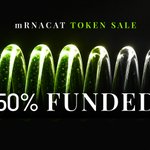
🎉 Halfway there!
mRNACAT has reached 50% of its funding goal on JoinCare! 🐈⬛
A huge thank you to everyone who's supported us so far. It means a lot to our team.
There's still plenty of research ahead, and we're excited to keep moving forward.
We'll keep you posted as the work progresses.

1
1,157
Feline oral cancer is an aggressive disease with limited treatment options. Surgery, radiation and chemotherapy all have their limitations.
At mRNACAT, we're exploring a different approach: a therapeutic mRNA vaccine designed to help a cat's immune system recognize and respond to an existing tumor.
Our research brings together AI-assisted antigen screening, feline immunology and mRNA vaccine design.
We've completed an initial computational design, with experimental validation planned as the next stage.
🐈⬛ mRNACAT is now live on JoinCare @TheJoinCare !
Follow us as we continue the research and share our progress.
JoinCare’s first token sale is now live.
Meet @mRNACAT , a project developing an mRNA therapeutic vaccine for feline oral squamous cell carcinoma (FOSCC).
For the cats we call family.
Participate with USDT on BNB Chain: joincarelabs.com/launchpad/4…
1
762
Developing a cancer vaccine starts with identifying the right targets.
At mRNACAT, we're comparing RNA from tumor and non-cancerous tissue to identify potential antigens for a therapeutic mRNA vaccine against feline oral squamous cell carcinoma (FOSCC).
This is where our research begins.