

Personal CFO for 7-8 figure tech employees & SMB owners @ Quadrant Capital • Advisor Educator • Dad x2 • Tweets ≠ Advice • Book a discovery call ↓
Lehigh Valley, PA
Joined October 2012
- Tweets23K
- Following720
- Followers17.1K
- Likes19.4K






20% of clients in my practice are business owners.
how do we help them?
example from onboarding this year:
> built living financial dashboards and plan modules in eMoney and Monarch Money, integrating the household and business balance sheets, income, liquidity needs, education funding, housing goals, long-term investments, and legacy planning.
> consolidated and reorganized all scattered investment accounts at Fidelity, including taxable accounts, IRAs, an HSA, and 529 assets.
> designed a tax-aware investment strategy, including direct indexing, tax-loss harvesting, and a gradual transition designed to manage realized capital gains in legacy ETFs.
> coordinated with outside CPA on S-corp distributions, excess business cash, tax planning, and potential business deductions.
> evaluated how much cash should remain in the business for operations versus how much could be distributed and invested personally.
> evaluated the company 401(k) (startup plan from $0), including provider pricing and alternatives, with an implementation target tied to employee compensation planning later in the year.
> started comprehensive estate and succession planning with outside counsel, including business continuity if the owner dies, guardianship, beneficiaries, and family legacy goals, and coordinated directly with an estate-planning attorney before and after.
> reviewed personal and business risk management, including homeowners, auto, umbrella, life, disability, key-person, and commercial insurance, and coordinated specialist introductions.
> referred to 2 white-glove HNW insurance brokerage firms (1 for life/disability, 1 for P&C) for new policies.
> built college and wealth-transfer strategies for 2 children, including 529 planning and other account structures.
> established ongoing portfolio reporting and a structured onboarding/planning roadmap so tax, investment, estate, insurance, and business decisions are coordinated rather than handled in silos.
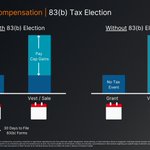
if you're a startup founder or early employee receiving restricted stock, you need to understand the 83(b) election
it could save you a fortune in taxes:
> allows you to recognize taxable income on unvested shares today, rather than as they vest
> potentially saves significant taxes if those shares appreciate
> starts the long-term capital gains holding period earlier
you have 30 days from the date the shares are transferred to file
not 30 business days.
not when you file your tax return.
you now have TWO main options:
1: File online (new):
> visit irs.gov/dmaf/form/f15620
> sign in using ID.me
> complete IRS Form 15620
> submit electronically and save confirmation
> provide a copy to your employer
BUT there are some limitations:
> maximum 999,999 share quantity
> per-share FMV and purchase price limited to 2 decimal places
that second limitation can be particularly problematic for startup founders with shares priced at $0.0001, as an example
2: File by snail mail:
> download IRS Form 15620
> complete, print, and sign TWO copies
> prepare a short cover letter requesting acknowledgment
> include a self-addressed, stamped envelope
> mail everything to the IRS service center where you'd file your federal tax return
> use USPS Certified Mail with Return Receipt requested
> KEEP your postmarked mailing receipt and tracking confirmation
the IRS may date-stamp 1 copy and mail it back to you
but don't rely on that happening
your proof of timely mailing is critical
also:
> give your employer a copy
> retain copies of everything
> 83(b) generally applies to RSAs and stock options, NOT ordinary RSUs
> elections are generally irrevocable
> if the stock is forfeited, you generally don't recover the taxes paid (if applicable)
don't leave this until the last minute.

they only have 2 speeds
1) cutest and nicest things you’ve ever laid eyes on
2) domestic terrorists with no objective other than to watch the world burn
no in between

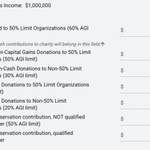
Reminder when thinking about charitable giving strategy this year:
there is now a 0.5% AGI "floor" for charitable donations
take this example:
> $100K gift of long-term capital gain property
> $1M Adjusted Gross Income (AGI)
the $100K gift gets a $5K haircut for deductibility ($95K remaining charitable deduction)
bottom line, the first 0.5% of your AGI donated to charity is generally no longer deductible


"I want to leverage social media to attract more clients"
are you willing to post original content every day for years on end?
are you willing to let go of any fears about what family/friends/colleagues might think of you?
are you willing to come up with things that differentiate your page from the sea of generic slop?
SpaceX $SPCX released earnings today, ~2 weeks ahead of schedule
this means that one of the largest staggered unlock milestones of 28% happens on Thursday this week (2 days post-earnings)
then another 7% gets unlocked this weekend (as originally scheduled) before the last unlock in early December
the majority of pre-IPO shareholders, employees, and former employees will be 100% unlocked after that

optimizing for the highest savings rate is bad
> go too far here for too long, and you start to flirt with financial hoarding
optimizing for the highest level of current spend is bad
> go too far here for too long, and you'll always be hand-to-mouth
it has to be a balance.
If you are thinking about really getting serious about your finances (even via DIY)
these are exactly the exact steps I would take to put myself MILES ahead of my peers:
0. Yes, you should maybe hire someone
Not everyone needs professional help to steward this process
but there are more options than ever:
1) One-time financial plan engagement
2) Ongoing advisory relationship (planning only)
3) Ongoing advisory relationship (planning + investments)
4) Ongoing advisory relationship (planning + investments management + tax prep)
work through this process with a good planner can provide an insane amount of value, and sometimes the hardest thing is just knowing:
1. Where to even start
2. What information to gather
3. How to implement changes
4. How it all fits together
5. How to hold yourself accountable
6. What questions to ask
1. Get organized before doing anything
Pretend you are going through a mortgage underwriting
If you don't know how mortgage underwriting works, you basically have to provide the bank with EVERYTHING about your finances
Gather all of the following parts of your balance sheet (or enter them into a financial app)
> Bank accounts
> Brokerage accounts
> Crypto holdings / wallets
> Retirement accounts (IRA, 401k, etc)
> Charitable vehicles
> Private investments
> Real estate assets
> Mortgage / HELOC loans
> Credit cards (including any balances and rates)
> Student loans
> Family loans
Pull down PDFs like your last year's W-2s and 1099s (both investment-related 1099s and self-employment related)
Grab your last few paystubs from your job
Grab your last few years of tax returns (if you use TurboTax, you can log back in and download them)
Put them all in the same folder on your computer's desktop
2. Really sit down and think about what you want to accomplish by doing this
No, you don't have to have these big massive financial goals like buying a house or retiring early
(honestly, most people couldn't tell you at any one time)
Your goals could literally just be:
"get in better financial shape"
"have a plan and be smarter with money"
"know where we stand"
"know what we can afford to spend"
"have better financial relationship with my spouse"
but you should ask yourself things like:
> What about money is important to me?
> Who are the main players in my life, both personally and professionally? Will I ever need to financially support them?
> Do I want to give money to charity? What causes are important to me?
> What would financial independence look and feel like? Do I actually WANT to fully stop working one day?
> How much real estate would I like to own (and where)?
> What major purchases might I make in the next 3-5 years?
> Am I comfortable with taking risk with my money?
3. Analyze your current financial situation
Create a balance sheet / statement of net worth
> Add up all of your assets (cash, investments, real estate, personal property
> Subtract out all of your liabilities (loans, CC's, mortgages, etc)
This is your current Net Worth -- you should aim to grow this over time
Create a budget / monthly statement of cash flow
> In terms of income, what are you currently making per month, on average?
> In terms of expenses, what are you currently spending, on average?
> How much are you spending on housing as a % of your gross income? Ideally it should be <30%
> How much are you saving, and in which accounts?
What is your savings ratio as a % of your gross income? Ideally it should be 15-20%+, but be careful not to save ALL the money into retirement accounts or ALL into taxable brokerage accounts
(Diversify your taxable dollars)
Using facts gathered (current and future income, expenses, major purchases, etc) craft an annual cash flow projection
If you are considering a major purchase, make a “what-if” scenario, such as home purchases or liquidity events for company stock
Take the baseline cash flow and modify it to reflect the new potential changes in inflows and outflows
4. Develop and execute planning and investment changes
Consolidation of existing accounts, where possible
Ex) Roll all old 401(k)'s together, or into an IRA
Ex) Consolidate brokerage accounts
Opening of new accounts, where necessary
Craft an overarching investment strategy without overcomplicating things or making it difficult to implement
Avoid speculating with the bulk of our money, avoid day trading or trying to time the market
Fold in your company stock considerations and strategies
5. Monitor progress and follow up on outstanding items
Set priorities for focus areas in 2024 (insurance, investments, estate, employee benefit review, etc)
Monitor portfolio implementation and set up automatic contributions and set reminders for rebalancing & tax loss harvesting
Other items for consideration
When it comes to diversification, I typically think about it in 3 ways:
> Diversification by balance sheet mix
(cash, after-tax investments, pre-tax retirement, Roth, real estate, etc)
> Diversification by investment asset allocation mix
(stocks vs. bonds, US vs. International, large vs. small, growth vs. value)
> Liquid vs. Illiquid assets
(marketable securities vs. illiquid private investments & hard real estate)
> What are the tax implications of liquidating existing investment holdings in taxable accounts?
After accounting for a healthy cash cushion (3-6 month emergency fund / cash runway)
AND
Necessary safety assets required for lump sum expenses (tax payments, down payments, etc), try to stay fully invested in the market with long-term oriented dollars
6. Check the boxes. Yes, those boxes.
Seriously, do it next month if you can.
If you have young children, start it next week.
> Complete your estate plan
These should be the legal documents you are considering (not all will apply):
Last Will & Testament
Power(s) of Attorney
Advanced Medical Directive (Living Will)
Revocable (Living) Trust
> Review beneficiaries across all accounts, including covered individuals under your benefits
> Review all of your insurance coverages, including employee benefits
...Life
...AD&D
...Health / Dental / Vision
...Disability
...Property & Casualty (Home, Auto, Umbrella)
...Renters
What fringe benefits at work are you not taking advantage of?
> Hire a CPA or engage a tax filing service for this upcoming tax season
If you do these 6 steps and take advantage of all available personal finance resources online, you will be MILES ahead of the majority of your peers
50% of my clients have children under 5 years old
60% of my clients have children under 10 years old
70% of my clients have children under 22 years old
my goal is to have them feel like someone is watching over their wealth at all times so they can focus on what matters at work and at home
I worked with retirees and pre retirees for the first 7 years of my career
with the benefit of hindsight and market performance for the last few decades, we (meaning the collective we = those firms, and much of our industry colleagues at large) were likely too conservative with investment rate of return assumptions in our financial plans
but
1) no one knew that the market was going to do what it did (sequence of return risk is real)
and
2) it’s nearly impossible to get many people to spend more or give more away even if the calculations say they can
for years I have tracked things like:
-personal net worth
-annual compensation
-social media followers & engagement
-client assets, revenue, demographics
to a ridiculous level of detail.
why?
whenever I get that familiar feeling of dread creeping in that says:
"you aren't doing anything. not nearly enough. you are flatlining."
I go back and look at the data history and graphs.
below is the actual line of revenue growth since July 2024 when my clients from Compound stopped transitioning over. I didn't want that migration to cloud the data (they were already clients, just at a different firm).
the result? +287% for the period (+82% annualized).
as always, zoom out.

one of the most underutilized features of Fidelity employer 401(k) plans is "BrokerageLink"
if your employer offers it, this allows:
> access to a much broader investment universe (ETFs, stocks, mutual funds, etc.)
> ability to coordinate your 401(k) investments with your broader financial plan or have a professional advisor manage it
> potential access to lower-cost investment options than the company's selected fund menu
how to set it up:
> log in to Fidelity NetBenefits
> navigate to your 401(k) > BrokerageLink
> open the account
> once the account is open, transfer existing 401(k) investments and/or redirect future contributions into BrokerageLink
not every employer allows it, and investment options, fees, and transfer limits vary by plan.
not always a slam dunk...review your options, as always.
but it's worth checking....


a few things have become very clear after working with clients at OpenAI, Anthropic, Stripe, SpaceX, Legora, Figma, Google, Grüns, GHOST, Nvidia, etc
1. The sudden wealth creation in technology / DTC has been staggering as of late.
2. People are finally looking for a way to de-risk and/or cash out without 25-40% going to Uncle Sam.
We have the playbook for this.
It's not one-size-fits-all.
Mark Cecchini, CFP® retweeted

When prospective clients upload documents to us we are starting to see a lot of “AI generated financial plans” included.
These plans of course have brought no confidence or clarity to them, which is why they are reaching out to a real financial planner.
The vast majority of people’s resumes should fit on 1 page
same thing with net worth statement
if it doesn’t fit on 1 page, you have too many accounts


