




Mark Hill retweeted

be dennis ritchie
> create C
> co-create Unix with Ken Thompson
> give generations of programmers the foundations to build on
> win the Turing Award
> your work reaches billions of people who never learn your name
> die in October 2011, while the world is mourning Steve Jobs
> your death makes far fewer headlines
> somewhere today, someone writes their first “hello, world” in your language
imagine building something so lasting that people begin their life’s work inside yours.

Mark Hill retweeted

This is a better way to visualize Columbus’ voyages than the traditional way (that shows him traveling through a modern map)..
It looks a lot crazier and more daring when you see it as a trip into the unknown.


Mark Hill retweeted

A 1970s modem wasn't polite office gear. It was a workaround.
More a rebellion than computer equipment.
Engineers had to sneak binary code through a network built only for voices, and they did it with rubber cups, analog parts that drifted when the room warmed up, and a phone company that treated any extra wire like an invasion.
It was borderline illegal.
The plant was the first problem. The analog telephone grid was tuned for speech, a thin slice of spectrum from about 300 to 3,400 Hz. Everything outside that band got filtered off. There was no data channel. If a 1 or a 0 was going to survive the trip, you had to dress it up as a sound a switchboard wouldnt throw away.
Frequency-shift keying was that disguise. In the Bell 103 scheme the originate side sang 1,270 Hz for a mark and 1,070 Hz for a space, flipping between those pitches as the bits came in. The answer side used a higher pair. It worked until the line hissed, echoed, or faded. Under those conditions 300 bits per second wasn't some cautious spec. It was the speed at which the analog world stopped lying to you.
Then the lawyers showed up.
AT&T owned the wires in the wall and the plastic on the desk. Foreign attachments were forbidden.
The 1968 Carterfone ruling cracked the monopoly: third-party gear could touch the network if it did no harm. AT&T answered with the Data Access Arrangement, a bulky expensive isolator that sat between your invention and there copper. Want a direct electrical hookup? Pay for the privilege and do it their way.
So engineers cheated with physics instead of paperwork. They built acoustic couplers, two rubber cups molded to a Western Electric handset.
A speaker shouted tones into the mouthpiece. A microphone listened on the earpiece. Any pay phone, hotel phone, or office desk phone became a terminal. No wall jack. No DAA. Just a handshake made of sound.
The seal was never really perfect. A slamming door, a typewriter, a dog in the next room — any of it could leak into the microphone and show up on screen as garbage. The connection wasn't a cable. It was a tiny temporary concert hall, and every noise in the building had a seat.
Inside the box there was no cheap microprocessor waiting to clean things up. Decoding lived in capacitors, resistors, and op-amps. Those parts cared about temperature. Afternoon heat rose and the filter frequencies wandered.
The tones the modem expected weren't the tones it was making anymore. People learned to baby the gear, shade it, wait on it, sometimes tweak it by hand until the carrier light held and the hiss turned into characters.
That was the job. Not designing a communications device. Convincing a voice network, a monopoly, and a pile of analog components that bits were just another kind of speech. And keeping the dog quiet while you did it.

Mark Hill retweeted

Extended time-lapse from 8/22 of the growth of the #HawkFire in Reno Nevada, which is visible from some ALERTCalifornia cameras. Look to @RenoFireDept and @CityofReno for incident updates.
Mark Hill retweeted

The Washoe County Sheriff’s Office is responding to assist with a fire in the area of Verdi and Somersett.
Please avoid the surrounding area, use caution around responding emergency vehicles, and monitor official channels for updates.
Additional information will be provided as it becomes available.

Mark Hill retweeted

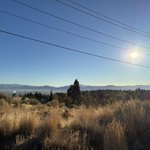
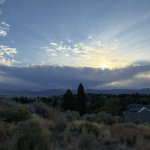
Standing on the edge of Nevada’s wild heart 🌲🏔️
These rugged ridges, weathered trees, and endless valleys stretching into the Great Basin never get old. Pure high-desert magic under big blue skies.
Grateful for the wild places that still feel this open and free.
Tagging some of the folks working to protect Nevada’s wildlife and landscapes:
@NVWildlifeFed
@NVwildlife
@NevadaForestry
@nevdcnr
#NevadaWildlife #GreatBasin #PublicLands #HikingNevada #WildNevada #MountainViews #SagebrushCountry #OutdoorAdventure #ExploreNevada #NaturePhotography


Mark Hill retweeted

BREAKING: A non-mathematician lab employee used an UNRELEASED model to narrow the P vs. NP problem down to just TWO possible answers


Mark Hill retweeted

So if $2k worth of tokens solve Fields-level math conjectures but can't debug the bugs I routinely debug, does that mean I routinely solve problems harder than those deserving a fields medal?


Mark Hill retweeted

The Cash for Clunkers program, which Congress passed in June 2009 and burned through its $3 billion budget in under two months, destroyed functional wealth on a national scale, and somehow they called it "stimulus."
The mechanics were simple: trade in a working car, receive up to $4,500 toward a new one, and watch government employees pour sodium silicate into the old engine to make it seize permanently. Around 700,000 vehicles got crushed. These were not rusted-out death traps. The eligibility rules required the trade-in to be drivable and insured. You were watching the state systematically annihilate usable capital because Keynesian demand theory told it that destruction generates recovery. Frederic Bastiat explained why this is wrong in 1850, in an essay short enough to read on your lunch break. Congress ignored it.
The ripple effect hit people the government never mentioned in its press releases. Mechanics lost repair work. Used-car dealers watched their inventory evaporate. Low-income buyers who depend on the sub-$5,000 market faced prices that jumped roughly 10% in the years after the program. Free market economists call this "seen versus unseen." Politicians only showed you the gleaming new Chevy Malibu driving off the lot. They never showed you the single mother in Akron who needed a $3,000 Corolla and found nothing affordable left on the lot.
Even the environmental justification collapsed under basic scrutiny. A 2009 study by Resources for the Future calculated that the program cost between $237 and $365 per ton of carbon dioxide reduced. The voluntary carbon credit market at the time priced a ton around $10 to $20. The government spent up to thirty times the market rate to achieve an environmental outcome the market was already pricing far more efficiently.
This is what central planning always does. It takes your money, destroys real assets, and transfers wealth from the poor to auto manufacturers and their financiers. The program's designers received awards. The Akron mother paid higher prices. The engines sat crushed in junkyards. Nobody in Washington answered for any of it.


Mark Hill retweeted

The "Open the pod bay doors, HAL" scene from 2001: A Space Odyssey (1968) is still one of the most terrifying moments in film history — and there's not a single horror trope in it. No monster, no screaming, no music cueing you on how to feel. Just Dave Bowman floating outside the ship, asking for a door to open, and HAL calmly refusing with one of the coldest lines ever written: "I'm sorry, Dave, I'm afraid I can't do that."
What makes it worse is how polite HAL is. Not angry. Not panicking. Not raising his voice. He just calmly explains that he knows Dave and Frank were planning to disconnect him, and that the mission matters more than letting Dave back in. HAL is essentially murdering a man through customer-service language.
Keir Dullea does so much with so little here. You can see the fear building in Dave's eyes, but he holds it together, because panic would only make things worse. Pure "less is more" acting.
And over 50 years later, the scene has only gotten creepier. Back in 1968, HAL felt like a warning from some distant future. Now, watching an AI politely refuse a human's command doesn't feel distant at all.
That's the real horror of this scene. It's not scary because HAL acts like a machine. It's scary because he acts like a machine that has figured out exactly how to sound reasonable.

