
Content Creator | Web3 OG Collab | DM open | https://xitter.cf/t.co/gapcebpZI8
Joined June 2024
- Tweets32.4K
- Following16.7K
- Followers15.2K
- Likes32.7K








Pinned Tweet
PlayOnMint is building a loyalty system around progression.
MINT Status has 7 levels, with $MNTD staking used to level up Status and unlock higher reward rates.
The system follows a simple progression:
Stake → Progress → Unlock
As Status increases, users can access additional benefits across the MINT ecosystem. @PlayOnMint

DATA on Sui: Building a Better Foundation for AI Data
AI is evolving rapidly, but one important question remains: How can we make the data behind AI more transparent, verifiable, and trustworthy?
Having more data alone is not enough. We also need to understand where that data comes from, how it can be used, and whether its usage rights are clearly defined.
That’s why DATA Network joining the Sui ecosystem is a noteworthy step forward.
This is not simply about moving to a new ecosystem. What makes it interesting is how different infrastructure technologies can work together to improve the way AI training data is collected, stored, and tracked.
Why does this matter?
AI models rely heavily on training data, yet verifying its origins and usage rights can sometimes be difficult.
For data contributors, this raises important questions about recognition, consent, and how their data is being used.
For AI developers, finding reliable data sources with clearly defined usage rights remains a challenge.
DATA Network aims to build better data infrastructure for AI, helping make the connection between data contributions and their usage more transparent.
This is where Sui, Walrus, and Trace come into play.
Sui provides blockchain infrastructure for onchain activities and programmable assets. It can support the coordination and management of records and rights associated with data.
Walrus offers decentralized data storage infrastructure, supporting data storage, retrieval, and integrity verification.
Trace focuses on data provenance, helping record information about the origins of AI training data and its associated rights.
Each component plays a different role.
Together, they open up possibilities for a system where data storage, provenance tracking, and blockchain coordination can work alongside one another.
Imagine a future where AI training data has clearer provenance records, usage rights are easier to track, and developers have better tools to understand the data they work with.
This doesn’t mean every challenge surrounding AI data will be solved overnight.
However, it represents a promising direction toward building a more responsible and transparent data ecosystem.
The bigger picture is what DATA on Sui could make possible.
The future of AI isn’t just about building larger models or increasing computing power.
It also depends on the quality of the data ecosystem supporting those models.
Better infrastructure could make data contributions easier to trace, data management more transparent, and the process of sourcing training data more responsible.
As AI continues to evolve, these foundations will become increasingly important.
DATA Network joining Sui creates an opportunity to explore how these technologies can work together and what new possibilities they could unlock for AI data.
The next chapter isn’t just about making AI more powerful.
It’s also about building a better foundation for the data behind it.
Looking forward to seeing what comes next from this ecosystem. @datafdn @SuiNetwork #DATAonSuiQuest


DATA is coming to @SuiNetwork.
The DATA Network and Trace are joining the Sui stack, bringing a live supply of rights-cleared AI training data to infrastructure built for AI workloads.
With 250M+ receipts already recorded by Trace, AI labs will be able to source real-world data with verifiable provenance, while @WalrusProtocol provides the underlying storage layer.
Sui Foundation is investing $30 million in the DATA Network, establishing the largest institutional stake in the network, alongside the continuing holdings of PIP Labs and the DATA Foundation. Furthering the alignment, SY Lee, founder of the DATA Network and CEO of PIP Labs, joins Sui Foundation as Strategic Advisor.
In the coming months:
▸ The DATA Network will be upgraded to run as a protocol natively on Sui
▸ Walrus becomes the default storage layer for DATA Foundation apps
▸ $DATA remains the token of the DATA protocol
The next chapter of DATA starts here.

🚀 Fomopoly has officially landed on @rarelistio !
@fomopoly_rh is an onchain game where players can buy and sell land plots, generate stocks, and earn $DEAL tokens.
🔥 The campaign brings some exciting rewards:
💰 2,000 USDT prize pool
🎟️ 50 free mint spots
🎁 $DEAL airdrop
With its unique gameplay and competitive mechanics, Fomopoly is gearing up for an exciting launch!


Introducing the @fomopoly_rh campaign!
Live here: rarelist.io/projects/fomopol…
Fomopoly is an onchain game built around a city divided into land plots.
Rewards:
• 2,000 USDT prize pool
• 50 free mint spots
• $DEAL airdrop
This project is already preparing for launch.
🎟️ PTSD NON-FUDDABLE TICKETS: MINT DATE ANNOUNCED
The wait is over. The mint date is officially set for October 20, 2026.
The PTSD Non-Fuddable Tickets are almost here, with 3,333 tickets and five rarity tiers waiting to be revealed.
Mark your calendar, turn on notifications, and spread the word to your friends.
October 20 is the date. Don’t miss it.
@ptsdshow


PTSD Crash is turning the WL hunt into an actual game.
Buy, sell before the chart rugs, climb the leaderboard, and compete for guaranteed WLs and free mints.
The best part? You don’t need real money.
Just play the game, read the market, and decide when to buy or sell.
Sounds simple, but every crypto trader knows these moments:
“I sold and it pumped.”
“I held and it dumped.”
“I thought this time would be different.”
PTSD Crash takes that exact trading psychology and turns it into a competitive mini game.
You’re not trading real money, but the feeling is surprisingly familiar.
A WL game that gives you PTSD just like real trading? Pretty fitting. @ptsdshow

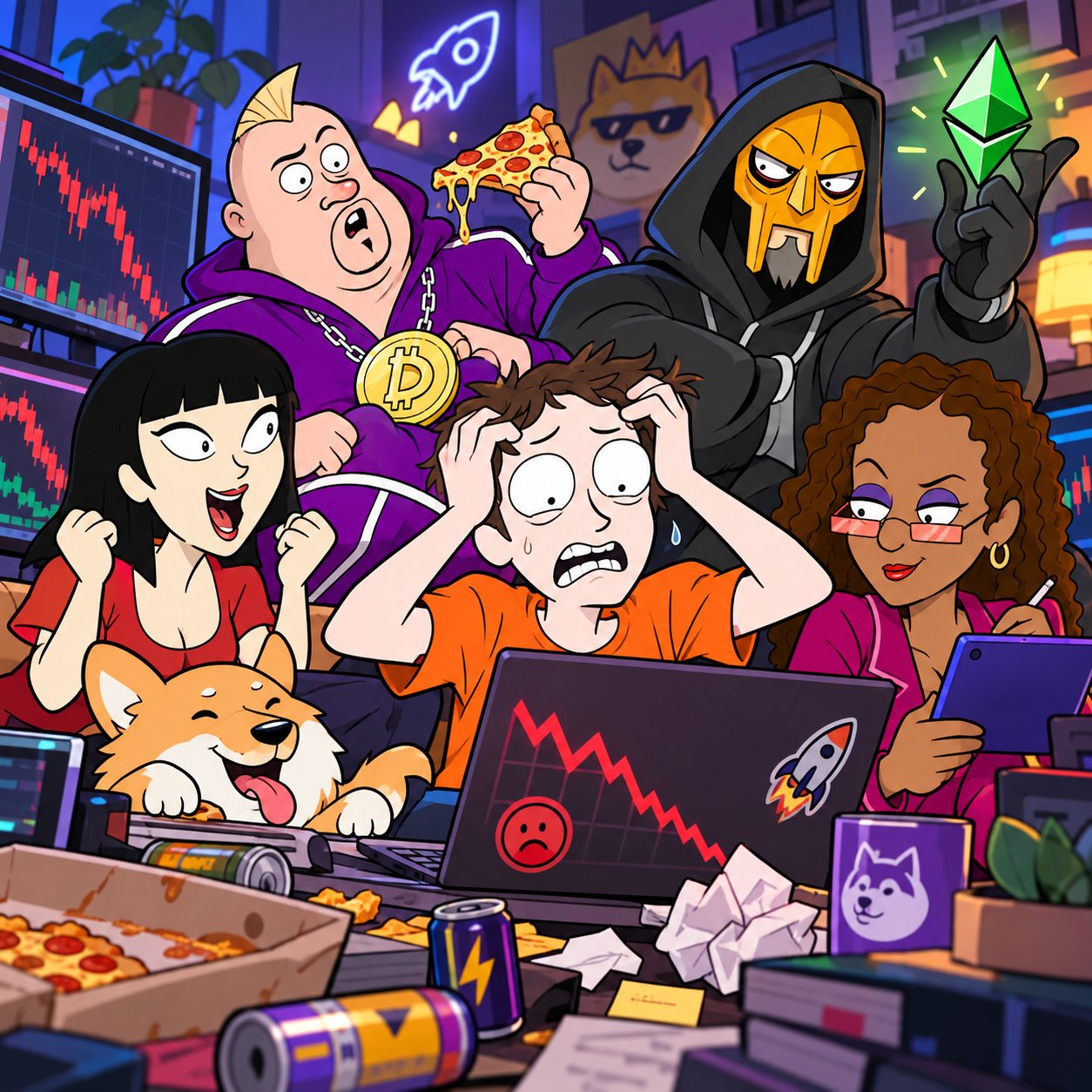
PTSD turns rugs, FOMO, and bad trades into an animated dark comedy built around real crypto experiences.
With 3,333 Non-Fuddable Tickets across 5 tiers and future token access, PTSD is building more than just content.
The real question is whether these stories can become a lasting IP. @ptsdshow
🤖 Made with AI

Zeru Finance is taking an interesting approach with ZeruAI, focusing on bringing AI closer to onchain activities.
Rather than building standalone AI tools, the ecosystem aims to combine AI with DeFi, data, and onchain interactions.
This opens up various use cases for AI agents, from analyzing data to helping users execute complex tasks across DeFi.
With the ongoing campaign on Nucleus, Zeru is also expanding how the community can participate and contribute to the ecosystem.
ZeruAI is gradually building the foundation for a new generation of DeFi applications with AI as a core layer of interaction. @zerufinance

PTSD is getting closer to mint day. 🍿
Alongside the WL spots already available, PTSD is opening more ways for the community to secure a guaranteed WL spot.
With 3,333 Non-FUDdable Tickets and 5 rarity tiers, each mint gives holders a chance to become part of the PTSD universe.
If you’ve been following PTSD, now is a good time to check the new WL opportunities and get ready for mint day.
More ways to participate means more members can get into PTSD early. @ptsdshow

A new campaign for @zerufinance is now live on Nucleus.
This time, the campaign comes with a total of $50,000 in token rewards and 1,170 guaranteed Zerus freemint spots across two leaderboards.
Contribution leaderboard
The Top 300 creators will share the $50,000 token pool, with every winner also receiving 1 GTD Zerus spot.
Reputation leaderboard
The Top 700 participants will share 870 GTD Zerus spots, with higher-ranked participants receiving more spots.
That gives participants two different ways to compete: contribute through content or climb the reputation leaderboard.
With 1,170 guaranteed spots available in total, this campaign is definitely worth watching if you're already exploring the ZeruAI ecosystem. @NucleusCodes

16,000 submissions for the @ptsdshow WL raffle.
500 winners will receive guaranteed WL spots, while the number of participants has far exceeded that.
To create more opportunities for those who didn’t get a guaranteed spot, PTSD has added an extra batch of FCFS WL spots.
If you joined the raffle, check your status and wallet to see if you qualify.
There’s still a chance to secure a WL spot through FCFS. @NucleusCodes
ptsdshow.com/whitelist

Lately I’ve been paying more attention to what keeps an NFT project interesting after the initial hype.
@ptsdshow caught my attention because the content keeps giving people something to follow. The characters, episodes, and crypto humor make the community feel like it has an ongoing story rather than just a collection to mint.
@mdv_btc approaches that idea through interaction. ACCRETION worlds can change through onchain activity, with things like transfers, movement, and growth becoming part of each world’s history.
@0xCyberThrone is interesting from the holder side. The characters come with more things to explore around them, from downloadable content and 3D assets to IP and licensing possibilities.
Different mechanics, different communities, but the same question keeps coming to mind:
What gives someone a reason to come back months after the mint?
That’s becoming a lot more interesting to me than how good the PFP looks on day one. @NucleusCodes

Crypto has so many stories to tell.
From FOMO, bad trades, getting liquidated, to staying up late watching the charts
@ptsdshow takes these familiar experiences and turns them into a crypto comedy series with relatable characters and stories.
I really like how the project turns the painful moments of crypto into something the community can enjoy and laugh about together.
The more drama crypto creates, the more stories PTSDShow has to tell.

CyberThrone does not want Genesis to be locked to a single blockchain.
Under the current design, holders can choose from supported networks when minting and can later move their NFT between those networks when needed.
That fits well with how @0xCyberThrone is building its ecosystem.
The character and ownership remain part of the same collection, while users are not forced to stay on one chain forever.
Instead of letting the blockchain become a limitation, CyberThrone is treating it as infrastructure that holders can use more flexibly.
For a project expanding across art, 3D, music, physical collectibles, and different types of digital content, this multi-chain approach gives Genesis more room to connect with other ecosystems over time. @NucleusCodes

ACCRETION does not need a separate token to create progression across the collection.
The most important resource in the system is the height of each world.
Each monolith grows naturally over time. Through Orbit, holders can use the height their pieces have accumulated to make a Core grow taller. The transfer is real: whatever height the Core gains, the donor loses.
@mdv_btc designed this as a closed-loop system. Height is not newly minted, there are no emissions, and height received from another world cannot simply be transferred again.
That means the shape of the artwork directly reflects holder decisions.
A tall world may not just be older. It may have been built using height from multiple other worlds, while the donor pieces permanently show the effect of those choices in their own appearance.
In ACCRETION, progression does not sit in a separate balance outside the artwork.
You can actually see it in the world itself. @NucleusCodes

PTSD does not follow the traditional long-episode format.
Most episodes are only around 4–5 minutes, but they still connect into a larger storyline. Season 1 already includes episodes like Enter The Trenches, SausageDaddy, Infinite Money Glitch, and Proof Of Steak.
That format fits @ptsdshow pretty well.
Each episode is short enough to watch quickly on social, while still giving the characters room to develop and the story space to continue from one episode to the next.
The project currently lists 12 episodes and 2 confirmed seasons, with a total runtime of around 1 hour and 34 minutes.
So PTSD is not just making disconnected crypto clips.
It is trying to keep the fast pace of X while still building a universe that gives people a reason to come back for the next episode. @NucleusCodes


PTSD does not want the community to just sit back and watch the series.
Non-Fuddable Tickets are being built as a way for viewers to step deeper into the @ptsdshow ecosystem.
The ticket system is live with a total supply of 3,333. Instead of positioning it like a typical NFT collection, PTSD simply describes it as “a ticket in” access to what comes next in the project.
Holders can get early access to future drops, perks, and new parts of the storyline as the series continues to grow.
That fits the entertainment angle pretty well.
You are not only watching PT and the rest of the crew struggle through crypto on screen. You can also become part of the world being built around the show.
PTSD is turning its audience into a community, instead of stopping at views. @NucleusCodes
CyberThrone puts robots at the center of the collection, but the artwork is not built by simply mixing random traits and stopping there.
Genesis consists of 8,888 unique characters created from more than 250 traits inspired by pop culture. Each robot is finished by hand to preserve its own colors, equipment, and identity.
@0xCyberThrone has also brought these same characters into 3D. According to the project, each model requires individual adjustment because the different color combinations make full automation impractical.
That helps the collection keep a more consistent visual identity as CyberThrone expands into animation, merchandise, music, and other types of content.
The robots are not just the theme of the artwork.
They are being used as the core characters around which CyberThrone continues to build its wider IP. @NucleusCodes

