

📈 Following US stocks daily 🔎 Watching catalysts, volume & market moves 📊 Sharing setups, notes & results
United States
Joined March 2015
- Tweets184
- Following114
- Followers269
- Likes779


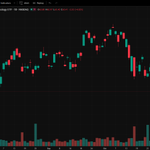
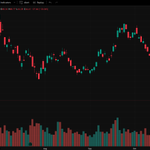

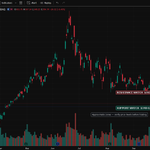


BIG TECH RALLIED. PARTS OF THE AI TRADE GOT HIT
The Dow surged nearly 3%. The S&P 500 gained 1.6%. The Nasdaq added 1.4%.
But the AI trade wasn't moving as one.
Big cloud platforms rallied, while parts of the data center and semiconductor supply chain struggled.
That's the split I'm paying attention to.
Not all AI companies have the same business model.
The big cloud players have established customers, recurring revenue and existing cash flow to support their AI investments.
Some infrastructure companies still need massive capital spending, outside financing and new customer commitments to keep growing.
That's a very different risk profile.
Going forward, I'm watching three things:
• Free cash flow — is AI spending actually paying off?
• Customer concentration — how dependent is growth on a handful of buyers?
• Returns on new investment — are these massive AI investments generating enough profit?
I'm still bullish on AI long term.
But I'm getting much more selective about where I want exposure.
The next winners may not be the companies spending the most on AI. They may be the ones making the most money from it

42
THE S&P 500 WAS GREEN TODAY. MOST STOCKS WEREN'T
The S&P 500 gained 0.4%. The Nasdaq added 0.8%.
But only 190 S&P 500 stocks finished higher. The equal-weight index slipped.
That's a pretty narrow rally.
Here's what I'm watching over the next few sessions:
If tech and high-beta names give back today's gains while market breadth stays weak, defense moves to the top of my watchlist.
$XLV — Healthcare. Demand isn't tied to the AI trade
$XLP — Consumer staples. People still need food and everyday essentials
$XLU — Utilities. Essential services that can attract defensive interest when risk appetite fades
One bounce doesn't fix a weak market.
Is this rally getting broader, or are investors quietly getting defensive?
8 STOCKS I'M WATCHING FOR THE NEXT 8 WEEKS
I'm looking for stocks with the potential to make a meaningful move before year-end
Not just great companies. I want a reason each stock could move over the next 8 weeks
Here's what I'm watching — and why
NEAR-TERM CATALYST
$EMR — Upcoming earnings. I'm watching order growth, automation demand and management's outlook
MARKET ACTIVITY
$CME — Trading volume, product mix and market volatility. More activity could translate into stronger revenue
$ICE — Exchange activity, mortgage-market conditions and growth in recurring data revenue
BUSINESS TREND CHECK
$ADP — Employment trends, client growth and the outlook for payroll-processing demand
$CB — Insurance pricing, underwriting margins and investment income
$PGR — Premium growth, claims costs and underwriting profitability
$TMO — Order trends and signs of a recovery in biopharma and lab spending
$DHR — Order growth and whether life-sciences demand is gaining traction
These 8 don't have the same catalyst strength — and that's exactly why I want to track them
I'll lock in the reference prices, track the key business signals, and explain what would strengthen or weaken each thesis over the next 8 weeks
Winners and losers. No cherry-picking. No moving the goalposts
Let's see which names actually deliver

3
89
What if the biggest winners of the AI boom aren't the companies everyone is betting on today?
Right now, most of the attention is still on chips, data centers and AI infrastructure
And for good reason. Someone has to build the foundation
But as investors start questioning the returns on all that spending, the next stage of the AI boom deserves more attention
The companies actually putting AI to work
Healthcare, financial services, enterprise software...
But not every company with an AI story will make the cut
I'm looking for companies already showing real results: growing revenue, cutting costs, or getting customers to pay for AI products
Because using AI is one thing. Turning it into earnings is another
The next winners won't just talk about what AI could do
They'll prove it in their earnings
2
52
Intel took the first hit. Who's next?


The most dangerous AI selloff is the one nobody takes seriously.
That's the boiling frog problem.
$AIQ ran from the mid-$40s to nearly $70. Now it's back near $63
No panic. Just another dip people want to buy
But what if this isn't the dip before the next leg up?
What if it's the start of a valuation reset?
I'm still bullish on AI long term. But I'm bearish on the idea that every pullback is a buying opportunity
The question isn't whether AI wins. It's how much you overpay to own it
I'm tracking whether $AIQ can stabilize — or whether lower highs and failed bounces keep building the case for more downside
Are you buying this dip — or waiting for more damage?

3
80
$INTC is down 30%
And the Q4 outlook explains why investors are worried
Intel guided for $15B–$16B in revenue, below the roughly $16.8B expected by analysts
Non-GAAP gross margin is expected to fall to 38%, down from 44.1% in Q3
PC weakness is getting worse, and an Israeli factory disruption is adding another $300M revenue hit
But data center and AI revenue grew 78% year over year
So here's the real question
Is Intel's turnaround still on track, or are the costs and delays starting to outweigh the progress?
I'm watching margins, PC demand and execution on the next product roadmap before calling this a dip worth buying

3
100
$AVGO's AI business is growing fast. But there's another number investors shouldn't ignore
Broadcom is helping finance a $63B AI infrastructure deal for Anthropic
And its latest filing puts the maximum potential liability under the new residual-value backstop at about $43B, undiscounted
That's not an expected loss. But it does show how much financial risk can sit behind the AI buildout
Demand is real. The question is how much risk comes with financing that demand🧵
1
1
206
Broadcom's latest quarter was impressive
AI semiconductor revenue hit $16.7B, up 221% year over year. Free cash flow reached $13.7B
But the AI story is getting more complicated
When customers need outside financing to build compute capacity, investors have to look beyond orders and revenue
They also need to watch customer credit, equipment value and the guarantees behind these deals
1
2
57
For $AVGO, I'm keeping the long-term AI story separate from the short-term trade
The business has real momentum. But I want to see the stock prove it can hold that momentum too
I'm watching the $346 area, then the recent highs around $351–353. Those levels matter because they mark the recent trading range, not because they're guaranteed support or resistance
A break below $338–340 would weaken the setup
Great company. Interesting AI exposure. Still needs confirmation
1
98
Yesterday, I asked whether AI spending is actually paying off
Today, the market is putting that question to the test
$GOOGL is under pressure as investors weigh massive AI spending against the cash it generates
$NOW is getting hit over weaker forward guidance, while $FTNT's softer service revenue outlook shows that even an earnings beat isn't always enough
But this isn't a blanket selloff across every growth stock
The bigger question is who actually captures the profits from the AI buildout
Chip designers, networking companies and cloud providers all benefit from AI demand differently. Revenue growth is one thing. Margins, pricing power and the cost of delivering that growth are another
After the close, I'm taking a closer look at one company positioned in the middle of this AI buildout
69
AI is growing fast. But the bill for building it is growing too 🦉
$GOOGL just posted 25% revenue growth. Search grew 12%, while Google Cloud surged 103%
But quarterly capex hit $51.4B, and free cash flow turned negative
$MSFT grew revenue 19%, with Azure up 48%. Its future-revenue backlog jumped 73% to $677B
The AI opportunity is real. The harder question is how much profitable growth all this spending will create

1
1
210
Here's the key difference between $GOOGL and $MSFT
Google has two growth engines: Search is still expanding, and Cloud is riding strong AI demand
Microsoft has powerful Azure growth and $677B in contracted future revenue
But neither Cloud growth nor a huge backlog tells us the full return on AI spending
Revenue is only half the story
1
1
159
One quarter of negative free cash flow doesn't mean $GOOGL's AI investments are failing
And $677B in Microsoft's backlog doesn't mean all that revenue will arrive tomorrow — or carry the same margins
What matters next is whether revenue growth can keep up with the cost of building AI infrastructure
I'll be watching capex, margins, free cash flow and forward guidance
The winners won't just be the companies spending the most on AI. They'll be the ones turning that spending into durable returns
I'll keep tracking whether the numbers back up the AI story
42
🦉AI infrastructure isn't dead, but the next opportunity may look different
$VRT and $MU are worth watching as real-world signals of continued AI infrastructure demand
Tonight, $MSFT and $GOOGL report after the bell. I'll be watching not just how much they spend on AI, but whether their results and guidance show that those investments are paying off
I'm also looking beyond infrastructure, especially at enterprise software, financial data and real-world AI applications
More spending alone isn't enough. The next winners will need to turn AI investment into measurable business growth
1
4
214
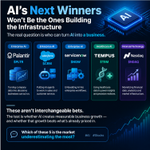
🚨The AI trade isn't just about who builds the infrastructure anymore
The next question is who actually turns AI into a business
I'm watching 5 stocks across 3 very different paths to AI monetization
Enterprise AI
$PLTR — Turning company data into decisions
$CRM — Putting AI agents to work in sales and customer service
$NOW — Embedding AI into enterprise workflows
Healthcare AI
$TEM — Using healthcare data to power insights and precision medicine
Financial technology
$NDAQ — Monetizing financial data, analytics and market infrastructure
These aren't interchangeable bets
The test is whether AI creates measurable business growth — and whether that growth beats what's already priced in
Which of these 5 is the market underestimating the most?
#AI #Stocks

1
4
221
Three stocks. Three different stories.
Now the numbers need to back them up
Since my original post:
$OLED : +10.2%
$CCL : +5.1%
$MP : +2.9%
But a stock going up doesn’t mean the thesis is playing out
$OLED reports tomorrow. Can revenue finally stabilize?
$CCL has strong booking and pricing trends. Can it keep turning that demand into earnings?
$MP reports Nov. 5. Will growth start showing up in profitability?
The real question isn’t which stock went up the most
It’s which one has the strongest fundamentals to back up its move
Which one would you put at the top of your watchlist right now?
The next big trade won’t necessarily be another AI stock.
I’m looking where demand is real — but the earnings story is still being tested.
3 names on my research list:
→ $MP — U.S. rare earths. Q2 revenue jumped 89% YoY, but the company still reported a GAAP net loss. Growth is real. Profitability still needs proving.
→ $OLED — Universal Display. OLED adoption has a long runway, but Q2 revenue fell 11% YoY. The opportunity isn’t the story alone — it’s whether growth reaccelerates.
→ $CCL — Carnival. Q2 revenue hit a record $6.7B, with adjusted net income up 20%+. Can strong bookings keep translating into earnings?
These aren’t buy calls. They’re three different setups worth investigating.
My filter is simple:
Demand → Revenue → Margins → Earnings.
A hot sector gets my attention. The numbers decide whether it deserves my money.
Follow me for stock breakdowns built around catalysts, financials, and downside risks — not hype.
Want the watchlist I’m researching?
DM me “WATCHLIST.” I’ll share the tickers and the key signals I’m watching.

2
81
🚨 3 stocks on my radar today. But I’d treat them VERY differently
$XNCR — Clinical data can send this thing flying… or reverse the move just as fast. I want to see buyers defend the gains and hold VWAP before considering a breakout
$RENT — Heavy volume got my attention. I want to see it build a base, then break above that range on stronger volume. No base, no chase
$CLRO — The one I’m most cautious about. It’s a tiny stock, and momentum without a clear catalyst can disappear fast. If liquidity dries up, I’m out
My rule is simple:
A stock being up 30% doesn’t mean you missed the move
But buying after the easy money has been made can be a costly mistake
I want to see price hold VWAP, volume expand, and a breakout actually stick
If it loses VWAP and can’t reclaim it, I walk away
Watchlist only. Not a buy signal
Which one would you trade — and what would make you walk away?
1
61
The biggest opportunity in the next 3 months might be hiding outside AI.
If AI stocks keep sliding, the question isn’t just how much lower they can go
It’s who benefits when the market’s favorite trade stops working
Energy is showing strength. Select financial and healthcare stocks are holding up, too
I don’t expect a new mega-theme to appear overnight. That could leave room for sharp rallies in sectors already showing relative strength
Not every dip is a buy. Not every rotation becomes a new bull market
I’ve picked 20 stocks across 4 sectors to watch for the next move. Tickers, catalysts and what I’m looking for in the replies 👇
1
3
78
3/4 — INDUSTRIALS & DEFENSE 🏭
This group needs more proof than energy or healthcare right now. I’m looking for real orders, execution and stocks beginning to regain leadership.
My 5 names:
$CAT — equipment demand + infrastructure exposure
$GE — aerospace demand + services
$LMT — defense programs + contract visibility
$CACI — government technology and defense contracts
$EXPD — global logistics and trade flows
The setup I want: improving relative strength, rising volume on breakouts and pullbacks that hold key moving averages.
This is a watchlist, not a claim that the whole sector has turned bullish. Confirmation comes first
1
15
4/4 — FINANCIALS 💳
If market leadership broadens, I want financials with durable earnings engines — not just a cheap valuation.
My 5 names:
$V — payment network + transaction growth
$MA — global payments + operating leverage
$BRK.B — diversified businesses + capital allocation
$JPM — scale, deposits and multiple earnings drivers
$MET — insurance and investment-spread exposure
My filter: relative strength, earnings quality, credit risk and trend structure.
$V and $MA have shown stronger price momentum. Banks and insurers need a different macro setup — especially if credit quality starts deteriorating.
A rotation only works if the underlying business supports it
14