

Our group @VHIO helps innovation in oncology by dissecting how aging causes cancer and translating it into improved cancer diagnostics and therapeutics.
Barcelona, Spain
Joined July 2022
- Tweets191
- Following414
- Followers1.4K
- Likes237
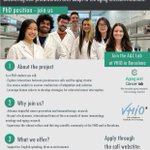




🔬 PhD Position
We're full of precancerous cells. So why don't we all develop cancer?
Aging can give these cells a competitive edge. What if we could take it away?
Join us to uncover how aging promotes colorectal cancer
Apply here:
vhio.net/vhio-academy-3/vhio…

Why do we lose vitality as we age? And why do we seem to catch every cold going around?
At today's Vall d’Hebron #PhDDay2026, our very own Ning Huang shared how her research on blood aging is challenging how we think about these questions.
Fantastic talk, Ning! So proud! 👏

Every morning, your cells anticipate breakfast. Every night, they prepare for sleep.
But what if our lives no longer match our cells' expectations?
We hosted Thomas Mortimer @VHIR_ to explore how disrupted circadian rhythms may connect aging and cancer.
#AgingAndCancer

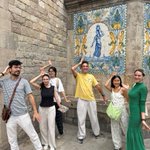
“We need a clue representing wisdom and healing,” Marc reads.
“A unicorn,” Francesca replies—pointing at one high on Barcelona Cathedral. She was right. 🦄
A fitting escape room for the Aging & Cancer Lab: helping the Timekeeper stop time from escaping us.


As labs grow, bottlenecks change.
We study how aging and chemotherapy disrupt metabolic supply chains in the body.
Now we are applying the same systems thinking to the lab itself.
This month we recommend Andrew Grove’s High Output Management.
amazon.com/dp/0679762884?lv=…

Why do aged or injured cells lose their ability to stay metabolically lean when nutrients are abundant?
We’re happy to welcome Saiprahalad Mani, joining us from Ludwig-Maximilians-Universität München for his MSc practical work.
Welcome to the Aging and Cancer Lab, Sai!

Hematopoietic stem cells face a central choice: divide or stay dormant.
In our lab seminar series, Patricia Herrero shared how this decision is shaped — and how aging and cancer therapy may reshape it.
Thanks to Patricia and the @BigSpinLab for an inspiring seminar.


#JournalClub
Colorectal cancer is often taught as one clone expanding toward malignancy.
But what if early lesions are polyclonal?
Hu, He and colleagues propose that multiple clones can cooperate early, before later transition toward monoclonal states.
nature.com/articles/s41586-0…

An almost empty 1970s-looking bar. An elderly owner solving crosswords. A few rundown tables. Two board games.
Not the obvious setting for a lab memory.
But playing miners and saboteurs there will quietly become part of our lab’s history.


What if precancerous selection is local?
Young et al. show that, in human bone marrow, clonal architecture can vary substantially within just millimeters of space.
A clue that local microenvironments may shape which clones expand.
#JournalClub
aacrjournals.org/bloodcancer…

Can the aged tissue microenvironment help predict cancer recurrence?
Welcome Adelina Gheorghe, a medical oncologist joining our team to test this question in the clinic and help move our findings toward better patient care.

Tumors don’t just experience stress — they weaponize it to evade immunity.
From our Journal Club: Bossowski et al. shows stressed tumor cells secrete LCN2, reprogramming macrophages to keep T cells out.
A link between stress responses and immune evasion.
nature.com/articles/s41586-0…

Your epigenome may record the exposures of your life.
At our Aging & Cancer Lab seminar, Silvana Maas (Seoane Lab) showed how lifestyle and environmental exposures leave marks on DNA that can be decoded to reconstruct exposures linked to early-onset colorectal cancer.

#JournalClub
Immune escape may be less about missing immune cells and more about how tumors reprogram surrounding stroma.
Ye et al. implicate senescent CAFs.
It raises a larger question: what gives rise to stromal states that constrain immune control?
aacrjournals.org/cancerdisco…

#JournalClub
Why does immunotherapy fail in most colorectal cancers?
Recent study shows it is not T cells, but TGF-β signaling in myeloid cells that blocks immune control. Turning it off restores T cell response.
Are myeloid cells the missing lever?
🔗 nature.com/articles/s41588-0…

Eric J. Chow et al. find that dexrazoxane given with doxorubicin in childhood cancer is linked to improved long-term cardiac function and lower risk of poor left ventricular function in adult survivors.
#JournalClub
ascopubs.org/doi/10.1200/JCO…
Piotr et al. report that intravenous iron in a mouse cancer model increases tumor iron, promotes tumor growth, and blunts anti-tumor CD8⁺ T cell responses, reducing immunotherapy/chemo efficacy.
#JournalClub
frontiersin.org/journals/onc…

A shared DNA methylation drift occurs with aging and tumorgenesis in the colon. Age-related inflammation and reduced Wnt signaling, which dysregulate iron metabolism and impair TET activity, drive this epigenetic drift.
#JournalClub
nature.com/articles/s43587-0…

Ferritin buffers intracellular iron and protects cells from iron toxicity. Yi et al. show that deleting the ferritin heavy chain (Fth1) impairs normal HSPC function but restricts AML progression and prolongs survival in mice.
#JournalClub
nature.com/articles/s41375-0…

The Maus Lab retweeted
A healthy forty-year-old swallows a pill every morning, not because they are ill, but to shape what might happen decades later.
Ten Drugs by Thomas Hager shows how medicines reshape not only health, but how we think, live, and build societies.
#labreads
amazon.com/Ten-Drugs-Powders…
