Director of Developmental Neurology Unit, Ospedale Bambino Gesù. Associate Professor, University of Tor Vergata. Chief Editor of Pain Research and Management
Roma, Lazio
Joined September 2011
- Tweets2K
- Following694
- Followers487
- Likes4.2K



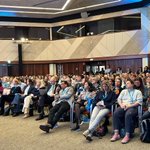

Today, at the @sinneurologia Congress, I presented the case of a 6-year-old girl with autoimmune nodo-paranodopathy, refractory to multiple immunosuppressive treatments, who showed a remarkable clinical improvement following anti-CD19 CAR-T cell therapy #SIN2026

I am very happy to announce the first Congress of the Child and Adolescent Neurology special interest group of @sinneurologia at @bambinogesu hospital
#children #adolescents #MultipleSclerosis #Headaches #RareDiseases #Stroke.

At #ICCN2026 I spoke of nociceptive brain potentials in a course of small fiber pathology @bambinogesu @unitorvergata
🤖 Made with AI

At #ICCN2026 speaking of neuroimaging in #migraine of children and adolescents @bambinogesu @unitorvergata

Happy to share our latest review article addressing a relevant issue for patients with #MS: How do patients with MS perceive their own bodies?
@bambinogesu @aism_nazionale @tor
frontiersin.org/journals/psy…

We have just published this interesting case of a child with #Marfan syndrome, who developed idiopathic intracranial hypertension (#IIH) @bambinogesu @to
mdpi.com/4017520 #mdpilife via @Life_MDPI

Special thanks to Dr. Licia Grazzi and @NeuroBesta for the interesting meeting on #migraine of #children and #adolescents. A great opportunity to discuss of the therapeutic perspectives with @aynurozge1 and other collegues – at Rome, Lazio


Happy to share our last paper showing how challenging the diagnosis of #migraine in #children and #adolescents may be
@bambinogesu @unitorvergata @SISCCefalee @sinneurologia @ihs_official @EHF_Official
journals.sagepub.com/doi/10.…

max valeriani retweeted

COSA DEVE FARE IL GENITORE DI UN BAMBINO CON MAL DI TESTA?
Prof. Massimiliano Valeriani, Professore associato di Neuropsichiatria Infantile Università degli Studi di Roma Tor Vergata e Direttore della UOC di Neurologia dello Sviluppo dell’Ospedale Pediatrico Bambino Gesù IRCCS.
National #headache day at @bambinogesu hospital. Fruitful meeting with the parents of #children and #adolescents suffering from #migraine @SISCCefalee @ihs_official @EHF_Official


max valeriani retweeted

New in Cephalalgia!
In migraine of children and adolescents, brain networks play different roles by sex: males show altered sensory–affective circuits, females altered cognitive–attentive ones—the instruments and conductors of pain processing.
journals.sagepub.com/doi/10.…
#migraine #headache #brain #pain #neurology #neuroscience
@maxval67

max valeriani retweeted

A new study analyzed treatments for medication-overuse headache. The most effective approaches combined migraine prevention treatments with nerve blocks or anti-CGRP therapies. In contrast, stopping medication wasn’t very effective. doi.org/10.1186/s10194-025-0…

We investigated #MR morphometric similarity in #children and #adolescents with #migraine. Distinct features separating girls and boys may represent a potential structural signature of sex-specific disease mechanisms.
@bambinogesu @unitorvergata
journals.sagepub.com/doi/10.…
Happy to share our review on #biomarkers of #migraine in #children and #adolescents. Much remains to be done to provide clinically useful insights, but this is the way forward. @EHF_Official @SISCCefalee @bambinogesu @unitorvergata
rdcu.be/fbOjI
Happy to share our review article showing the psychosocial consequences of #pediatric #stroke @bambinogesu @unitorvergata @sin
frontiersin.org/journals/psy…

The @SISCCefalee school on #headaches of #children and #adolescents ended today. Two fruitful days with dynamic discussions and presentations of clinical cases.

max valeriani retweeted

A Delphi Consensus developed by a panel of 53 Editors-in-Chief of Anaesthesiology and Pain Medicine journals to guide the responsible use of Large Language Models (LLMs) in academic publishing. bjanaesthesia.org/article/S0…

max valeriani retweeted
New in Cephalalgia!
2025 Highlights in headache in children and adolescents
Laura Papetti
• Migraine in young people is no longer seen as just a neurological condition — it’s a developing, biopsychosocial process shaped by brain, behaviour, and environment
• 2025 research highlights how psychological factors, resilience, and early life experiences strongly influence migraine severity and long-term outcomes
• Studies show that anxiety, depression, pain catastrophising, and multisite pain can all affect disability and treatment response
• Education matters: stigma often begins in adolescence, making awareness among parents, teachers, and caregivers a vital part of care
• Early psychological, educational, and biopsychosocial interventions can change the trajectory of migraine across the lifespan
• A key focus for the future: integrated care models and smoother transitions from paediatric to adult services
• Bottom line: supporting a child with migraine today helps shape a healthier adult tomorrow
More Cephalalgia 2025 editorials coming soon — stay tuned.
journals.sagepub.com/doi/10.…
#migraine #headache #brain #pain #neurology #neuroscience

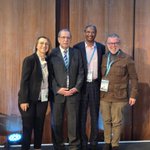
Meeting this friends at #EHC2025 and discussing with them about #headaches of #children and #adolescents was really incredible! @aynurozge1 @EHF_Official

Impressive participation at the pediatric session of @EHF_Official #EHC2025. #Headaches of #children and #adolescents do matter! @aynurozge1