


eIisa retweeted

The motion to keep the Long COVID expertise centres and maintain long term investment in PAIS has been APPROVED.
Congratulations to everyone who has played a part in making this happen.
Now to figure out what this means concretely for the future.


eIisa retweeted

NIH announced a new Vaccinology and Immunology Center, with several hundred patients expected.
Researchers will investigate the biology of Long COVID and illnesses following vaccination, identify risk factors, and explore treatments.
nih.gov/about-nih/nih-direct…

eIisa retweeted

Thanks to collaborations with @MichaelPelusoMD, @PutrinoLab, @VirusesImmunity, @nualameyer and the help of @polybioRF @microbeminded2, we were able to perform these analyses on over 500 samples from hundreds of people with LC, recovered controls, and acute SARS-CoV-2 infection.

eIisa retweeted
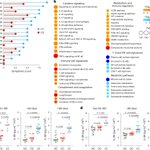
Harvard researchers studied 106 people and found that Long COVID is linked to disrupted fat metabolism, increased inflammatory enzyme activity, and reduced molecules that help resolve inflammation.
cell.com/iscience/fulltext/S…

eIisa retweeted
Our study on virus-specific T cell activation in Long COVID (LC) is up on bioRxiv! We identify a subset of people with LC with persistently elevated activation of CD8 T cells targeting spike and/or EBV lytic antigens, consistent with viral persistence.
biorxiv.org/content/10.64898…

eIisa retweeted

Our new work using virus-specific T cells as biosensors in Long COVID. These data point to viral persistence detected by T cells and some level of T cell exhaustion. Excellent work by @markmpainter biorxiv.org/content/10.64898…
eIisa retweeted
University of Pennsylvania researchers studied over 300 people and found 40% of Long COVID samples had elevated SARS-CoV-2-specific CD8 T cell activation, with signs of exhaustion and reduced function.
This supports persistent viral antigen stimulation.
biorxiv.org/content/10.64898…
eIisa retweeted

Breaking: PolyBio-Supported Preprint Finds Persistently Activated Virus-Specific T cells in a Subset of People with Long COVID
👉🏻Virus-specific immune cells show signs of ongoing stimulation and impaired function in a subset of people with Long COVID, offering a potential way to guide targeted clinical trials
1/

eIisa retweeted

This is a beautiful way to visualize the pathophysiology.
B cells at different stages of differentiation occupy different compartments, express different surface markers, and drive different pathologies.
Based on this biology, it'd make sense that (for example) lupus would respond best to anti-CD19 therapies, while Sjögren’s would respond best to anti-BCMA -- though how that shakes out in trials isn't fully known.


Next-generation immune cell engagers for B cell depletion in autoimmune diseases
nature.com/articles/s41573-0…
rdcu.be/NecnUNkptUFa
This Review discusses the principles guiding the design of immune cell engagers and emerging stratgeies to improve safety and durability of response

eIisa retweeted
How many of these have genuinely new mechanisms? By my count, 23.
Vepdegestrant – first PROTAC
Daraxonrasib – first multi-selective RAS inhibitor
Oveporexton – first orexin receptor agonist
Baxdrostat – first aldosterone synthase inhibitor
Atacicept - first dual BAFF/APRIL inhibitor
Icotrokinra – first IL23 receptor antagonist
Apitegromab – first myostatin activation inhibitor
Pivekimab sunirine – first CD123 ADC
Gedatolisib – first combined pan-PI3K and mTORC1/2 inhibitor
Brepocitinib – first combined TYK2/JAK1 inhibitor
Bulevirtide – first NTCP inhibitor (blocks hepatitis D entry receptor)
Islatravir – first nucleoside reverse-transcriptase translocation inhibitor
Rusfertide – first hepcidin mimetic
Zilganersen - first GFAP-targeting antisense therapy
Garetosmab - first activin A-neutralising antibody
Zilurgisertib – first ALK2/ACVR1 kinase inhibitor
Pegzilarginase – first arginase-1 enzyme replacement therapy
Pritelivir – first HSV helicase–primase inhibitor
Relacorilant – first glucocorticoid receptor antagonist to improve chemotherapy sensitivity
Tavapadon - first selective D1/D5 agonist
Tividenofusp alfa – first TfR-mediated IDS enzyme delivery
Centanafadine – first triple noradrenaline/dopamine/serotonin reuptake inhibitor
Tiratricol – first thyroid hormone analogue that works independently of MCT8


eIisa retweeted

Lots is happening in the world of clinical trial reform!
I decided to put together a list - all of this was announced since June - and shared some thoughts:
abundanceandgrowth.org/p/is-…


eIisa retweeted

Invivyd and the SPEAR Study Group Announce Initiation of “FLINTLOCK” Phase 2 Study of VYD2311, a Monoclonal Antibody for the Potential Treatment of Long COVID or Post-Vaccination Syndrome investors.invivyd.com/news-r…


eIisa retweeted

Bis zu 80.000 Menschen in Österreich leben mit ME/CFS. Die schwere Erkrankung ist noch wenig erforscht. Das wollen wir ändern, indem wir zwei neue Forschungsprojekte mit rund 2 Mio. Euro fördern. Für Betroffene gibt es ab 2027 mit dem PAIS-Zentrum auch eine eigene Anlaufstelle.
eIisa retweeted

The team at La Trobe University in Australia, including Dr Sarah Annesley and Dr Daniel Missailidis, have published a study acknowledging funding from ME Research UK, which provides evidence of altered lipid metabolism in ME/CFS.
Read more: tinyurl.com/yv4mmvtn

eIisa retweeted
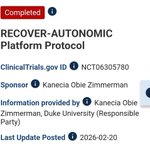
NIH RECOVER is launching a new wave of Long COVID pathobiology studies using 1.5 million biosamples.
The focus is shifting from symptom clusters to biological endotypes, including viral persistence, immune mechanisms and biomarkers.
recovercovid.org/news/new-pa…

eIisa retweeted

Mein Name ist Antonia und ich freue mich sehr, Guardian4ME zu sein.
Mein persönlicher Bezug zu ME/CFS ist meine beste Freundin Carmen, die nach einer COVID-19-Infektion schwer erkrankt ist.
Seitdem gibt es für mich keine sinnvollere Aufgabe, als alles dafür zu tun, dass ihr und den Millionen Menschen weltweit, die mit ME/CFS leben und noch immer weitgehend im Stich gelassen werden, geholfen werden kann.
Deshalb setze ich mich gemeinsam mit WE&ME für mehr Aufklärung und dringend benötigte Forschung ein.

eIisa retweeted

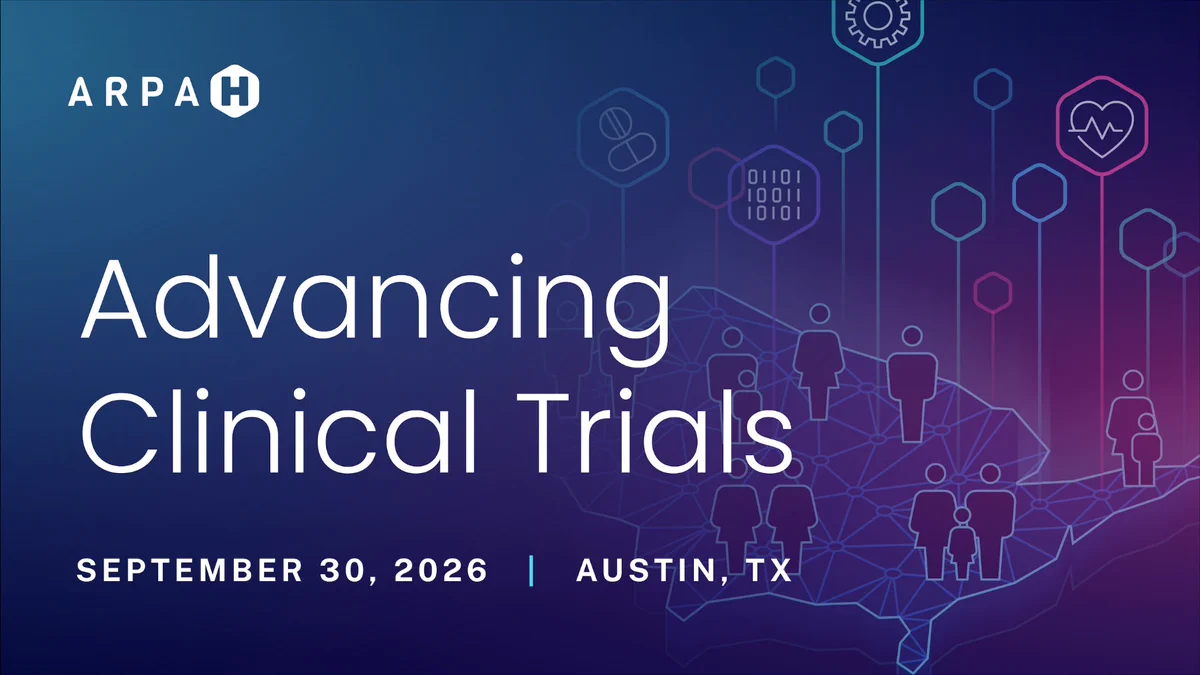
Clinical trials still move like it’s 1995.
A decade of waiting, $1–2 billion spent, and a 90%+ failure rate on a clunky, fragmented system.
ARPA-H’s SURPASS program is rethinking the entire clinical trial model.
Adaptive platforms, predictive models, real-time analysis, and AI will make trials faster and cheaper so treatments reach patients years earlier.
Ready to stop waiting? Learn more about SURPASS ➡️arpa-h.gov/explore-funding/p…
eIisa retweeted
How ARPA-H is planning to cut clinical trial times from 10+ years to <4 years:
1. 'Phaseless' clinical trials - move towards replacing phase 1 → 2 → 3 with adaptive trials that can cut failed drugs (or advance good ones) faster.
2. Simulate trial outcomes before starting, with digital twins - to reduce reliance on large control groups.
3. AI agents for trial operations.
4. Turn ordinary hospitals into reusable clinical trial sites, and gets AIs to flag eligible trials to doctors and patients.


ARPA-H Advancing Clinical Trials Announcement teapaw.org/i/broadcasts/1vKpPNOwV…