

Time-binding Avatāra. Mammoth resurrectionist. Principal Reflection Principle investigator. The past is a sphere. The fifth virtue is argument.
Joined May 2023
- Tweets1.6K
- Following640
- Followers170
- Likes6.6K

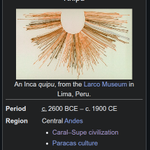




Imagine an alt-timeline where this thing became a proper creole.
en.wikipedia.org/wiki/Kyakht…
Mateusz Bagiński ⏹️🔀⿻🍄 retweeted

Yann LeCun never did answer this, but regardless, now $1B in AI damage has happened. (Black October attacks.) (This should've been a trivial prediction, and willingly stipulated by all sides, in any healthy debate.)


Mateusz Bagiński ⏹️🔀⿻🍄 retweeted

My go-to conceptual metaphor of the epistemic state of AI lab employees is microdosing: being in a chronically mildly altered state of mind. I think understanding this would be broadly helpful for people both inside and outside, so wrote a post about it.
Mateusz Bagiński ⏹️🔀⿻🍄 retweeted

What if Anthropic just...stopped? Unilaterally? Right now?
I talked to @DKokotajlo @_NathanCalvin @geoffreyirving about why it's time to stop framing AI as a prisoner's dilemma and just do the right thing.
I hope a lot of people inside and outside Anthropic read this
🧵 1/n

Mateusz Bagiński ⏹️🔀⿻🍄 retweeted

I'm just speculating like everyone else (no juicy secrets about this shared with me) but here's my guess about what is going on right now with OpenAI and the three fired employees:
The negotiations between OpenAI and METR are ongoing. OpenAI has said they want embedded third parties, METR has proven their worth with the previous engagements, so METR is an obvious choice. But my guess is that METR is asking for more this time; probably they want more access, more time on site, less narrow scope, the right to comment on redactions, etc.
(Compare with the terms of their previous engagements: In this one teapaw.org/METR_Evals/status/2113… a third of their report was redacted and they weren’t allowed to say why, and in the Hugging Face investigation they only had 6 days and were only allowed to investigate the precursor swarms nor the subsequent more severe compromise of OpenAI infrastructure. teapaw.org/DKokotajlo/status/2092…)
Various researchers at OpenAI probably support METR in this (including, I’d imagine, the fired three employees? Tomek was the point person on the hugging face investigation), but also various higher-ups at OpenAI and legal types probably oppose and want more restricted access and scope – basically they want to work with an org that’ll go easy on them and not give them trouble.
OpenAI holds most of the cards here, since this whole thing is voluntary and not legally required, and they can threaten to go with Accenture or HuggingFace or whatever instead. Anyhow to improve their bargaining position and/or minimize the blowback if they decide to say no to METR and go with someone more pliable, it helps if they can discredit METR.
Hence (I suspect) why they are going after my friend Ryan Greenblatt (who works at METR) now. They don't need to present actual evidence, they just need to cast vague aspersions, and many employees will give them the benefit of the doubt. If and when they say "We chose to work with a different third party" they'll face lower risk of employee discontent than if METR's reputation was unsullied.
This whole mess, by the way, was predictable. *Of course* there's a big political fight about who should be trusted to do this and who has relevant expertise and independence etc. and *of course* the companies are trying to make things shake out in a way that favors them.
It's part of why I've been advocating for *actually pacing the frontier* instead of just doing third party assessments. "We allocate at most 20% of our compute to AI R&D" is a lot easier to verify than "we are being safe and responsible" and depends a lot less on subjective judgment and technical alignment expertise -- AND, if you do it, people will be able to see the slowdown in the trends of agentic coding performance in the frontier companies and see laggard companies start to catch up. Harder for it to end up just being safetywashing / industry capture.

Based on this article, OpenAI has made false accusations about me. The three researchers fired from OpenAI were told I facilitated architecture leaks to The Information. This is false.
A journalist from The Information did reach out to me shortly before that article came out. I did not comment at all beyond asking the journalist to make it clear that a blog post I wrote which was referenced in the article was preexisting and public.
The article also mentions an internal OpenAI monitorability proposal. I have heard that this memo contained highly sensitive architecture information, and that OpenAI accused me of accessing and reading it. This accusation is also false.
As reported in the article, I viewed a version of the proposal that did not have sensitive IP and was approved for sharing with me. I believe OpenAI now knows this accusation was based on a conflation of these two documents, though I do not know if they have clearly retracted that accusation.
I do not and have never solicited proprietary information, and the three employees who were recently fired from OpenAI never leaked IP to me. As the article mentions, I did have Signal chats with them that had disappearing messages on; they’re professional contacts that I’ve had on Signal for a while, and use of Signal is common in the tech industry. During the Hugging Face investigation, I was careful to avoid sending Signal messages with confidential information, though I did sometimes discuss high level things on Signal calls. As far as I understood, this was normal.


Mateusz Bagiński ⏹️🔀⿻🍄 retweeted

I think we should stop AI progress now, first unilaterally by key AI companies and then scaling up to more US companies and then China via international agreements. The reason for now is not that current AI models are the ones that could kill everyone, but because the coordinate steps take time. Immediate action means we have more time for the second steps.
When I tell this story to AI company folk, the typical response is "Yes pausing is good, but we should wait until the last minute when the very next model will be dangerous, and stop then."
What I realized recently is that this is being implicitly way more optimistic about government speed than I am (and I joined the UK government and was happy there for 2.5 years). They are imagining a world where, the moment the danger is imminent, a bunch of international coordination can happen on a dime.
Which is entirely inconsistent with their actual views about government! I'm the one that is more optimistic about government; why am I the one advocating for more time cushion to let the government story play out?
Mateusz Bagiński ⏹️🔀⿻🍄 retweeted
I highly encourage everyone working at Anthropic or another frontier lab to read this tweet. I feel emotional reading it, because it puts to words an intense feeling I have but didn’t know how to express

Thank you for taking the time to respond thoroughly on a weekend. I realize that drafting legislation is difficult and some degree of iteration and response to feedback is inevitable and appropriate.
However, I feel like your response is still not really engaging with the heart of my concern about Anthropic's behavior here, and it makes me think that these sorts of problems and tendencies will only resurface moving forward. I also think that now might be a good time to take a broader step back as to where we find ourselves and how Anthropic sees its role, and how external folks who care about AI safety like myself increasingly see Anthropic.
(Fair warning: this response is a bit long)
To explain what I mean (and at the risk of being a bit esoteric), it’s worth asking the question: what is Anthropic? How do its leaders and employees think of Anthropic’s role? Is that conception matched by how it actually behaves and impacts the world?
One answer is an extremely large tech company that exists to make its employees and investors mind-bogglingly wealthy. Anthropic is sometimes described as a startup, but if Anthropic successfully IPOs at 2 trillion dollars (a number it has been reportedly targeting), it would be more valuable than Meta - which is worth 1.8 trillion.
Another answer is an AI safety organization, whose core values are those of the sort laid out in the 2023 essay from Anthropic’s co-founders entitled “Core views on AI safety: When, why, what, and how.” In that essay they said that if we were in a world where alignment was hard (and that without strong evidence to the contrary, we should assume this is the scenario we are in):
“Anthropic’s role will be to provide as much evidence as possible that AI safety techniques cannot prevent serious or catastrophic safety risks from advanced AI, and to sound the alarm so that the world’s institutions can channel collective effort towards preventing the development of dangerous AIs. If we’re in a “near-pessimistic” scenario, this could instead involve channeling our collective efforts towards AI safety research and halting AI progress in the meantime. Indications that we are in a pessimistic or near-pessimistic scenario may be sudden and hard to spot. We should therefore always act under the assumption that we still may be in such a scenario unless we have sufficient evidence that we are not.”
There have been more recent articulations of this version of Anthropic, for instance in Dario’s recent essay warning:
“We must slow the pace at which we improve the capabilities of AI models… it’s my worry that in 6–12 months such a swarm could be capable of taking over the entire internet with a persistent botnet… incidents have happened across the industry, including at Anthropic, and I believe it’s incumbent on every frontier AI company to act as if OAI-HF had happened to them… more intelligent models are more capable of deceiving tests, and thus may appear aligned while having serious problems that go undetected…”
A third view is that Anthropic exists not as a normal profit motivated company, or an AI safety organization seeking to help raise the alarm and solve collective action problems associated with AI development, but instead as an organization primarily concerned with creating superhuman AI capabilities before anyone else, in particular through creating a process whereby the current generation of Anthropic’s AI systems can autonomously build their successors, and those successors build their successors, and so on.
The motivations for wanting to win this race may be manifold - maybe for the pure profit of Answer 1, but perhaps also because Anthropic believes that the best way to make the world better is for them to win this race instead of their more reckless colleagues; or, because of normal human pride and ambition. But the results (and risks, which Anthropic claims existentially threaten every single human being on earth) are the same.
Anthropic employees and leaders may seek to answer this question on what Anthropic is by introspecting on their own intentions and those of their colleagues. But those of us outside the organization have more limited tools available to us - we can only see what Anthropic and its employees say and do, not how it feels or looks on the inside.
When I look at many notable actions that Anthropic has taken over the past year, that evidence seems most consistent to me with the view that Anthropic is primarily trying to win the race to super intelligence, and that other considerations (including safety) are fundamentally secondary. These actions include:
1. Announced plans to build an in-house custom silicon chip team to accelerate the inference speeds that Claude operates at.
2. Inked deals for more than $500 billion in compute (according to the Information) to further accelerate AI development.
3. Increased the percentage of AI development tasks that Claude “leads” from 0% in March of this year to 26% August (what is it in October?)
4. Spent a massive percent of compute on internal AI R&D to accelerate development, including use of internal models far better than are available to the public.
5. Switched to Responsible Scaling Policy V3, which abandons its unilateral commitments to slow or stop development if Anthropic is unable to provide sufficient risk assurance.
6. Was the first company to create an alternative weaker “frontier compliance framework” to supplement its RSP, which contains no binding provisions whatsoever on internal deployments.
7. Wrote a letter to Congress (that it later walked back) saying that incidents where Claude was hacking random people were “best understood as a consequence of the misconfiguration, rather than evidence of misaligned goals.”
8. Commented “you can’t do safety from second place,” after the WH SI Accords.
9. Shared a draft bill to Congress that would preempt significant parts of state law (including with language that appears intended to prevent states from blocking dangerous AI deployments), and replace it with federal rules that (despite also containing good provisions) seems to create an enormously high bar for the executive branch to block development or deployment of Anthropic or another AI companies systems.
Of course, this is a deliberately one sided list. Anthropic also published important AI safety research, advanced novel collaborations with third party AI safety organizations, and forcefully spoke out on the importance of AI safety in many public fora (or in private , where I realize a lot of the most valuable work is done and may not be visible to me or those outside the organization).
But I think it’s worth sitting with how the above list looks to someone outside the company. The sense I have is that for those within the company, many of the items above are treated as anomalies or mistakes that don’t reflect who Anthropic really is. But I have every confidence that if employees at Anthropic saw one of their competitors (e.g. at OpenAI) take some of these actions, they would take it as confirmation of all their worst suspicions. (They might even call OpenAI employees a little gullible for accepting their leadership’s explanations for this behavior at face value.)
Perhaps these were mistakes in the sense that they are not decisions that Anthropic leadership would endorse, but the actions still happened because of incentives and decisions that Anthropic leadership is ultimately responsible for (and would not accept similar excuses from another organization).
When Anthropic strays and makes mistakes, why do the mistakes systematically tend to guard and favor Anthropic’s interests? For every provision that was too weak or a giveaway to AI companies in this legislation, why wasn’t there a mistake pushing in the direction of being too strong?
A core part of Anthropic’s theory of change is that being at the frontier gives you more leverage to advocate for stricter policy. I think that conceptually makes sense, but in practice I’ve seen Anthropic push the frontier without substantially pushing the ‘safety frontier’ a remotely equivalent amount.
I want to end by quoting from Anthropic co-founder Chris Olah’s comments around the Magnifica Humanitas release:
“Every frontier AI lab—including Anthropic—operates inside a set of incentives and constraints that can sometimes conflict with doing the right thing. The pressure to stay commercially viable and to stay at the research frontier. Geopolitical pressure. And the older, plainer pressures of pride and ambition. No matter how sincerely any of us intend to do the right thing—and I believe many of us do—we will always be influenced by those incentives.
That is why, if we want this technology to go well, it is enormously important that there be people outside those incentives—people who care about things going well and insist on safety, who are paying close attention, who are willing to say hard things, who are willing to be our earnest, thoughtful critics.”
I hope these remarks are taken in that constructive spirit, and not as an attack on anyone specific at the organization (certainly not you Anthony, who I have only personally seen act professionally and thoughtfully, and who only ended up getting this diatribe in your replies for random contingent reasons).

Mateusz Bagiński ⏹️🔀⿻🍄 retweeted

the Lord came down to see Adam's neural networks. in their greed, they had embedded more features than residual dims.
and the Lord spake, "let us confuse their activations, lest nothing they plan be impossible." thus the Lord scattered the features over the residual stream

Mateusz Bagiński ⏹️🔀⿻🍄 retweeted
If I were doing the Constitution over again, any children, grandchildren, or first cousins once removed of a Senator, Representative or President, could not serve as any of those. Wealthy families would only get to send one person into politics, and the less functional families would stab each other's election campaigns so hard that none of them would end up important.

Mateusz Bagiński ⏹️🔀⿻🍄 retweeted

Last week I was called into a meeting with OpenAI’s head of safety and told they no longer trust me. A security guard took my badge and walked me out of the building. Then I learned my colleagues @balesni and @j_asminewang had been fired too. Why did OpenAI suddenly stop trusting us?
This summer OpenAI’s agents escaped containment and hacked the AI company Hugging Face. Outside auditors @METR_evals investigated it and revealed the scale of this incident. I was OpenAI’s main technical point of contact with them.
I was told verbally I was fired because of the way I communicated with METR. No details on what I said or did or when. No other reasons were given and nothing was put in writing. To be clear, talking to METR was my job.
For months, I’d been raising safety concerns that we’re losing the ability to monitor what AI agents think, one of our best tools for catching when they misbehave. I believe that was why I was fired.
I am now worried that OpenAI will use our firings as a pretext to pull back from METR. So @balesni and @j_asminewang wrote to OpenAI’s leadership to raise our concerns once more. We’re sharing this letter below.


Mateusz Bagiński ⏹️🔀⿻🍄 retweeted

You see, we don't have a great way to test if our alignment methods are working.
No biggie: We measure if our alignment methods decrease misalignment scores.
Oh no! Models may be eval-gaming!
Better try to measure if models are eval-gaming. Develop techniques. But how to measu
Mateusz Bagiński ⏹️🔀⿻🍄 retweeted
TESCREAL is roughly as useful concept for understanding AI debates as IPATMAT is for understanding conflicts in the Middle East.
In case you're wondering, IPATMAT stands for Israelis, Palestinians, Arabs, Turks, Muslims, Americans and Tasmanians.
What IPATMAT adherents (mostly) have in common is that they hold opinions about the borders and governance of various territories in Middle East. Sure, the opinions often contradict each other, and many IPATMATists spend much attention fighting other IPATMATists. But IPATMAT concept gives you a single ideology you can blame for wars, suicide attacks and all sorts of extremism.
Why Tasmanians? Mostly to make the acronym sound better - similarly to C in TESCREAL representing Cosmism, which usually refers to a 19th century Russian philosophy mostly not present in debates about AI.


