

building apps and dashboards. notes on every tool i use to build them. https://teapaw.org/t.co/wjx9TkbkbB · https://teapaw.org/t.co/2YG1CjtK8f · member @SuperteamAE
Hacker House
Joined July 2025
- Tweets2K
- Following306
- Followers1.2K
- Likes4.9K





MO retweeted
the screen that surprised me most while building accrue:
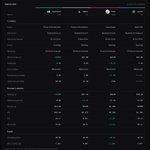
@Pumpfun pays you 19.8% a year and trades at 2.25x P/S which is 82% below the market median.
either the market is wrong or it knows something you don't.


introducing Accrue: the valuation desk CT never had.
Everyone values a token by its revenue, but most of that revenue never reaches you.
Accrue shows what reaches you and what you pay for it.
go find what's mispriced: tokenaccrue.xyz
MO retweeted
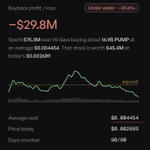
oh also another banger data point you can find on tokenaccrue.xyz is the team's average buyback cost.
for @Pumpfun it's $0.0044 which is ~40% underwater...

the screen that surprised me most while building accrue:
@Pumpfun pays you 19.8% a year and trades at 2.25x P/S which is 82% below the market median.
either the market is wrong or it knows something you don't.
MO retweeted

good tool for those who want to track rev stage crypto projects
introducing Accrue: the valuation desk CT never had.
Everyone values a token by its revenue, but most of that revenue never reaches you.
Accrue shows what reaches you and what you pay for it.
go find what's mispriced: tokenaccrue.xyz
MO retweeted
introducing Accrue: the valuation desk CT never had.
Everyone values a token by its revenue, but most of that revenue never reaches you.
Accrue shows what reaches you and what you pay for it.
go find what's mispriced: tokenaccrue.xyz
MO retweeted
been working on this with a few of my friends.
took all the issues we had managing a small startup team, release procedures, the sandboxing system we optimized internally and now it's getting ready
until now i would say this is way better than any tools and flow we used (i'm sure we are one of the most active teams for testing and finding new tools and using them in our business)


MO retweeted

POV: you buy from
ledger = address leaked
resellers = funds lost


Ledger is investigating reports of loss of funds from users in South East Asia who purchased products from a reseller named CryptoBillis. As a precaution, and pending the results of our investigation, we have asked CryptoBilis to pause all sales and shipments of Ledger devices. We recommend Ledger users who purchased from this reseller in the last 90 days to not initiate set up if you have not done so yet. If you have set up your Ledger device, consider moving assets to a new Ledger signer (with new seed). We will continue to inform customers of updates as the investigation progresses.
Reach out to Ledger customer support through official channels with any questions: support.ledger.com/
MO retweeted

Introducing Blanket!
Blanket helps small businesses find relevant @Kalshi markets for hedging risk and running promotions.
Describe your business risks and it will help identify the Kalshi markets that fit.
Blanket is a research product and will be open sourced after testing.
MO retweeted
There was never a market for what an asset is worth in a future that has not arrived and Multiverse markets are that market!
I wrote a piece on how they work and where they break.
The odds were never the point, the world was.

MO retweeted

a mechanism x chain map of the prediction market landscape, and it tells you exactly where the space actually is versus where it thinks it is
1/ it's still overwhelmingly binary. binary markets dominate every chain, 15 on solana, plus base, arbitrum, bnb, and a long tail everywhere. this is the prototype phase
everyone building the same yes/no primitive on a different chain
2/ now look at the rows that barely have entries. continuous and distribution markets, 2. scalar, a handful. multiverse, a couple. the hard stuff is empty precisely because it's hard
the other tell is that infrastructure and tooling is the second most populated row, 13 on solana, 10 on polygon. builders clearly sense the real value is in the rails, not another front-end. i believe that instinct is right
solana is the center of gravity by a wide margin, with base quietly picking up the consumer and information market builders
the category is wide but shallow. tons of binary clones, a thriving infra layer, and a nearly empty frontier where the continuous, scalar, and multiverse mechanisms live
if you can, start building in the rows everyone else left blank

MO retweeted
Polymarket shows you one parlay price and charges you another.
the one it shows comes from the help page, a combo pays by multiplying the leg probabilities together.
but the one it charges comes from a dealer auction you never see and the dealer does not use that math. with a 40¢ leg and a 50¢ leg, the help page says 20¢ but the fills say more.
I measured the difference across 300 real fills, every leg rebuilt at its price the moment the combo filled. 285 of 300 landed above the product of their legs, even at ask prices. the median fill pays about 22% less than the multiplication implies, and simple two leg combos floor around 1.11x the product.
one exact score leg never traded above 3.7¢ in its whole window and its combo filled at 9.4¢, a price that cannot happen in coherent math.
there is also a fee in no documentation, roughly 5% of notional scaled by one minus the price, sitting right in the fill data.
to be fair, part of the gap is earned. correlation is real work to price and a dealer carrying a parlay to settlement is underwriting a real tail.
the problem is the interface teaches independence math the dealer never uses, so users read the price as the odds when it is the odds plus the house's whole opinion of them.
the dealer prices correlation, the interface teaches multiplication. the gap between those two stories is the real fee, and nobody sees it until asking.
all of it is public data, the method and dataset reproduce from the venue's own endpoints.
the next generation of venues has to price correlation in the open and whoever shows the joint math honestly turns this seam from a fee into a market.


MO retweeted
Been calling passive PM makers underwriters since june and someone finally measured it.
Palumbo reconstructed the passive maker book on @kalshi NFL moneylines and the P&L comes from outcome risk carried into settlement more than from the spread, about $29M held through the whistle.
LPing a binary venue is selling insurance with the premium set by accident.
makers get paid for liquidity. underwriters get paid for carrying the result. binary venues sell the first story and run the second.

MO retweeted

very interesting paper that i am just seeing now, guess it flew under the radar here on prediction market X because it comes from draftkings and has uncomfortable regulatory implications
i do agree with the take though, a lot of the algorithmic strategies are more akin to underwriting than market making
the paper itself is also pretty short so definitely worth a read if you missed it
Been calling passive PM makers underwriters since june and someone finally measured it.
Palumbo reconstructed the passive maker book on @kalshi NFL moneylines and the P&L comes from outcome risk carried into settlement more than from the spread, about $29M held through the whistle.
LPing a binary venue is selling insurance with the premium set by accident.
makers get paid for liquidity. underwriters get paid for carrying the result. binary venues sell the first story and run the second.


MO retweeted
compress the last 50 years of markets and almost every wave that pulled new people in came from one of two things:
1- new assets to trade
2- new ways to trade
these two are the closest thing i can find to what actually onboards the next wave of users into crypto.
i've been talking to a lot of people about this lately, and a lot of them land on the same thesis: "new markets are the whole game."
what stuck with me is that this pattern isn't new at all, it's basically the whole history of modern markets.
people have always wanted to trade new assets and price new metrics, and every time a way opened up to do it, a new cohort showed up:
- early 70s, futures broke off from physical commodities and went abstract. first currencies (CME, 1972), then rates, then the index itself (S&P 500 futures, 1982). suddenly you could take a position on something that wasn't even a "thing."
- 1973, CBOE and black scholes standardized the option. a genuinely new way to trade: pricing volatility and optionality, not just direction.
- 1993, the ETF (SPY) made an index trade like a single stock. then VIX turned volatility itself into something you could buy.
- and in crypto we lived it. perps and AMMs were the new ways to trade; tokenization made brand new assets liquid on day one, from treasuries to the seed stage equity VCs used to lock up for a decade; and new markets like decision markets and futarchy turned the value of a decision itself into something you could price and trade.
every one of these either made a new asset tradable, or opened a new way to express a view you couldn't before and every time, a new cohort onboarded.
but listing them isn't the same as explaining them. why did each one actually get created, and how did a niche instrument end up onboarding a whole cohort?
none of them started with a new asset. they started with a view people already had and no way to express it.
currency futures didn't invent FX risk, bretton woods broke in 1971, money started floating and overnight every importer was carrying a risk they couldn't hedge. the instrument just uncorked demand that was already sitting there.
so creation is the easy part; find a view people already hold that has nowhere to go. traction is where most new markets die, and the ones that lived all did the same three things.
1- something crushed the cost of the venue: black scholes made options priceable, the ETF wrapper made an index tradable as one share, the smart contract made a market anyone could deploy. before the unlock it couldn't exist, after it, it looks obvious.
2- they borrowed liquidity from something already liquid: SPY leaned on the underlying basket, perps lean on spot, tokenized treasuries lean on real treasuries. nothing has liquidity on day one, so the survivors piggybacked on an older market until they grew their own.
3- standardization made them legible: CBOE turned a bespoke OTC option into one contract with a clearinghouse behind it, and counterparty risk quietly disappeared. that's the step that turns a clever idea into a market people trust.
get those three right and the payoff never changed: you pull in a cohort that literally couldn't play before.
corporates hedging FX, then vol traders, then retail, then a permissionless global crowd. the new cohort was never a side effect, it was the whole return.
what's different now is that crypto is driving the cost of both to zero at the same time, launching a new asset and building a new way to trade it.
like @firstc0in says: "as the cost of spinning up a market approaches zero, that becomes the binding problem."
which means the next onboarding wave won't come from trading some old asset a little cheaper, it'll come from markets that, until right now, were never allowed to exist.
MO retweeted

Great read on what brings new cohorts into markets. My favorite line: "none of them started with a new asset. they started with a view people already had and no way to express it."
That's what we're doing @convallax - understanding views that people want to take on prediction markets but are unable to do so today, and building a primitive that enables them to do so
compress the last 50 years of markets and almost every wave that pulled new people in came from one of two things:
1- new assets to trade
2- new ways to trade
these two are the closest thing i can find to what actually onboards the next wave of users into crypto.
i've been talking to a lot of people about this lately, and a lot of them land on the same thesis: "new markets are the whole game."
what stuck with me is that this pattern isn't new at all, it's basically the whole history of modern markets.
people have always wanted to trade new assets and price new metrics, and every time a way opened up to do it, a new cohort showed up:
- early 70s, futures broke off from physical commodities and went abstract. first currencies (CME, 1972), then rates, then the index itself (S&P 500 futures, 1982). suddenly you could take a position on something that wasn't even a "thing."
- 1973, CBOE and black scholes standardized the option. a genuinely new way to trade: pricing volatility and optionality, not just direction.
- 1993, the ETF (SPY) made an index trade like a single stock. then VIX turned volatility itself into something you could buy.
- and in crypto we lived it. perps and AMMs were the new ways to trade; tokenization made brand new assets liquid on day one, from treasuries to the seed stage equity VCs used to lock up for a decade; and new markets like decision markets and futarchy turned the value of a decision itself into something you could price and trade.
every one of these either made a new asset tradable, or opened a new way to express a view you couldn't before and every time, a new cohort onboarded.
but listing them isn't the same as explaining them. why did each one actually get created, and how did a niche instrument end up onboarding a whole cohort?
none of them started with a new asset. they started with a view people already had and no way to express it.
currency futures didn't invent FX risk, bretton woods broke in 1971, money started floating and overnight every importer was carrying a risk they couldn't hedge. the instrument just uncorked demand that was already sitting there.
so creation is the easy part; find a view people already hold that has nowhere to go. traction is where most new markets die, and the ones that lived all did the same three things.
1- something crushed the cost of the venue: black scholes made options priceable, the ETF wrapper made an index tradable as one share, the smart contract made a market anyone could deploy. before the unlock it couldn't exist, after it, it looks obvious.
2- they borrowed liquidity from something already liquid: SPY leaned on the underlying basket, perps lean on spot, tokenized treasuries lean on real treasuries. nothing has liquidity on day one, so the survivors piggybacked on an older market until they grew their own.
3- standardization made them legible: CBOE turned a bespoke OTC option into one contract with a clearinghouse behind it, and counterparty risk quietly disappeared. that's the step that turns a clever idea into a market people trust.
get those three right and the payoff never changed: you pull in a cohort that literally couldn't play before.
corporates hedging FX, then vol traders, then retail, then a permissionless global crowd. the new cohort was never a side effect, it was the whole return.
what's different now is that crypto is driving the cost of both to zero at the same time, launching a new asset and building a new way to trade it.
like @firstc0in says: "as the cost of spinning up a market approaches zero, that becomes the binding problem."
which means the next onboarding wave won't come from trading some old asset a little cheaper, it'll come from markets that, until right now, were never allowed to exist.
MO retweeted
"The next generation of markets won’t just use Solana, they’ll be born here."

first time @Dekantfi has made it into @superteam member wins!
4 months ago Dekant was just a conviction: people should be able to trade the whole shape of their beliefs, not flatten them into a yes/no.
people said distribution markets couldn't be built on-chain. we built them, and the third beta is now live with 100 people testing.
and the whole way here, @solana never felt like a network we build on, it felt like a home that builds with us.
The next generation of markets won’t just use Solana, they’ll be born here.
MO retweeted
first time @Dekantfi has made it into @superteam member wins!
4 months ago Dekant was just a conviction: people should be able to trade the whole shape of their beliefs, not flatten them into a yes/no.
people said distribution markets couldn't be built on-chain. we built them, and the third beta is now live with 100 people testing.
and the whole way here, @solana never felt like a network we build on, it felt like a home that builds with us.
The next generation of markets won’t just use Solana, they’ll be born here.


MO retweeted
betting solana:So11111111111111111111111111111111111111112 up or down is the lowest resolution trade in crypto.
@Dekantfi early users are live trading the next 24 hours of SOL as a full probability curve.
not up or down. the entire shape, where it peaks and how wide the tail runs.
this is what trading belief actually looks like.


People think in Distributions, the market never did!
we built a market where the entire shape of your belief becomes a position.
Powered by @solana.
