







Pinned Tweet
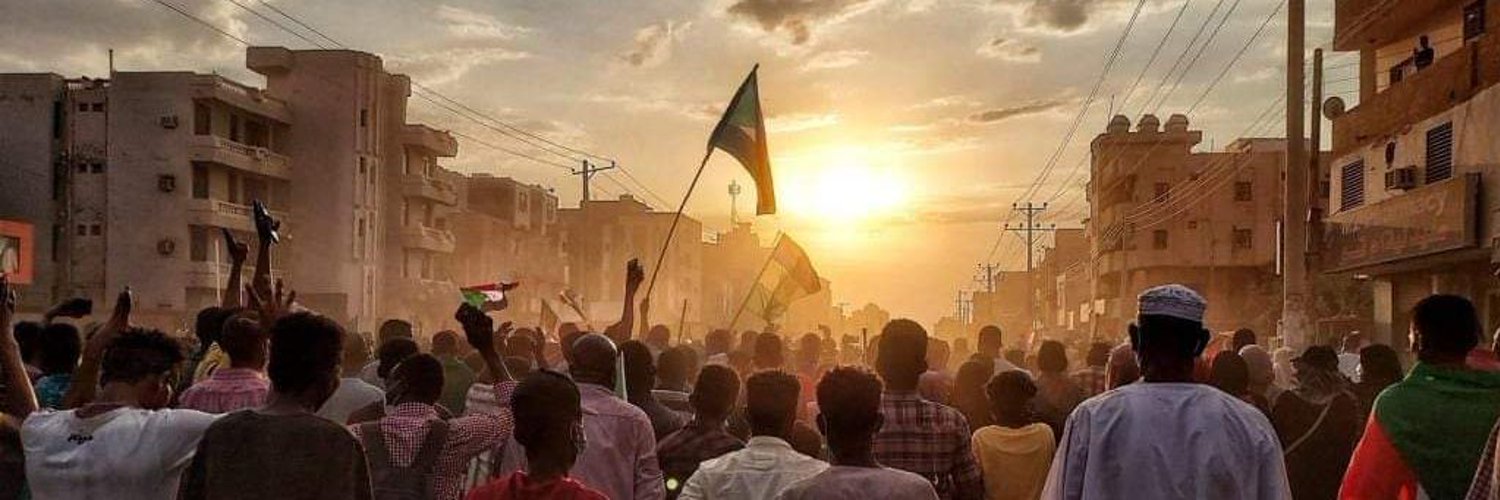
"Khartoum, it's been a year since the insurgents of the Rapid Support Forces or RSF were pushed out by the Sudanese military. Mohanad Hashim returned to his beloved city to find the streets scarred by the war, but also showing signs of recovery."
bbc.co.uk/sounds/play/w3ct99…

Mohanad Hashim retweeted

Israel’s generals stood behind Netanyahu in the last two wars with Iran. Now he’s trying to drag Israel into a 3rd war with Iran on the eve of elections and they’re briefing against him. My report in @TheEconomist
economist.com/middle-east-an…

Mohanad Hashim retweeted

Evidence collected by HRW indicates since 2024 an Abu Dhabi-based security company–licensed to work for UAE govt & w/ links to senior UAE officials–has appeared to hire Colombian pvt military contractors who were deployed to Sudan to fight alongside RSF. hrw.org/report/2026/05/25/fr…

Mohanad Hashim retweeted

قالت مصادر ميدانية لـ"دارفور24" ، السبت، إن سيارة عسكرية تابعة للقوات المشتركة المساندة للقوات المسلحة السودانية دهست مواطنين في موقف المواصلات بسوق الخضار "جيبن جيبن" في أم درمان بولاية الخرطوم، ما أدى إلى مقتل 8 أشخاص وإصابة أكثر من 30 آخري وأشارت المصادر إلى وفاة 4 مواطنين في الحال، فيما جرى إسعاف بقية المصابين إلى مستشفى النو بأم درمان وأكد مصدر طبي لـ"دارفور24" ارتفاع حصيلة الوفيات إلى 8 مواطنين، إضافة إلى إصابة أكثر من 30 آخرين جراء الحادثة
للاطلاع على تفاصيل الخبر الرابط في أول تعليق
#دارفور_24
#Darfur_24

Mohanad Hashim retweeted

Not security, not deterrence, it’s diabolical

Israeli forces demolished homes and damaged roads in Hebron in the occupied West Bank, forcing around 1,200 Palestinians to leave their homes a day after a Palestinian attack killed two Israeli soldiers reut.rs/3ULnOwX
Mohanad Hashim retweeted

When the Rapid Support Forces closed in on el-Fasher, all the Sudanese city’s hospitals closed—except one. This is the untold story of a group of young doctors who kept operating through the drone strikes, as a bloodbath approached: bit.ly/3UcpeR0
Illustration: Michelle Thompson

Mohanad Hashim retweeted

1/ Benjamin Netanyahu got the last set of polls last night. They argue Likud and his block are eroding fast.
Then, came his remarks on Israel's economy. These are among the most extraordinary he has made in a long political career. Whatever their intent, they carry real weight for the Israeli economy – before Tuesday's election, and regardless of who forms the next government.
In an interview with journalist Roy Katz, aired Friday, the prime minister said American military aid to Israel is coming to an end. "It's over. It's only a question of time," he said. Israelis should get used to no longer receiving tens of billions of dollars in U.S. defense assistance, he added, "because America has changed."
That alone is remarkable. There is a growing recognition in Israel that U.S. military aid in its current form will have to change, and might end, as bipartisan support for Israel erodes in Washington. Netanyahu himself has spoken before about wanting to wean Israel off the aid.
But there is a distance between that recognition and a sitting prime minister effectively announcing the end of one of the pillars of the U.S.–Israel strategic relationship. The current Memorandum of Understanding – $38 billion over ten years – runs through September 2028. It is embedded in a web of interests that includes the American defense industry, and Israel's diplomats in Washington work hard to sustain it. Israel's friends in Congress, operating in an increasingly difficult political environment, are still fighting to preserve the special relationship. When the prime minister himself says "it's over," that is a hard message for Israel's defense establishment, and for those in Washington still trying to help.
And that was only the opening.
"There could be sanctions, including banking sanctions," Netanyahu said. Israel, he explained, must prepare an economy capable of bypassing them.
This is a different order of magnitude entirely.
Some background is needed. In the world of international sanctions, comprehensive banking sanctions against a country are among the most powerful tools available to major powers. They are not import restrictions, consumer boycotts, or even arms embargoes. Broad financial sanctions go after an economy's circulatory system.
Israel's banks depend on the global financial system: correspondent banks, clearing, credit lines, the ability to move money across borders. Without access to banks abroad, the Israeli economy stops functioning. And such sanctions don't hit only the banks. They hit everyone who banks with them – companies, exporters, importers, investors, employers. When foreign banks become nervous about a country's financial institutions, they tend to cut ties well beyond what the law strictly requires.
In other words, a sweeping financial sanctions regime would push Israel toward the category of Iran or Russia.
It would be worse. Iran and Russia sit on vast oil and gas reserves. Even under sanctions, they keep selling – mainly in Asia and parts of the Global South. Israel's economy is not built on commodities. Its strength comes from integration into the global economy: human capital, technology, research, advanced services.
According to the Israel Innovation Authority, Israeli high-tech exported roughly $85 billion in goods and services in 2025 – 58 percent of all Israeli exports – and accounted for about half of the economy's growth. It is the engine of the economy, and it depends on foreign markets, foreign capital, and the free movement of money.
Netanyahu did not say who might impose banking sanctions. A prime minister raising this possibility, in the same breath as forecasting the end of U.S. aid, should prompt immediate questions. Is he referring to European sanctions? American ones? above all: how did Israel get to the point where this is being discussed at all?
There was more - and much worse.
Mohanad Hashim retweeted

In July 2024, Lana Nusseibeh publicly and categorically rejected the UN Panel of Experts’ findings of credible evidence that #UAE supports the atrocities and genocide committed by the Rapid Support Forces (#RSF) militia in Sudan.
Confronted on CNN, she declared: “No. Those allegations are categorically untrue.” Asked directly whether she disputed the UN experts’ findings, she replied: “Yes, absolutely.”
Now, Ms. Nusseibeh seeks to lead the very institution whose findings she so emphatically dismissed in defence of her government. How can she possibly be entrusted with that responsibility? The fundamental question is not whether Nusseibeh was entitled to defend her regime. It is whether someone who placed that defence above the credible findings of UN experts can genuinely be entrusted with upholding the independence, integrity, and authority of the United Nations.
Why should the world trust her judgment when the UN’s findings conflict with the interests of the very government that nominated her? The UN highest office is not for protecting a criminal regime from scrutiny and accountability. The seat of the UN Secretary-General should not be for sale!
Mohanad Hashim retweeted

A Palestinian family in Hebron, south of the occupied West Bank, watch in heartbreak and anguish the remains of their home that was levelled to the ground by Israeli occupation authorities.
📹 Bilal al-Taweel
More RSF defections.

أعلن المقدم جدو محمد أدمو همه قائد المجموعة (135) وقائد قطاع نيالا جنوب، انسلاخه عن مليشيا الدعم السريع، وكان قد أشرف على الحراسات الخاصة لحميدتي وشقيقه عبدالرحيم دقلو، في انشقاق جديد يطال الدائرة الأمنية القريبة من قيادة المليشيا.
#هاشتاق_السودان #السودان
The original blue print of Bahri town ( Khartoum North) - 1925. Note it was almost a military barracks, note how the prison and the blocs around it are marked. With Kober, the original village surrounded by deims. Curtesy of @durham_uni Sudan Archives.

Mohanad Hashim retweeted

بيان | بشأن تفاقم أزمة الجوع وانعدام الأمن الغذائي في السودان
تفاقم الجوع والنزوح في السودان نتيجة استمرار الحرب، والقيود المفروضة على حركة المدنيين ونقل السلع، والنهب وعرقلة الإغاثة. ونحذر من استمرار حرمان المدنيين من احتياجاتهم الأساسية، ونطالب بفتح مسارات آمنة للمساعدات وحماية مصادر المياه والمنشآت المدنية، ومحاسبة المسؤولين عن الانتهاكات. ونشيد بالبيان الوزاري المشترك الصادر في 23 أكتوبر 2026، وتؤكد ضرورة ترجمة التحذيرات إلى استجابة عاجلة وفعالة.


Mohanad Hashim retweeted

مقال عبد الباقي الناجي عن المعونة على منصة جوارات جيل الثورة مهم
المعونة الأمريكية: حل للأزمة أم إعادة لإنتاج ظروفها؟ - Hiwaratjeel share.google/X5xiIGS6Wa17Kb9…


Mohanad Hashim retweeted

Sudanese journalists and human rights groups are sounding the alarm over a new Criminal Code amendment that criminalizes online publishing. Critics warn it directly threatens press freedom and independent documentation, while the Justice Minister defends the measure.
sudantribune.com/article/320…
#Sudan #PressFreedom #Journalism #HumanRights

The Sudanese government has moved to muzzle out dissent, threatening freedom of expression and journalists. Article 51 of the Sudanese penal code of 1991 'waging war against the state', a crime punishable by death, has been amended to include "electronic and media publishing" .
Mohanad Hashim retweeted

Sudan's southwestern city of El Fasher, in the North Darfur region, has seen a population decline of more than 90 percent from last year's figures
mee.s.gy/JaERTF

Mohanad Hashim retweeted

And who helped supply the weapons that made this possible?

"Deeply disturbing."
UN human rights chief Volker Türk reacts to a BBC investigation finding evidence that the RSF systematically destroyed hospitals in Sudan, stating the actions may amount to war crimes. bbc.in/3W1oONU

Mohanad Hashim retweeted

I condemn escalating drone strikes in Sudan, which killed more than 300 people in the first three weeks of October. Strikes on camps for displaced people and healthcare facilities are completely unacceptable and may constitute war crimes.
ohchr.org/en/press-releases/…

Mohanad Hashim retweeted
He doesn’t need to predict something he is actively in negotiations about, and that he has already stated would be the case because he understands where US public opinion is going

BREAKING @Jewishinsider: “Netanyahu predicts end of U.S. military aid, calls for plan to circumvent potential sanctions”
jewishinsider.com/2026/10/ne…

Mohanad Hashim retweeted
A little more than three years ago, in the days leading up to October 7, 2023, I started drafting a piece that was never published.
As The Jerusalem Post’s editor-in-chief, I oversaw the paper’s daily editorials, unsigned opinion pieces expressing the view of the editorial staff on the issues of the day. Each morning, I would discuss potential topics and positions with the editor assigned to write the next day’s piece, then review, edit, and sign off on the draft prior to publication. Once a week or so, I wrote the editorial myself, generally pondering the topic for several days unless breaking news forced my hand.
Atypically, in the case in question, I knew what I wanted to title the editorial before it was even written:
“Ben-Gvir Must Go.”
Calling for the dismissal of a senior government minister is not a decision to be taken lightly. Journalists, no matter how critical of the government they or their publications may be, rely on relationships with officials at all levels to do their jobs. I worried that we might jeopardize our reporters’ access to important sources, particularly in ministries controlled by National Security Minister Itamar Ben-Gvir and his far-right Otzma Yehudit party, impairing their ability to serve the public and inform the national conversation.
But I decided that we needed to take a stand nonetheless.
In the months prior, we had published a series of editorials increasingly critical of Ben-Gvir and of his utter failure to do his job as the minister responsible for law enforcement. In April of that year, we said that putting him in charge of a newly formed National Guard should be a “nonstarter.” In June, we wrote that, if he continued engaging in inflammatory stunts rather than dedicating himself to fighting a wave of deadly violence sweeping through Israel’s Arab community, he ought to step down. In August, we called his racist attacks on Arab Israeli journalist Mohammed Magadli “abhorrent” and “appalling.” In September, we slammed his attempts to undermine due process and ease prison conditions for Amiram Ben-Uliel, convicted of murdering three members of a Palestinian family, including an infant.
In my own weekly columns, published each Friday, I took Ben-Gvir to task for modeling racist extremism to Israel’s teens, attempting to undermine non-Orthodox conversions, helping foster an atmosphere of hostility toward Israel’s LGBT community, and doing little to prevent acts of murder among the country’s Arab citizens.
“Arab lives matter, too, and unless Ben-Gvir comes to accept that and treat the murder of a boy in Rahat or Taibe as he would the murder of a boy in Karnei Shomron or Petah Tikva, he needs to make way for someone who will,” I wrote that August.
But as passions swirled in the months and weeks leading up to October 7, my concerns about Ben-Gvir grew beyond his inflammatory rhetoric and abysmal performance in office. Time and again, he demonstrated contempt for the restraints that govern the exercise of state power, seeking to bend law enforcement institutions to his will and attacking those who stood in his way. At one of the most sensitive moments in Israel’s history, his conduct had become a threat to the rule of law and to the institutions he had sworn to protect. It could no longer be left up to him, I decided; we needed to call on Prime Minister Netanyahu to let him go.
I planned to publish the call in the next Friday paper, the most widely read issue of the week, on October 13.
Six days before it was to appear, Hamas invaded southern Israel.
The horrors of October 7 gripped our collective attention for days, weeks, and then months, leaving little room — in our minds or on our pages — for anything else. The war expanded to additional fronts and we became consumed by its impact on every facet of our lives. I left the Post. The piece never ran.
For three years, though, those four words — Ben-Gvir must go — have echoed through my mind. His conduct throughout this period has only strengthened the conviction behind them. Now, with days to go until Israel heads to the polls, it is time to say them out loud.
Much has been made of the damage Ben-Gvir’s behavior and his very presence in the cabinet cause Israel’s reputation on a daily basis. His name has become shorthand for crude extremism, and the fact that he is a senior minister is held up as proof that his noxious views are somehow representative of Israeli society, despite his party holding only six of the Knesset’s 120 seats. As someone who engages regularly with audiences around the world, most of them predominantly Jewish and pro-Israel, I cannot recall the last time a Q&A session did not include at least one pointed question about Ben-Gvir, the way his awful statements and outlandish conduct reflect on Israel, and the shame and embarrassment he causes some of the Jewish state’s most devoted supporters.
But the problem with Ben-Gvir isn’t merely that he makes Israel look bad, though he certainly does. The problem is the Israel he is trying to forge in his own image — a dark place that would be utterly unrecognizable.
It is tempting to dismiss his antics as publicity stunts meant to appeal to a certain type of voter, as though he is perpetually in campaign mode. His provocations have ranged from having himself filmed taunting bound Gaza flotilla activists and Palestinian prisoners to wearing a noose lapel pin and celebrating his birthday with gallows- and gun-themed cakes to promote his effort to impose the death penalty on Palestinian terrorists; and from dancing at a conference calling for the emigration of Gaza’s Palestinian residents and the reestablishment of Israeli communities in the territory to announcing plans to surround a prison holding Palestinian security prisoners with a crocodile-filled moat.
But beneath this gruesome spectacle lies a disturbing worldview that is racist, thuggish, supremacist, and cruel.
An acolyte of Meir Kahane — the American-born rabbi convicted of terrorism-related charges in the U.S. and banned from the Knesset for his incitement to anti-Arab racism — Ben-Gvir has never been one to conceal his views. “We had a prophet in our midst, a leader among us, and we walk in his footsteps,” he said in 2016, referring to Kahane. Until 2020, a portrait of Baruch Goldstein — another Kahane disciple who massacred 29 Palestinian Muslim worshippers at the Cave of the Patriarchs in Hebron in 1994 — hung on his living room wall. He had previously displayed signs reading “Expel the Arab enemy.” Also in 2016, he declared that LGBT people “have no place neither in Jerusalem nor anywhere else in the State of Israel.” He backed a suggestion by fellow extremist (and current fellow cabinet member) Bezalel Smotrich that Jewish and Arab women should be separated in maternity wards and added he would require pregnant Arab women to take loyalty oaths. And lest anyone suspect that his entry into electoral politics reflected a moderation of his views, Ben-Gvir himself dispelled the notion: “My style has changed, but the ideology is the same ideology,” he said in 2019.
The form is the substance, and it has been ever since Ben-Gvir went on national television as a 19-year-old to display an emblem stolen from Prime Minister Yitzhak Rabin’s Cadillac and crow that “we got to his car, and we’ll get to him too” (Rabin was murdered by another far-right extremist, Yigal Amir, several weeks later). Between 1993 and 2007, he was indicted on 15 criminal charges, including incitement to violence, possession of terrorist propaganda, and support for a terrorist organization. He was convicted of 13.
One might argue — erroneously, in my view — that Ben-Gvir’s antics, his criminal past, his noxious views, and the damage he causes Israel’s image would be tolerable if he were good at his job. But the truth is that he has been an abject failure. As minister of national security, he has presided over a surge in violent crime not seen in decades. During his time in office, the number of homicide victims has more than doubled, from 148 in 2022 — approximately 1.5 homicides per 100,000 residents — to 309 in 2025, or approximately 3.0 per 100,000 residents. The disparity in homicide rates between Arab and Jewish Israelis widened considerably, from 10:1 to 14:1, after Ben-Gvir terminated a program created by the previous government to prevent violent crime in Arab communities, which had caused the murder rate to decline. When asked about the wave of murders among Arab Israelis, Ben-Gvir said that the “greater danger” was that it could “spill over into the Jewish sector” and that weapons held by Arab citizens “could be directed at us on command.”
Meanwhile, Ben-Gvir has repeatedly sought to bend the police to his political will. He attempted to remove Tel Aviv’s police commander amid disagreements over the handling of anti-government protests, prompting the attorney general to intervene. The Supreme Court has repeatedly had to restrain his interference in operational policing decisions, particularly concerning demonstrations, and struck down a legislative provision granting him expanded authority over criminal investigations. His attempts to influence police appointments and promotions have raised serious concerns that officers’ careers could depend less on their professional judgment than on their willingness to do his bidding.
Ben-Gvir’s indulgence of Jewish terrorism in the West Bank has been particularly egregious. He has characterized attacks on Palestinians as a “marginal” phenomenon — contradicting the heads of the IDF, the Shin Bet, and the Israel Police, who jointly warned about the threat they pose — and reportedly called their perpetrators “sweet kids.” As the attacks have escalated, police investigations have declined sharply. Senior officers have also faced allegations of deliberately failing to pursue Jewish terrorism suspects in an effort to curry favor with the minister.
Only a third of Israelis now say they have high trust in the police. Israelis also report lower levels of personal safety, with a quarter saying they don’t feel comfortable walking alone after dark. Three-quarters of Israelis say they believe police decisions are influenced by political pressure, rather than purely professional considerations.
Ben-Gvir is not a bull in a china shop; a bull cannot control its actions. He is a hooligan with a baseball bat, gleefully smashing every democratic norm, every Jewish value, every standard of decency, and every foundation of the state whose citizens he is supposed to protect.
Elsewhere, a minister who had failed so resoundingly at his job, and whose tenure had caused his country so much damage, would have been sacked long ago. Having appointed Ben-Gvir to a critical and sensitive ministerial post for which he was grossly ill-suited, and having assembled a governing coalition of which Ben-Gvir’s Otzma Yehudit party is an indispensable part, Prime Minister Netanyahu has adamantly refused to let him go, going so far as to defend his continued tenure in court. That he granted a convicted criminal control over the country’s law enforcement bodies, that he has allowed himself and his government to be held hostage by him, that he has staked his political fate on his band of extremists, and that he has permitted him to run amok during one of the most fateful periods in Israel’s history will be a mark of shame on Netanyahu’s premiership. He, too, bears responsibility for Ben-Gvir’s disastrous term in office.
Itamar Ben-Gvir’s record has demonstrated not merely that he is unfit for his current position, but that he should never again be entrusted with the authority of public office. His continued presence in Israel’s government poses a threat to Israeli democracy. Netanyahu may have opened the door to Ben-Gvir and his ilk, but now it falls to us to close it.
When I enter the polling booth on Tuesday, my vote will be shaped not only by my opposition to Ben-Gvir and everything he stands for, but also by my conviction that he must play no role at all in Israel’s next government. I will not cast my ballot for any party willing to form a coalition with Otzma Yehudit or to enable Ben-Gvir to hold a ministerial post once again, and I urge other Israeli voters to do the same. It is time to put this ugly chapter behind us.
Yes, Ben-Gvir must go.
-----
Yes, Ben-Gvir Must Go
Jerusalem Journal
October 23, 2026
Link in the first threaded tweet
