
I'm Richard Hiscocks - author at the morethannelson website - A Biographical History and Chronicle of the Royal Navy 1776-1815.
Outwood, Surrey UK
Joined May 2021
- Tweets2.6K
- Following300
- Followers555
- Likes4.3K




Pinned Tweet
OK - Naval History may not be up everyone's alley, so periodically I'll post links to articles or biographies which the non-anoraks might find interesting, and in so doing I'll surreptitiously try to lure them in.....
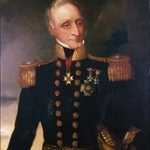
The son of a celebrated captain, ill health punctuated the career of Vice-Admiral Richard Harrison Pearson (1769-1838) making distinction unobtainable beyond the honourable call of duty.
morethannelson.com/officer/r…

When the Colossus 74 was wrecked in the Scilly Islands during a winter storm in 1798 whilst returning from the Mediterranean, the waters consumed not only the coffin of an ennobled admiral but also scores of Sir William Hamilton’s antiquities.
morethannelson.com/the-wreck…

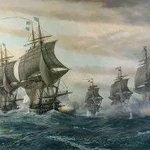
Though a member of a well-known naval family, Rear-Admiral David Graves (1746-1822) was an obscure officer, whose only moment in the historical spotlight occurred during the later years of the American Revolutionary War.
morethannelson.com/officer/d…

An enterprising officer with the impressive capture of a French frigate to his name, Vice-Admiral Sir Thomas Baker (1773-1845) provided sterling service in the French wars. Sadly, his last years were blighted by family tragedy and mental incapacity.
morethannelson.com/officer/s…

In November 1798, a textbook operation saw Minorca captured without the loss of a single man, resulting in a knighthood for the victorious general, Hon. Charles Stuart, yet no award for the avaricious naval commander, John Thomas Duckworth.
morethannelson.com/the-captu…

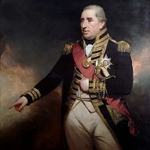
New! One of Britain’s greatest admirals, George Rodney’s brilliant career spanning three major wars was tarnished in his own lifetime by controversy and financial irregularities, together with a singular unpopularity amongst his peers and subordinates.
morethannelson.com/officer/g…

In October 1798, a unique but comparatively unexacting engagement in the North Sea saw the British frigate Sirius capture two Dutch frigates packed with French troops on the same day.
morethannelson.com/sirius-vs…

Many thanks to the ‘Who Do You Think You Are’ magazine for nominating us as the best website to research Nelson’s Navy! Let me know if you want an autograph!😂


Acclaimed by contemporary newspapers for fighting one of the most gallant actions in naval history after his sloop put a superior French frigate to flight, John Clarke Searle (1757-1824) later took up a civil position.
morethannelson.com/officer/j…

Coming from a prominent naval family, Captain William Affleck (1744-91) enjoyed a rare level of peacetime employment and performed valuable service in the American Revolutionary War. He died young in the West Indies prior to the French Revolutionary War.
morethannelson.com/officer/w…

In October 1798, an attempt by a French squadron to land troops in support of the Irish Rebellion was thwarted by a concentration of Naval forces off Donegal, resulting in the captures of a ship of the line and six frigates.
morethannelson.com/the-battl…

Bad luck and controversy, not always of his own making, surrounded the able Admiral Sir James Athol Wood (1756-1829), whose career included imprisonment in France, court-martials, a shipwreck, and major contributions to the capture of West Indian islands.
morethannelson.com/officer/s…

Promoted after commanding his ship to victory over a large French ship after his captain was killed, Capt. Robert Carkett (1719-80) was later criticised by Admiral Rodney for tactical failings in battle and lost his life in a hurricane shortly afterwards.
morethannelson.com/officer/r…

Though he had few opportunities for distinction at sea, Captain James Stevenson (1762-1818) proved successful in supporting the Army in combined operations ashore, garnering praise from some of the most prominent generals of the French Revolutionary War.
morethannelson.com/officer/j…

The respected, brave Captain Nathaniel Bateman (c1723-98) reached the rank of post captain after entering the navy as a common seaman, but his career ended when controversially dismissed for failing to understand Admiral Rodney's complex battle signals. morethannelson.com/officer/n…

An experienced and reliable officer, Admiral George Frederick Ryves (1758-1826) was famous for surveying Agincourt Sound off Sardinia, an anchorage that Vice-Admiral Lord Nelson relied on during his long blockade of the Toulon fleet in 1803-05 .
morethannelson.com/officer/g…

A horrific incident in September 1798, which saw scores of shipwrecked Frenchmen butchered on an Egyptian beach by the Bedouin, also instigated an astonishing act of bravery by a young British midshipman, who saved the lives of five of his enemy.
morethannelson.com/midshipma…

An aristocratic Scot, Rear-Admiral Sir William Ogilvy (1759-1823) had to wait some time for promotion and his career as a ship commander, serving mainly in the West Indies, lasted only seven years. He inherited his baronetcy just 3 years before his death.
morethannelson.com/officer/s…


Although Rear-Admiral William Truscott (1734-98) had to wait many years for his promotion to post captain and was then given a succession of underwhelming commands, his career spanning four wars did see him fight in half a dozen battles.
morethannelson.com/officer/w…
