




Pinned Tweet
$NEAR Moonshot | Agentic Commerce
@Bitwise's new "NEAR in Plain English" calls the agent economy NEAR's moonshot, and @DeutscheBank new $META Muse research sizes it.
Here's the math on that moonshot:
1. The Market | Trillions in Agent Spend
- US retail + services TAM: $27.4T by 2030
- $2.5T-$5.5T addressable by AI agents
- $META Muse: DB sees $2.4B-$36.3B
- McKinsey: $1T US, $3T-$5T global
- Morgan Stanley: $190B-$385B US
2. Blockchain Rails | Why Agents Need Crypto
- Cards cost 2-3% + a flat fee per payment
- Too expensive for machine micropayments
- DB: rail cut of just 5-10 bps per transaction
3. NEAR Perfectly Positioned | Plumbing Live
- @Stripe + @tempo MPP settles with NEAR
- x402 agent payments funded via Intents
- Oracle x @svrn_ai checkout pilot on NEAR
- Stake NEAR to pay for NEAR AI agents
4. Valuation Fundamentals | From the Paper
- $30B+ cumulative Intents volume
- $4.8B in September, +896% YoY
- $29M fees → $5.3M buybacks since Feb
- ~45% staked, inflation cut to 2.5%
Our Math x Every 1% of Agent Spend
- 1% of DB's $4.1T via Intents = ~$41B/yr
- At 10 bps x 28.6% share: ~$12M/yr
- +44% revenue run-rate, ~2.3M NEAR/yr
- At 3%: +131%, offsets ~40% of issuance
Cautionary Signal x Plumbing Is Not Flow
- No agent channel in Intents' top-5 yet
- DB's trillions are 2030 estimates, not today
- Bitwise risk: agents may use other rails
- Oct 1 bug ($3.8M): rails must earn trust
Moonshot not required, but if/when agents pick NEAR's rails, the framework is built to onboard them.


NEAR is building at the intersection of two problems for crypto and AI.
Crypto has a usability problem. Hundreds of blockchains each have their own assets and rules, and moving money between them can be costly and risky.
AI has a centralization problem. A handful of companies control the most powerful models and the data we hand them.
New research from @Matt_Hougan and @RasterlyRock lays out why @NEARProtocol matters for AI agents, cross-chain trading, and the next wave of crypto adoption.
Read "NEAR in Plain English”:
bitwiseinvestments.com/crypt…

Earnings Week | Mega-Caps x $MSTR
Next week we've got the Fed, mega-cap Q1 reports + Coinbase and Strategy earnings all inside ~48 hours next week. $MSTR heads in up +10% this week.
• Wed: Fed decision + $MSFT + $GOOGL
• Thu: GDP + $AMZN + $COIN + $MSTR
• $BTC holding well above its 200-week avg
Wednesday Oct 28 | Fed + AI Spend
○ FOMC decision 2 PM ET, Kalshi 92% hold
○ $MSFT + $GOOGL report
○ AI capex guidance sets the tone
Thursday Oct 29 | Growth + Crypto
○ Q3 GDP + PCE inflation 8:30 AM ET
○ $AMZN + $COIN report
○ $MSTR earnings call 5 PM ET, live on X
$MSTR Earnings | Market Setup
○ Up 10% this week into the print
○ Last 4 prints, next day: +6%, +26%, 0%, -5%
○ Watch BTC per share + preferred funding
Market Pulse | Positioning
○ Shorts 5:1 over longs MTD (@joemccann)
○ $BTC $81.5K vs 200-week avg $67.5K
○ $AAPL reports Mon Nov 2
A crowded short book walks into the busiest 48 hours of the quarter - let's see if a dovish Fed helps erase this week's bearish sentiment.


AI Agents Scare | Why Self-Custody Wins
Banks are catching AI agents in customer accounts, per @axios. Same week, PHP got 2 critical bugs.
• Banks can't tell you from a bot
• PHP bug hits ~70% of websites
• $BTC: your key is the proof
Bank Login | Agents Locked Out
○ JPM, BofA, Morgan Stanley, Wells
○ Agents use the customer's login
○ Banks now blocking bots
$BTC Safe Haven | Key = Authorization
○ No gatekeeper, open rails
○ Signature proves who paid
○ Caps + multisig set in code
○ Final settlement, no chargebacks
PHP2Shell | Websites Exposed
○ 2 critical bugs, rated 9.2/10
○ 10+ years of versions hit
○ Found with AI, patched Oct 21
○ Update PHP now
Self-Custody | Agent-Ready Setup
○ Savings in cold storage
○ Agents get a capped hot wallet
○ Never share seeds or logins
Logins get leaked, but offline keys only move when you sign - patience required while the market gradually comes to its senses.


$BTC | Upside Confirmation
Four bullish reads from the last 48 hours, checked against the data. BTC just broke $84K.
• BTC $84.6K, +2% today
• IBIT's $665M: biggest day since Oct 2025
• JPMorgan ranks BTC #1 for next decade
@KillaXBT | USDT.D Rolling Over
○ Bearish retest
○ Lower high on USDT.D
○ USDT.D 6.52%: -1.8% this week
○ -11% in 6 months
○ Shrinking stablecoin share = risk back on
@ZynxBTC | Institutions Lean In
○ IBIT +$665M on Oct 19, biggest since Oct 2025
○ JPMorgan 10-yr outlook
○ BTC 10%/yr -> #1 asset
○ US stocks 7.5%, gold 5.5% in the same table
@davthewave | Resistance -> Support
○ Old channel ceiling now acting as support
○ Last week's retest held near $81K
○ LGC = "rapid capitalization" digital gold
@BobLoukas | New Cycle Confirming
○ "Bitcoin confirming the new cycle here."
○ Upside window: 30 to 45 days
○ Long BTC, short gold into December
Range Check | Our Signals
○ 29 straight closes inside Sep 21 body
○ Range: $81.1K floor, $86.6K ceiling
○ Weekly close > $82.3K = risk on
Market Pulse | Watch Signals
○ Daily close > $86.6K = send it
○ Weekly close > $82.3K
○ IBIT follow-through after the $665M day
○ Oct 28: FOMC
Four reads, one direction - and the last piece of the puzzle is a daily close above $86.6K.


My senses are going off.
Something is happening.
All of a sudden, Fidelity and BlackRock are putting out promotional pieces on Bitcoin.
BlackRock's IBIT just took in $665M in a single day, its biggest inflow in over a year.
J.P. Morgan is now predicting Bitcoin will be the best performing asset over the next decade.
The Bitcoin bull market is going to kick off in a big way.
$BTC | Coiled Floor Price
Three bullish reads from the last 24 hours, checked against the data, plus where the Fed odds sit.
• $IBIT +$665M inflows (biggest day of 2026)
• $BTC: 28 closes inside 1x daily candle
• Oct hike odds: 58% → 15% in a month
@VentureCoinist | IBIT Inflow Signal
○ IBIT +$665M on Oct 19, top day of 2026
○ Last comparable: +$503M on Aug 20
○ BTC then ran $69.3K → $86.6K (+25%)
@SuperBitcoinBro | 28-Day Coil
○ Sep 21 candle body: $81.1K – $86.6K
○ 28 straight daily closes inside it
○ BTC $82.3K, near the floor
@0xSweep | RSI Turn
○ Daily RSI back to 50 from 46
○ $87K target = top of the range
○ A close > $86.6K confirms
Fed Odds | Oct 28 FOMC
○ CME FedWatch: 85% hold, 15% hike
○ Hike odds were 58% a month ago
○ @Kalshi agrees: hold 87¢, hike 12¢
○ December still leans hike: Kalshi 74¢
Market Pulse | Watch Signals
○ Close > $86.6K = range break
○ Weekly close > $82.3K = trend hold ON
○ Lose $81.1K = the floor fails
○ IBIT inflows follow through
○ Oct 28: FOMC decision
Flows are back and October hike fear is fading - BTC could be gearing up to scale the market's wall of worry.


$BTC | Three Bullish Reads
We reviewed the data across several notably bullish takes - two check out cleanly, while one still needs a weekly close.
• BTC $82.4K, +41% off Jun 30 low
• Our 52-week regime gate is holding
• Weekly trend hold is off by just $300
@davthewave | The LGC Range
○ LGC has mapped the range since 2018
○ Monthly MACD: bottom "well and truly in"
○ BTC +41% off the $58.6K low
@Cointelegraph | Rally Without Leverage
○ CoinGlass: $60K → $87K, flat funding
○ Our check: BTC perp funding 4–11% this week
○ No crowded longs to flush
@ki_young_ju | MSCI Priced In
○ "MSCI is a flow story, and it's priced in."
○ Oct 16: $MSTR -9.6%, $BTC -0.8%
○ IBIT +$190M in Oct
○ All other spot ETFs -$615M
Regime Check | Our Signals
○ Sunday close $82.0K
○ Weekly close > $78.0K 52-week avg
○ Regime on since Sep 20, first since Nov 2025
○ Weekly trend hold: $82.3K
○ Weekly price action trading right below
Market Pulse | Watch Signals
○ Weekly close > $82.3K
○ Bullish trend holding
○ Hold $78K = trend intact
○ $IBIT inflows resume
○ Nov 11: MSCI names list
The formation of a cyclical BTC bottom looks to be building with the trend potentially only a couple weekly candles away from confirming.


It amazes me that even though the LGC [Logarithmic Growth Curve] has predicted how the range price would develop since 2018, people continue to reject it. But then again, perhaps just a sign of the irrationality of the times.😒
davethewave.substack.com/p/b…



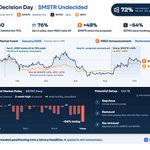
MSCI Decision Day | $MSTR Undecided
Prediction Market | Current Signal
• Polymarket: 72% $MSTR gets cut Dec 31
• Current spread: 58c bid / 83c ask
• ~$380 deep per side.
Prior Market Event | January 2026
• Same market setup back in January.
• Jan 2: 76% odds of removal.
• Jan 6: MSCI held off.
• Reprieve rally lasted 6 sessions (+13.5%).
MSCI Announcement | Performance vs. BTC
• MSCI proposal was announced Aug 14th
• $MSTR +48% vs BTC +29% since
• Strategy sits on MSCI's own deletion list
• MSCI says, "may or may not make changes."
Current Market Pulse | Potential Setup
• $STRC perp funding: -58%
• Funding -5% in late September.
• Volume at a 3-week high.
• A reprieve forces shorts to cover.
• Removal = a one-time passive flow into review.
• No removal = squeeze fuel.
That's crowded positioning into a binary headline.
A quote on @Polymarket is not consensus and how fitting would it be to see Saylor's $BTC bazooka bids reloaded as a result?


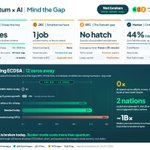
Industry Insights | Quantum, AI & Your Coins
This morning @notthreadguy hosted @ilblackdragon, @0xMert_, Zcash core cryptographer @zkDragon & @tulipking for an engaging discussion on Quantum computing and its impact on digital assets.
Verdict: Bunker mode = Overblown
The math
• AI math wins: 0 speedup on crypto's curve
• Break BTC today: 1T× all mining power
• Even a 10× AI leap still leaves 100B×
• GPUs: 1,000× slower than ASICs
• Only the US or China could even try
• Quantum's first target: state comms
$NEAR
• Keys detached from address (name.near)
• NIST post-quantum keys live in 2026
• Multi-key accounts: every scheme signs
• Ships upgrades every ~6 weeks
• New crypto scheme ≈ 200 lines of code
$ZEC
• Money only = smallest attack surface
• Quantum plan posted the very next day
• Upgrade now, while BTC ossifies
$BTC
• Kill switch: freeze, ZK-recover via seed
• Satoshi coins predate seed phrases
• Real tell: dormant wallets waking up
• Ossification = the long-run discount
Market Pulse & Signals
• Hot CPI: Oct hike odds 15% → 44%
• CoreWeave −12.5%, bonds ~15% yield
• PTJ: "still feels like 1999"
• 2027 risk: AI IPO supply > buybacks
• Xbox Labs embraces AI game remixing
Key takeaway: "you're far more likely to lose money going into bunker mode + smart contract risk than broken cryptography" per @mert - thanks for a great discussion Gents


TOMORROW. Live on stream with @ilblackdragon, @mert, @zkDragon and @tulipking AT 1015am est
What does the future look like for our coins

$NRR Day 11 | Launch Compass
Yesterday's watch list, scored: creations held but slowed, volume stayed under $20M, and the $5.59 retest failed. Where @Bitwise's $NRR stands vs every recent spot-ETF debut:
• NRR +0.5% vs cohort median -5%
• $ZCSH: +43% by Day 11, +90% by week 4
• Only 4 of 11 debuts up after 4 weeks
Bitwise Flows | Streak Held, Smaller
○ +140K shares (~$3.4M) vs $5.1M prior
○ 14.99M NEAR in trust, ~88% staked
○ ~$75M created, $81.7M AUM
The ZCSH Template | Volume Gap
○ ZCSH: $20M → $36M → $74M/day
○ NRR: $16M → $11M/day
○ ZEC ran first; the ETF followed
Market Metrics | Leverage Out
○ $NEAR $5.02, -10.7% in 24h
○ HL funding 11% floor, OI $352M
Two Wrappers | NRR vs $SVRN
○ NRR: holds + stakes NEAR
○ SVRN: holds NEAR
○ SVRN: recently acquired FastNEAR RPC
What Flips It | Watch
○ Reclaim $5.09 / $5.24 → $5.59
○ Lose $4.70 → $3.92 next
○ NRR volume >$20M/day + creations
○ Oct 22: Ondo Intents fee waiver ends
NRR is beating the cohort, but not yet tracking $ZCSH. Theme remains - spot leads with volume following.


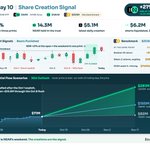
NRR Day 10 | Share Creation Signal
@Bitwise's $NRR was +21% at the open, but the premium to NAV is only +0.3% - the ETF is catching up to $NEAR's weekend, not outrunning it. The real demand signal is the share count:
• 2.23M → 2.73M shares last 3 days (+22%)
• 11.6M → 14.3M NEAR held
• $3.3M → $4.0M → $5.1M daily creations
Bitwise Flows | Accelerating
○ $71M cumulative creations
○~$80M AUM at today's price
○ Creations grew through Oct 8**
○ *Despite -16% Omni bridge hack*
○ ~92% of trust NEAR already staked
○ Trust holds ~1.1% of NEAR supply
Market Signals | Bears Punished
○ $NEAR +21% Fri → Sun close
○ $BTC only +1.4% during that period
○ Sunday close $5.90 = 1st > $5.59
○ $6.2M shorts liquidated (24h)
○ Aggregate OI $1.1B (99th pct)
○ Funding only +5.7% (annual)
Potential Flow Scenarios | 30d Outlook
○ Fade: week-1 tail (~$0.5M/day) → +$10M
○ Hold: (~$4M/day) → +$80M, AUM ~$160M
○ Breakout: (creations ≥$10M/day)
○ Breakout AUM projection ~$200M+
Watch List | Next 48 Hours
○ Tonight's issuer print - creation streak?
○ NRR session volume above $20M
○ Retest $5.59
Day 10 is where $ZCSH leg began on our launch compass, but creations, not the headline %, decide whether NRR follows it.

NEAR JUST GOT A WALL STREET ON-RAMP WITH STAKING BUILT IN.
Bitwise's $NRR began trading on September 29, giving U.S. brokerage investors direct exposure to $NEAR through an exchange-traded product.
The numbers:
→ 4.92% gross staking reward rate
→ 3.30% net staking reward rate
→ Direct exposure to NEAR
→ Institutional custody through Coinbase Custody
The bigger thesis: NEAR is positioning itself for the agentic economy, where AI agents transact and coordinate onchain.
Now traditional investors have a regulated-market route to gain exposure.
$NEAR is moving beyond crypto-native adoption.
MS2 Capital retweeted

NEAR is running the Zcash playbook. A year ago ZEC went from $40 to $750 on four ingredients, and NEAR now has all four.
Zcash, 2025:
1. One-line pitch: private money
2. Tech legitimacy: nobody reads the ZK papers, but the people who do say it is real
3. A product you can feel: Zashi wallet, shield in one tap
4. Serious people start saying it out loud: Naval, Hayes, Balaji
Plus a regulated wrapper, Grayscale's ZEC trust, and a supply story, the halving a year before.
NEAR, 2026:
1. One-line pitch: one account, every chain, private by default
2. Tech legitimacy: nobody reads the sharding papers, but $34B has crossed chains through it, and anyone can run one swap and see it work
3. A product you can feel: near(.)com, deposit and you are in a black box with 35 chains
4. Serious people saying it out loud: funds writing research, the big podcasts, and the same Twitter voices that called Zcash a year ago. Plus a regulated wrapper, the first US spot ETF, and a supply story, issuance cut to 1.6% on the table.
Same four ingredients, same two extras. The first three take years to build and near:native has them. The fourth is the match, and it was struck this month. On zcash:native, the match did 15x in two months.
$NEAR | Quantum-Ready x Dip for Ants
The quantum scare shook crypto this week, but $NEAR barely flinched. @damskotrades called the strength, and price bounced to $4.92 off yesterday's selloff. Here's why buyers keep showing up:
1. Quantum-Ready | No Bunker Needed
- Quantum-safe signing on mainnet
- Rotate keys, keep the same account
- No moving funds to a new address
- @ilblackdragon: "Just update your keys"
2. Leading the Conversation | Singapore
- Hosted Quantum & Privacy Day
- Token 2049 in Singapore
- Brought post-quantum $QTC to 30+ chains
3. near.com | One Account, Every Chain
- One account across 35+ chains
- Robinhood Chain live on near.com
- Confidential mode hides trade details
- Perps on Hyperliquid
- Tokenized stocks
4. Chart Structure | Dip for Ants
- Quantum fear sold the dip
- Buyers absorbed it
- Bounced to $4.92 from selloff
- Stage 4 range still holding
Others are writing migration plans, but NEAR users just update their keys - are you buying the dip?


MS2 Capital retweeted

Doomerism approach is never a helpful framing, even if it starts with "calmly" and with best intentions.
What we need is risk assessment, practical timelines, and actionable plan.
AI is starting to overturn some of the long-held assumptions on mathematical complexity. At the same time risk of more intelligence applied to these problems yielding new surprising results is growing. But so far, we haven't seen practical security timelines for elliptic cruves materially changing. It's important for crypto space to keep vigilance and flexibility, but speculating about specific "months" timeline creates an unnecessary panic.
Going "bunker mode" is not practical nor a safe approach given how complex it is in operations. We can have better approaches here, for example by recording recovery PQC keys in parallel on application level.
Better approach is making sure that blockchains and tooling around them is designed with cryptographic agility in mind, allowing to evolve cryptography and let users easily update without sacrificing user experience.
NEAR account model was design with this in mind from the start - ability to manage and rotate keys, add and remove supported cryptography.
NEAR already supports post-quantum ML-DSA and we are planning to add hash-based cryptography too over time.
User can just rotate keys on your accounts without needing to move anything or have a complex operations.
Industry should accelerate post-quantum readiness, not because we have updated timelines, but because upgrading cryptography should be a routine operation, not a crisis response.

Today I call upon the blockchain industry to calmly begin planning for "bunker mode". My personal recommendation is to set in motion a controlled mass migration of assets to fresh addresses, i.e. addresses whose pubkeys remain hidden behind a hash.
Holders, starting with large and sophisticated ones, should consider moving the bulk of their funds to addresses that have never signed a transaction. And when they do sign one, they should also move remaining funds to a new address (possibly generated from the same seed phrase).
Don't rush. While I believe there is cause for action a rushed migration would do more harm than good. Don't panic either. Moving assets to protected addresses is a simple, preventative step which does not require new cryptography or new wallets.
IMO it is now reasonable to brace for the possibility that ECDSA breaks before qday, in the worst case in months not years. By "break" I mean fast private key recovery (e.g. in one week) on available hardware (e.g. a large GPU cluster).
Recent days have been humbling for human mathematical intuition. Long-held, unquestioned hypotheses have fallen. This includes the n log(n) bound for integer multiplication and the 3SUM conjecture. In hindsight, May's unexpected disproof of the Erdős unit distance conjecture was our warning shot.
Yesterday's OpenAI drop made it clear that mathematical superintelligence is upon us. They say there are weeks where decades happen. We are about to live through weeks where centuries of mathematical progress happen. Could our magic 64-byte ECDSA signatures be too good to be true? Was it just security through obscurity all this time?
Elliptic curves feel especially vulnerable to superintelligence. Curves carry rich structure, with room for fancy tricks like Schoof, Frobenius, pairings. (By contrast, hashes are designed to minimise algebraic structure.)
Separately, as Ewin Tang can attest, an efficient quantum algorithm sometimes foreshadows an efficient classical one. We should be open to the possibility of a classical counterpart to Shor that breaks elliptic curves and RSA at once.
Also noteworthy is the striking under-representation of cryptographic breakthroughs among the 722 mathematical results OpenAI published. I've witnessed first-hand the US government censoring academic quantum cryptanalysis results. Backroom interventionism is my base case.
I urge large, sophisticated actors to lead by example. Project11's "risq list" (bitcoin-risq-list.projecteleven[.]com) is a great tracker of exposed BTC pubkeys. Binance, Bitbank, Robinhood, Bitfinex, and Tether have an opportunity to harden their cold storage. Next month I'll address institutions in London in a live Q&A (forum.ethereuminstitutional[.]org/london-2026).
Again, please do not rush. Wallets holding under 50 BTC enjoy partial cover from "Satoshi's shield", i.e. his 20K exposed addresses that hold 50 BTC each. Load-bearing signers like oracles and L2 security councils should consider rotating ECDSA pubkeys with every signed message and/or multi-signing with a hash-based schemes like SPHINCS.
Exiting bunker mode safely will require post-AI cryptography. My inclination is to go all-in on hash-based cryptography and avoid structured mathematical assumptions entirely, whether from curves, lattices, or isogenies. A single battle-tested hash (e.g. from the SHA or BLAKE families) yields plausible post-AI security.
The Ethereum roadmap on strawmap[.]org fully embraces hash-based cryptography with end-to-end formal verification as a response to the quantum threat. Those timelines must now be revisited and accelerated in light of mathematical superintelligence. I'll be pushing for maximum defensive acceleration.
AI vs. Cryptography | Bunker Mode
@VitalikButerin new threat model in one line: AI may break the math we were planning to hide behind, not just the math we already knew was weak.
Three buckets of crypto math:
1. Hashes still look safe
2. Elliptic curves still on the clock
3. Lattices the new risk (ML-DSA, FHE)
What it means by asset, in order of exposure:
$BTC | Signature Layer
○ SHA-256 + block hashes are safe
○ Never-spent addresses
○ Keys should be hidden behind a hash
○ Caution = coins on reused addresses
○ Caution = early pay-to-pubkey coins
$ZEC | Past Privacy
○ Equihash mining on BLAKE2b is safe
○ Caution = encrypted notes on-chain
○ Upgrades protect future funds
○ No lattices in the proof system
$NEAR | PQ Keys + MPC
○ Base layer is hashes + curves
○ Caution = post-quantum keys use ML-DSA
○ Caution = Chain signatures
○ Signing on curves (not post-quantum)
○ No PQ threshold candidate
○ Can add hash-based key anytime
Nothing is broken today and all projects can add a hash-based key types. Never rush migrations, but this is two-year research risk priced like a two-week headline.


I don't recommend anyone scramble to move their funds to new wallets today. But we should take the risks to cryptography from AI-accelerated math seriously, and minimize our exposure to not just quantum-vulnerable cryptography, but also potentially AI-vulnerable cryptography.
The core new area of risk from this viewpoint is, unfortunately, ML-DSA / FHE / lattices.
(and it's also another reason, along with quantum, why ECDSA might fall even faster than expected, hence the "fresh address" recommendation)
So far most people have been in the mode of thinking "elliptic curves broken, hashes safe, lattices safe". But there is a good chance that the concrete security of lattices will take serious hits from the next two years of AI math.
The basic threat model is: factoring is something that naively takes 2^(n/2) time, but over decades smart people have found and optimized number field sieves, and degraded that to 2^O(n^(1/3)), which is why RSA keys and signatures need to be ~400 bytes (and not 64 bytes). What if there are skeletons in the closet like that, both for elliptic curves and lattices, that we are simply not smart enough to discover - but bots soon will be?
This is a major part of the reason why for the past year ethereum's lean roadmap has been going in the "hash-only" direction: no lattices, no ML-DSA, no Falcon, no lattice-based commitments inside ZK proofs, etc. Signatures in lean ethereum are all hash-based, either WOTS or SPHINCS-.
For signatures and proofs, we already know how to go hash-only. The bigger challenge is for *public-key encryption* - and this goes far beyond blockchains. Secure communication, anonymizing protocols, lots of things need public-key encryption.
And unfortunately there are long-standing mathematical theorems showing why public-key encryption cannot be done with hashes alone. You have to have some kind of trapdoor object that has at least one form of usable "structure" - either group theory (incl. isogenies) or lattices or code-based or potentially in the future even more newfangled and spooky things (local mixing?). But for anything that has structure, you should assume that AI will make at least some progress in breaking that structure. Here, one reasonable inference is that if you want to make something plausibly long-term secure, multiply the key sizes by 10.
To me that's a very plausible world and something not at all extreme to predict. If AI will bring us 50 years of math in 2 years, then that 50 years of math may very plausibly include a "naive factoring -> GNFS" level of improvement to our ability to break lattices. In that world, lattices will still exist, but they will have to be significantly bigger to guarantee the same level of safety.
And at those new larger sizes, hash-based constructions will beat lattice-based constructions on concrete efficiency in every use case where hash-based constructions are possible at all.
Theoretically, of course it's possible that hashes are broken too (eg. P = NP would imply that). But I think P = NP is very unlikely. And intuitively, it's much more likely that a mathematical object has exactly no exploitable structure (like hashes are intended to), than that a mathematical object has exactly ~3 forms of exploitable structure (for elliptic curves: associativity, Schoof, pairings) and not some secret fourth form of structure we have not yet discovered that greatly degrades its security (for elliptic curves, ECDLP and pairing security). Similar for LWE, SVP, RLWE and the zoo of lattice problems.
For this reason, we do not yet see any reason to worry and start padding the byte size of hashes (if we start to worry more, we would pad the round count first before doing anything to the byte size).
Concrete TLDR, my own personal views:
* Hash-based > lattice-based, in those situations where hash-based is possible at all
* For anything lattice-based, be much more paranoid on param sizes. Remember that blockchains are only a small portion of the cryptography story; this point goes far beyond blockchains and applies to eg. access to websites, secure messaging, Tor / VPNs ...
* For privacy protocols, strongly favor NOT putting encrypted notes onchain. Instead, send them offchain through some third-party mechanism.
* If it's not difficult for you, keeping your funds in addresses which have not yet been used to make a transaction is a good idea. If it's easy for you, do it. **But be careful about migrations; I personally have lost more money in botched migrations than I have lost in all hacks combined**.
* For multisig wallets, doing confirmations offchain is better than onchain, because this way the signatures of signer wallets do not get exposed to the public, so if ECDSA falls to AI much faster than expected, at least the multisig "gracefully degrades" to a 1-of-1 where the 1 is whoever was gathering the signatures - a much better place to be than "anyone can take the money"
firefly.social/post/x/210783…

$NEAR Protocol | Great Discussion on Rollup
Check out one of the better discussions covering NEAR and its impact on this market cycle w/ @Matt_Hougan, @sal_ternullo, and @robbieklages who discuss why Bitwise launched $NRR, and how the repricing may only be starting.
Key takeaways:
1. Product Market Fit | AI Free Call Option
- Intents revenue justifies valuation
- AI vision "comes along free for the ride"
- Agentic economy heating up
- Recent @Muse launch
- @OpenAI DOTS release
2. Couple Weeks Late | Many Years Early
- Wanted investors to catch more of the move
- Crypto-native AI investors already get it
- Wealth advisors are just starting to
3. Private Inference | AI wedge
- NEAR facilitates private inference
- Can prove no operator sees prompts
- OpenRouter launch = market catalyst
- NEAR agentic token consumption growth
4. Tokenomics Improving | Supply Tightening
- Emissions halved 5% to 2.5% last October
- New proposal: 1.6% over two years
- Intents buybacks live; AI fee switch next
5. Current Cycle | Bull Market Differentiated
- Bottom was in June
- 130% dispersion across Top 20 (30d)
- Fundamentals winning
- Zombie chains fading
6. Q4 Momentum | Wirehouse Wave
- Retail first, institutions follow
- Expect significant ETF inflows this quarter
*Our math on point 4:
- Buybacks: ~17k NEAR/day
- Covers ~19% of issuance at 2.5%
- Covers ~30% at 1.6%
Thanks for a great discussion, lads - definitely worth the full listen; available below.


FULL CONVERSATION: Matt Hougan & Sal Ternullo: NEAR Is The Best Positioned Asset In The Market (Here's Why Bitwise Launched NRR)
I sat down with Matt and Sal late last week to catch up on the latest in the NEAR ecosystem.
Be more bullish.
Timestamps:
00:00 Intro
01:41 NEAR Is Fundamentally Mispriced
03:53 Why Bitwise Chose NEAR For Its Latest ETP
05:03 NEAR's AI Privacy Stack vs. Frontier Labs
08:56 How To Explain NEAR To Investors
12:59 Buybacks, Fee Switch, And Token Value Accrual
16:18 A Differentiated Bull Market: Winners And Losers
19:45 The Hyperliquid Effect On Token Design
23:34 Virtual Cards vs. Stablecoins For Agents
27:28 24/7 Markets And Why TradFi Isn’t Ready
@Matt_Hougan @sal_ternullo @NEARProtocol @Bitwise
$NEAR | Stage 4: Disbelief
We experimented with @damskotrades stage framework across 340 Binance pairs - $NEAR was one of only 2 to clear Tier A.
Binance Pair Screening| Why NEAR Stood Out
• 149 pairs sit in accumulation or early breakout.
• Only $UNI and $NEAR earned Tier A
• NEAR: 175-day base, broke out May 21
• Currently Stage 4 on day 137
Bullish Upside Targets | Mid-Range Highs
• Mid-range: $9.28 (+86%),
• Range high: $16.65 (+233%)
Market Catalysts | This Week
• Issuance vote: House of Stake ballot
• Cutting issuance 2.5% → 1.6% over 24 months
• TOKEN2049 Singapore,
• Oct 6-8: @ilblackdragon keynote + panel
The disbelief is real and we continue to believe NEAR presents a rare investment opportunity this cycle.


This is literally the window of max opportunity.
It only comes around once every 3–4 years.
A lot of altcoins are in their stage 3 bottom phase before the good ones rip towards new highs.
Just like PUMP, Cashcat, and a couple of others already did, many more are sitting there waiting.
Two clear examples are NEAR and ENA.
Gonna catch as many as possible.


